
Last Updated on March 6, 2026 by Indoor Plant Nook
TL;DR (Quick Wins)
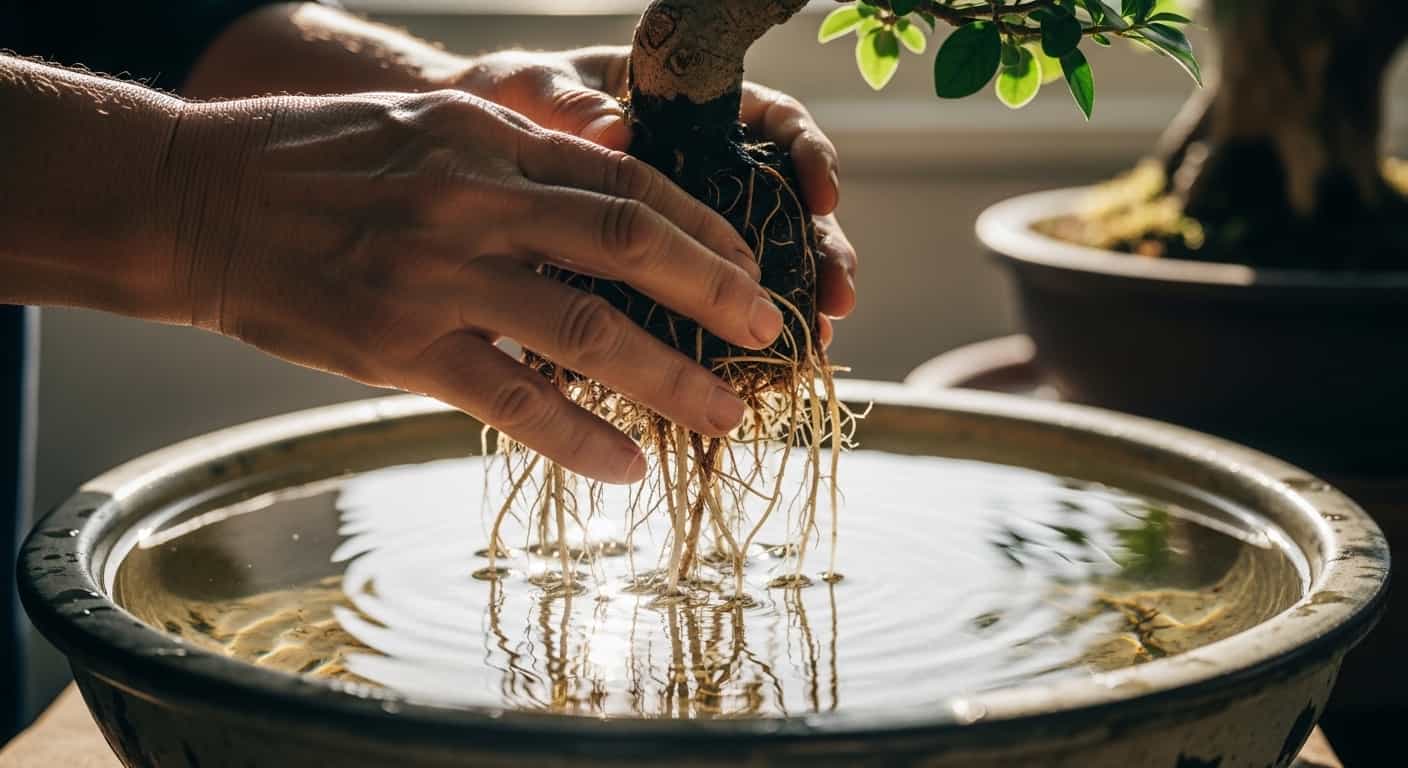
- What It Is: Trimming bonsai roots while submerged in water for better visibility, hydration, and reduced transplant shock.
- Key Benefits:
- Prevents air embolism in roots by keeping the vascular systems water-filled.
- Enhances precision by washing away debris for clearer root visualization.
- Keeps roots hydrated during lengthy pruning sessions.
- Best for: Water-loving species like Bald Cypress, Willows, and Mangroves.
- Risks: Avoid completely for species needing sharp drainage (e.g., Pines, Junipers, Olives). Long-term submersion requires aeration to prevent root suffocation.
Introduction
Underwater root pruning—a niche technique in the bonsai world—sounds counterintuitive at first. Why would you submerge roots in water when they need oxygen to thrive? Yet, this method has gained a dedicated following among advanced bonsai artists for its unique benefits, especially for water-adapted species.
This article dives deep into the science and art of underwater root pruning, exploring why it works, how to do it safely, and when to avoid it entirely.
What is Underwater Root Pruning?
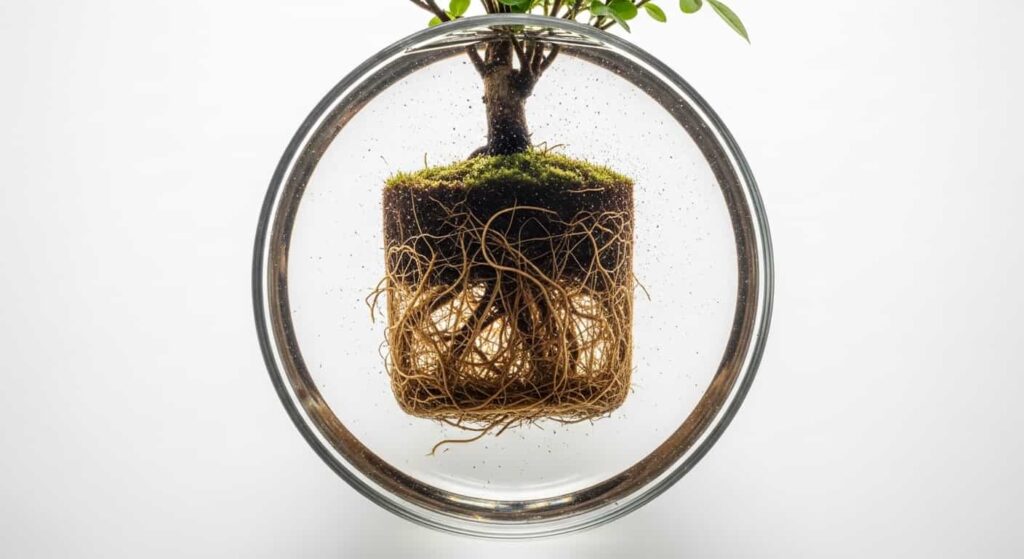
Underwater root pruning involves trimming bonsai roots while they are submerged in water, rather than exposed to air.
Common Contexts:
- The “Dunk and Chop” Method: Used during repotting to wash away old soil and clearly see the root structure.
- Transition to Water Culture: A technique for acclimating bonsai to hydroponic or aquatic setups.
- Emergency Rescue: Reviving severely root-bound or dehydrated trees by pruning in a water bath.
The Primary Benefits
1. Reduced Air Embolism (The Hydraulic Benefit)
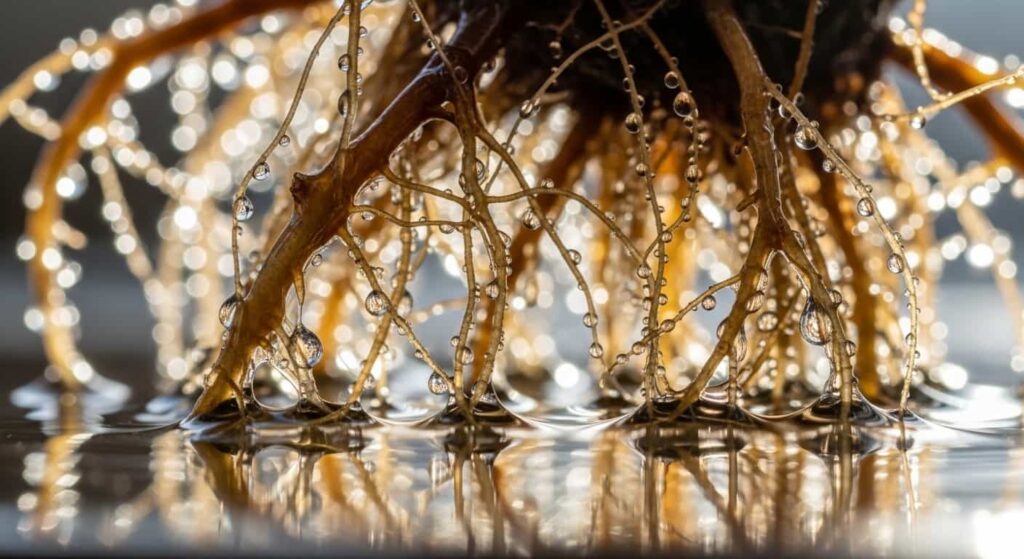
When roots are pruned in the air, fine root tips can dry out, leading to air embolism in the vascular system. When cut in air, the negative pressure within the plant’s vascular system can pull air into the cut xylem vessels, creating an air bubble that blocks the flow of water. Submerging roots keeps the xylem tubes filled with water, reducing transplant shock significantly.
2. Enhanced Visibility & Precision
Water washes away soil and debris, making it easier to see and untangle roots. This ensures a cleaner nebari (radial root flare) and reduces the risk of tearing delicate roots. You’ll see the fine, fibrous roots separate and become clearly visible against the murky water.
3. Hydration Retention During Surgery
Roots can dry out quickly during lengthy pruning sessions. Submerging them keeps fine feeder roots moist and healthy until repotting. This is especially critical during complex root work that takes more than a few minutes.
Case Study: The Bald Cypress Anomaly
Why It Works for Bald Cypress
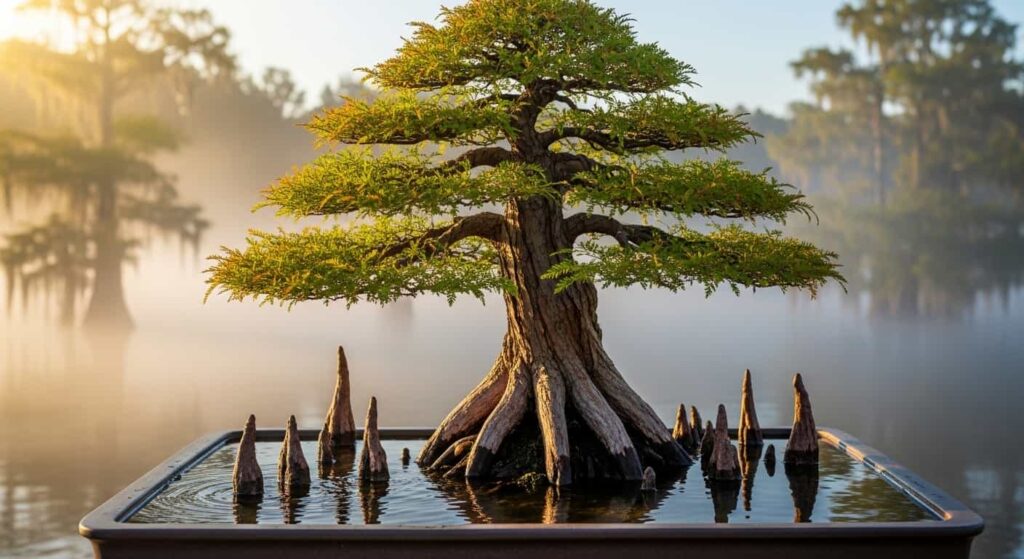
Bald Cypress (Taxodium distichum) thrives in swampy environments, making it an ideal candidate for underwater root pruning. This species has evolved to survive prolonged submersion and actually benefits from it.
- Promoting Buttressing: Submersion encourages the base of the trunk to swell and form “knees” or buttresses, a highly desirable aesthetic trait in bonsai.
- Aggressive Pruning Tolerance: Growers have successfully removed up to 80% of the root mass while keeping the tree submerged, with no adverse effects.
- Rapid Recovery: Water-pruned Bald Cypress often shows faster new root growth compared to traditionally pruned specimens.
Other species that tolerate this technique well include Willows, River Birch, and Mangroves—all adapted to oxygen-poor, water-rich environments.
Beyond Pruning: The Art of Aquatic Bonsai Cultivation
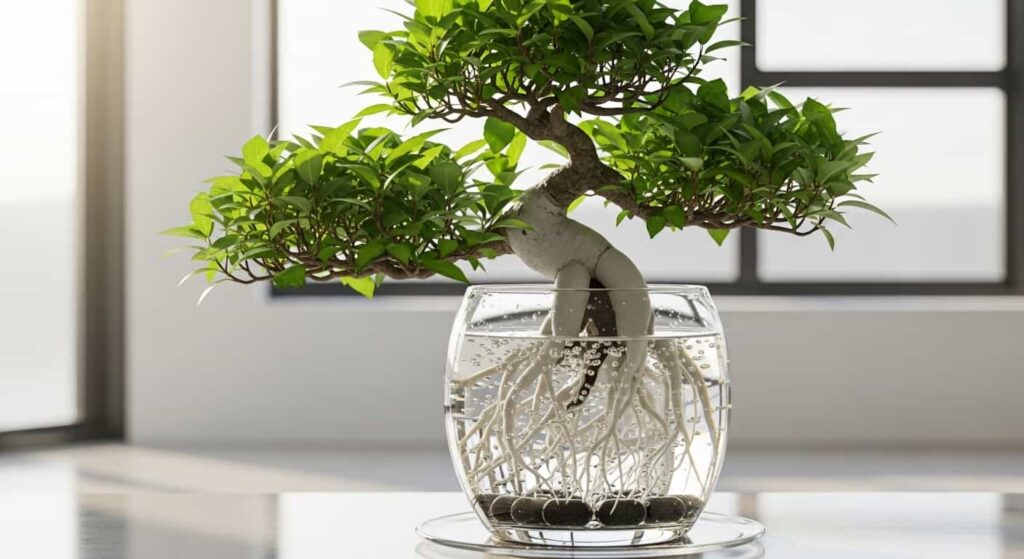
Some bonsai artists take underwater techniques further by transitioning trees to live permanently in water.
The Transition Method:
- Initial Soil Growth: Start the tree in traditional soil to establish a strong root system.
- Frequent Spraying: Encourage water-adapted roots by misting regularly over several weeks.
- Periodic Water Changes: Gradually acclimate the tree to a hydroponic environment by increasing submersion time.
- Aeration is Essential: Long-term aquatic culture requires air stones or oxygenating systems to prevent root suffocation.
Aesthetic Goal:
Create “living sculptures” that thrive in decorative water containers, offering a unique twist on traditional bonsai. These specimens often develop unique root formations impossible to achieve in soil.
The Risks and How to Mitigate Them
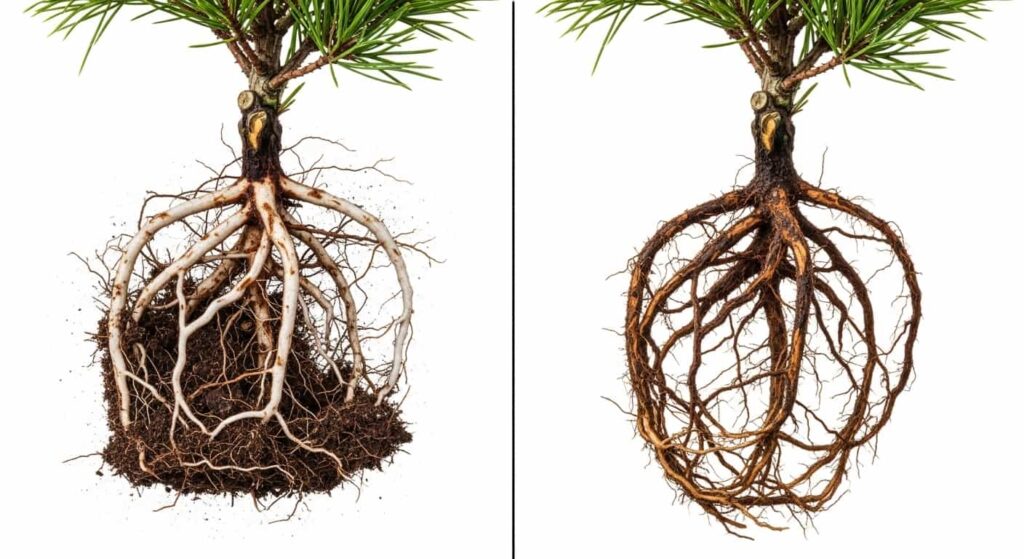
1. Oxygen Deprivation
Roots need oxygen, not just water. While short-term submersion (under 30 minutes) is fine, long-term aquatic culture requires aeration to prevent root suffocation.
Mitigation: Use air stones in aquatic setups. For pruning sessions, keep submersion under one hour.
2. Root Rot in Non-Water Species
Mediterranean species like Pines, Junipers, and Olives require sharp drainage and will not tolerate prolonged submersion. For these trees, even 15 minutes underwater can cause damage.
Mitigation: Never use this technique on drought-adapted species. A Ponderosa Pine, which has evolved to thrive in dry, rocky mountain soil, would almost certainly lead to rapid root rot and death due to its intolerance for saturated conditions.
3. Temperature Shock
Always use room-temperature water (65-75°F / 18-24°C). Ice-cold water can shock the roots and halt growth for weeks.
Mitigation: Fill your tub 24 hours in advance to allow chlorine to evaporate and water to reach ambient temperature.
4. Fungal and Bacterial Risks
Standing water can harbor pathogens that enter through fresh cuts.
Mitigation: Use dechlorinated water and consider adding a dilute hydrogen peroxide solution (1 teaspoon per gallon) for susceptible species.
Step-by-Step: How to Safely Prune Roots Underwater
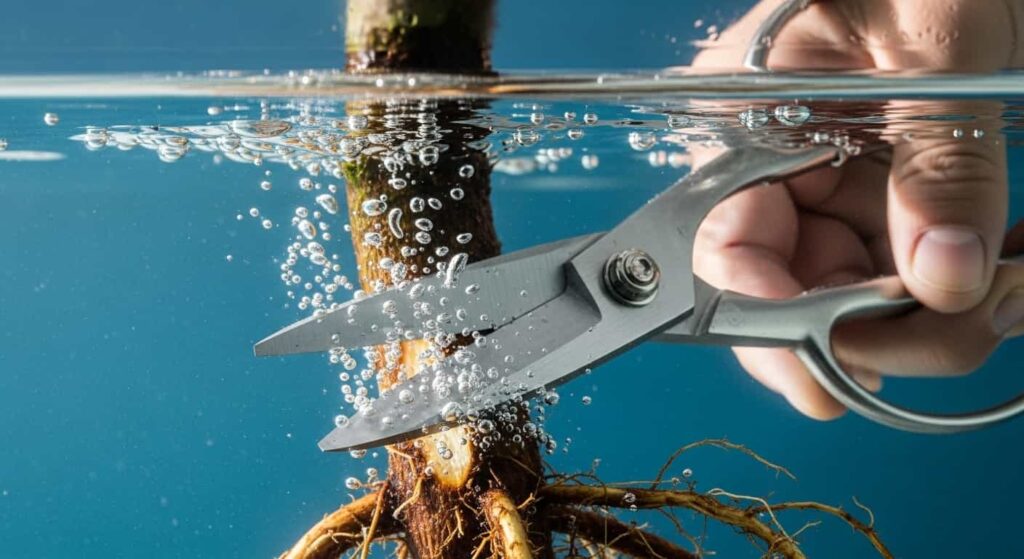
Preparation: Fill a large tub with dechlorinated, room-temperature water. Have your sharp, clean root scissors and cutters ready. For larger specimens, an assistant to hold the tree submerged while you prune can be invaluable.
Extraction: Gently remove the tree from its pot and submerge the entire root mass immediately to prevent any air exposure.
Cleaning: Swish the roots vigorously underwater to wash away old soil. This will reveal the true structure of the root ball and nebari without the risk of tearing delicate feeder roots. You’ll see the root architecture clearly for the first time.
The Pruning Cut: You can either lift a section of root briefly to make a precise cut above water and immediately re-submerge it, or, with practice, learn to prune by feel underwater. Use sharp shears to make clean cuts, focusing on thick, downward-growing roots and any dead or circling material. Pruning saws can also be used for larger roots underwater, but care must be taken not to tear the tissue.
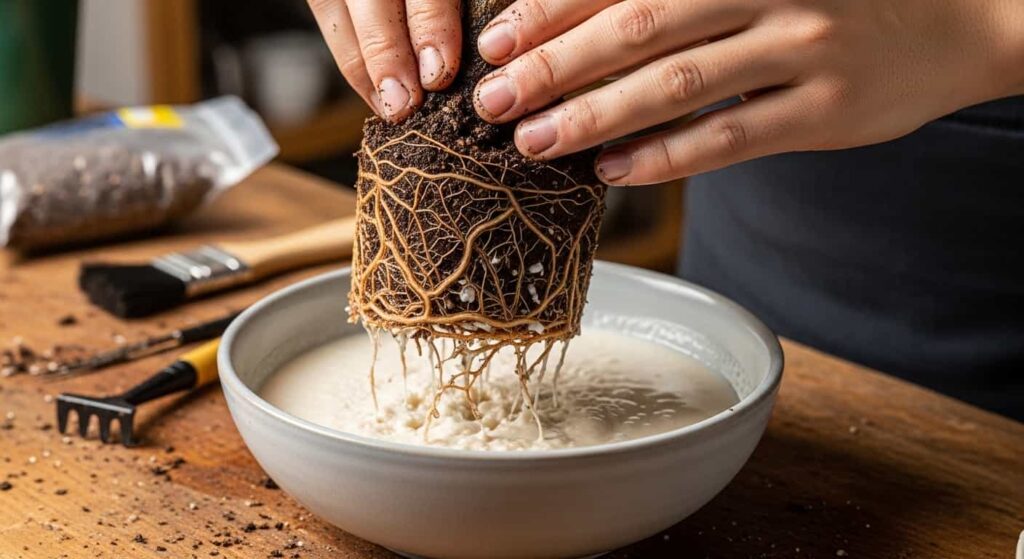
Post-Prune Care: For most trees, remove from the water and repot immediately into a very moist (but not soaking wet) bonsai substrate. Some artists like to first dip the freshly pruned roots into a “slurry” of water and mycorrhizal fungi to protect the cuts and boost recovery. If you are intentionally transitioning the tree to an aquatic setup, this is the moment to place it in its new water-filled container with proper aeration.
Conclusion
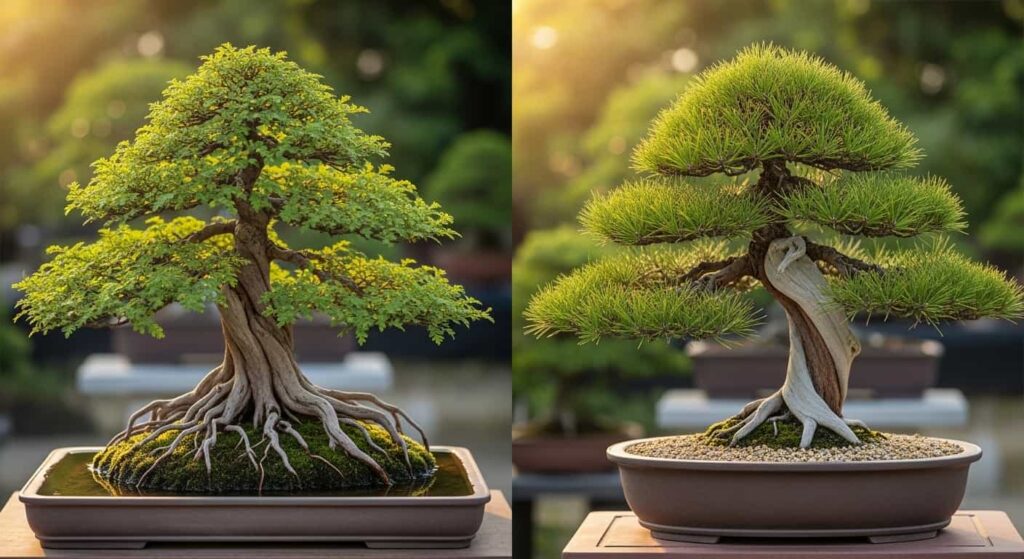
Underwater root pruning is a powerful tool for advanced bonsai artists, offering benefits like reduced transplant shock and improved precision. However, it’s not a universal solution.
The technique excels for swamp-dwelling species like Bald Cypress, but can be disastrous for Mediterranean natives like Pines and Junipers. Success depends on understanding your tree’s evolutionary history and physiological needs.
Final Thought:
“Prune your Swamp Cypress in a bucket of water; prune your Pine with a dry brush and sharp shears. Know your tree, and you will know the right method. “
Frequently Asked Questions
Can I use this technique for all bonsai trees?
No. This method is only suitable for water-tolerant species. For desert or Mediterranean species, traditional dry pruning is essential.
How long can roots stay submerged during pruning?
For most water-tolerant species, 30-60 minutes is safe. For sensitive trees, 15 minutes maximum.
Do I need special tools for underwater pruning?
Standard stainless steel tools work fine. Just dry and oil them thoroughly after use to prevent rust.
Will underwater pruning work for rescued nursery stock?
Yes, often dramatically so. Severely root-bound trees frequently respond well to this gentler approach, especially if they are water-loving species.