
Last Updated on April 15, 2026 by Indoor Plant Nook
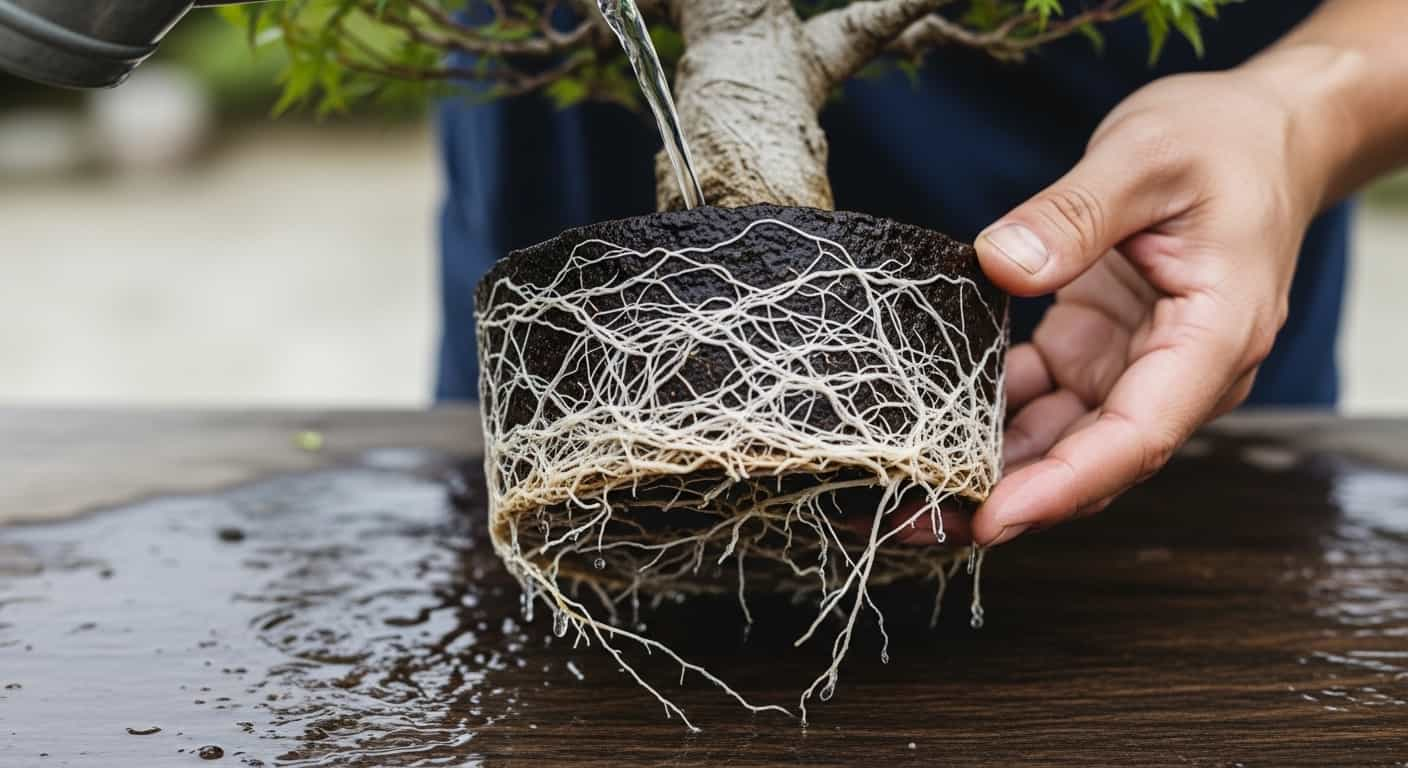
If you want to repot a bonsai without drying out fine feeder roots, root washing—working the root mass in clean water while you loosen old soil and trim—protects those fragile roots from the moment the old pot comes off until the tree is settled in fresh soil. Choosing the best bonsai species for root washing matters because tolerance varies: some trees shrug off a thorough rinse and comb-out, while others need a lighter touch and stricter timing.
This article explains which species handle root washing best, why that is, and how to match technique and aftercare to the tree so you stay within the safe range for each type.
Why the best bonsai species for root washing are not all the same
Root washing keeps hair roots moist while you remove old substrate, inspect, and cut. Species that lose fine roots quickly in open air—often maples, azaleas, and other fibrous-rooted trees—gain the most from the method. But “best” also means vigorous recovery: the tree must bounce back from root reduction and moisture shock without stalling for years.
In practice, the best candidates usually share some of these traits:
- Strong adventitious rooting or fibrous root systems that refill the pot after disturbance
- Predictable dormancy or pre-growth windows when you can safely reduce roots
- Enough vigor to tolerate losing a portion of the root mass in one session
Species that are slow to recover, very sensitive to root disturbance, or prone to drying stress may still be root washed when you reduce intensity—less soil removal, fewer cuts, cooler weather, and more recovery time—but they are not the “best” in the same sense as vigorous, forgiving types.
Best bonsai species for root washing (by group)
These are widely used as bonsai and are among the best bonsai species for root washing when you need to clear old soil, fix circling roots, or reduce a dense ball. Always match timing to your climate and the tree’s health.
Deciduous trees
Japanese maple (Acer palmatum) and trident maple (Acer buergerianum) — Fine, fibrous roots dry out fast in air; root washing is a standard way to protect them during repot. Work in room-temperature water, trim conservatively, and favor late winter to early spring before buds swell.
Chinese elm (Ulmus parvifolia) — Tough and forgiving; handles root washing and moderate reduction well. Good for beginners practicing the technique.
Zelkova (Zelkova serrata) — Similar to elm in resilience; vigorous regrowth after a clean root wash.
Crabapple, hornbeam, hawthorn, and other temperate deciduous species — Often root washed successfully when repotted in the dormant window. Reduce vigor on weak or stressed trees.
Conifers
Japanese black pine (Pinus thunbergii) and other two-needle pines — Commonly root washed and repotted in early spring before candle extension; follow species-specific guidance on how much root to remove in one session.
Junipers (e.g. Juniperus chinensis) — Frequently root washed; avoid bare-rooting the entire mass unless you know the tree is strong—leave some old soil if you are unsure.
Spruce (Picea) and larch (Larix) — Can be root washed; timing and moderation matter—larch in particular is often worked in early spring.
Cedar and fir — Generally less ideal for aggressive root washing; if you use water, keep the work gentler and preserve more soil.
Broadleaf evergreens and tropicals
Satsuki and other azaleas (Rhododendron) — Fine roots and sensitivity to drying make root washing valuable; timing is often right after flowering, with gentle technique and careful aftercare.
Olive (Olea) — Strong root vigor; often tolerates root washing well in warm climates when repotted in the right season.
Fig (Ficus) and other tropical bonsai — Root washing is common in warm conditions; protect from cold drafts and avoid over-trimming when the tree is not pushing strong growth.
Jade (Crassula) and other succulents — Can be root washed lightly; let cuts dry briefly and use very fast-draining mix after—treat as moderate candidates, not the same as elms or maples.
Species to treat as “lighter root washing”
These are not usually listed among the best bonsai species for root washing if you mean aggressive bare-rooting and heavy reduction in one go:
- Bougainvillea, some mature pines with weak vigor, or recently collected material with limited root mass
- Trees already stressed, diseased, or repotted within the last year or two
You can still use water to keep roots moist and rinse soil—just reduce how much you strip and cut.
Best time for root washing by species
Schedule root work when the tree is in its dormant or pre-growth window (or the appropriate season for tropicals), before the tree commits to a flush you cannot support with a reduced root system.
| Tree type | Typical window for root-washing repot |
|---|---|
| Deciduous (maples, elms) | Late winter to early spring |
| Conifers (junipers, pines) | Early spring before budbreak/candles |
| Tropical (ficus, jade) | Warm season when the tree is active |
| Flowering species (azalea) | Often right after flowering |
Do not perform heavy root work on a tree that is stressed, diseased, or was recently repotted. For major reduction, many trees need at least two growing seasons between big sessions—confirm with species-specific references.
Tools and setup for root washing
Have everything beside the tub before you lift the tree so roots are not left exposed while you search for tools.
Essentials: large shallow tub or basin; clean room-temperature water; sharp root scissors or concave cutters; root hook or chopstick; prepared bonsai soil; new pot with drainage ready.
Helpful: spray bottle; soft brush; gloves; rooting hormone or mycorrhizal products if you already use them.
Optional items do not replace keeping the work in water when you are stripping soil or cutting; they support the same workflow.
How to root wash safely (short workflow)
These steps apply especially to the best bonsai species for root washing when you want full soil removal and structural pruning. Adjust intensity for sensitive types.
- Prepare water and the receiving pot — Room-temperature water; pot, mesh, wire, and soil ready before you touch the tree.
- Remove from the pot — Support the trunk; ease the root ball out without tearing.
- Submerge immediately — Soak five to ten minutes so soil softens and roots rehydrate.
- Loosen soil underwater — Fingers, hook, or chopstick; keep roots and tools in the water as much as possible. Clearing roughly seventy to eighty percent of old soil is a common target unless the species needs more soil retained.
- Inspect — Identify circling roots, dead tissue, and fine roots to preserve.
- Trim underwater — Remove dead wood first, then address structure and congestion. Many healthy mature trees tolerate up to about one-third root reduction in one session; sensitive species (many maples, azaleas) often need the minimum that solves the problem.
- Rinse — Optional second container of clean water; then pot in fresh mix, firm without packing, and water thoroughly.
Slow, deliberate work underwater beats rushing with exposed roots.
Aftercare after root washing
Recovery depends on species vigor and how much you removed. For the species that tolerate root washing best, expect a normal repot recovery if you shaded, watered carefully, and avoided early heavy fertilizer.
First one to two weeks: bright indirect light; shelter from harsh sun and wind; frost protection for tropicals. Reduced root volume means less uptake—avoid treating the tree like a fully rooted plant on day one.
Watering: check daily at first; water when the surface just begins to dry—not bone dry and not constantly soggy.
Fertilizer: hold off until roots have callused and growth is active—often several weeks.
Watch for bud movement, normal leaf turgor, and steady new growth. Wilting or drop often means more shade and gentler watering; persistent problems may warrant a careful re-inspection of roots and environment.
Mistakes that undo root washing
- Cold water — Chill stresses roots; use room-temperature water.
- Air gaps — Return the mass to the tub if you pause; short dry spells kill fine roots.
- Over-trimming — Especially on species that are only moderate candidates; trim less and repot again later if unsure.
- Dull tools — Crushed cuts heal poorly.
- Early fertilizer — Wait until the tree can use nutrients without burning cut surfaces.
- Ignoring species limits — Treating every tree like a Chinese elm leads to setbacks on slow or sensitive species.
Short answers
Which bonsai are best for root washing?
Among the best bonsai species for root washing in typical collections are Japanese maple, trident maple, Chinese elm, zelkova, many junipers and pines (with species-appropriate timing), azaleas, and tropicals like ficus when conditions are warm. Match the strength of washing to the individual tree’s vigor.
Does root washing suit every species?
Mechanically, you can keep roots moist in water for any species you repot, but intensity should vary. Aggressive bare-rooting suits vigorous types best; weak, sick, or very sensitive trees need lighter washing and more soil left on the root ball.
How often is root work needed?
Most bonsai need root work on a one- to three-year cycle depending on species, pot size, and vigor. Root washing does not change that schedule—it changes how you execute the work.
Can root work happen in any season?
Best practice is still dormant or pre-growth timing for temperate material. Summer or fall work is riskier for many trees. Match season to species, not just convenience.
What if a large root is cut?
For substantial wounds, cut paste or sealant, per your usual practic,e can protect large faces. Small feeder cuts underwater typically need less intervention—follow species norms.
When is repotting clearly needed?
Roots exiting drainage holes, very fast dry-down, stalled growth, a root mass lifting the tree, or a solid, congested ball when you slip the pot are common signs it is time to repot and trim.
Conclusion
The best bonsai species for root washing are the ones that combine a real need to protect fine roots in water with the vigor to recover from soil removal and pruning—maples, elms, zelkova, many conifers, azaleas, and strong tropicals are common examples. Choose species-appropriate timing, keep the root ball submerged while you work, cut with intention, and follow through with shade, careful watering, and delayed feeding.
Stay methodical rather than rushed, and let the tree dictate how much root you remove each session. With practice, root washing becomes a normal part of repotting for suitable species—and your trees get a cleaner transition from old soil to new.