
Last Updated on April 15, 2026 by Indoor Plant Nook
You just finished root pruning your bonsai, carefully repotted it, watered it well — and now the leaves are dropping. Panic sets in. Did you do something wrong? Is your tree dying?
Take a breath. Bonsai leaf drop after root pruning is, in most cases, a normal stress response: your tree is matching foliage to what its roots can support right now. Knowing when that leaf drop is expected — and when it signals a real problem — is what this article is about.
Below you’ll learn why it happens, how to tell normal shedding from danger signs, what commonly makes leaf loss worse, and how to care for the tree while it recovers.
Why Bonsai Leaf Drop Happens After Root Pruning

To understand leaf drop, you need to see what root pruning does to water and nutrient uptake.
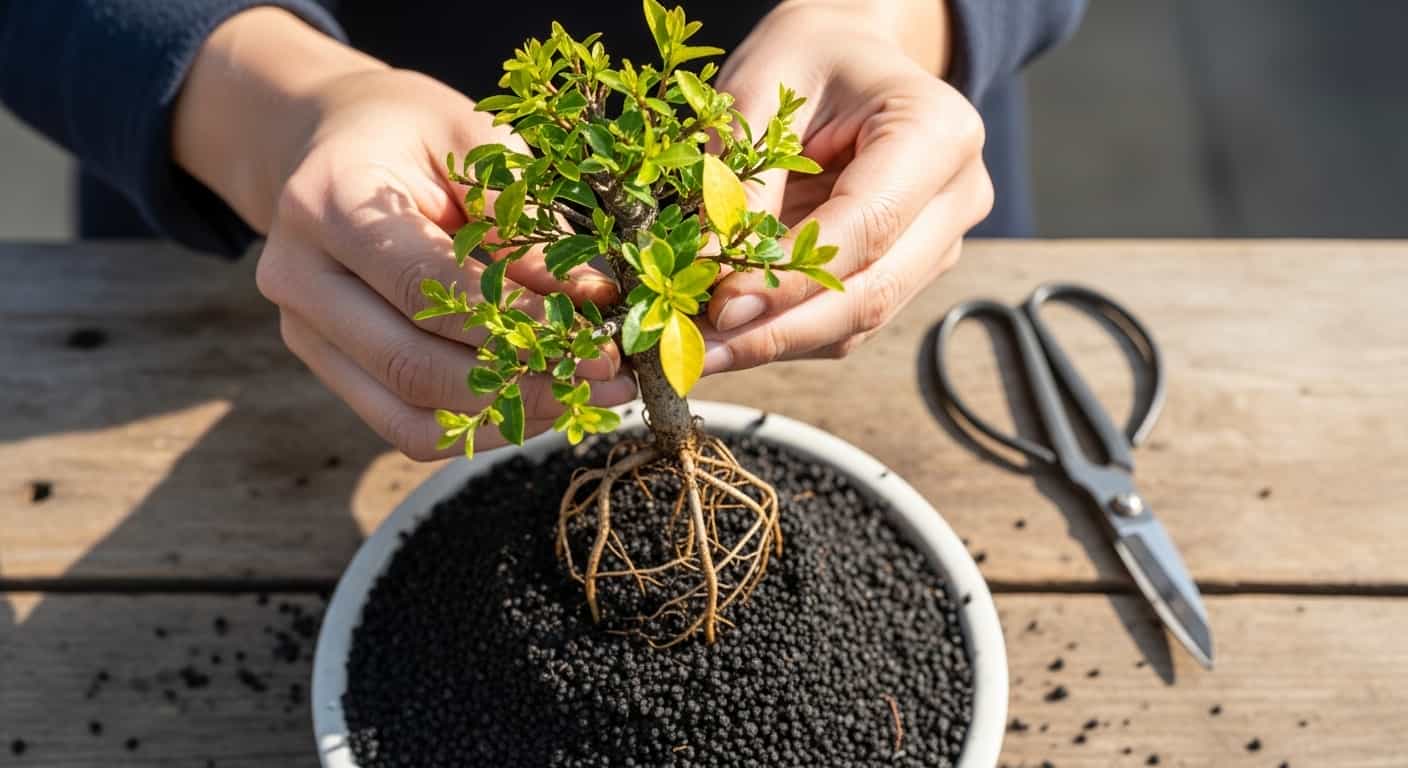
When you prune the roots, you reduce how much water and nutrients the tree can pull from the soil. The roots are the supply line. Remove a large share of them, and the same canopy suddenly asks more of a smaller “workforce” underground.
The tree’s response is straightforward: it sheds some leaves so demand matches what the roots can deliver. That is not a moral failure on your part — it is a survival strategy. Fewer leaves mean less water loss and less load on the system while new feeder roots form.
That balancing act is often described as transpiration reduction: the tree is aligning leaf surface area with root capacity until the two are in sync again.
Is Bonsai Leaf Drop After Root Pruning Normal?
Yes — often. Here is how to tell normal bonsai leaf drop after root pruning from a red flag.
Normal leaf drop (usually fine)

- Partial leaf drop: losing roughly 20–50% of leaves in the days or weeks after repotting is common, especially on deciduous species.
- Yellowing before drop: leaves yellow and fall cleanly as the tree reclaims nutrients before shedding.
- Gradual change: loss spreads over one to three weeks, not all at once overnight.
- New buds: tiny buds or shoots appearing while some leaves fall is a strong positive sign.
- Firm branches: small branches feel pliable and alive, not dry and snapping.
Abnormal leaf drop (act quickly)
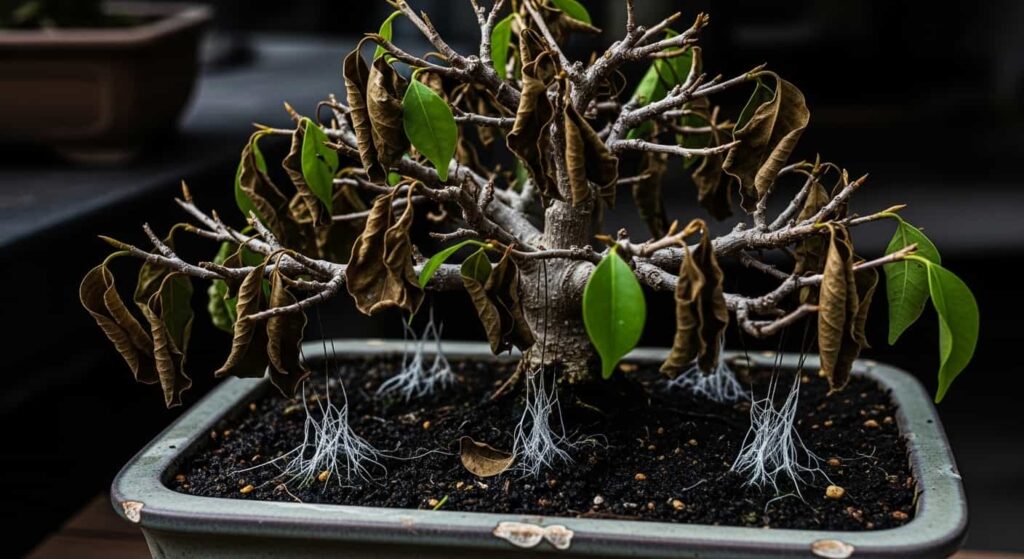
- Sudden total defoliation in 24–48 hours: can mean severe shock or root rot, not ordinary post-pruning shedding.
- Black or mushy roots: dark, slimy roots point to rot that may have been present before or after the work.
- Brittle branches: dieback, not just leaf fall.
- Wilt that does not progress to clean drop: leaves stay limp and hang on; the tree may be too stressed to shed in an orderly way.
- No new growth after six to eight weeks: under good care, you should see some response within about two months.
Species and Bonsai Leaf Drop After Root Pruning
Not every species drops leaves to the same degree after the same root work. That does not change the core story — bonsai leaf drop after root pruning is about stress and balance — but it sets how dramatic the response may look.
Trees that often show more leaf loss or yellowing after root pruning include Ficus (especially with a big environment change the same week), Japanese maple (Acer palmatum), azalea, Chinese elm (still fairly forgiving), and Serissa, which is known for strong reactions.
Species that tend to keep more foliage through recovery include juniper, jade (Crassula ovata), bougainvillea, and Fukien tea (Carmona). Even these can still show bonsai leaf drop after root pruning if aftercare is off — the species sets tendency, not a guarantee.
What Makes Bonsai Leaf Drop After Root Pruning Worse?
If leaf loss feels extreme or the tree looks worse than “stressed but stable,” one of these is usually involved:
1. Too much root removed in one go
A common guideline is to avoid removing more than about one-third of the root mass in a single session. Beyond that, shock rises sharply and bonsai leaf drop after root pruning can look like collapse instead of measured shedding.
2. Root pruning at the wrong time
For many trees, early spring — buds swelling, not fully leafed out — lines up stored energy with the push for new roots. Root pruning in midsummer or late autumn stacks heat or cold dormancy on top of root injury, so leaves stress faster and recovery takes longer.
3. Soil that stays too wet
After root pruning, remaining roots are vulnerable. Mixes that hold water around the roots invite rot. Well-draining bonsai soil (for example akadama, pumice, and lava in roughly equal parts) helps roots regenerate instead of suffocating.
4. Overwatering after repotting
Fewer roots drink more slowly; water sitting in the mix damages what is left. Water when the top layer begins to dry, not on a fixed calendar.
5. Sun and wind right after repotting
Strong sun and drying wind pull water through leaves faster than a reduced root system can replace it, which can trigger emergency leaf drop on top of normal bonsai leaf drop after root pruning.
6. Fertilizer too early
Salts can harm cut root surfaces. Wait four to six weeks after repotting before feeding, and start dilute.
Care That Reduces Harmful Leaf Drop After Root Pruning
Use this routine after root pruning to limit unnecessary leaf loss and support recovery.
Step 1: Choose the right spot
For the first two to four weeks, place the tree in bright indirect light, out of full sun, strong wind, heating vents, and cold drafts. A covered patio or greenhouse shelf works if the tree usually lives outside.
Step 2: Water with intention
Check moisture daily. Water when the top centimeter feels dry; water thoroughly until drainage runs clear. Optional: sit the pot in a shallow tray of water for 10–15 minutes so the mix wicks from below without repeatedly disturbing the surface where new roots form.
Step 3: Support humidity
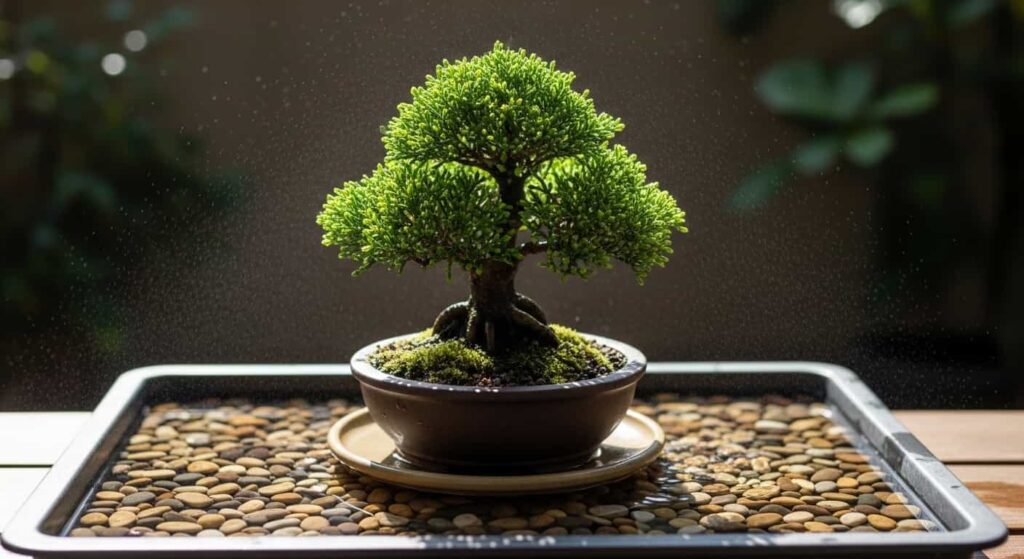
Light morning misting or a humidity tray (pot above the water line, not sitting in it) reduces extra water stress on leaves while roots catch up.
Step 4: Avoid stacking stress
Do not top-prune, wire, or move the tree again at the same time as root pruning. If you must reduce branches, do it before root work, not in the same session.
Step 5: Wait it out
New feeder roots often start forming within three to six weeks in good conditions. Fresh green growth is the sign recovery is working. Hold off on fertilizer and avoid repotting again until the tree is clearly stable.
How Long Until Leaves and Growth Return?

Timelines depend on species, season, age, and how hard the roots were cut. The table below is a rough guide for when you might expect things to settle after bonsai leaf drop after root pruning.
| Situation | Typical recovery time |
|---|---|
| Light pruning, correct timing, healthy tree | 2–4 weeks |
| Moderate pruning, spring, good aftercare | 4–8 weeks |
| Heavy pruning or poor-season timing | 8–16 weeks |
| Very old or weak tree | 3–6 months or longer |
If some leaves remain, branches stay firm, and there is no rot smell or mushy roots, the tree is usually still in the game even when progress feels slow.
When Bonsai Leaf Drop After Root Pruning Means Real Trouble
Escalate if you see:
- Dieback moving inward from tips
- Bark shriveling or lifting from the wood
- Sour or rotten smell from the soil
- Black, mushy roots when you inspect below the surface
- No new growth after about eight weeks with appropriate care
If rot is likely, unpot carefully, trim dead roots with clean tools, treat cuts as your practice recommends (for example cinnamon or a suitable product), and repot into fresh, fast-draining mix. Work quickly to limit extra shock.
Smoother Root Pruning Next Time (Less Leaf Drop)
You cannot always avoid some bonsai leaf drop after root pruning, but you can keep shock smaller:
- Time: early spring when buds swell is the safest default for many species.
- Roots: when unsure, prune less; you can address more next cycle.
- Prep: have soil and pot ready before roots are exposed for long.
- Tools: clean, sharp cuts; sanitize between trees.
- Soil: free-draining mix ready before you start.
- Bare-root only when needed; leaving some old soil on the root ball reduces shock.
Frequently Asked Questions
Will leaves come back after bonsai leaf drop after root pruning?
Usually yes. As roots rebuild capacity, the tree pushes new buds and replaces foliage over weeks to a couple of months.
Should I clear fallen leaves from the pot?
Yes. Decaying leaves on the surface can encourage fungus; remove them.
Can rooting products help?
Some growers use a single light application after the first couple of weeks; follow product directions and avoid overuse.
All leaves dropped but branches feel alive — is the tree dead?
Not necessarily. Firm wood and green cambium under a light scratch often mean the tree is alive and may flush again; keep stable care.
How does repot frequency relate to leaf drop?
Root pruning every one to five years (species-dependent) keeps the root ball healthy so each session can stay moderate — heavy, infrequent root removal tends to produce worse bonsai leaf drop after root pruning than regular, lighter work.
Closing thoughts
Bonsai leaf drop after root pruning is alarming to watch, yet it is often the tree doing what it must: shrink above-ground demand until roots recover. The practical job for you is timing, moderation, drainage, careful watering, and patience — not panic.
New growth after a clean recovery is often strong. Trust conservative aftercare; your tree has handled stress in nature long before it met your bench.