Last Updated on March 15, 2026 by Indoor Plant Nook
Most bonsai beginners obsess over the tree. They research species, study pruning, and track watering schedules. Then repotting day comes, and they grab whatever pot looks nice.
That mistake costs them months of growth, and sometimes the tree itself.
The pot you choose for repotting isn’t just decoration. It controls root space, moisture retention, drainage speed, and temperature. Get it wrong, and even a healthy bonsai will struggle to recover after repotting shock.
This guide breaks down exactly how to pick the right bonsai pot for repotting — and recommends seven pots that experienced growers rely on.
Why the Repotting Pot Matters More Than You Think

When you repot a bonsai, you’re cutting roots. The tree is stressed. During this recovery window, the pot plays a direct role in whether the tree thrives or declines.
Here’s what’s happening underground:
- Damaged roots need oxygen — poor drainage suffocates new root growth
- Shallow pots dry out faster — fine roots near the surface desiccate easily after repotting
- Pot material affects soil temperature — terracotta breathes; glazed ceramic insulates; plastic swings
Choosing a pot that matches your tree’s recovery needs — not just its aesthetics — is the difference between a bonsai that bounces back in six weeks and one that sulks for six months.
5 Things to Look for in a Bonsai Repotting Pot
1. Drainage Holes (Non-Negotiable)
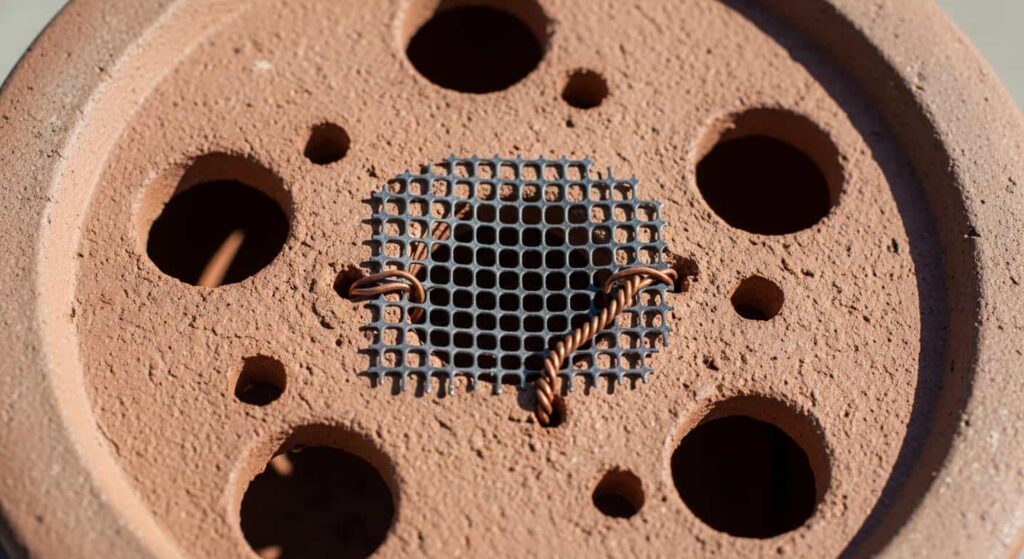
A bonsai pot without multiple drainage holes is a decorative bowl, not a growing container. After repotting, excess water must escape quickly to prevent root rot in already-stressed roots.
Look for:
- At least 2–4 drainage holes, depending on pot size
- Holes large enough to wire mesh over (to stop soil loss without blocking flow)
- A slightly raised base or feet to allow airflow underneath
Tip: If you love a pot that has only one small drainage hole, drill additional holes before repotting. A diamond-tipped drill bit works on ceramic without cracking.
2. The Right Size: Slightly Smaller Than You Think
New bonsai growers almost always choose pots that are too large. A pot should limit the root system, not liberate it — that’s what keeps the tree in bonsai proportion.
General sizing rules:
- Width: Should be approximately 2/3 the height of the tree (for upright styles)
- Length: Should be approximately 2/3 the width of the canopy
- Depth: Should be roughly equal to the trunk diameter at the base
After repotting, the root ball should fit with about 1–2 cm of fresh soil on each side. If you have more space than that, the pot is too big.
The exception: Training pots. During development, you may use a slightly larger, less decorative pot to encourage faster root growth. Development pots can be more generous in size.
3. Pot Material: Matching to Your Tree and Climate
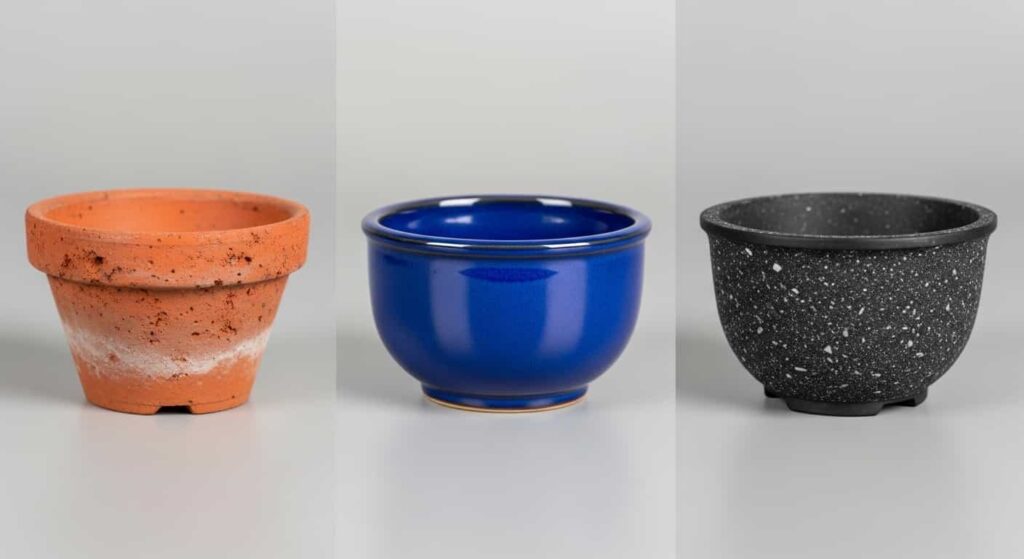
| Material | Drainage | Breathability | Best For |
|---|---|---|---|
| Unglazed Terracotta | Excellent | High | Conifers, junipers, pines — trees that prefer drier conditions |
| Glazed Ceramic | Good | Low | Tropical/subtropical species; decorative display |
| Mica/Plastic | Good | None | Training pots; cold climates (frost-resistant) |
| Stone/Cement | Variable | None | Display only; rarely used for repotting |
Unglazed terracotta is the most universally trusted repotting pot material among experienced bonsai growers. It wicks excess moisture from the soil and promotes healthy microbial activity in the root zone.
Glazed ceramic retains more moisture — ideal for species like ficus, serissa, or fukien tea that prefer consistent moisture levels.
Mica pots are underrated for repotting. They’re lightweight, virtually unbreakable, frost-safe, and drain well. Many serious growers use mica training pots for years before moving to a display ceramic.
4. Pot Shape and Depth
Bonsai pot shapes aren’t random — each shape suits certain tree styles and root structures.
- Oval/Rectangular pots — Most versatile; work for the majority of upright, slanting, and literati styles
- Round pots — Best for cascade and semi-cascade styles; also suit trees with a more informal, organic feel
- Deep pots — Required for cascade styles where the tree hangs below the pot rim; also useful for trees still in root development
- Shallow/Accent pots — For mature, refined trees with well-developed nebari (surface roots); not ideal for repotting stressed trees
Depth note for repotting: Don’t go too shallow immediately after a heavy root prune. A slightly deeper pot lets fragile new root tips grow downward without hitting the pot floor too early.
5. Wiring Holes
Bonsai pots should have small wiring holes alongside the drainage holes. These allow you to wire the tree into the pot after repotting — critical for stability while new roots anchor.
A freshly repotted bonsai with cut roots can shift in the wind or during watering. Movement tears new root hairs before they establish. Wiring the tree through the pot base prevents this.
If a pot doesn’t have wiring holes, use a thin wire looped under a mesh screen across the drainage hole — it’s a workable alternative.
Pot Size by Tree Species: Quick Reference
| Tree Type | Recommended Pot Depth | Notes |
|---|---|---|
| Japanese Maple | Shallow–Medium | Prefers good drainage; avoid deep pots |
| Juniper | Shallow | Dries quickly; matches juniper’s drought tolerance |
| Ficus | Medium | Retains moisture; benefits from glazed ceramic |
| Pine (Black/White) | Shallow–Medium | Unglazed terracotta ideal; excellent drainage |
| Chinese Elm | Medium | Versatile; suits oval or rectangular forms |
| Azalea | Medium | Needs acidic soil; glazed pots help retain moisture |
| Trident Maple | Shallow | Develops dramatic nebari best in wide, shallow pots |
7 Bonsai Pots Growers Actually Trust for Repotting

These picks are based on what serious bonsai hobbyists and practitioners consistently recommend across forums, clubs, and practice — not sponsored rankings.
1. Tokoname Unglazed Training Pot (Best Overall)
Tokoname is the historic pottery capital of Japanese bonsai culture. Unglazed pots from this region are made from high-iron clay that fires to a deep red-brown, breathes well, and lasts decades. If you want one pot that does everything right for repotting, an authentic Tokoname unglazed oval is it.
Best for: Junipers, pines, and maples during the development phase. Why growers trust it: High-fire clay = exceptional porosity; traditional sizing fits standard bonsai proportions
2. Mica Training Pot (Oval, Mame to Medium) (Best Value)
Mica pots are made from a composite of mica and plastic. They look like unglazed ceramic from a distance, but weigh almost nothing and won’t crack in frost. For repotting a tree you’re still developing, a mica pot is practical and forgiving.
Best for: All species during training; cold-climate growers. Why growers trust it: Frost-safe, inexpensive, excellent drainage, easy to wire through
3. Chinese Yixing Clay Pot (Best for Display Repotting)
Yixing (purple clay) pots from China are the most widely used ceramic bonsai pots globally. They come in hundreds of shapes and sizes, fire at high temperatures, and have natural porosity similar to Tokoname. Many are affordable without sacrificing quality.
Best for: Mature trees being moved to display containers. Why growers trust it: Beautiful finish, proven durability, widely available in correct sizes
4. John Naka-Style Flat Oval Pot (Best for Literati/Informal Upright)
Inspired by the forms used by legendary American bonsai master John Naka, these wide, low-profile ovals give literati-style and informal upright trees room to show off surface roots. Slightly more depth than a typical shohin pot makes them appropriate for post-repotting recovery.
Best for: Literati, informal upright, windswept styles. Why growers trust it: Proportions are time-tested; complements rather than competes with tree movement
5. Glazed Blue-Grey Oval (Chinese Export Quality) (Best for Tropical Species)
Glazed ceramics retain moisture longer — exactly what tropical species like ficus, fukien tea, and serissa need. A mid-tone blue-grey glaze is the most versatile color: it complements both light and dark-barked trees without drawing the eye away from the tree.
Best for: Ficus, serissa, fukien tea, jade. Why growers trust it: Moisture retention matches tropical needs; glazed interior slows evaporation between waterings
6. Cascade Deep Round Pot (Best for Cascade Styles)
Cascade and semi-cascade bonsai need a deep pot — the trunk and branches hang below the pot rim, so the container must provide visual counterbalance. Round deep pots in unglazed or lightly glazed finishes are the standard choice.
Best for: Cascade (Kengai), semi-cascade (Han-Kengai). Why growers trust it: Depth supports root system; round form balances the downward movement of cascade styling
7. Shallow Shohin Pot (Sub-4″ Width) (Best for Miniature Bonsai)
Shohin bonsai (under 20cm) need proportionally tiny pots. Shallow rectangular or oval pots in the 2–4 inch range are used for repotting mame and shohin specimens. Many are hand-thrown and come from small studios in Japan and China.
Best for: Mame, shohin-sized trees. Why growers trust it: Correct scale maintains visual impact of miniature styling; shallow depth suits compact root systems
Common Repotting Pot Mistakes to Avoid

Using a pot without drainage mesh. Soil falls out of the drainage holes and blocks them. Always cover holes with plastic or aluminum mesh wired in place before adding soil.
Choosing a pot because it looks good on the tree right now. Trees change. Pick a pot for the tree’s current stage of development, not just its current appearance.
Skipping the wiring step. A tree that shifts in the pot after repotting will take far longer to establish. Wire every repotted tree in for at least the first growing season.
Using display pots for sick or recovering trees. If your tree was rootbound, diseased, or heavily pruned, use a plain training pot. A good display pot is earned once the tree is healthy and stable.
Repotting into the same pot without cleaning it. Old pots carry fungal spores and bacteria. Scrub with a stiff brush, rinse with diluted bleach solution, and dry completely before reuse.
When to Repot (And Which Pot Stage to Use)
| Tree Stage | Recommended Pot Type |
|---|---|
| Seedling / Cutting | Deep nursery container or grow box |
| Early development (1–5 yrs) | Mica or unglazed training pot |
| Mid development (5–10 yrs) | Tokoname or Yixing clay, correct proportion |
| Pre-display refinement | Slightly smaller display-quality pot |
| Mature display tree | High-quality display pot, matched to style |
The rule of thumb: training pots for developing trees, display pots for developed ones.
Final Thoughts
Choosing a bonsai pot for repotting is part horticulture, part proportion, part patience. The best pot isn’t the most beautiful one in your collection — it’s the one that gives your tree exactly what it needs during the most vulnerable moment in its annual cycle.
Get the basics right: adequate drainage, appropriate size, correct material for your species, and wiring holes. Then, as your tree matures, let it earn the pot it deserves.
A pot chosen with care is one you’ll use for decades. A pot chosen carelessly might only last one repotting season before the tree outgrows it — or worse, before the tree doesn’t survive it.
Frequently Asked Questions
Can I repot a bonsai into a decorative pot right away?
It depends on the tree’s health and how aggressive the root pruning was. For healthy trees with a light trim, yes. For heavily root-pruned or sick trees, use a plain training pot for at least one full growing season first.
How deep should a bonsai repotting pot be?
As a general rule, depth should equal the trunk diameter at the base. Cascade styles are the exception and need significantly deeper pots.
What’s the best pot material for beginners?
Unglazed terracotta or mica. Both drain well, forgive overwatering better than glazed ceramics, and are available at most bonsai suppliers in correct sizing.
Should I use the same pot after repotting?
You can, as long as the pot is the correct size, clean, and in good condition. Many trees stay in the same pot for 3–5 years between repottings.
Do pot color and glaze affect tree health?
Glaze affects moisture retention, which matters. Dark-colored pots absorb more heat in direct sun — relevant in very hot climates. Color itself is aesthetic, but glaze is a functional consideration.