

Last Updated on April 15, 2026 by Indoor Plant Nook
Root pruning is one of the most stressful procedures you can perform on a bonsai. Done correctly, it rejuvenates the tree and keeps it thriving for decades. The days and weeks that follow are fragile—and bonsai root pruning overwatering (watering too much while the tree is still recovering) is one of the most common ways good intentions turn into root rot.
If your bonsai looks wilted, yellowing, or simply “off” after root pruning, too much water may be the cause. This article explains why root pruning raises overwatering risk, how to spot trouble, what to do next, and how to water safely through recovery—so the whole piece stays focused on bonsai root pruning and overwatering, not general repotting theory.
Bonsai Root Pruning and Overwatering: Why the Risk Spikes
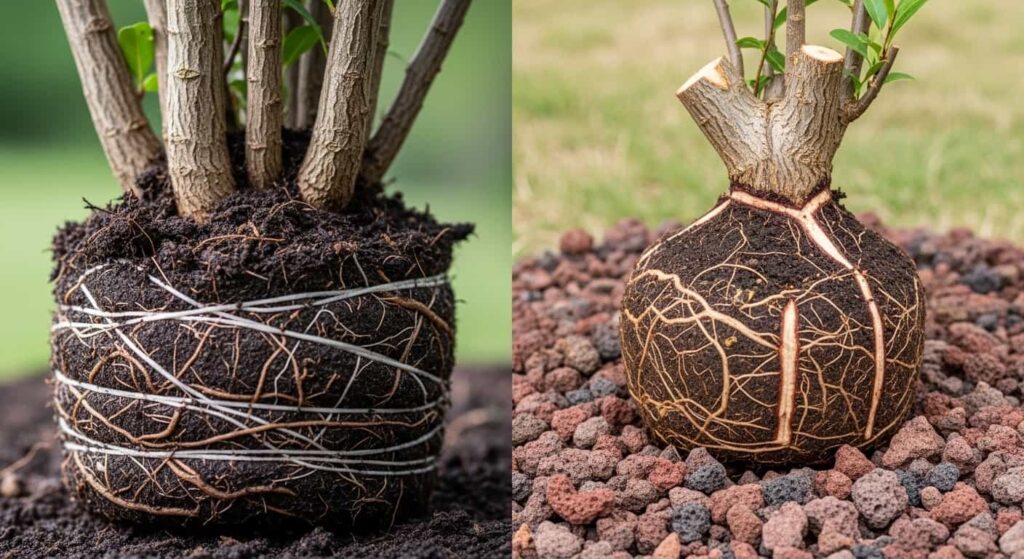
To understand bonsai root pruning overwatering risk, you need to see what pruning does to the tree’s water balance.
When you prune the roots, you remove a large share of the tree’s water and nutrient uptake surface. The remaining roots are wounded and temporarily less efficient. The canopy above—still full of leaves and still transpiring—suddenly has far less root mass supporting it.
That creates a dangerous mismatch: after root pruning, the tree generally needs less water than before, because fewer roots are there to absorb it and excess moisture sits in the soil.
When growers water on their old schedule—or add more water to “help” the tree recover—water saturates the medium and lingers around cut root ends. Wet conditions around wounded tissue invite fungal pathogens such as Fusarium and Phytophthora.
The usual result is root rot, which can kill a bonsai faster than the root pruning itself.
Signs of Bonsai Root Pruning Overwatering (What to Look For)
The symptoms of overwatering after root pruning can look like underwatering, which is why you should confirm what is going on before you change how you water.
Visual signs on the leaves and branches
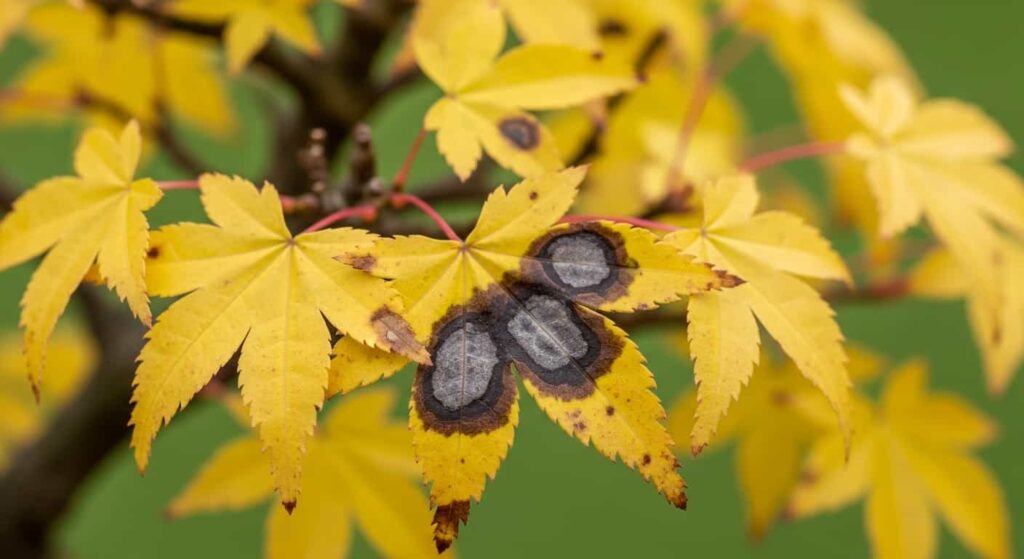
- Yellowing leaves that start at the tips or edges and move inward
- Soft, mushy, or translucent leaf texture instead of firm, healthy foliage
- Leaves dropping early without turning brown and crispy first (unlike typical underwatering)
- Wilting even when the soil is damp—if the mix is wet and the tree still droops, suspect overwatering after root pruning
- No new growth several weeks after pruning when you would expect recovery
Signs in the soil and pot
- Soil that stays wet two to three days after watering
- A sour, musty, or swampy smell from the potting medium
- Heavy moss or algae on the soil surface
- Water sitting on the surface instead of draining through
Signs at the root level (when you can check)
If you gently probe the top layer or inspect roots at drainage holes:
- Dark brown or black roots instead of healthy white or tan
- Roots that feel soft and fall apart when touched
- A slimy feel on the root surface
How to Fix Bonsai Root Pruning Overwatering
Act quickly. The longer roots sit waterlogged, the more rot can spread. Work through these steps in order.
Step 1: Stop watering immediately
Many growers keep watering because they think wilting means drought. Do not water again until the top inch of soil is fully dry to a fingertip.
Move the bonsai to shade with good air movement. Strong direct sun raises transpiration demand on a root system that is already reduced and stressed.
Step 2: Assess severity
Decide how bad the situation is before you do more.
Mild overwatering (caught within about a week or two): Yellowing but firm branches; soil a bit off but not fully saturated.
Severe overwatering or root rot (weeks of wet conditions): Dieback on multiple branches, foul-smelling soil, black mushy roots at drainage holes.
Mild cases often improve with stricter watering alone. Severe cases usually need repotting.
Step 3: Improve drainage right away
If the pot drains poorly or the soil has compacted, fix that immediately.
- Tilt the pot gently so standing water can exit the holes
- Use a thin chopstick or skewer to loosen the mix several inches deep so air reaches the root zone and the medium dries faster
- If the container has no drainage holes, that must be corrected before anything else
Avoid digging into the root ball unless you are moving to a full emergency repot.
Step 4: Emergency repot (severe cases)
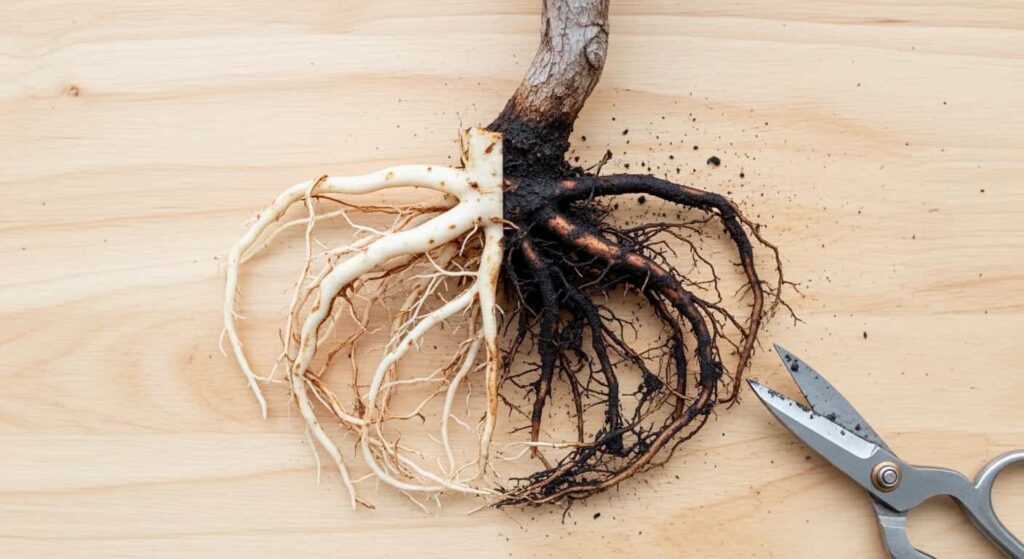
If you suspect major rot, an emergency repot is necessary. That disturbs the tree again—but leaving it in rotting conditions is worse.
What you will need:
- Fresh, well-draining bonsai substrate (for example akadama, pumice, and lava rock)
- Clean pruning shears, sterilized with rubbing alcohol or dilute bleach
- A clean pot with adequate drainage
- Rooting hormone (optional)
- Fungicide powder (sulfur-based or copper-based types are common)
Repotting outline:
- Remove the bonsai from the pot
- Shake and rinse roots with room-temperature water so you can see all tissue
- Inspect carefully: healthy roots are white, tan, or light brown and firm; rotted roots are dark, soft, and may smell bad
- With sterilized tools, cut away all rotted tissue back to healthy wood—cut until you see firm, lighter-colored tissue inside
- Dust cut ends with fungicide to limit further infection
- If you use rooting hormone, apply to healthy cut ends to support new roots
- Repot into fresh, dry substrate—not pre-soaked mix
- Water lightly once to settle the medium, then follow the recovery watering approach below
Step 5: Fungicide drench (optional but often worth it)
After repotting, or for mild cases you are treating in place, a fungicide soil drench can help reduce pathogens in the root zone.
Products with copper hydroxide, thiophanate-methyl, or mancozeb are widely used. Always follow the label and dilution for container plants.
This is especially sensible if the soil smelled bad, this tree has a history of wet conditions, or the species is prone to rot (for example Japanese maple, azalea, or ficus).
Watering After Bonsai Root Pruning (Avoid Repeat Overwatering)

The point of fixing bonsai root pruning overwatering is not to repeat it. After any root work—initial pruning or emergency repot—use a conservative watering approach tied to actual soil dryness.
The finger test
Set rigid schedules aside for now. Water only when the top 1–1.5 inches of substrate are completely dry. Use a finger or a thin wooden chopstick; if the chopstick comes out with moist particles stuck to it, wait another day.
Rough timeline after root pruning
| Time period | Watering frequency |
|---|---|
| Week 1–2 | Every 3–5 days (test before each watering) |
| Week 3–4 | Every 2–4 days as roots begin to recover |
| Month 2 | Gradually move toward your pre-pruning habits |
| Month 3+ | Normal pattern for species and season |
These are guides only. Climate, pot size, and species all change how fast the mix dries.
What changes drying speed
Pot size and material: Unglazed ceramic and terracotta lose moisture through the walls; plastic and glazed pots hold it longer.
Substrate: A gritty, inorganic-heavy mix dries faster than dense organic mixes. If soil stays wet more than two to three days, it may be too water-retentive for safe recovery after root pruning.
Season and temperature: Warm weather can mean more frequent watering; cool weather stretches the interval.
Canopy size: If you cut foliage to match root reduction, demand drops compared with a full canopy.
Preventing Bonsai Root Pruning Overwatering Next Time
Balance root and canopy work
When you remove a substantial share of roots, remove a proportional amount of foliage and small branches—often on the order of 20–30% if root loss is in that range. That lowers water demand on a smaller root system.
Use an appropriate substrate
After root pruning, favor free-draining, inorganic-dominant mix—for example:
- About 50% pumice for drainage and aeration
- About 25% akadama for modest moisture and nutrient retention
- About 25% lava rock for drainage and oxygen at the roots
Avoid heavy peat-, bark-, or compost-heavy mixes right after root work; they stay wet too long and raise bonsai root pruning overwatering risk.
Match pot volume to roots
A pot that is too large for the remaining root mass leaves excess medium that roots do not colonize quickly, so wet pockets persist. Choose a snug fit, not an oversized training pot, when recovery is the priority.
Time root pruning with recovery in mind
Pruning roots in late winter or early spring, just before buds open, gives the longest growing season to rebuild roots. Summer or late-autumn work shortens the safe recovery window before heat or cold stress, which makes overwatering damage harder to outgrow.
Ease off full sun right after pruning
Bright sun increases transpiration. A tree with fewer roots cannot match that demand. Use bright indirect light for at least two to four weeks after root pruning.
Species Notes (Still About Overwatering After Root Pruning)
These points only refine the same topic: how likely you are to see bonsai root pruning overwatering problems and how each type tends to show stress.
Juniper (Juniperus spp.)
Tolerates some neglect but not constant wet feet. After root pruning, let the substrate approach dryness between waterings and keep air moving. Inner browning and dull gray-green foliage can indicate too much water.
Japanese maple (Acer palmatum)
Moderate water use but rot-prone roots. After root pruning, shelter and semi-shade help; water less than before pruning. Black spots and fast defoliation can signal overwatering.
Ficus (Ficus spp.)
Fairly tough, yet still vulnerable to rot if watered too often after pruning. They often tolerate drying more than many tropicals. Early leaf drop can warn you before rot becomes severe.
Chinese elm (Ulmus parvifolia)
Adaptable but benefits from open substrate after root pruning. Slightly more moisture tolerance than juniper, but soil should never stay soggy. A strong new flush usually means recovery is on track.
Azalea (Rhododendron spp.)
Normal care may favor moisture-retentive, acidic mix; after root pruning that works against you. Cut frequency and prioritize drainage. Yellow leaves and poor flower buds can follow chronic wet conditions.
Frequently asked questions
Can a bonsai recover from severe root rot after root pruning?
Often yes, if you catch it early and enough healthy root remains. Remove rotted tissue, repot into fresh mix, and many species (for example, juniper and ficus) can recover over a growing season. Weak species or heavy rot at the base may take longer or fail.
Should I fertilize while the tree recovers from overwatering after root pruning?
No. Wait for clear new growth—new leaves or buds—before feeding. Fertilizing stressed roots can add salt injury. When growth is active, start with a dilute balanced fertilizer.
How long does recovery from root pruning take?
In favorable conditions—careful watering, suitable light, good substrate, mild temperatures—many trees show new buds or leaf flush within three to six weeks. Full root recovery often takes a full growing season.
Is some leaf drop normal after root pruning?
Some drop is normal, especially if the canopy was not reduced with the roots. Widespread rapid drop with soft, mushy leaves points to overwatering more than ordinary transplant stress.
Can I mist leaves instead of watering the soil?
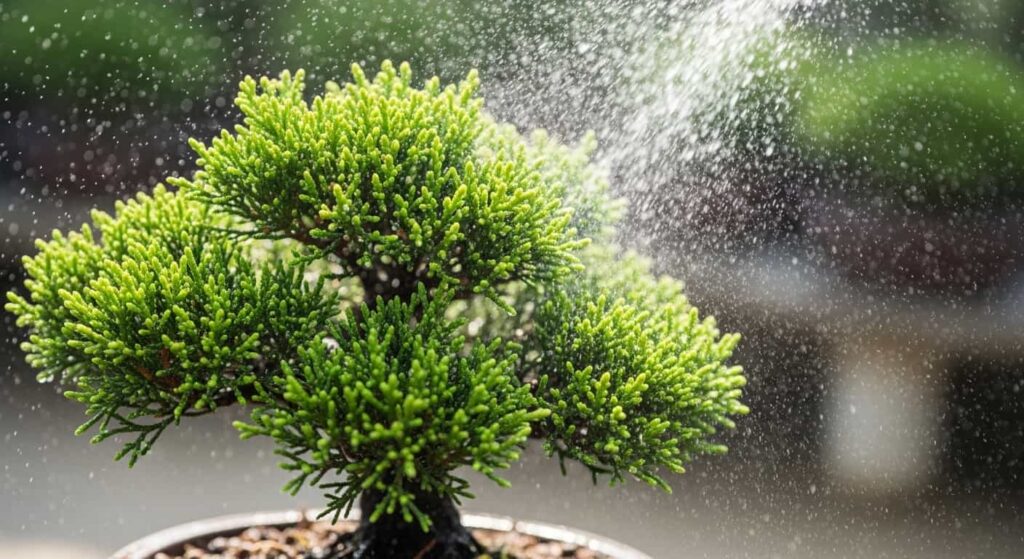
Yes. Misting foliage can ease canopy stress without wetting the root zone. Mist in the morning so leaves dry by night—useful in warm weather during recovery.
Closing note
Bonsai root pruning overwatering is a common mistake: the urge to “help” a stressed tree with more water is understandable, but it works against a smaller, wounded root system. Fewer healthy roots mean less water should move through the pot until new roots establish. Learn the early signs, dry the soil when you have overdone it, and water only when the substrate actually dries—your bonsai gets a fair shot at strong new roots and stable health.
Tailor watering to your species, climate, and pot. When unsure after root pruning, it is safer to stay slightly dry than to keep the mix wet—mild dryness recovers quickly; advanced rot does not.