
Last Updated on April 15, 2026 by Indoor Plant Nook
If you repot bonsai trees, you need a way to loosen old soil and comb roots without tearing them. That is the job of a bonsai root rake—a small, tined tool made for working through the root ball during repotting. Using the wrong implement (or only your fingers) often bruises or breaks roots you spent years developing.
This article explains what a bonsai root rake is, why it matters for root health and nebari, the main types, how to choose one for your trees, how to use it step by step, and how to care for it. If you are comparing it to hooks, chopsticks, or scissors, there is a clear comparison section as well.
What Is a Bonsai Root Rake?
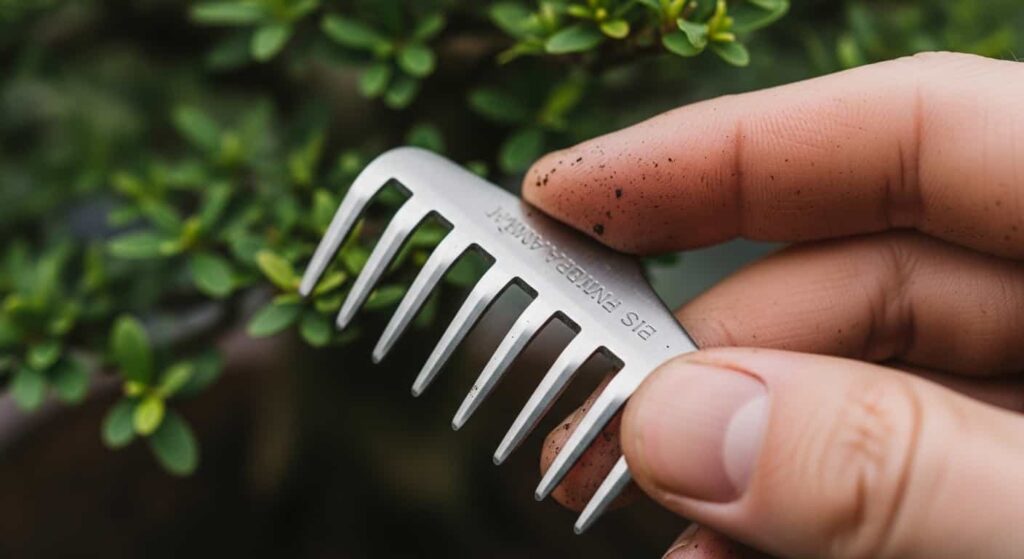
A bonsai root rake is a hand tool with several narrow tines on one end, used to gently untangle, comb, and spread roots while you repot. The handle is often flat or paddle-shaped; the working end looks like a miniature rake or a wide, stiff comb.
The tines are thin enough to slip between root branches without acting like a knife. That matters because bonsai roots are easy to damage when soil is packed tight. A bonsai root rake is built for that tight space and for repeated, controlled strokes—unlike a full-size garden rake or a random kitchen fork.
Materials are usually stainless steel, carbon steel, or bamboo. Tine count, spacing, and length vary so you can match the rake to tree size and how coarse or fine the roots are.
Why a Bonsai Root Rake Matters for Repotting
Repotting is when you refresh soil, adjust the root plate, and often prune roots. The bonsai root rake is the tool you use to expose and arrange roots before you cut and before you add new mix.
1. Less root damage
Out of the pot, roots are often matted. Pulling them apart by hand or prying with something blunt can tear tissue. A bonsai root rake lets you work from the outside of the ball inward with short, controlled strokes so you stress fewer roots.
2. Better root structure and nebari
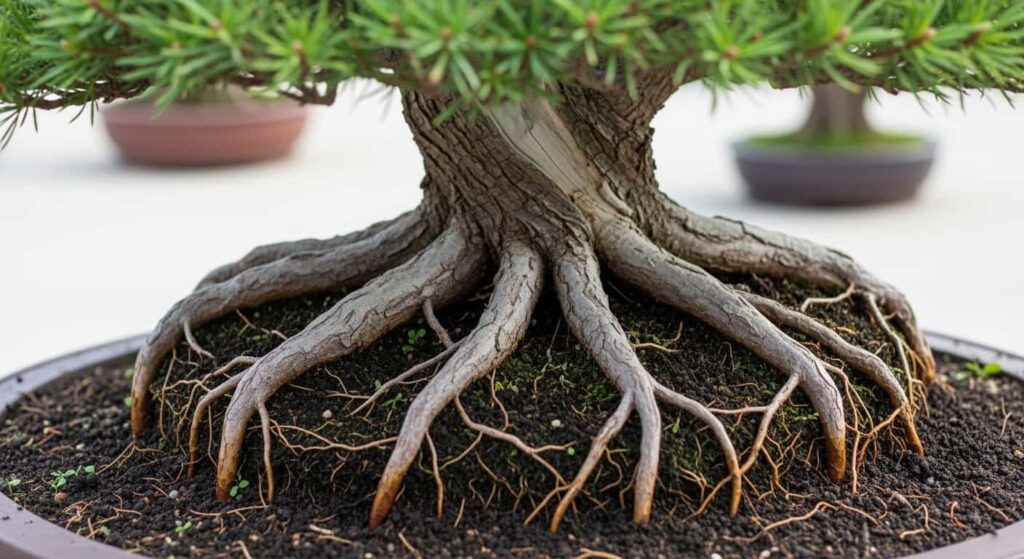
Combing roots outward and downward helps you spread them evenly. That supports a radial nebari (the visible surface roots at the base) and a root layout that fits the pot—both health and the classic bonsai look depend on how you handle this step.
3. Old soil removal
Compacted old soil holds poor air and water balance. A bonsai root rake loosens that soil between roots so you can replace it with fresh, well-draining bonsai mix.
4. Clear view before root pruning
You trim roots after you can see them. Raking separates and spreads the mass so you can spot crossing, circling, or downward roots to cut with scissors or shears.
Parts of a Bonsai Root Rake
Knowing the parts helps you compare models and use the tool without forcing the wrong end into the root ball.
| Part | Description |
|---|---|
| Handle | Flat or paddle-shaped; metal, wood, or bamboo. Grip and leverage for small strokes. |
| Tines (prongs) | Parallel prongs that comb through roots; often about 2–8 tines. |
| Tine spacing | Wider for thick roots; narrower for fine, fibrous roots. |
| Tine length | Longer tines reach deeper into the ball; shorter ones suit surface work and small trees. |
Types of Bonsai Root Rakes
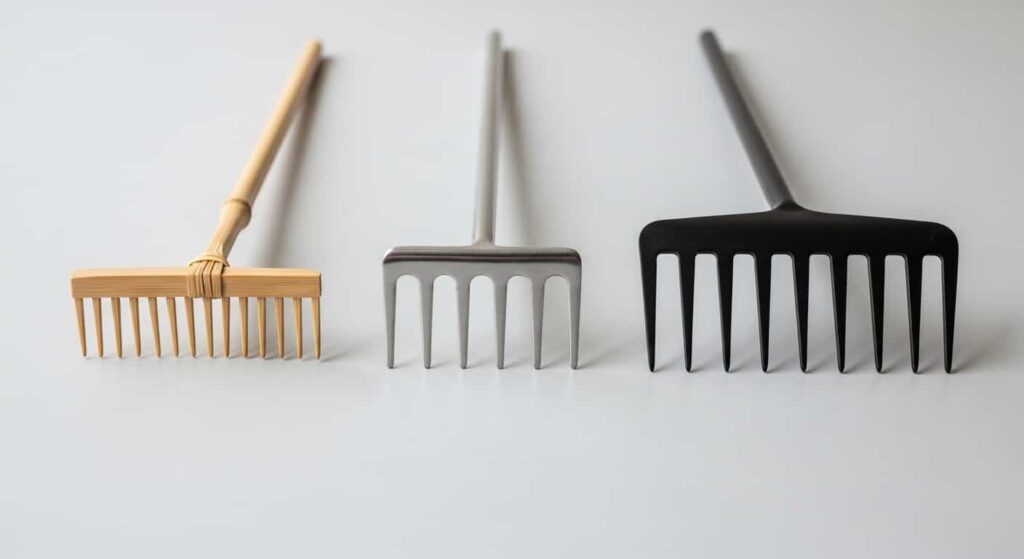
These are the common patterns you will see when you shop for a bonsai root rake:
Standard metal bonsai root rake
Usually stainless or carbon steel, often four to six straight tines and a flat metal handle. Versatile for many species. Some have a flat spatula on the opposite end for tamping soil.
Wide bonsai root rake
More tines, spaced wider—suited to larger trees and thick, spreading roots (for example some junipers, pines, oaks).
Fine-tine bonsai root rake
Closer, thinner tines for small or refined trees with delicate roots (for example azaleas, maples, or fine-rooted material).
Bamboo bonsai root rake
Softer than steel; tines flex slightly, which some growers prefer for fragile roots or young material.
Combination rake and spatula
One end rakes; the other spreads or tamps soil. A single bonsai root rake with this layout is common in starter kits.
How to Use a Bonsai Root Rake: Step by Step
Technique matters as much as owning the tool. Use light pressure and let the tines do the work.
Step 1: Remove the tree from the pot
Tip the pot carefully and ease the tree out. If the root mass is stuck, loosen the edge of the soil against the pot wall with a slim tool—do not yank the trunk.
Step 2: Loosen the root ball
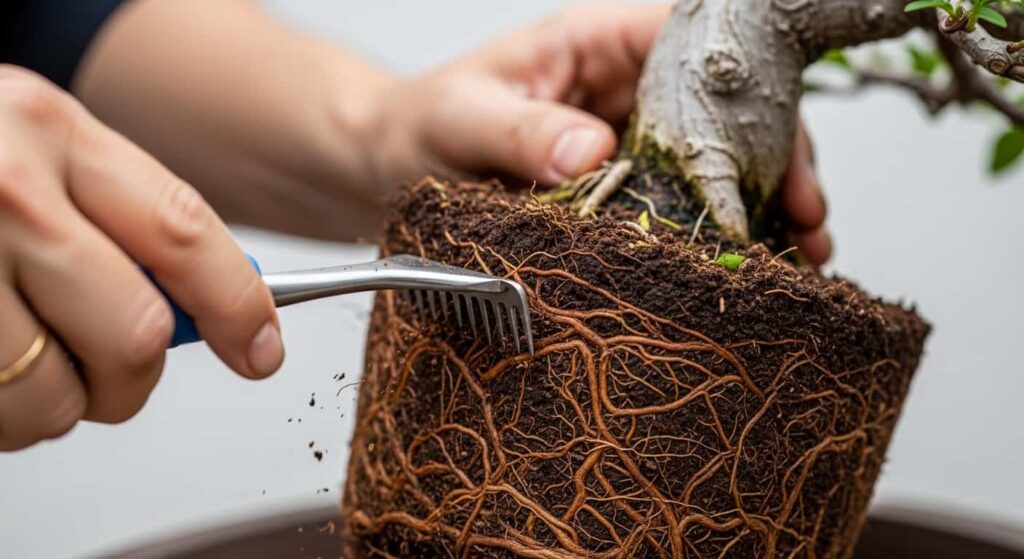
Hold the base of the trunk and use the bonsai root rake on the outer layer of the ball with short strokes, working outward. Move from the outside toward the center gradually.
Step 3: Remove old soil
Run the tines through the roots and lift out soil bit by bit. Tight old soil takes time; removing about one-third to one-half of the old soil before major pruning is a typical range, depending on species and condition.
Step 4: Untangle and spread the roots
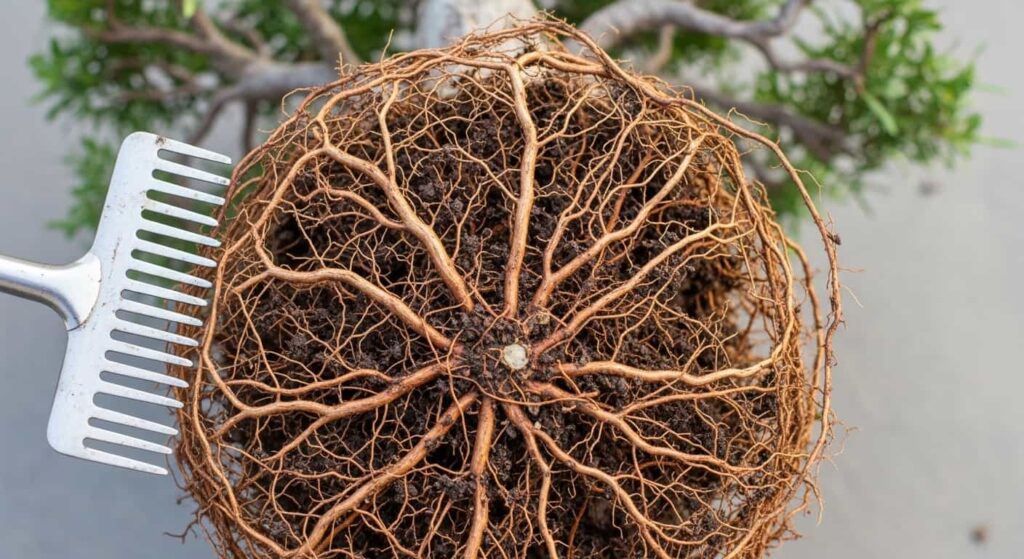
Comb outward and downward so roots radiate rather than stay in a tight plug. This is the main reason to own a bonsai root rake: even spreading before you prune and repot.
Step 5: Prune as needed
With roots laid out, cut crossing or overly long roots with proper bonsai scissors or shears according to your species and season plan.
Step 6: Repot and fill
Set the tree in the pot, build soil under and between roots (spatula end of the rake or a chopstick), and water after finishing.
How to Choose the Right Bonsai Root Rake
Match the bonsai root rake to tree size and root texture:
Tree size
- Small/shohin (under about 20 cm): fine-tine or compact rake, shorter tines, closer spacing.
- Medium (about 20–60 cm): standard four- to six-tine metal rake.
- Large outdoor bonsai: wider pattern, longer, sturdier tines.
Root type
- Fine, fibrous roots: bamboo or fine-tine metal bonsai root rake.
- Thick, coarse roots: standard or wide metal rake.
Material
- Stainless steel: rust-resistant, easy to clean; a solid default.
- Carbon steel: strong; keep dry and oiled or it can rust.
- Bamboo: gentler on very soft roots; less durable than metal.
Build quality
Tines should be fixed firmly—no wobble. A loose tine can snap off in the root mass. Well-made Japanese tools are a common benchmark; budget options can still be usable if the build is solid.
Caring for Your Bonsai Root Rake
- Rinse soil and debris after use; dry completely.
- On carbon steel, a thin film of camellia oil or mineral oil after drying helps prevent rust.
- Store in a dry place; a tool roll or case protects tines from bending.
- Straighten bent tines carefully; root rakes are not meant to be razor-sharp like scissors.
Bonsai Root Rake vs. Similar Tools
| Tool | Role | How it differs from a bonsai root rake |
|---|---|---|
| Root rake | Untangle and spread roots | Several flat tines; combing action |
| Root hook | Break up hard compaction | Single hook; more aggressive |
| Chopstick | Work soil between roots after repotting | No tines; for packing, not raking |
| Root scissors | Cut roots | Cutting only |
Many growers pair a root hook with a bonsai root rake: the hook frees compacted areas; the rake combs and spreads what you loosened.
Bonsai Root Rake FAQ
Can I use a comb or fork instead of a bonsai root rake?
You can improvise, but teeth on household items are not spaced or shaped for roots, and edges can snag. A dedicated bonsai root rake is low-cost relative to the damage risk.
How often will I use a bonsai root rake?
Whenever you repot—often roughly every one to three years per tree, depending on species and stage.
Do I need more than one bonsai root rake?
One standard rake is enough to start. If you keep very small and larger trees, a fine-tine and a standard (or wide) bonsai root rake cover most cases.
Are certain brands better for a bonsai root rake?
Japanese makers such as Masakuni, Kikuwa, and Kaneshin are known for precision bonsai tools. Western or budget lines can be fine for learning; check reviews for tine attachment and handle solidity.
Summary
A bonsai root rake is a focused tool: it helps you remove old soil, separate roots with less tearing, and spread the root plate evenly before pruning and repotting. Choosing tine spacing and material for your trees, then using light, patient strokes, keeps roots healthier and makes repotting more predictable. Keep the tool clean and dry, and it will last for many repotting cycles.