

Last Updated on April 15, 2026 by Indoor Plant Nook
Whether you are bare-rooting a tree during bonsai repotting, rinsing old akadama or soil mix off the root pad, or inspecting roots before pruning, the bonsai root washing container you use shapes how safely and quickly the job goes. The wrong size or material can stress fine roots, make rinsing inefficient, or introduce contaminants.
This guide explains what to look for in a bonsai root washing container: size relative to your tree, safe materials, common types that work on the bench, and simple DIY options that perform as well as anything you would buy.
What Is a Bonsai Root Washing Container (And Why Does It Matter)?
In bonsai, root washing is the process of gently removing growing media from the root system with water so you can see the structure, prune roots cleanly, and refresh soil. You might do it at scheduled repotting, when diagnosing root rot or pests, after collecting material, or when changing soil mixes.
The container is not decorative here—it is your working vessel. It affects how easily fine roots separate from particles, whether delicate root tips get crushed against the sides, and how much you have to jostle the tree. A vessel that is too small forces rough handling; one that is too large wastes water and makes control harder.
What to Look for in a Bonsai Root Washing Container
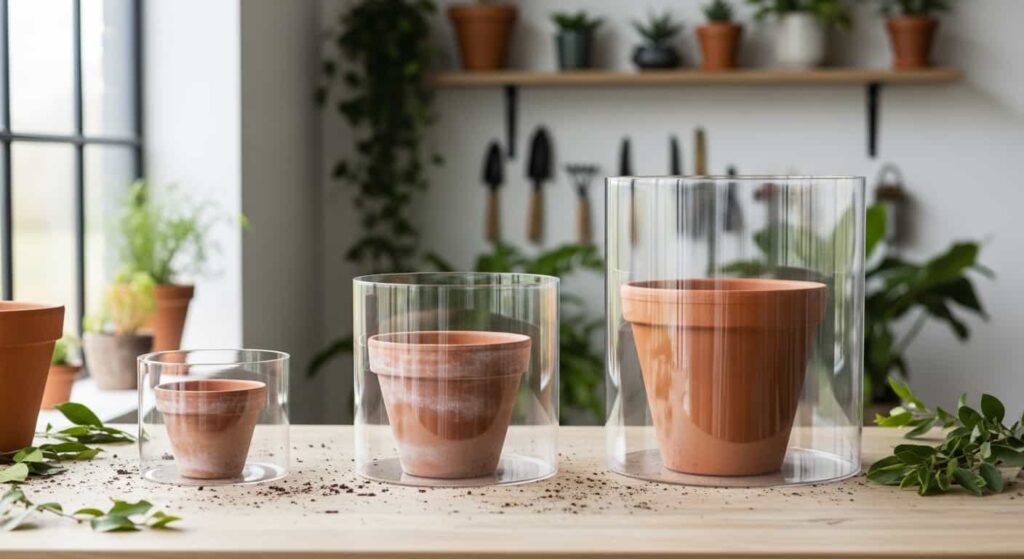
Before you grab whatever is on the shelf, weigh these four factors for your bonsai root washing container:
1. Size Relative to the Root Ball
The container should be roughly 2–3× the diameter of the root mass you are washing. That gives the root pad room to float and separate without ramming the walls—especially important for fibrous feeder roots at the edge of the nebari.
2. Depth
Deeper vessels suit trees with longer roots or heavier root pads (many deciduous and some conifers in training). Shallower, wider trays suit compact root pads, shallow pots, and species where you want a broad working area without deep water.
3. Material Safety
Some materials leach when submerged, especially in warm water. Prefer food-safe plastics (HDPE, PP), glass, ceramic, or stainless steel. Skip old painted buckets, galvanized metal (zinc concerns), or anything that held cleaning chemicals.
4. Ease of Handling
You will tilt, swirl, and drain repeatedly. A container with a handle or a secure grip reduces fatigue and drops that could snap roots or chip bark.
Types of Containers That Work as a Bonsai Root Washing Container
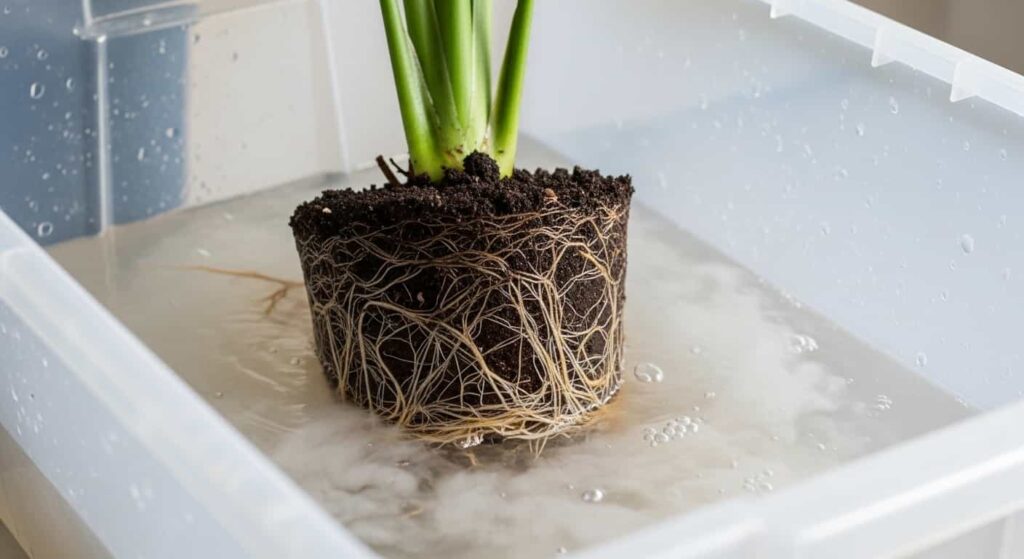
Clear Plastic Storage Bins
Best for: Medium to larger bonsai, training trees, visibility while rinsing
Clear bins let you see when water clears and media is gone without fishing around blindly. The flat bottom and straight sides give a stable surface for resting the tree between steps.
For many shohin and medium trees, 6–12 quart bins are practical; 16–32 quart suits larger root pads and collected material with more soil to flush.
✅ Inexpensive, easy to find, stackable ❌ Can crack if dropped; confirm food-safe grade if unsure
Deep Mixing Bowls (Stainless Steel or Ceramic)
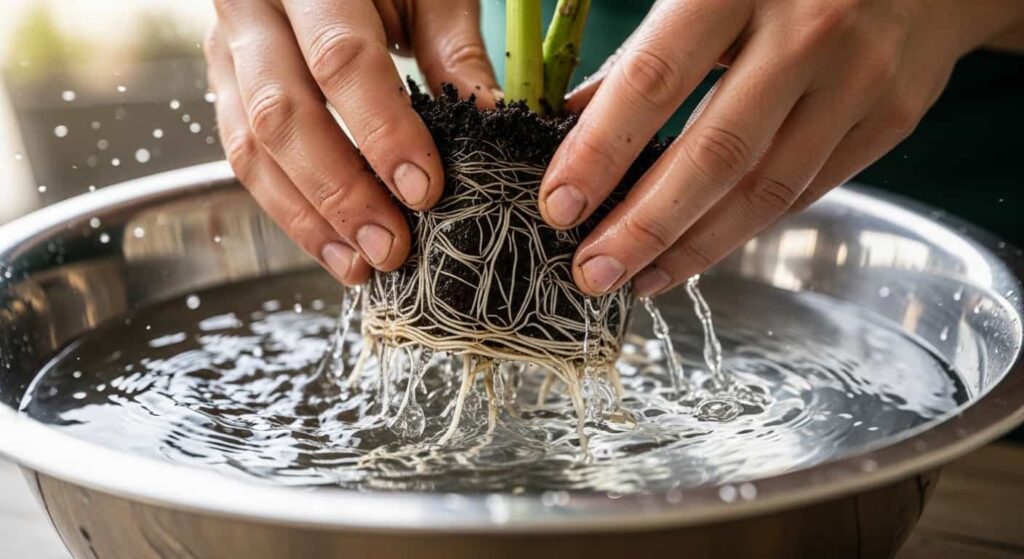
Best for: Small bonsai, mame, shohin, and precise control at the bench
A large stainless steel mixing bowl is one of the most practical choices when the root pad is modest. The smooth curve lets you swirl the root mass gently; the rim is easy to grip when full.
5–8 quart bowls fit many small trees; 12 quart and up helps when the root pad is wider than a typical shohin pot.
✅ Durable, non-reactive, easy to sanitize ❌ Heavy when full; large sizes cost more
Dish Tubs / Wash Basins
Best for: Several trees in one session, wide shallow rinsing
The classic rectangular dish tub is a strong option when you want a broad, shallow water surface—useful for spreading roots slightly while you pick out old soil with chopsticks or a root hook.
19–22 quart sizes cover a lot of workshop repotting without feeling cramped.
✅ Light, cheap, large work area ❌ Can be shallow for very deep roots
Buckets (5-Gallon or 2-Gallon)
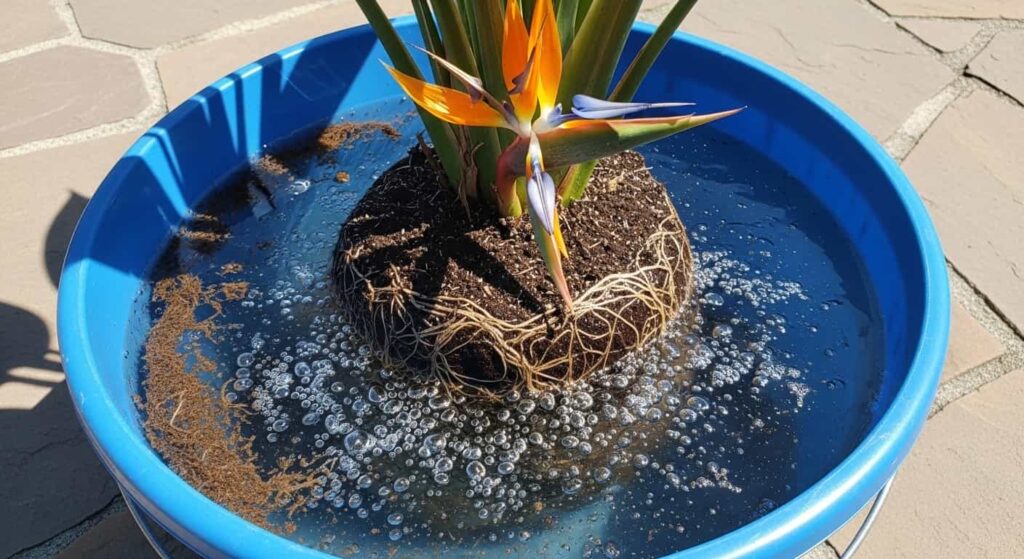
Best for: Soaking before active washing, large root balls, collected trees
A food-grade 5-gallon bucket works well for an initial soak—submerge the root ball for several minutes so compacted soil softens before you comb or rinse. That step cuts how much you must agitate later.
For active swirling, the narrow opening is awkward. Use the bucket for soak, then move to a wider bin or tub for the main rinse and inspection.
✅ Excellent for soaking; handles aid lifting ❌ Tight opening limits free movement during active washing
Clear Pitchers or Large Measuring Cups
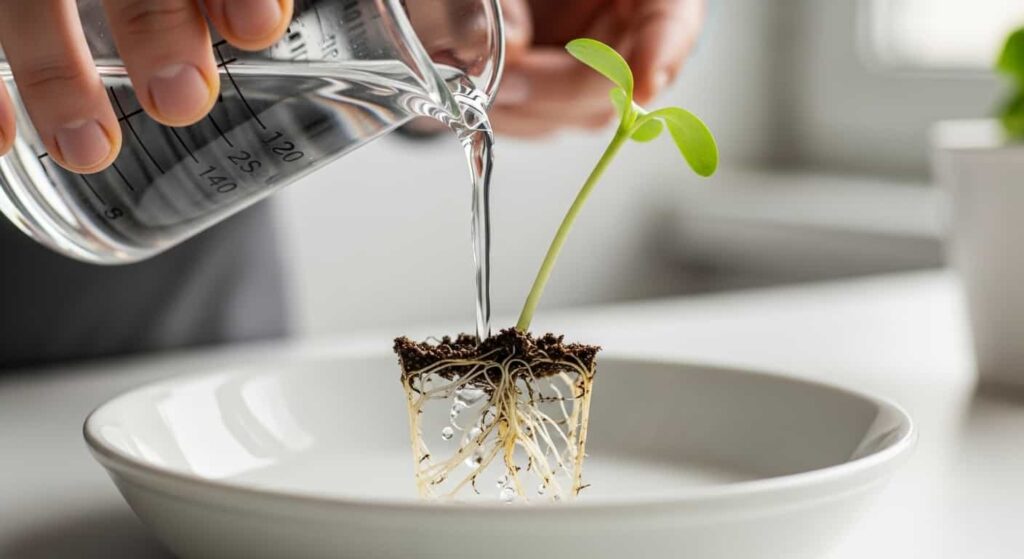
Best for: Mame, very small bonsai, seedlings, and cuttings
For tiny root pads, a 1–2 quart clear pitcher gives visibility and a controlled pour. You can direct a gentle stream over the roots without dunking the whole crown.
✅ Ideal for fine roots and small volumes ❌ Too small for anything beyond compact trees
Container Size by Bonsai Scale
| Bonsai scale / root pad | Approx. root mass width | Suggested container |
|---|---|---|
| Mame / tiny | Under ~2 inches | 1–2 qt pitcher or small bowl |
| Shohin / small | ~2–4 inches | 5–8 qt bowl or shallow basin |
| Medium | ~4–6 inches | 8–14 qt bin or basin |
| Large / training | ~6–10 inches | 16–22 qt bin or dish tub |
| Large collected / pre-bonsai | 10+ inches wide | 5 gal bucket (soak) + large wide bin |
DIY Options That Work as a Bonsai Root Washing Container
You do not need a specialty product. Common household items often work:
- Large salad bowls — deep, smooth, often food-safe plastic or glass
- Cooler lids — shallow basin for small trees or quick rinses
- Food-storage bins (Sterilite/Rubbermaid type) — larger sizes match many benches
- Baby bathtubs — smooth plastic, ergonomic for longer sessions
- Disposable roasting pans — acceptable for one-off use, not ideal long term
Avoid interiors that are heavily ribbed (roots snag), anything with chemical residue, and galvanized or painted metal for repeated soaking.
Water Temperature for Root Washing
Whatever you wash roots in, water temperature still matters. Lukewarm water (about 65–75°F / 18–24°C) is a sensible default. Cold water can stress tender species; hot water can damage root tissue.
Fill the container first, let water temper if your tap runs cold, then introduce the tree.
Step-by-Step: Using Your Bonsai Root Washing Container
- Fill your container about two-thirds with lukewarm water.
- Remove the tree from its pot and loosen obvious soil by hand where safe.
- Soak the root ball several minutes so media softens (use a bucket for large masses if needed).
- Swirl gently or work soil free with water and tools; let debris cloud and settle.
- Dump and refill until rinse water runs relatively clear.
- Final rinse under a gentle stream if you need a last pass on the fine roots.
- Inspect the root pad for rot, pests, or crossing roots before wiring and repotting.
Mistakes to Avoid With Your Bonsai Root Washing Container
Container too small: Cramped roots tear more easily. When in doubt, size up.
Aggressive scrubbing: You are rinsing and inspecting, not scrubbing bark or stripping every root hair. Gentle water movement and tools beat friction.
Cold shock: Especially for frost-tender species, avoid ice-cold water straight onto exposed roots.
Sun on bare roots: Keep work in shade or indoors while roots are exposed.
Skipping the soak: Dry, tight soil needs soak time first; otherwise you handle the tree longer and risk more damage.
Frequently Asked Questions
Can I use one bonsai root washing container for multiple trees?
Yes—rinse the container between trees. If you handled rot or suspected pests, sanitize: a dilute hydrogen peroxide rinse (3% mixed roughly 1:4 with water) is a common precaution.
Does the container need to be sterile?
Not sterile, but clean. Old fertilizer residue or fungal spores can transfer. Scrub with dish soap and rinse well before a repotting day.
Can I add anything to the water?
Some growers use very dilute hydrogen peroxide when addressing rot; others use kelp or similar at low rates. Plain water is fine for routine repotting rinses.
How often is root washing part of bonsai care?
It aligns with repotting cycles and problem diagnosis, not a monthly chore. Unnecessary washing stresses the tree.
Final Thoughts
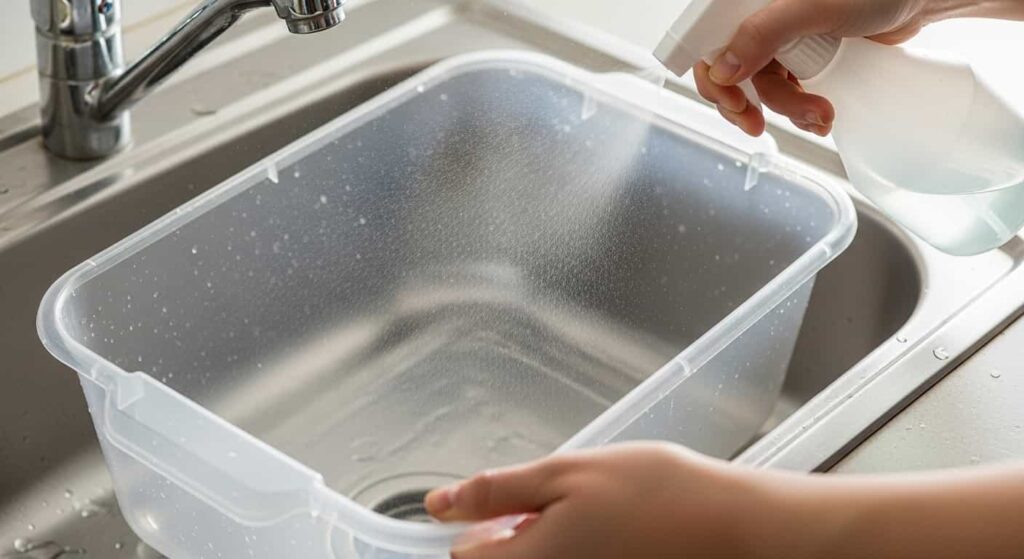
The right bonsai root washing container will not replace good technique—but it makes repotting rinses faster, calmer, and easier on fine roots. Prioritize smooth sides, enough volume for your root pad, safe materials, and a shape you can hold when full. Many growers already own something that fits.
Swirl and soak before you force; inspect as you go; and when unsure, choose a slightly larger vessel so the roots have room to move underwater without fighting the walls.