
Last Updated on March 18, 2026 by Indoor Plant Nook
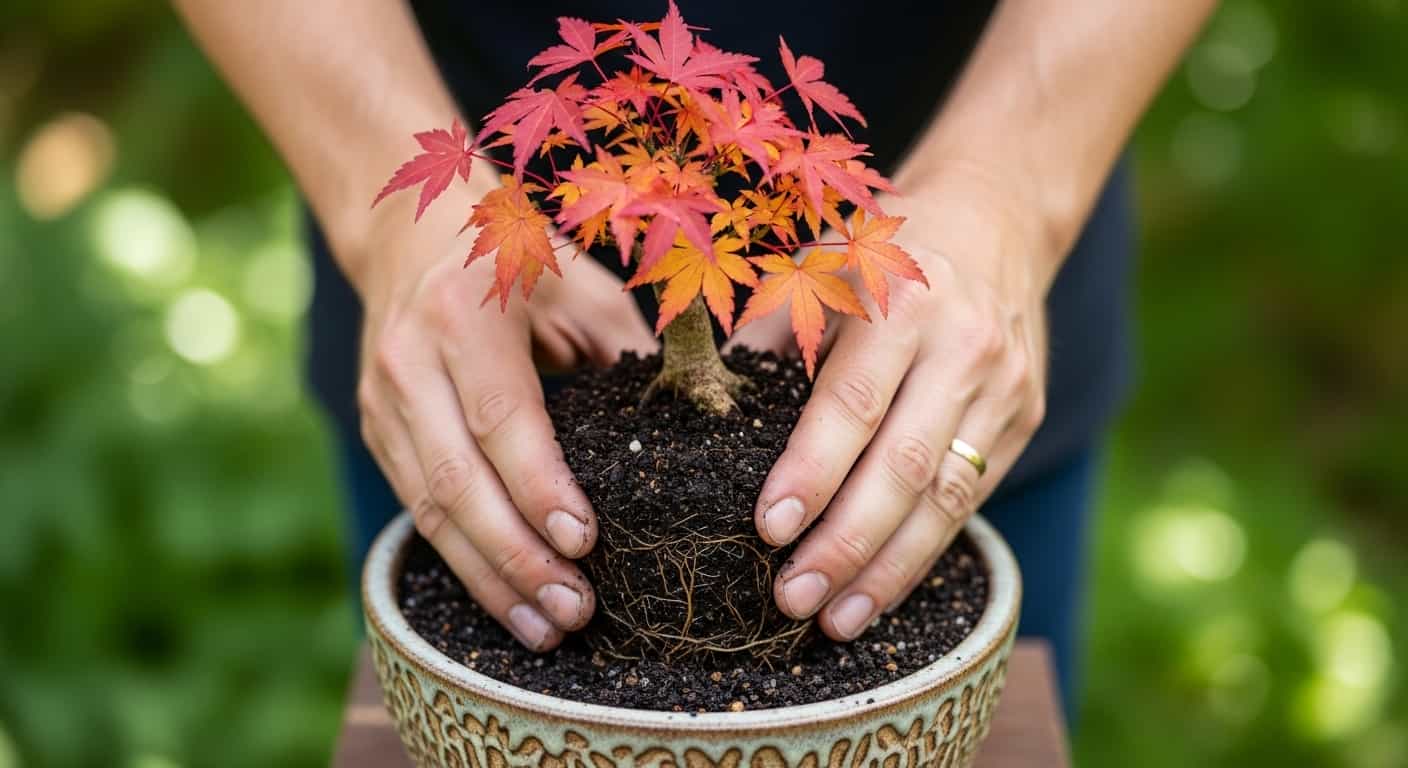
Repotting is one of the most stressful events a bonsai tree can go through. Disturbing the root system — even carefully — leaves the tree temporarily unable to absorb water and nutrients efficiently. That’s exactly why placing your bonsai in shade immediately after repotting isn’t just helpful; it’s often the difference between a tree that thrives and one that declines.
This guide covers exactly how long to keep your bonsai in shade, what “shade” actually means in practice, and the warning signs that tell you when it’s finally safe to bring your tree back into full sun.
Why Shade Is Critical After Repotting
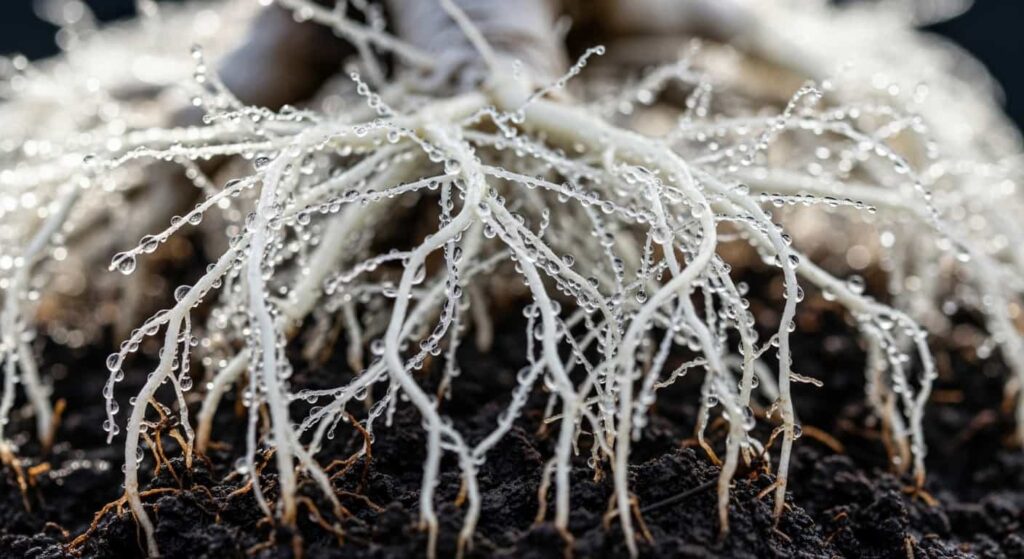
When you repot a bonsai, fine feeder roots — the hairlike tips responsible for most water uptake — get damaged or removed. Until those roots regenerate, the tree simply cannot drink fast enough to compensate for the water it loses through its leaves.
Direct sunlight dramatically increases transpiration (water loss through foliage). If your bonsai is losing more water than its damaged root system can replace, it will wilt, drop leaves, and in severe cases, die — even if you’re watering it regularly.
Shade reduces the demand on those recovering roots by:
- Lowering leaf temperature and slowing transpiration
- Reducing the tree’s overall metabolic stress
- Giving the soil more time to stay evenly moist
- Allowing new feeder roots to grow back before full sun exposure resumes
How Long to Keep Bonsai in Shade After Repotting
The general rule is 2 to 4 weeks of shade after repotting. However, the exact duration depends on the species, the time of year, how much root work was done, and your local climate.
Standard Timeline by Situation
| Situation | Recommended Shade Duration |
|---|---|
| Light root trim, healthy tree | 2 weeks |
| Moderate root pruning | 3–4 weeks |
| Heavy root reduction | 4–6 weeks |
| Sick or weak tree | 4–8 weeks or longer |
| Repotted in summer heat | Add 1–2 extra weeks |
| Repotted in cool spring | Standard 2–4 weeks |
What Type of Shade Does a Bonsai Need?
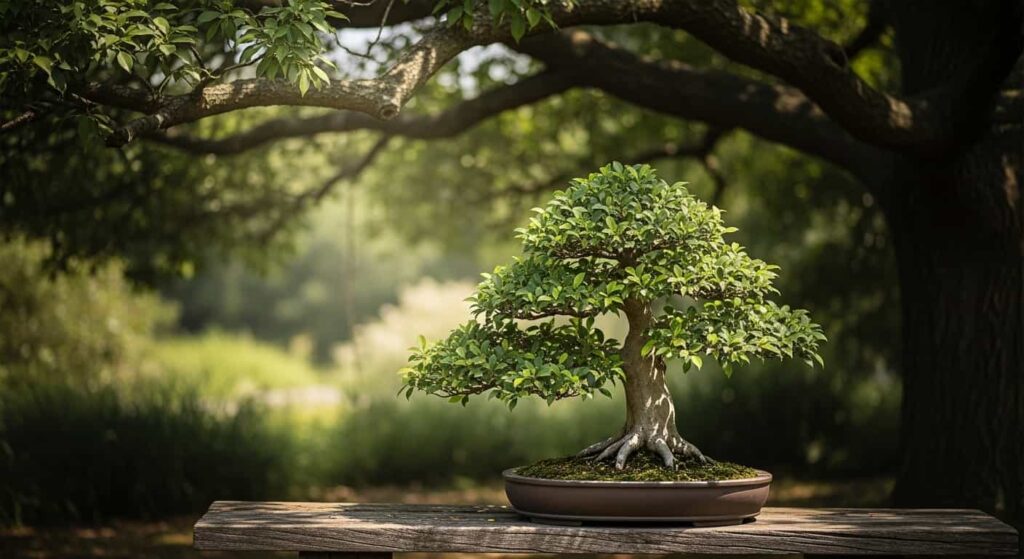
“Shade” does not mean complete darkness. Bonsai trees still need light to photosynthesize and recover. The goal is filtered or indirect light — bright enough to support the tree, gentle enough to reduce stress.
Ideal Shade Conditions
- 50–60% shade cloth is ideal if your tree normally lives outdoors
- Under a tree canopy that provides dappled light works well
- A north-facing or east-facing spot receives gentle morning light without harsh afternoon sun
- Indoors near a bright window works for tropical species if the tree is normally kept inside
What to Avoid
- Full afternoon sun — the most intense and damaging during recovery
- Dark corners or sheds — insufficient light slows recovery
- Highly reflective surfaces nearby that concentrate heat
- Wind exposure — wind increases transpiration just like direct sun
Shade Duration by Bonsai Species
Different species have different recovery speeds. Faster-growing trees with vigorous root systems bounce back more quickly than slow, delicate ones.
Faster Recovery (2–3 weeks of shade)
- Japanese Maple (*Acer palmatum*) — vigorous grower, recovers well in spring
- Ficus — tropical, resilient, roots regrow quickly in warmth
- Chinese Elm (*Ulmus parvifolia*) — adaptable and fast-recovering
- Juniper — hardy conifers that tolerate root work fairly well
Moderate Recovery (3–4 weeks of shade)
- Pine (*Pinus* spp.) — roots grow back more slowly; needs patient shading
- Trident Maple — similar to Japanese Maple, but benefits from a full month
- Azalea — fine roots are sensitive; err toward longer shade periods
- Olive — Mediterranean trees do fine but appreciate a gradual sun return
Slower Recovery (4–6+ weeks of shade)
- Oak (*Quercus* spp.) — slow-rooting; do not rush back into sun
- Bald Cypress — needs extended care after root work
- Collected trees (yamadori) — often severely stressed; shade for as long as needed
- Old or weak specimens — always prioritize a long, cautious recovery
How to Transition Back to Full Sun
After your shade period, do not move the bonsai directly into full sun. A gradual transition prevents sunburn and gives the tree time to adjust.
Week 1 after shade period: Move to morning sun only (before 10 AM), shade for the rest of the day.
Week 2: Allow 3–4 hours of direct sun, preferably morning to midday.
Week 3: Allow 5–6 hours of sun. Observe the tree closely.
Week 4 onward: Return to normal sun exposure if the tree shows no signs of stress.
This gradual process is especially important in summer or in hot climates where temperature swings are large.
Signs Your Bonsai Is Ready to Leave Shade
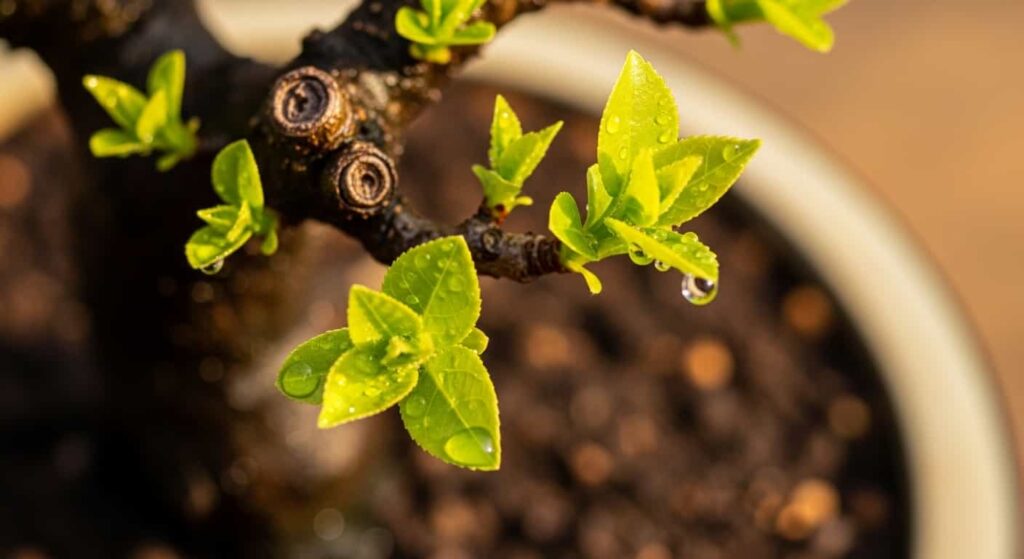
Watch for these positive indicators before moving the tree back into full sun:
- New growth emerging — buds pushing, new leaves unfurling, or fresh shoots extending
- Firm, turgid leaves — no wilting even in warm temperatures
- Consistent soil moisture — the tree is drinking at a normal rate
- Healthy leaf color — no unusual yellowing or browning on new foliage
- Root tips visible at drainage holes (a strong sign of active root growth)
If you see any of these signs within the first two weeks, the tree is recovering well. You can still complete the full shade period as a precaution.
Signs Your Bonsai Needs More Time in Shade
If you notice the following, extend the shade period and investigate further:
- Wilting leaves even with moist soil — roots not yet absorbing water
- Leaf drop without new buds appearing
- Yellow or pale new growth — insufficient energy reserves
- Soil drying out unusually fast — may need more frequent watering and continued shade
- No visible new growth after 4 weeks — a weak or stressed tree needs more time
In these cases, do not rush. Patience is the most important tool in bonsai aftercare.
Watering After Repotting
Shade alone won’t save a tree if watering is off. Here’s how to manage water during the recovery period:
- Check soil daily — the top 1–2 cm should dry slightly between waterings, but the root zone should never completely dry out
- Water gently — use a fine-nozzle watering can to avoid disturbing fresh root growth
- Avoid fertilizing for 4–6 weeks — new roots are sensitive to fertilizer salts
- Do not let the pot sit in standing water — good drainage is essential to prevent root rot
Fresh bonsai soil (akadama, pumice, or a well-draining mix) will help enormously here. Overly dense or water-retentive soil is one of the biggest risks after repotting.
Repotting Season and Shade Duration
The time of year you repot directly affects how long shade is needed.
Spring (ideal season): Most species are entering their growth phase, so roots regenerate quickly. Standard 2–4 weeks of shade is usually sufficient.
Early summer: Warmer temperatures support root growth but increase transpiration. Lean toward the longer end of the shade period.
Late summer/fall: Roots grow more slowly as the tree prepares for dormancy. Extend shade to 4–6 weeks and be cautious with watering.
Winter: Only repot dormant cold-hardy species if necessary. Keep in an unheated but frost-free space with minimal light. No sun exposure is needed during full dormancy.
Common Mistakes to Avoid
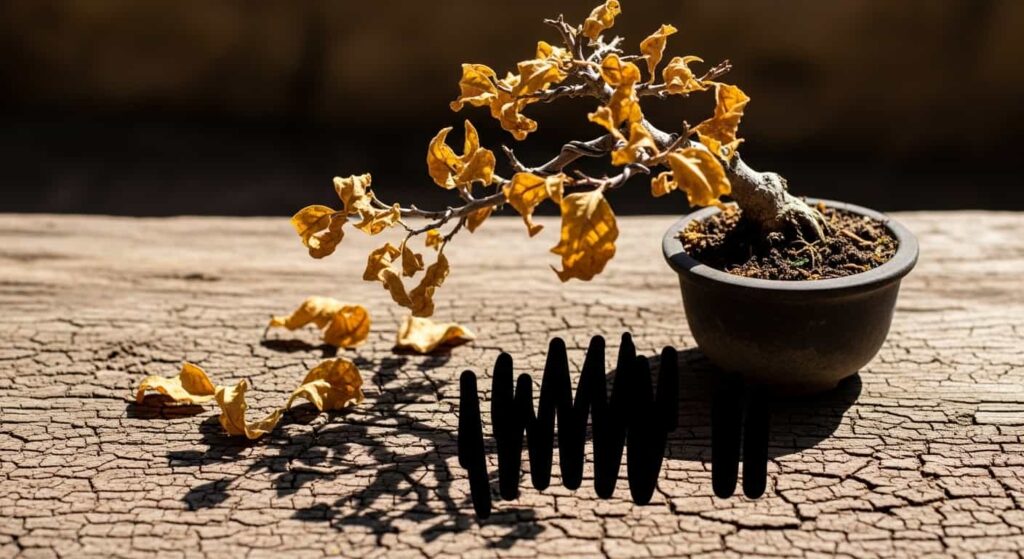
Moving back to the sun too soon — the most common cause of post-repotting decline. Even if the tree looks fine, complete the full shade period.
Overwatering — more water does not compensate for damaged roots. Saturated soil reduces oxygen to the root zone and invites fungal disease.
Fertilizing too early — wait until you see strong new growth before resuming any fertilizer routine.
Skipping shade entirely — some growers assume a light repot doesn’t need shade. Even minor root disturbance benefits from at least one to two weeks of shade protection.
Using the wrong shade — placing a tree in a dim corner is not the same as filtered bright shade. Both extremes — too dark and too bright — slow recovery.
Quick Reference Summary
- Standard shade duration: 2–4 weeks for most species and situations
- Extended shade: 4–8 weeks for heavy root work, weak trees, or summer repotting
- Best shade type: Filtered or indirect bright light (50–60% shade cloth or dappled canopy)
- Gradual sun return: Reintroduce direct sun over 2–4 weeks after the shade period ends
- Key signal to move on: Vigorous new growth with turgid, healthy foliage
Frequently Asked Questions
Can I keep my bonsai in shade longer than 4 weeks?
Yes, especially if the tree is weak, the root work was extensive, or you’re dealing with a slow-growing species. Extended shade rarely causes harm as long as the tree still receives adequate filtered light. Darkness is the problem — not shade.
What if I forgot to put my bonsai in the shade after repotting?
Move it to shade immediately. If the tree shows wilting, mist the foliage lightly (not a substitute for watering, but helps temporarily) and ensure the root zone is properly moist. Most trees recover if caught within the first few days.
Do indoor bonsai need shade after repotting?
Yes. Even if your indoor bonsai lives in lower light conditions, avoid placing it in the brightest spot in your home for 2–4 weeks post-repotting. A step back from the window is usually sufficient.
Should I mist my bonsai during the shade period?
Light misting of the foliage once or twice a day can help reduce transpiration during the first week or two. This is especially useful in hot, dry conditions. However, misting is a supplement — not a replacement for proper soil moisture management.
Repotting is stressful for bonsai, but the recovery period is straightforward if you respect the tree’s needs. Give it shade, appropriate watering, rest, and time. A few weeks of patience now means a healthy, vigorous tree for years to come.