
Last Updated on April 15, 2026 by Indoor Plant Nook
When you prune a bonsai, the conversation immediately shifts to the roots—and to bonsai soil after pruning. Every cut on the canopy triggers a stress response underground, and the soil sitting around those roots either accelerates recovery or quietly holds the tree back for an entire growing season.
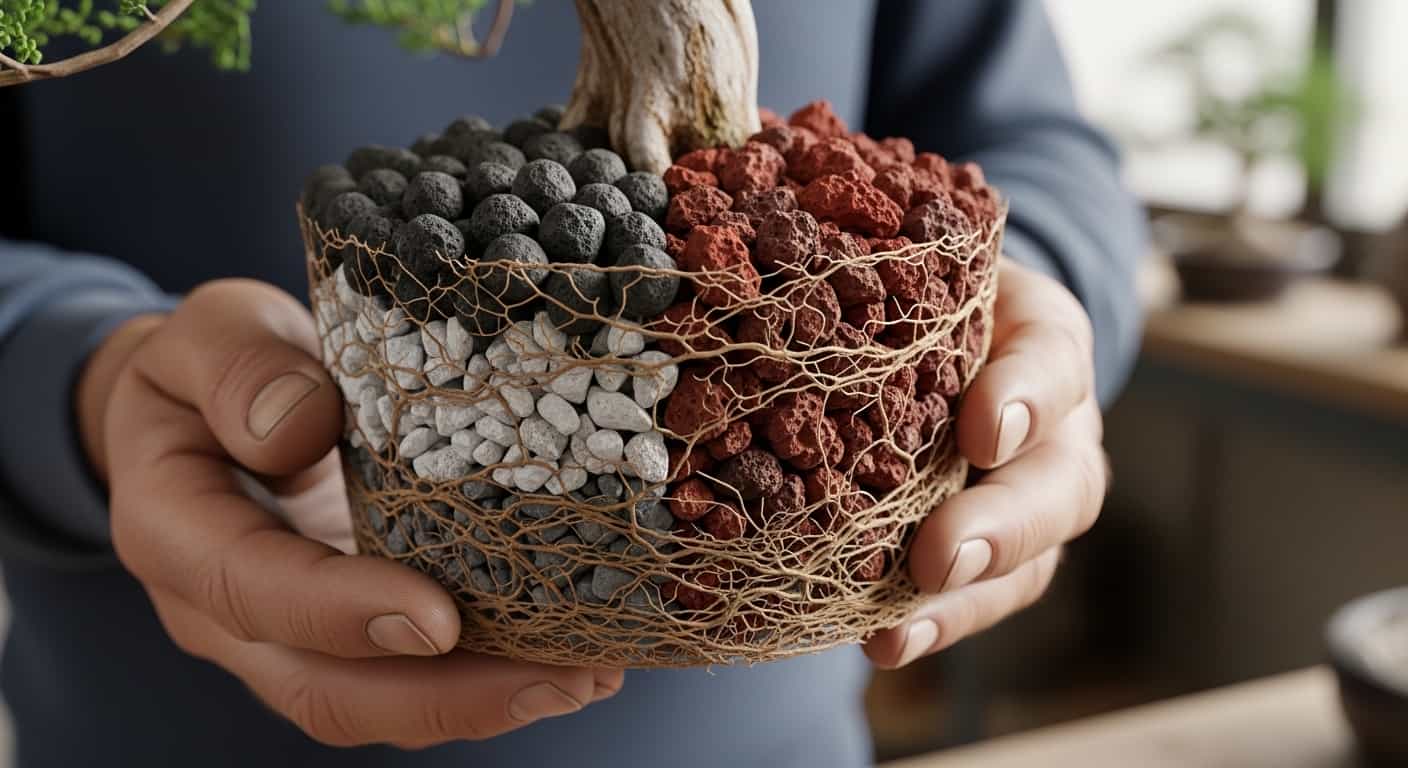
This guide is not a generic product comparison. It explains what your bonsai’s root system needs in the days and weeks after pruning stress, and how the three most common inorganic substrates—akadama, pumice, and lava rock—each behave in that recovery window so you can choose or blend a mix that qualifies as sound bonsai soil after pruning.
Why Bonsai Soil After Pruning Differs From Ordinary Repotting Mixes
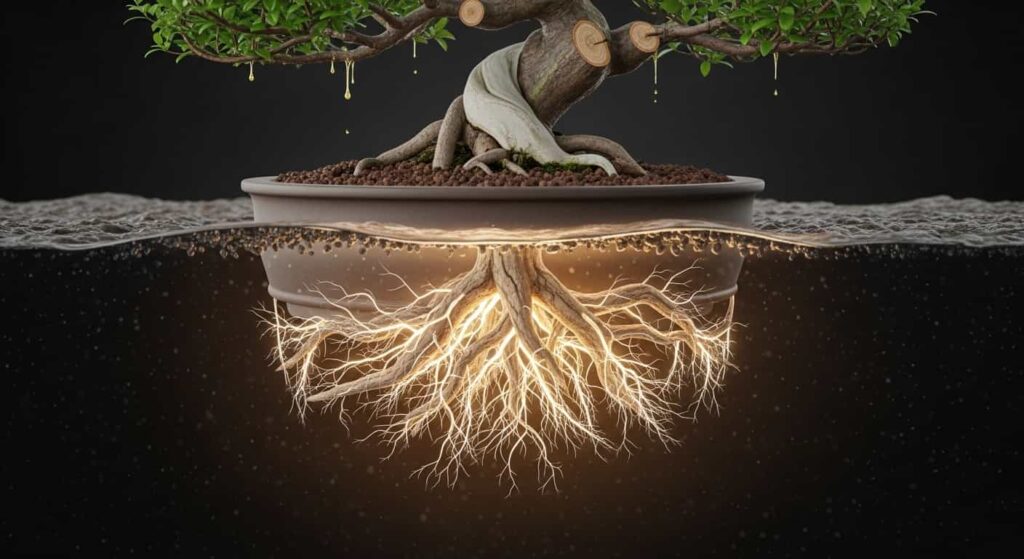
Most bonsai guides treat substrate selection as one-size-fits-all. The period right after pruning is different: you are usually deciding whether to repot, what blend to use, and how drainage and biology interact when the tree is already under canopy stress. Getting bonsai soil after pruning right is what ties those decisions together.
When branches are removed, the tree reallocates photosynthate toward wound callusing and root-to-shoot ratio rebalancing. During this window:
- Water uptake slows because fewer leaves are transpiring
- Root oxygen demand increases as new feeder roots push through the media
- Fungal activity spikes around any root wounds from simultaneous root pruning
- Nutrient absorption is suppressed until new fine roots establish
That means the soil must handle reduced water throughput without becoming waterlogged, keep oxygen available at the root zone, and support microbial balance—all at once. Choose your mix for those constraints, not from a generic “good bonsai mix” recipe you use at other times of year.
Akadama in Bonsai Soil After Pruning: Cation Exchange and Timing
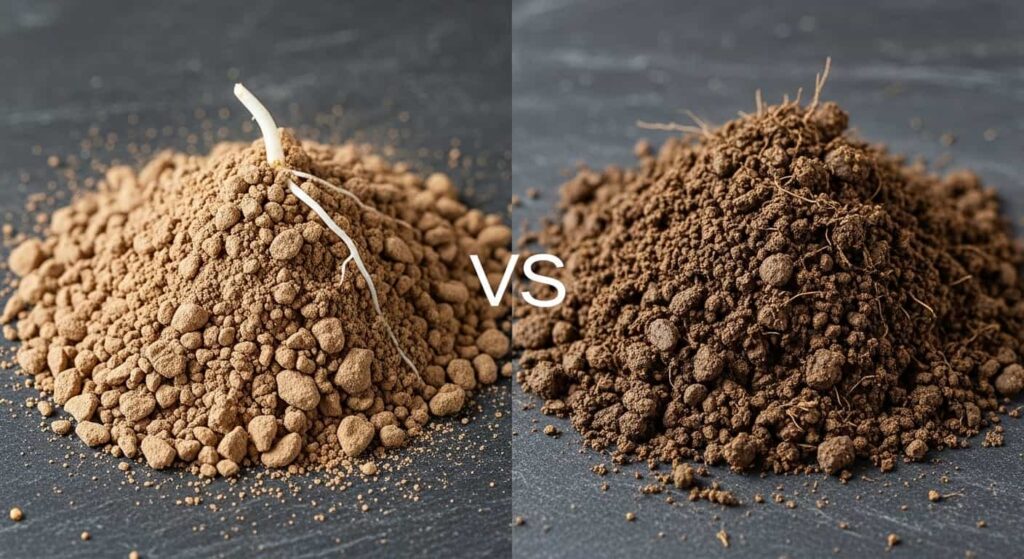
Akadama is calcined clay mined in Japan. Its standout trait is cation exchange capacity (CEC): it holds and slowly releases mineral nutrients—calcium, magnesium, potassium—near root hairs.
What Akadama Does Well After Pruning
- Creates a soft, slightly compressible texture that new feeder roots penetrate easily
- Holds moisture near roots without pooling—important when transpiration is reduced post-pruning
- Gradually breaks down over 2–3 years, becoming increasingly root-friendly in texture
The Problem With Akadama Alone After Pruning
Akadama’s weakness is breakdown. Fresh akadama drains well, but used akadama compacts under wet/dry cycling. If you repot into a mix heavy in degraded akadama right after heavy pruning, drainage can fail exactly when the tree needs oxygen most.
Use akadama at 40–50% of a mix, not 100%, and check whether existing akadama still has particle integrity before a post-pruning repot.
Akadama Particle Size for Post-Pruning Recovery
For recovery mixes, use 2–3 mm akadama rather than larger grades. Smaller particles increase surface area for root contact and faster nutrient exchange during the first flush of new growth after pruning.
Pumice: Oxygen When Bonsai Soil After Pruning Must Drain Fast
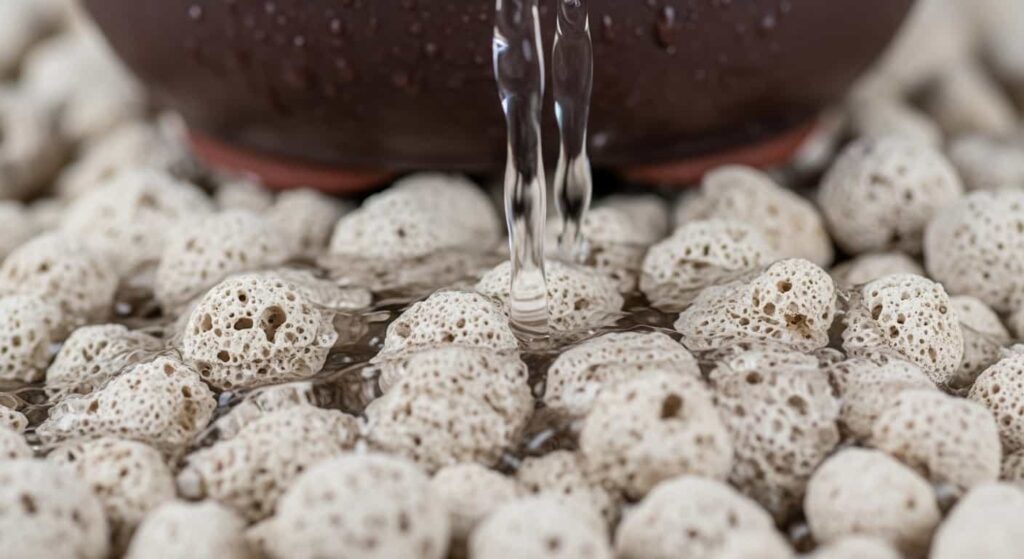
Pumice is volcanic glass—lightweight, porous, and biologically neutral. It mainly keeps space open and holds a thin film of water on its silica surface. That is exactly what stressed roots often need from soil after pruning.
What Pumice Does in a Post-Pruning Mix
After pruning, the root system faces a tension: it needs moisture for function, yet excess moisture favors pathogens (for example Fusarium and Phytophthora) that attack stressed tips.
Pumice addresses that structurally. Rigid, non-compressing particles create macro-pores—air channels that persist even when the mix is fully saturated. Those channels:
- Let excess water drain quickly
- Pull oxygenated air back into the root zone as water drains
- Separate roots physically, which can slow pathogen spread
Unlike akadama, pumice does not break down. A particle you use today will look much the same in a decade, so it anchors long-term mixes.
How Much Pumice in Bonsai Soil After Pruning?
For deciduous trees after pruning, 25–35% pumice is a common range. For conifers or trees sensitive to wet feet, 40–45%. In humid climates or if you tend to overwater, 50% pumice is reasonable.
Practical check: water the tree and watch the drainage holes. Water should begin flowing within a few seconds. If it lags, raise the pumice share in your post-pruning blend.
Lava Rock: Microbial Structure in the Mix After Pruning
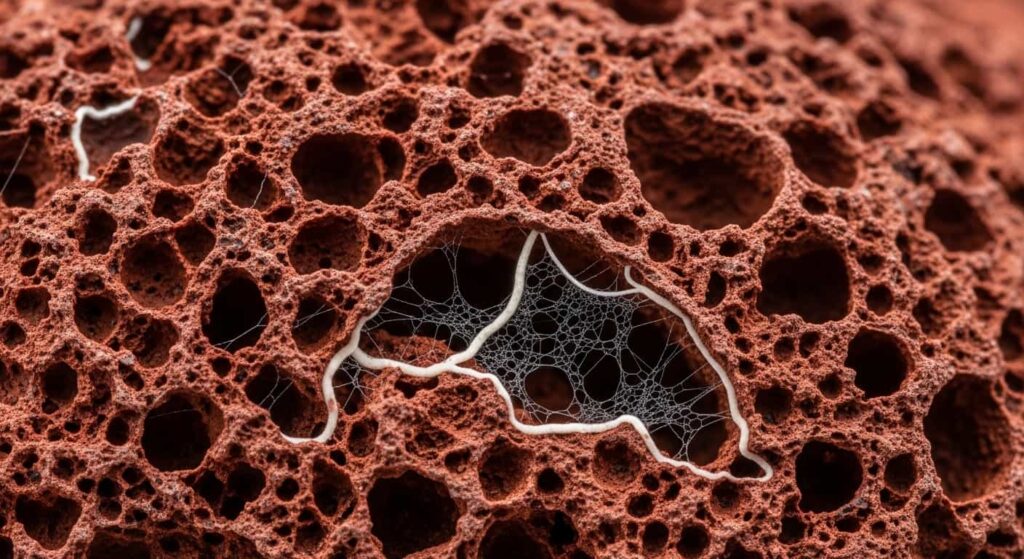
Lava rock (scoria) is often used only as cheap drainage filler. After pruning, its role is broader: surface area for beneficial microbes when roots are rebuilding.
The Microbial Surface Pumice Lacks
Under magnification, lava rock is deeply pitted. Those cavities favor mycorrhizal fungi and beneficial bacteria—the organisms that extend the effective root zone and help make nutrients available.
After pruning, networks around damaged roots need to reestablish. Lava rock gives physical structure for that recolonization compared with pumice-only or akadama-only mixes.
Limits of Lava Rock
- It does not hold moisture like akadama or pumice films
- It contributes little CEC on its own
- Irregular shapes can occasionally hinder very fine roots in the 0.5–1 mm range
Particle Size for Post-Pruning Mixes
Post-pruning mixes usually work well with 3–6 mm lava—large enough for macro-porosity, small enough for roots to navigate. Particles above about 10 mm can leave voids roots bridge poorly.
Building Bonsai Soil After Pruning: Ratios That Match the Tree
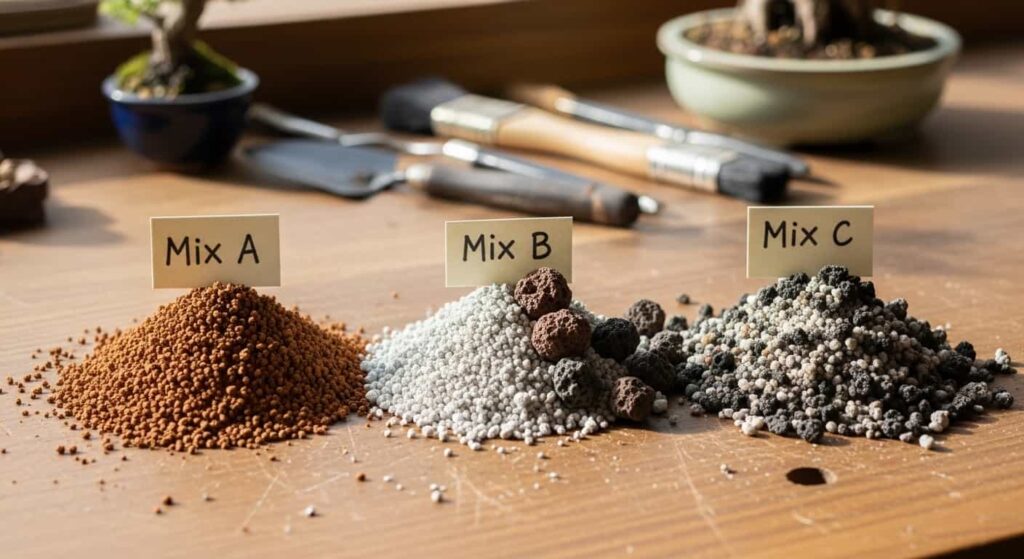
There is no single perfect ratio—only a framework tied to species, climate, pot, and how hard you pruned.
What Changes the Formula
- Species — Junipers and pines often tolerate lower moisture retention; lean on pumice and lava. Maples and elms may need slightly more moisture during recovery; a higher akadama share can help.
- Climate — In humid regions, reduce akadama and increase pumice. In arid conditions, you may increase akadama and ease back on pumice.
- Pot size and depth — Shallow pots drain faster; a bit more akadama can compensate. Deep pots hold more moisture; more pumice and lava can balance that.
- Pruning severity — Light canopy work: standard ratios. Heavy defoliation or combined root and canopy work: raise pumice about 10–15% beyond your usual mix so oxygen stress does not stack on top of pruning stress.
Three Starting Points for Bonsai Soil After Pruning
Mix A — Deciduous Trees, Temperate Climate
| Substrate | Proportion |
|---|---|
| Akadama | 50% |
| Pumice | 30% |
| Lava Rock | 20% |
Best for: Japanese maple, trident maple, hornbeam, zelkova
Mix B — Conifers and Junipers, Any Climate
| Substrate | Proportion |
|---|---|
| Akadama | 33% |
| Pumice | 40% |
| Lava Rock | 27% |
Best for: Shimpaku juniper, Japanese black pine, white pine, spruce
Mix C — High Humidity or Heavy Watering
| Substrate | Proportion |
|---|---|
| Akadama | 25% |
| Pumice | 50% |
| Lava Rock | 25% |
Best for: species or situations where drainage is often a problem
What Most Guides Miss About Bonsai Soil After Pruning

Many comparisons stop at how each substrate looks in the bag. Bonsai soil after pruning is not passive: it hosts fungi, bacteria, and other life that can shorten or lengthen visible recovery.
If you assemble a post-pruning mix, consider pressing a mycorrhizal inoculant against the root ball before covering. Lava rock’s texture tends to retain and spread that inoculant; pumice less so; akadama somewhere between. That step is easy to skip but can matter in the first growing season after a hard prune.
Substrate Breakdown: Quick Reference
| Property | Akadama | Pumice | Lava Rock |
|---|---|---|---|
| Water retention | High | Low–Medium | Very Low |
| Drainage speed | Medium | Fast | Fast |
| Oxygen retention | Medium | High | High |
| CEC (nutrient holding) | High | Very Low | Very Low |
| Microbial support | Medium | Low | Very High |
| Longevity in mix | 2–4 years | 10+ years | 10+ years |
| Particle durability | Moderate | High | High |
| Cost | Moderate–High | Moderate | Low–Moderate |
Frequently Asked Questions
Can I use only pumice in bonsai soil after pruning?
You can, but you will likely water more often while the tree recovers, and you lose akadama’s CEC during the new root flush. Pure pumice is a workable emergency substrate—not the ideal long-term post-pruning mix if you have access to a balanced blend.
How soon after pruning should I repot into fresh bonsai soil?
Often, pruning and repotting line up in early spring before bud break. If you already pruned and did not repot, use the next appropriate seasonal window rather than forcing an immediate repot—stacking stresses rarely helps.
Does lava rock color matter?
No. Red, black, and grey lava are functionally similar for porosity. Color reflects mineral makeup, not drainage or microbial support in any practical sense.
Is akadama necessary, or can I substitute other calcined clays?
Turface, Haydite, and similar products can substitute partially, but CEC and particle consistency vary by brand and batch. Akadama remains the most consistent calcined clay for many growers; substitutes need testing on your trees.
How do I know when akadama needs replacing?
Crush a dry particle between thumb and forefinger. If it crumbles easily, it has lost structure and will compact the root zone—replace at the next repot.
Final Takeaway
After pruning, your bonsai is in a delicate phase, and the soil you choose is either part of the recovery plan or a hidden drag on it.
Akadama feeds recovering roots through moisture and CEC. Pumice keeps oxygen and drainage where you need them. Lava rock supports microbial recolonization the other two do not provide on their own.
Blend all three to match species, climate, and pot, and bonsai soil after pruning becomes something you dial in with purpose instead of the variable that keeps you guessing all season.