

Last Updated on April 15, 2026 by Indoor Plant Nook
Can you use a concave cutter for bonsai root pruning? Yes—in narrow situations. For most repotting work, other tools do the job better and spare your cutter’s edge. This article answers when a concave cutter belongs in root work, when it does not, and what to use instead so your trees and tools stay healthy.
What a Bonsai Concave Cutter Is For (and Why That Matters for Roots)
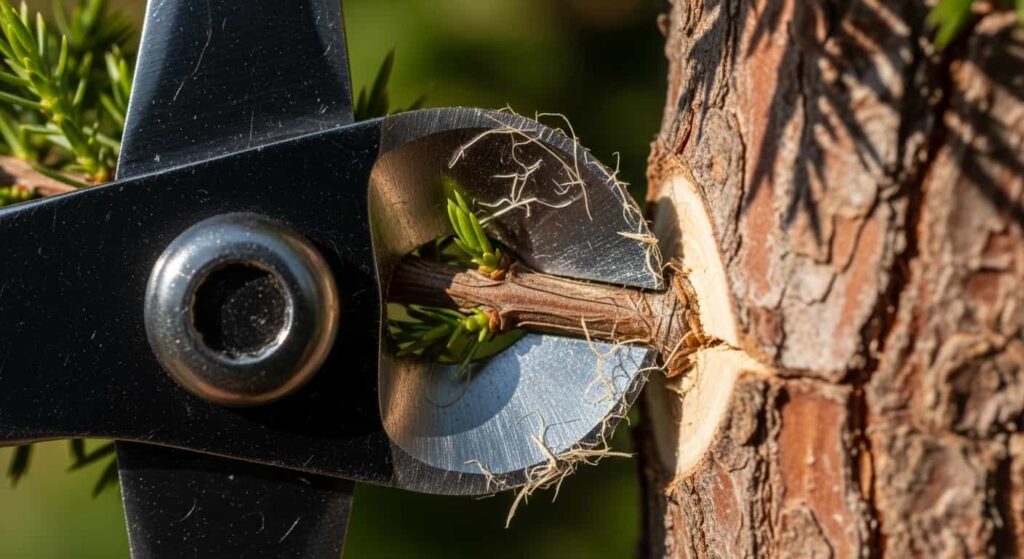
A concave cutter (sometimes called a hollow-ground cutter) is built to remove branches flush with the trunk—or slightly below the surface—so the wound heals into a smooth, flat, or slightly sunken scar instead of a raised bump.
The concave blade profile creates a dish-shaped wound. Callus grows inward from the edges and fills the depression, which blends with the bark. That geometry is ideal for above-ground cuts on branches, not for slicing through packed root balls.
What concave cutters are designed for:
- Branch removal at the trunk or a major limb
- Light jin and deadwood refinement
- Removing small surface knobs or old stubs
- Cutting soft to medium-density wood
They are not root-first tools. The same concave shape that heals branch scars beautifully offers little advantage under the soil line, and gritty, soil-coated roots dull blades quickly. (A knob cutter is a separate tool with a different jaw shape; do not confuse it with a concave cutter.)
Can You Use a Concave Cutter for Bonsai Root Pruning?
Short answer: You can use a concave cutter for bonsai root pruning only for small, targeted cuts—especially at the soil line—not for general root-ball reduction.
When using a concave cutter for bonsai root pruning makes sense
For very fine surface roots, especially when shaping nebari (the visible root flare), a concave cutter can make a clean, slightly recessed cut so that callus forms flat and neat. Some growers use a small concave cutter at the trunk base to remove a single surface root when they want that same controlled, dish-shaped wound you would aim for on a branch.
In practice, that “yes” is limited to nebari refinement, specific surface roots, and occasional woody roots where you want a visible, controlled healing profile.
When you should not rely on a concave cutter for bonsai root pruning
For typical repotting—cutting through a dense root ball, shortening circling roots, reducing a tap root, or working soil-encrusted feeder roots—a concave cutter is the wrong primary tool:
- The blade geometry is not meant for straight-through cuts on thick, cylindrical roots
- Soil and grit abrade the edge and shorten time between sharpenings
- Larger roots need leverage that concave handles are not designed to supply
- Using a precision cutter for heavy root work wears an expensive tool faster than necessary
If you mean “is it allowed,” yes—but for bulk root work, the practical rule is: use scissors and pruners first, and reserve the concave cutter for the few cuts where its shape actually helps.
What to Use Instead for Most Bonsai Root Pruning
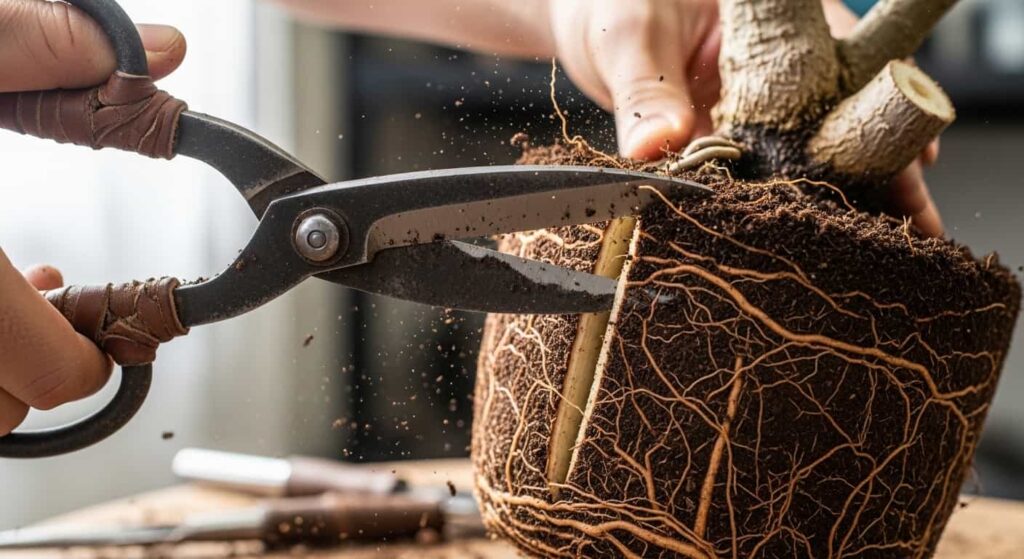
1. Bonsai root scissors (long-bladed trimming scissors)
These are the default for repotting. Long blades reach into the root ball so you can cut feeder roots and thin dense masses without fighting the wrong tool. Look for blade length around 8–10 cm for medium trees, high-carbon or stainless steel depending on whether you want maximum edge retention or lower maintenance, and a spring if you do long sessions.
Best for: feeder roots, circling roots, and general root-ball reduction—i.e., most of what people mean by bonsai root pruning.
2. Root hook or rake
Not a cutter, but it comes first: you have to see and separate roots before you pick scissors, pruners, or a concave cutter. A rake or hook loosens compacted soil and reduces tearing.
3. Concave cutter (limited role)
Same as above: appropriate for nebari-focused cuts, a specific surface root at the base, or a woody root where you want a concave wound profile at the soil line—not for chewing through the whole root mass.
| Brand | Model | Blade width (approx.) | Notes |
|---|---|---|---|
| Masakuni | No. 08 (small concave) | ~14 mm | Nebari refinement, small trunks |
| Tian Bonsai | Medium concave | ~16 mm | General surface root work |
| Kaneshin | No. 11 | ~18 mm | Medium deciduous trees |
| Ryuga | Standard concave | ~17 mm | Frequent use |
Japanese brands often use high-carbon steel and cost more but hold an edge longer; Chinese options can be strong values for heavy repotting seasons.
4. Bypass pruners (for thick woody roots)
For pencil-thick roots and larger, use bypass pruners so you slice instead of crush. Avoid anvil pruners for living roots when a clean cut matters.
5. Knob cutter (woody root knobs)
For old woody stubs you want flush with a larger root, a knob cutter’s jaw shape can be more appropriate than a concave cutter. It is still specialized—not your first tool for routine root shortening.
Root Pruning Steps With Tool Choice in Mind
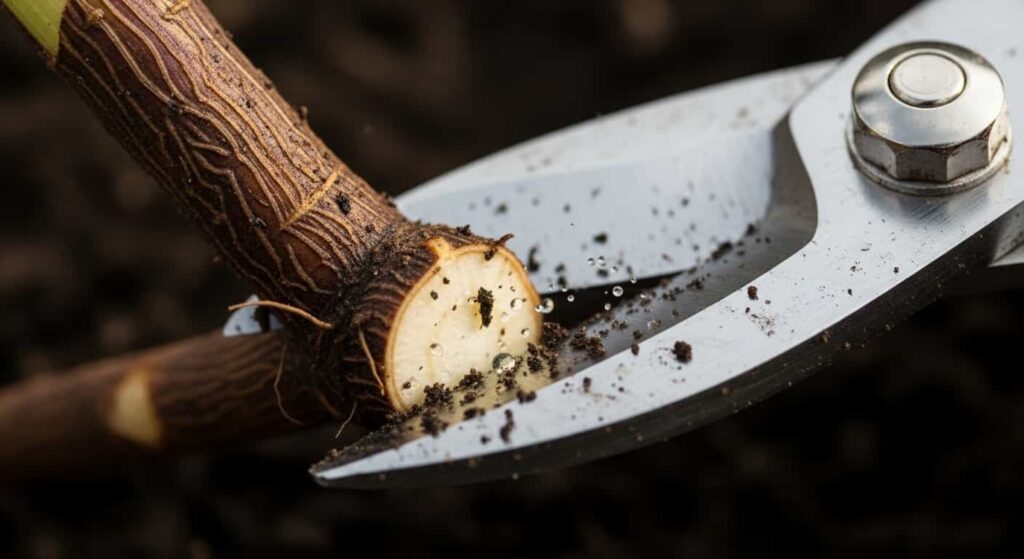
- Timing: For many species, repot and prune roots in early spring as buds swell, before full leaf-out.
- Sharp, clean tools: Dull edges crush roots; sharp edges slice. That matters more than which brand you own.
- Loosen the root ball: Use a rake or hook from the outside in; remove spent soil so you can see what to cut.
- Decide what to remove: Circling roots, problematic tap roots (depending on stage), dead tissue, and excess length on healthy feeders.
- Match the tool to the root: Root scissors for most cuts. Bypass pruners for thick woody roots. Use a concave cutter for bonsai root pruning only on those few surface or nebari cuts where a concave wound is the goal—not for powering through the ball.
- Large cuts: Thick root wounds in humid climates may benefit from cut paste or sealant per your practice.
- Repot quickly: Exposed roots dry out; aim to finish soil work within roughly 20–30 minutes of heavy root exposure.
Caring for Your Concave Cutter If You Use It on Roots
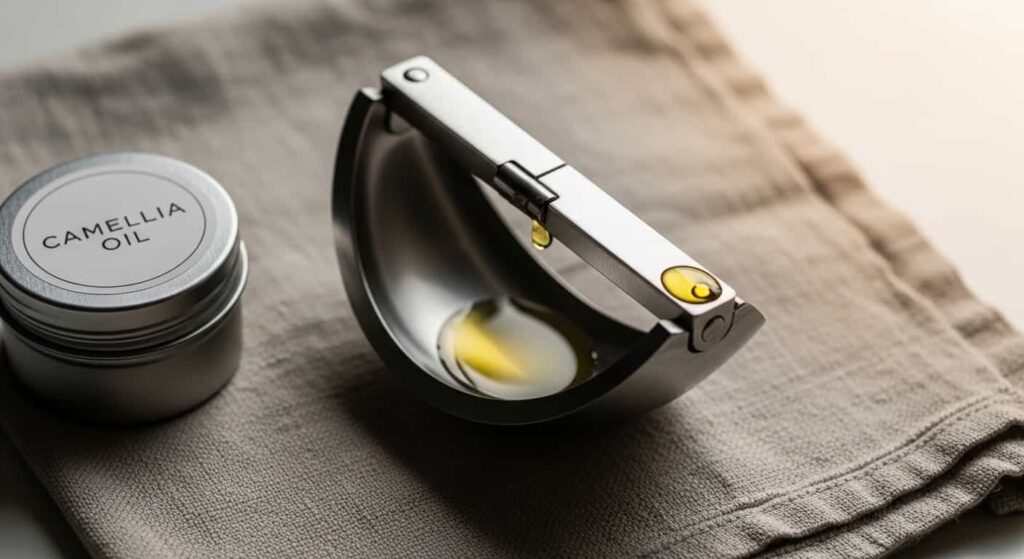
If you use a concave cutter for bonsai root pruning even occasionally, clean and oil it every time. Soil is abrasive and slightly acidic.
After each use:
- Wipe the blades dry immediately
- Apply a thin film of camellia oil or light mineral oil
- Store dry, not in a damp box
Sharpening: use a fine whetstone (for example 1000/3000 grit) on the flat inner face only; do not grind the outer concave face or you ruin the geometry. For serious wear, use a sharpener who works on Japanese bonsai tools.
Premium tools can often be serviced for years; replace budget tools that chip at the pivot rather than risk failure on a cut.
Concave Cutter Size and Bonsai Root Work
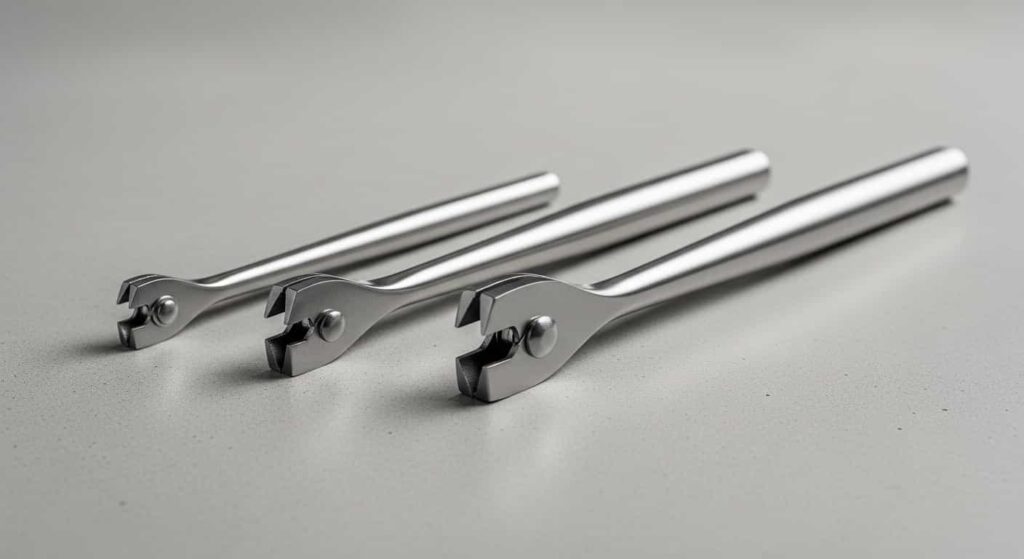
Size still matters for nebari work: too large and you risk collateral damage; too small and you lever the wrong way.
- Small (about 12–15 mm blade): mame/shohin, fine nebari, very slim trunks
- Medium (about 16–20 mm): typical deciduous work and many mid-size trees
- Large (about 22 mm+): heavier wood—more often branch work than fine roots
- Knob/sphere cutters: raised knobs and woody protrusions, not interchangeable with a standard concave cutter
A medium concave cutter covers most people’s occasional root-adjacent needs; add a small one when you specialize in tiny trees.
Quick reference: bonsai root pruning tools
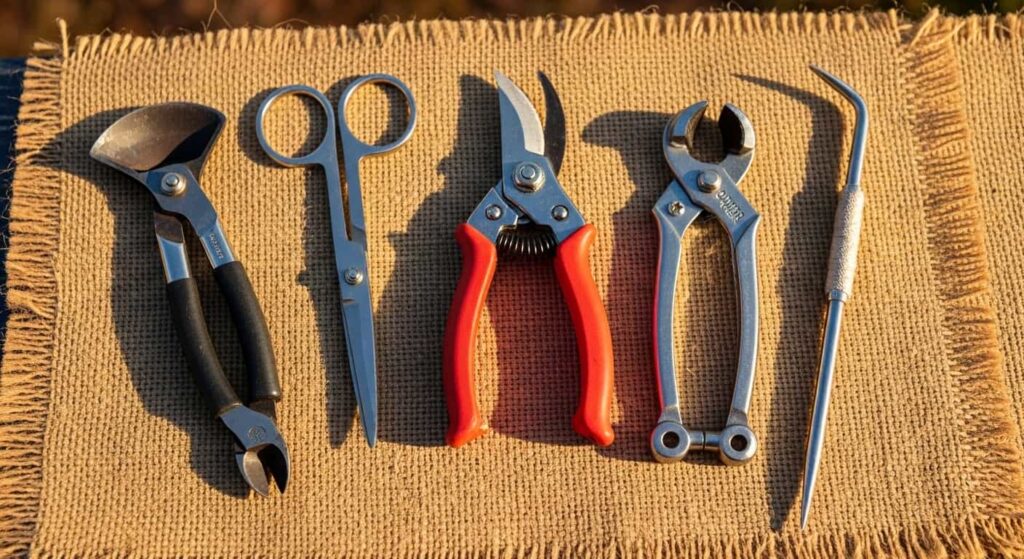
| Task | Best tool |
|---|---|
| Most feeder-root work | Root scissors |
| Thick woody roots | Bypass pruners |
| Surface nebari / specific roots | Concave cutter (as needed) |
| Woody knobs on roots | Knob or sphere cutter |
| Loosening soil mass | Root rake or hook |
| Large cut protection | Cut paste / sealant |
Summary
Can you use a concave cutter for bonsai root pruning? Yes, for careful, shallow work where you want a concave wound—mainly nebari and selected surface roots. For the bulk of repotting, root scissors and bypass pruners carry the work; your concave cutter stays sharper longer and stays true to what it was built for.
If you have been using only a concave cutter when you repot, add dedicated root scissors and a bypass pruner so each cut uses the right blade—not the wrong one worn down by soil and leverage.