

Last Updated on March 16, 2026 by Indoor Plant Nook
Ficus bonsai trees are prized for one of their most dramatic features — aerial roots. These gravity-defying tendrils cascade from branches and trunk, eventually anchoring into the soil to form secondary trunks. When cultivated with care, they transform an ordinary Ficus bonsai into a breathtaking, jungle-like masterpiece.
But aerial roots also raise questions: Should you encourage them? Prune them? Leave them alone? This guide covers everything you need to know about Ficus bonsai aerial root care and pruning — from understanding why they grow to mastering the techniques that shape them beautifully.
What Are Ficus Bonsai Aerial Roots?

Aerial roots are above-ground roots that emerge from the trunk, branches, or nodes of a Ficus tree. Unlike underground roots, they are exposed to air, light, and humidity before eventually reaching the soil.
In nature, species like Ficus benjamina, Ficus retusa, and Ficus microcarpa produce aerial roots to anchor themselves over wide areas, absorbing moisture from the surrounding environment. In bonsai culture, these roots are one of the most artistically valuable features a tree can develop.
Common Ficus Species Known for Aerial Roots
| Species | Common Name | Aerial Root Tendency |
|---|---|---|
| Ficus microcarpa | Chinese Banyan | Very strong |
| Ficus benjamina | Weeping Fig | Moderate |
| Ficus retusa | Taiwan Ficus | Strong |
| Ficus religiosa | Sacred Fig | Moderate |
| Ficus rubiginosa | Port Jackson Fig | Strong |
Why Do Ficus Bonsai Develop Aerial Roots?
Understanding the cause helps you control the process. Aerial roots appear in response to:
- High humidity — The primary trigger. Moist air encourages roots to emerge from nodes.
- Warm temperatures — Ficus thrives in tropical conditions (65°F–95°F / 18°C–35°C), which accelerate aerial root growth.
- Vigorous health — A well-fed, well-watered tree produces more aerial roots than a stressed one.
- Seasonal growth spurts — Spring and early summer are the most active periods.
Should You Encourage or Discourage Aerial Roots?
This is a personal and artistic choice. Here’s how to weigh it:
Reasons to Encourage Aerial Roots
- They dramatically increase the visual complexity of your bonsai.
- Once they reach the soil, they thicken over time, creating secondary trunks (buttress roots).
- They reflect the tropical rainforest character that makes Ficus bonsai unique.
- They can help stabilize a pot-bound tree.
Reasons to Restrict or Prune Aerial Roots
- Too many can make the tree appear chaotic or overcrowded.
- Some roots may grow in undesirable directions, disrupting the design.
- Beginner trees benefit from a simplified, clean silhouette while the trunk and canopy develop.
- Excessive roots can compete for moisture and nutrients.
The best approach is intentional management — guide the roots you want, remove those that don’t serve the design.
How to Encourage Ficus Bonsai Aerial Root Growth
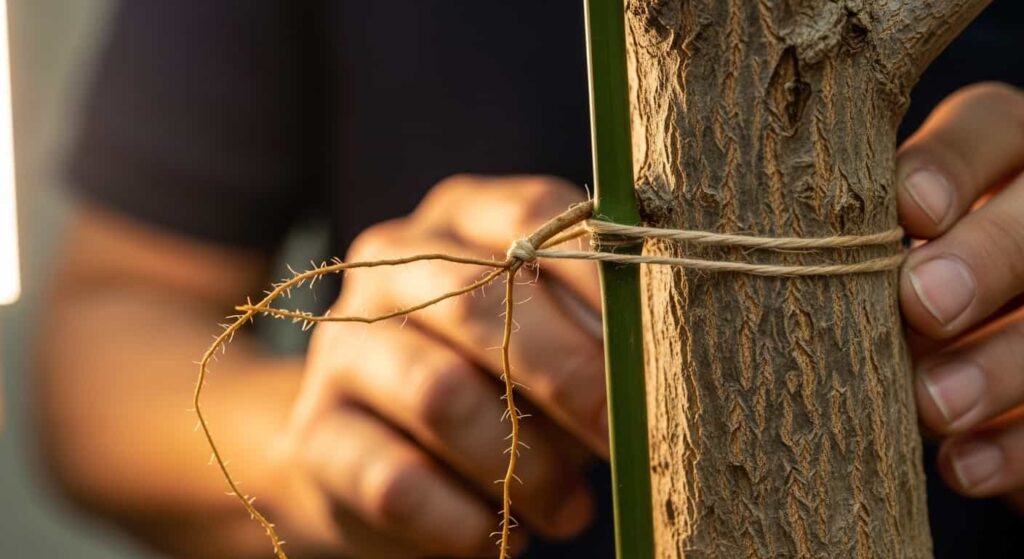
If you want to develop impressive aerial roots, these proven methods work reliably.
1. Increase Ambient Humidity
Aerial roots thrive in humidity above 60–70%. Practical ways to achieve this:
- Humidity trays: Place a tray filled with water and pebbles beneath the pot. The evaporating water raises local humidity without waterlogging roots.
- Regular misting: Mist the trunk, branches, and above-soil area once or twice daily — especially in dry climates or heated indoor spaces.
- Humidity tents: For short-term acceleration, loosely wrap a clear plastic bag around the canopy for a few hours daily. Remove it to prevent fungal issues.
- Grouping plants: Clustering multiple plants together naturally elevates the surrounding humidity.
2. Maintain Warm Temperatures
Keep your Ficus bonsai in temperatures consistently above 65°F (18°C). Cold drafts or air conditioning can halt aerial root development entirely.
3. Place in Bright, Indirect Light
Adequate light drives the metabolic activity needed for active root growth. A south- or east-facing window or an outdoor summer placement both work well.
4. Feed During the Growing Season
Fertilize with a balanced liquid fertilizer (e.g., 10-10-10 or 20-20-20) every two weeks from spring through early fall. Strong, healthy growth produces more aerial root sites.
5. Guide Roots with Wire or Stakes
As aerial roots emerge, gently guide them in your desired direction using thin wire or bamboo stakes before they harden. This allows intentional, designed root paths rather than random growth.
Ficus Bonsai Aerial Root Care
Once aerial roots begin growing, proper care ensures they develop into strong, healthy structural elements.
Watering Considerations
- Aerial roots absorb moisture from both air and soil.
- Water the soil thoroughly when the top inch becomes dry — never let the root zone dry out completely.
- Mist aerial roots directly if they appear shriveled or papery, which indicates dehydration.
Protecting Young Aerial Roots
Young aerial roots are soft, white, and delicate. Take care to:
- Avoid snapping them during repotting or repositioning.
- Keep them out of direct, scorching afternoon sunlight — they can dry and die before reaching the soil.
- Protect them from cold drafts, which cause them to shrivel and retract.
Encouraging Roots to Reach the Soil
One of the most satisfying stages is watching an aerial root touch and anchor into the soil. To help:
- Lower the root manually: Once long enough, gently bend the root toward the soil surface and bury the tip 1–2 cm deep. Anchor it lightly with a hairpin-shaped wire stake.
- Use a soil tube: Wrap a thin tube around a growing aerial root and fill it with moist sphagnum moss to guide it all the way to the pot.
- Repot shallow: A shallower soil level makes it physically easier for roots to reach the surface.
Once Rooted in Soil
After an aerial root reaches and establishes in the soil:
- It will begin to thicken gradually over months and years.
- It starts absorbing nutrients and water independently.
- You can treat it similarly to a trunk — it can be shaped, wired (gently), or encouraged to fuse with the main trunk over time.
Ficus Bonsai Aerial Root Pruning
Pruning aerial roots is just as important as encouraging them. The goal is intentional design, not wild growth.
When to Prune Aerial Roots
- Year-round: Light pruning to remove unsightly or misdirected roots is fine any time.
- Spring (preferred for heavy pruning): The tree’s surge of new growth helps it recover quickly from significant cuts.
- Avoid late fall/winter pruning if your tree is indoors in low light, as the recovery rate slows significantly.
Tools You’ll Need
- Fine bonsai scissors or sharp bypass pruners for small roots
- Concave cutters for thicker, established aerial roots
- Isopropyl alcohol or a flame to sterilize tools before each cut
- Cut paste / wound sealant (optional but recommended for cuts over 3mm diameter)
Step-by-Step Aerial Root Pruning
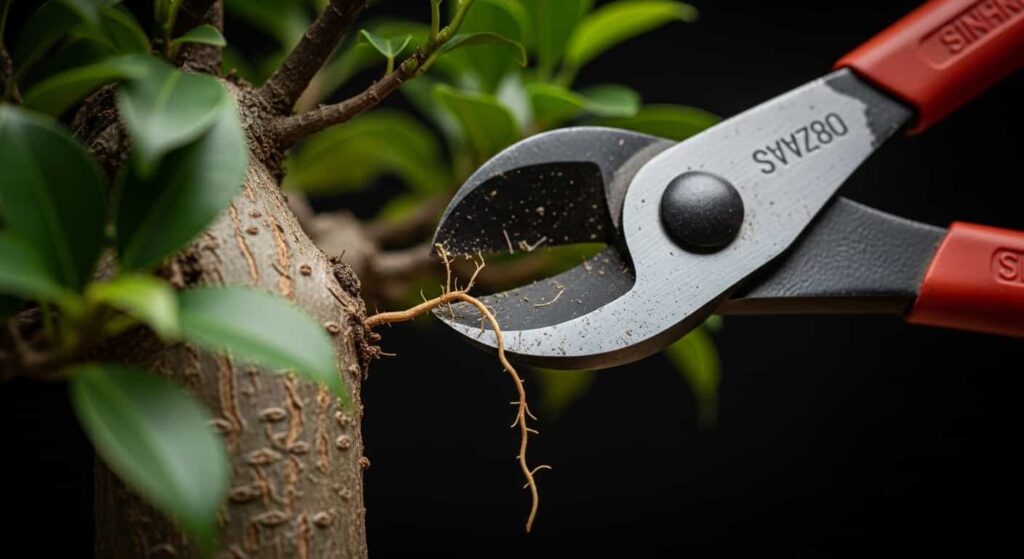
Step 1 — Assess the overall design. Step back and view your tree from all angles. Decide which aerial roots add to the composition and which clutter it. Mark those you plan to remove with a light touch of chalk or a loosely tied ribbon.
Step 2 — Remove roots that cross or tangle. Crossing roots create visual confusion and can cause abrasion damage over time. Choose the more desirable root and remove the one that compromises it.
Step 3 — Remove roots growing toward the back of the design. In bonsai design, the front of the tree is primary. Roots growing directly backward or inward should typically be removed or redirected.
Step 4 — Thin dense clusters. If a section of trunk has produced five or six aerial roots close together, reduce them to one or two well-spaced specimens. Crowded roots rarely thicken well and confuse the eye.
Step 5 — Make clean cuts close to the origin. Cut as close to the trunk or branch as possible without damaging the bark. A clean cut heals faster and is less visible. Avoid tearing or ripping.
Step 6 — Apply wound sealant on large cuts. For cuts on roots thicker than 3–4mm, apply a thin layer of bonsai cut paste or grafting wax to prevent drying and reduce infection risk.
Step 7 — Clean up and water. Remove all trimmings from the pot, lightly mist the tree, and place it in a warm, humid location to recover.
Shaping Aerial Roots for Maximum Visual Impact

Beyond simple pruning, you can sculpt aerial roots as part of your overall bonsai design.
Creating Pillar Roots (Banyan Style)
The iconic banyan bonsai style (also called Neagari or Banyan-kei) features multiple thick aerial roots descending like pillars. To achieve this:
- Select 3–5 vigorous aerial roots and guide them vertically downward.
- Encourage them into the soil and allow them to root and thicken over 2–3 growing seasons.
- Remove all other aerial roots not contributing to the pillar structure.
- Over years, these pillars can be encouraged to fuse together at the base for a dramatic, unified nebari.
Weaving and Braiding Roots
Young, flexible aerial roots can be loosely braided or woven together before they harden. When they eventually fuse (a process called inosculation), they form a single, characterful mass with natural-looking bends and movement.
Directing Roots as Surface Roots
Not all aerial roots need to descend vertically. Some can be directed horizontally across the soil surface to become dramatic surface roots (nebari), significantly widening the visual base of the bonsai.
Common Problems with Ficus Bonsai Aerial Roots
Aerial Roots Not Growing
Cause: Low humidity, cold temperatures, or a stressed tree. Fix: Increase humidity to 60%+, ensure temperatures stay above 65°F, check for root rot or pests, and resume a regular fertilizing schedule.
Aerial Roots Shriveling and Dying
Cause: Dry air, direct sunlight on young roots, or cold drafts. Fix: Mist the roots daily, protect from cold and harsh direct sun, and maintain consistent warmth.
Aerial Roots Growing in Unwanted Directions
Cause: Natural, undirected growth. Fix: Redirect with thin wire or stakes early, while the root is still soft. Older, hardened roots may crack if bent forcefully.
Rotting at the Soil Entry Point
Cause: Overwatering or poor drainage causing the root-to-soil junction to stay too wet. Fix: Improve soil drainage (use a well-draining bonsai mix of akadama, pumice, and lava rock), reduce watering frequency, and ensure the pot has adequate drainage holes.
Roots Fusing Unintentionally
Cause: Two roots in contact for a long period will naturally graft together. Fix: If undesired, separate them early by inserting a thin piece of plastic or foil between them. If you notice it late and the fusion is partial, carefully cut the connecting tissue with a sterilized blade.
Seasonal Care Calendar for Ficus Aerial Roots
| Season | Focus | Key Actions |
|---|---|---|
| Spring | Active encouragement | Begin misting, increase feeding, guide new roots with wire |
| Summer | Peak growth | Maximize humidity, water consistently, direct fast-growing roots |
| Autumn | Selective pruning | Remove unwanted roots before growth slows, apply cut paste |
| Winter | Protection | Maintain warmth indoors, reduce misting, no heavy pruning |
Repotting and Aerial Roots
Repotting is a stressful time for aerial roots. Follow these precautions:
- Repot in early spring before the major growth flush begins.
- Use care when removing the root ball — aerial roots that have reached the soil may be embedded deeply.
- If a rooted aerial root must be cut during repotting, make the cut clean and treat it with cut paste.
- After repotting, boost humidity for 2–3 weeks to help the tree recover and stimulate new aerial root development.
Frequently Asked Questions
How long does it take for aerial roots to reach the soil?
Under ideal humidity and warmth, aerial roots can grow several inches per month. Reaching the soil from mid-canopy typically takes one to three growing seasons, depending on the distance and conditions.
Can I force aerial roots to grow faster?
The most effective method is maintaining high humidity (70%+) combined with warm temperatures and consistent fertilization. Covering the tree with a humidity tent for a few hours daily can noticeably accelerate growth.
Will removing aerial roots harm my Ficus bonsai?
Removing individual aerial roots does not harm a healthy Ficus. Unlike primary roots, aerial roots are supplemental structures. Always use clean, sharp tools, and the tree will recover quickly.
Can aerial roots replace the main root system?
Over many years, thick, well-established aerial roots can become significant contributors to the tree’s water and nutrient uptake — but they are never a complete substitute for a healthy underground root system.
My Ficus is indoors. Can it still develop aerial roots?
Yes, but it requires deliberate humidity management. Homes are typically too dry for spontaneous aerial root development. Use a humidity tray, regular misting, and keep the tree away from heating vents to create suitable conditions.
Conclusion
Ficus bonsai aerial roots are one of the most captivating features in the art of bonsai. With patience, the right environment, and thoughtful pruning, you can cultivate root structures that make your tree truly extraordinary — evoking ancient banyan forests in miniature form.
The key is intentionality: encourage the roots that serve your design, guide them with purpose, and prune those that don’t contribute. Master these techniques, and your Ficus bonsai will develop a character and depth that sets it apart from any other tree in your collection.