Last Updated on March 16, 2026 by Indoor Plant Nook
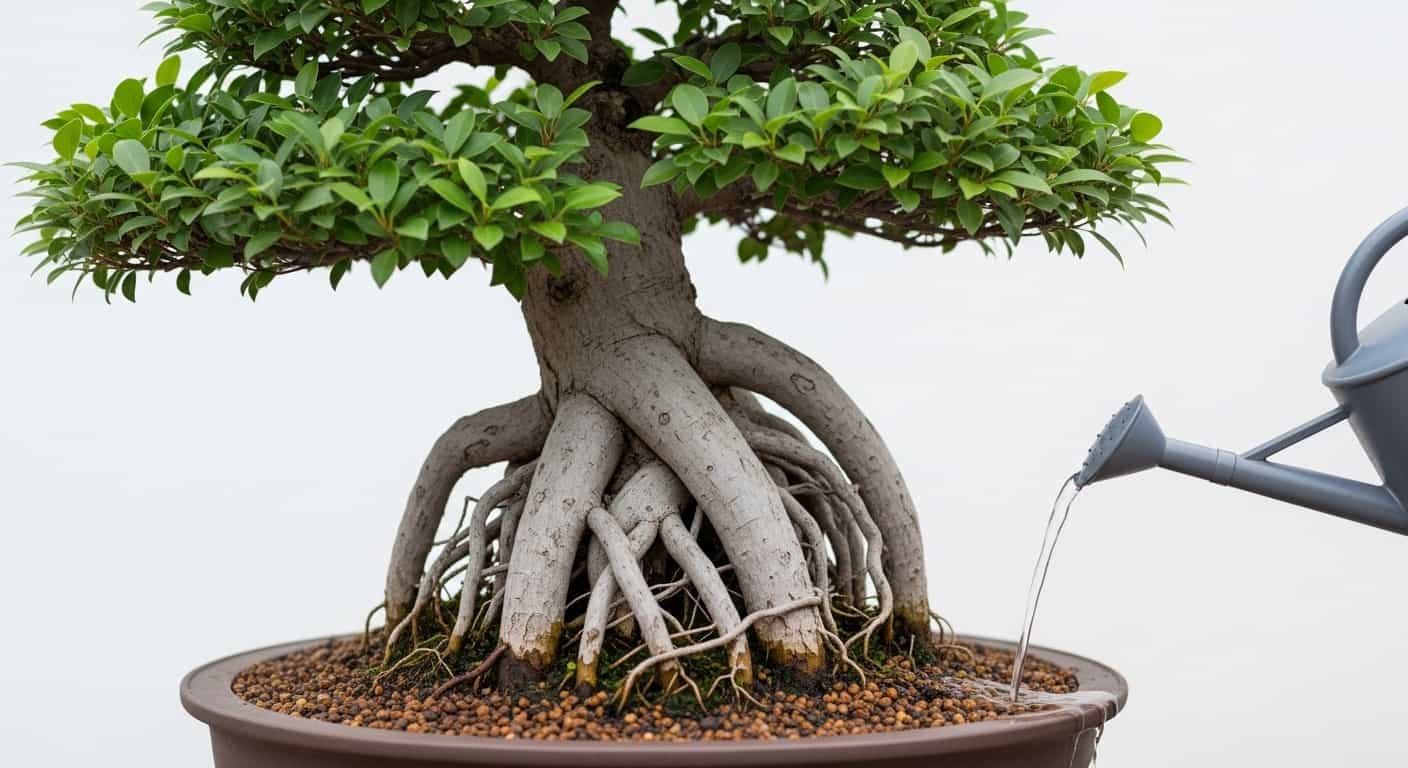
Root washing is one of the most misunderstood — and most misused — techniques in ficus bonsai care. Done at the right time and frequency, it revitalizes your tree, removes compacted soil, and exposes beautiful nebari (surface roots). Done too often, it stresses or kills a tree you’ve spent years developing.
This guide gives you a clear, practical answer to how often you should wash ficus bonsai roots, when it’s the right time to do it, and exactly how to do it without harming your tree.
What Is Root Washing in Bonsai?
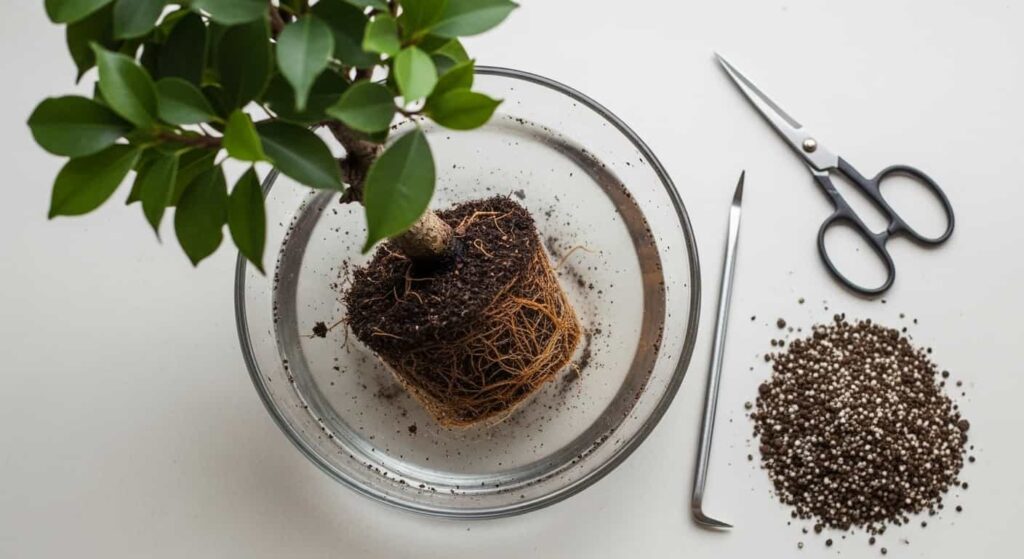
Root washing (also called bare-rooting) is the process of completely removing all the soil from a bonsai’s root system, rinsing the roots clean with water, pruning any dead or unhealthy roots, and repotting in fresh bonsai substrate.
Unlike a standard repot — where you simply loosen the outer root mass and replace some soil — root washing is a full reset. Every gram of old soil is removed, giving you direct access to assess root health and rebalance the root structure from scratch.
For ficus bonsai specifically, root washing is also used to:
- Reveal and refine the nebari (exposed surface roots)
- Remove old, decomposed soil that no longer drains well
- Treat root rot or pest infestations hiding in the soil
- Transition a tree from nursery soil to proper bonsai substrate
- Correct root binding or circling roots in the pot
How Often Should You Wash Ficus Bonsai Roots?
The general recommendation is every 2 to 5 years, depending on the tree’s age, health, pot size, and the substrate it’s growing in.
Here’s a more specific breakdown:
| Tree Stage | Recommended Frequency |
|---|---|
| Young/developing ficus (under 5 years) | Every 1–2 years |
| Mature ficus in active development | Every 2–3 years |
| Established/display ficus | Every 3–5 years |
| Trees in poor health or recovering | Only when necessary |
Why You Should NOT Wash Roots Too Frequently
Root washing is stressful. When you strip all the soil away, you’re removing the mycorrhizal fungi and beneficial microorganisms that have colonized the root zone — organisms that help your tree absorb water and nutrients efficiently. Every time you wash roots, your ficus needs several weeks to re-establish that microbial ecosystem.
Frequent root washing also:
- Removes fine feeder roots that take months to regrow
- Increases dehydration stress during recovery
- Raises the risk of infection at fresh cut sites
- Slows trunk and foliage development
Unless your tree has a specific problem requiring root intervention, stick to the schedule above and let the roots do their job undisturbed.
Signs Your Ficus Bonsai Needs Root Washing Now

Even if it hasn’t been two years, there are situations where root washing should happen sooner rather than later:
1. Water is pooling on the surface and draining very slowly When the substrate has broken down or compacted to the point where water sits on top instead of flowing through, root health is at risk. Root washing and re-potting into fresh, well-draining substrate is the fix.
2. The tree is visibly root-bound If roots are circling the pot, escaping through the drainage holes in thick masses, or pushing the tree up out of the container, the root system has outgrown the space and needs to be reset.
3. You’re seeing signs of root rot Yellowing leaves, sudden leaf drop, soft or mushy soil that smells unpleasant, and weak new growth are all warning signs. Root washing lets you inspect the root mass directly, remove diseased tissue, and treat the remaining roots before re-potting.
4. You’re transitioning from nursery to bonsai soil Nursery trees are grown in peat or bark-heavy mixes that retain too much moisture for bonsai containers. When you acquire a new nursery ficus for bonsai development, a root wash is often the first step — done at the right time of year.
5. Pest infestation in the soil Fungus gnats, vine weevil larvae, and certain nematodes live in the root zone. If you’re dealing with persistent soil pests, root washing eliminates the infestation directly.
Best Time of Year to Wash Ficus Bonsai Roots
Timing matters enormously. Ficus is a tropical species and is far more sensitive to cold stress than temperate bonsai trees.
The ideal window is late spring to early summer — when daytime temperatures are consistently above 60°F (15°C) and the tree is actively pushing new growth. At this point, the tree has the energy reserves and metabolic activity needed to recover quickly.
Avoid root washing:
- In winter or when temperatures drop below 55°F (13°C)
- During a period of dormancy or slow growth
- Immediately after repotting (wait at least a full season)
- When the tree is already stressed from disease, drought, or recent root work
If you keep your ficus indoors year-round in a warm, stable environment, you have slightly more flexibility — but late spring is still the safest window.
Step-by-Step: How to Wash Ficus Bonsai Roots

What You’ll Need
- A bucket or tub filled with room-temperature water
- A hose with a gentle spray nozzle (or a second bucket)
- Root hook or chopstick
- Sharp, sterile bonsai scissors or root shears
- Fresh bonsai substrate (akadama, pumice, and lava rock mix)
- Your target pot, cleaned and ready
- Optional: rooting hormone powder, antifungal solution
Step 1: Water the Tree the Day Before
Give your ficus a thorough watering 24 hours before root washing. Hydrated roots are more flexible and resilient during the process.
Step 2: Remove the Tree from Its Pot
Gently work the root ball loose using a root hook or chopstick around the edges of the pot. Avoid pulling from the trunk — work the root mass free from the sides and bottom.
Step 3: Begin Loosening the Soil
With your fingers and root hook, begin breaking up the old soil from the outer edge of the root ball, working inward. Remove as much soil as possible by hand before moving to the water.
Step 4: Wash the Roots Clean
Lower the root mass into your bucket of room-temperature water and gently agitate to loosen remaining soil. Use a gentle hose spray or pour water through the roots until all the old substrate is gone. Avoid blasting roots at high pressure — you’ll strip fine feeder roots.
Lay the bare root system out on a clean, damp surface and inspect carefully.
Step 5: Prune the Root System
With sterile scissors or shears, remove:
- Dead roots (black, mushy, or dried out completely)
- Circling or crossing roots that are binding
- Roots that are disproportionately long or growing straight down
- Any diseased or damaged tissue
Cut cleanly and at an angle to prevent water pooling on the cut surface. Leave as much healthy, fine root structure intact as possible — this is what drives recovery.
Step 6: Apply Treatment (If Needed)
If you found root rot, dust cut ends with sulfur powder or apply a diluted antifungal solution. For healthy trees, a light dusting of rooting hormone can encourage faster regrowth.
Step 7: Repot Immediately
Root washing exposes the root system to air stress — don’t leave the bare roots exposed any longer than necessary. Repot directly into your prepared container with fresh bonsai substrate, working the mix between the roots with a chopstick to eliminate air pockets.
Step 8: Post-Wash Recovery Care
- Place the tree in bright, indirect light — not full sun — for 4 to 6 weeks
- Do not fertilize for at least 4 weeks; fertilizer on damaged roots causes burn
- Water carefully: the new substrate should stay lightly moist but not waterlogged
- Keep temperatures warm and stable — cold slows recovery significantly
- Expect some leaf drop; this is normal stress response
Ficus Bonsai Root Washing vs. Standard Repotting: What’s the Difference?
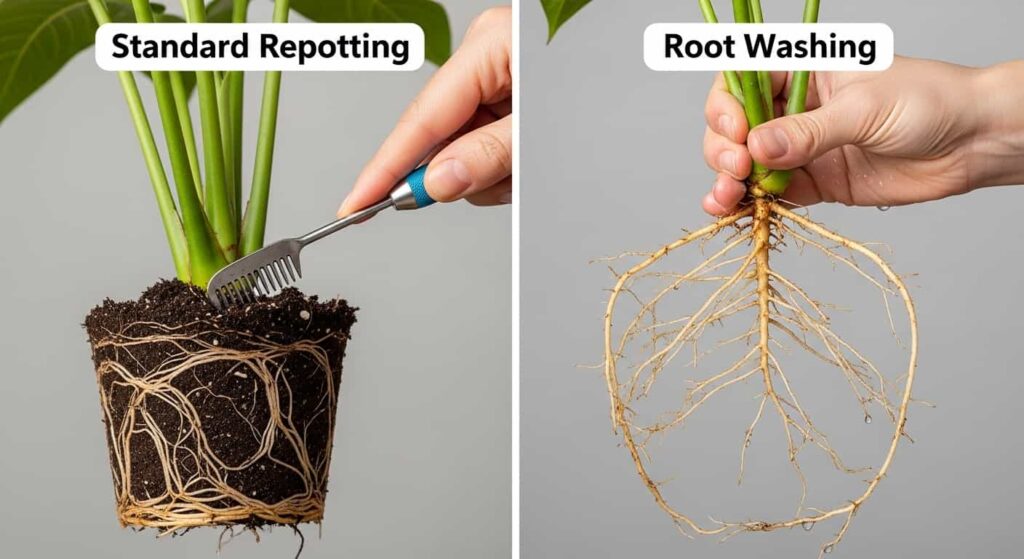
Many growers use “repotting” and “root washing” interchangeably — but they’re not the same procedure:
Standard Repotting:
- Remove 20–30% of the outer root mass
- Replace old substrate with fresh mix
- Quick, low-stress procedure
- Can be done more frequently (every 1–2 years for young trees)
Root Washing:
- Remove 100% of all old soil
- Full inspection and pruning of the entire root system
- Higher stress, longer recovery window
- Reserved for trees with specific needs or on a longer cycle
For most healthy ficus bonsai in well-draining substrate, standard repotting every 1–2 years is sufficient. Reserve root washing for the situations outlined earlier in this article.
Common Mistakes to Avoid
Washing roots in cold water. Cold water shocks tropical roots. Always use room-temperature water — roughly matching the ambient air temperature.
Root washing in autumn or winter. Even a healthy ficus needs warmth to recover. Washing roots when growth is slow dramatically extends recovery and raises the risk of losing the tree.
Removing too much root mass. The goal is to clean and balance, not to minimize. Leave as much fine root structure as possible — it’s what feeds your tree during recovery.
Fertilizing immediately after. The damaged root tips can’t handle fertilizer salts. Wait until you see fresh new growth emerging, which signals the root system has begun regenerating.
Skipping aftercare. Root washing isn’t the end of the process — the 4–6 weeks following the wash are when your care decisions have the biggest impact on recovery. Don’t neglect post-wash monitoring.
Frequently Asked Questions
Can I root wash a ficus bonsai indoors?
Yes, ficus is one of the more forgiving species for indoor root washing since it’s already adapted to warm, stable environments. Just ensure your workspace is warm (above 65°F / 18°C) and that you can provide bright indirect light for recovery.
How long does recovery take after root washing?
Most healthy ficus bonsai show signs of new growth within 3–6 weeks of root washing. Full recovery — where the root system is functioning at full capacity — typically takes 2–3 months.
Should I cut back foliage at the same time as root washing?
Light defoliation or foliage reduction at the time of root washing is acceptable and can reduce the transpiration demand while the root system recovers. However, heavy pruning and root washing at the same time increases overall stress. If you need to do both, prioritize one or stagger them by a few weeks.
What substrate should I use after root washing?
A well-draining inorganic mix is ideal. A standard recommendation for ficus bonsai is approximately 50% akadama, 25% pumice, and 25% lava rock. This provides excellent drainage, aeration, and enough water retention for tropical roots.
My ficus dropped all its leaves after root washing — is it dead?
Not necessarily. Ficus is notorious for dramatic leaf drop in response to stress, including root washing, repotting, changes in light, and temperature shifts. If the branches are still flexible and green under the bark, the tree is alive. Keep it warm, give it indirect light, water lightly, and be patient. New buds should appear within 4–8 weeks.
Summary
Root washing is a powerful technique — but it’s not something your ficus bonsai needs every year. For most trees, every 2 to 3 years is the right rhythm, timed to late spring or early summer, with careful aftercare in the weeks that follow. Reserve root washing for situations where the root system genuinely needs intervention: compacted soil, root rot, pest problems, or transitioning from nursery stock.
When you treat root washing as a deliberate, infrequent reset rather than a routine step, your ficus will reward you with stronger roots, better health, and more impressive development over time.