
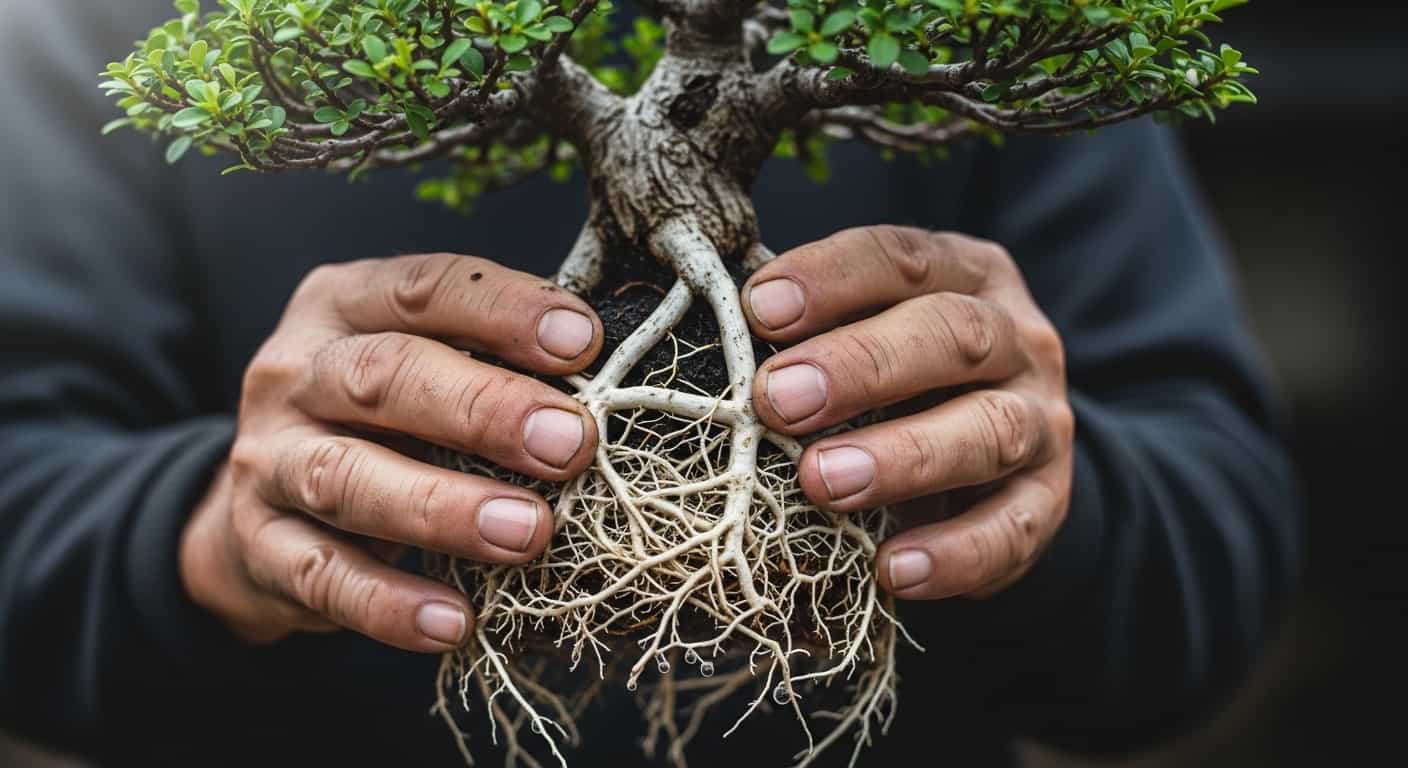
Last Updated on April 15, 2026 by Indoor Plant Nook
TL;DR
- Species first: Deciduous trees and azaleas usually tolerate thorough root washing in early spring. Conifers such as pines and junipers are poor candidates and can decline sharply from the shock.
- Timing: Wash roots in early spring as buds swell, unless you are treating an emergency such as severe root rot.
- Methods: Use gentle dry teasing or the tub method for weak trees or cautious work. Reserve the hose method for vigorous deciduous material or urgent soil removal.
- Aftercare: Keep the tree shaded, out of strong wind, and unfertilized for at least a month while it recovers.
The anxiety around washing bonsai roots
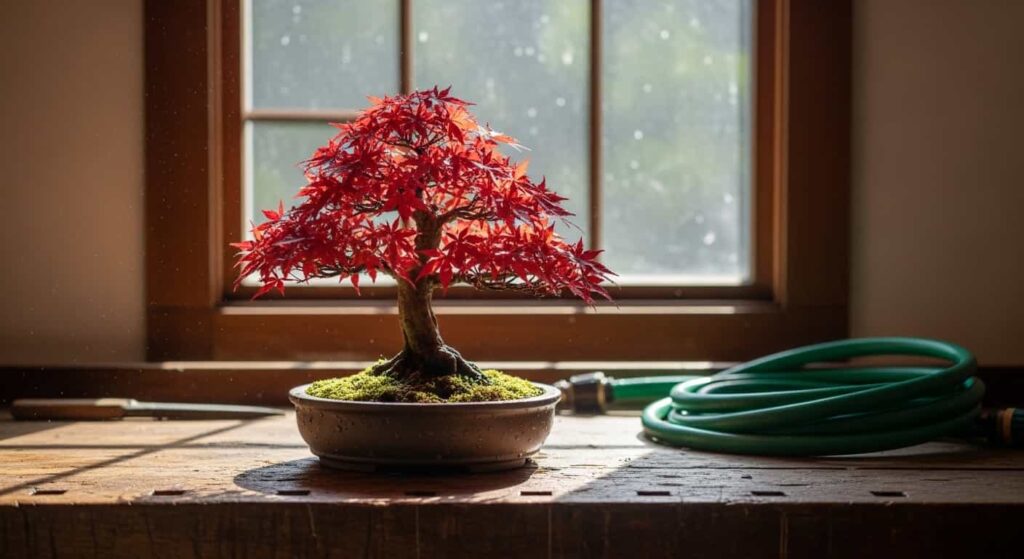
Root washing bonsai trees is one of the most debated practices in the hobby. Some growers treat it as essential for long-term health; others call it reckless. If you hesitate before putting a hose near your tree’s roots, that caution is reasonable.
There is no honest one-word answer. Whether root washing bonsai trees is appropriate depends on species, season, soil condition, and why you are repotting. Used in the right situations, it can rescue trees stuck in heavy nursery soil and give you a clear view of the root system for pruning and health checks. Used blindly—especially on the wrong species or at the wrong time—it can do serious harm.
This article explains what root washing means in bonsai work, which trees tolerate it, how to do it step by step, and how to care for the tree afterward.
What “root washing” means when you work on bonsai
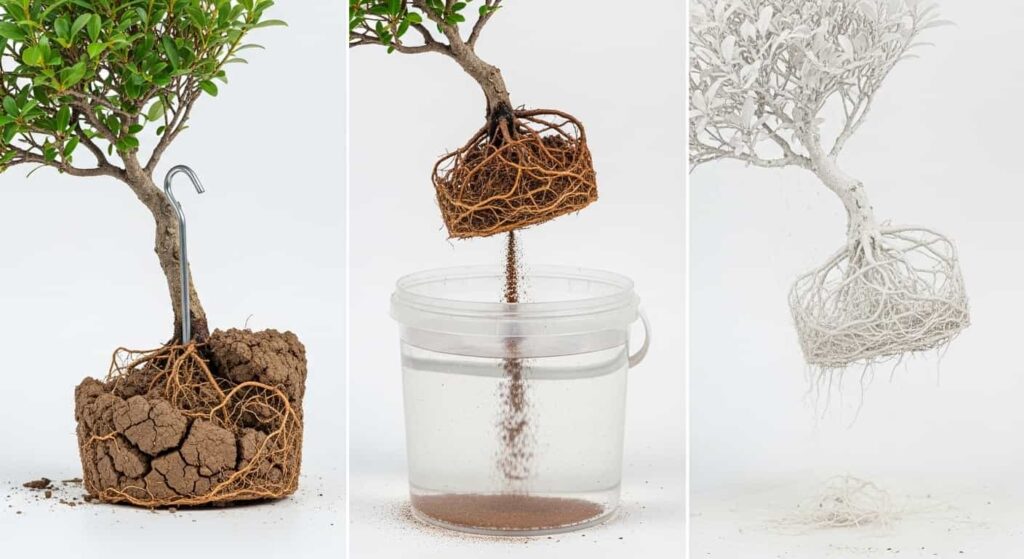
People often use “root washing” to mean different levels of soil removal. Before you add water or pressure, it helps to name what you are doing.
Gentle teasing
You use a wooden chopstick or a metal root hook to loosen old soil while the root ball is still dry—no water yet. This is the least invasive option and fits routine repotting when you only need to remove outer soil and untangle roots.
The tub method
You submerge the root ball in room-temperature water and gently swish or soak until silt softens and rinses away. Mechanical stress stays low compared with blasting soil off with a jet of water.
The hose method
You use a pressurized stream from a garden hose to strip soil until roots are fully exposed. This is the most aggressive approach and leaves the root system the most exposed to drying and damage.
The Bonsai Society of Portland uses a simple analogy: gentle teasing is like removing a coat; the tub method is like stripping down further; the hose method leaves the tree “naked.” The more soil you remove and the rougher the method, the more stress the tree must absorb—so root washing bonsai trees should always match the species and the reason you are doing it.
Why root washing bonsai trees splits opinion
Growers disagree because both benefits and risks are real.
Reasons growers wash roots
- Heavy or toxic soil: Nursery clay or waterlogged “mud” can suffocate roots in a small bonsai pot. Sometimes washing is the practical way to remove that soil completely and address compaction or rot.
- Nebari and structure: With soil gone, you can see the full root arrangement, remove thick downward roots if your styling plan calls for it, and encourage finer surface roots over time.
- Inspection: Bare roots make it easier to find circling roots, rot, pests, or damage that would stay hidden inside the ball.
Reasons growers avoid full washing
- Mycorrhizae: Many trees associate with beneficial fungi on roots. Aggressive washing strips that community; recovery depends on species and aftercare.
- Root hairs: Strong water pressure can tear the fine root hairs that take up water, worsening transplant shock.
- Drying: Exposed roots can dry within minutes in sun or wind, so work must be quick and the tree must go straight into appropriate soil and shelter.
None of this means root washing bonsai trees is always right or always wrong—it means the decision is contextual.
Species: who tolerates root washing on bonsai trees
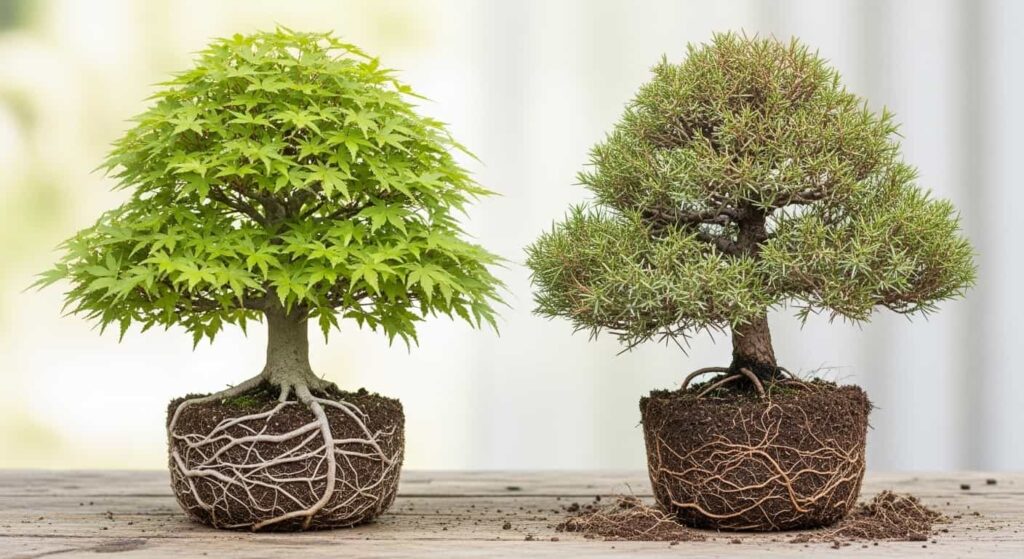
Species is the main lever. A useful mental split is foliage load and seasonal dormancy, not only “deciduous vs evergreen” labels.
Deciduous trees often go leafless in winter; in early spring, before leaves expand, water demand is relatively low, so many species cope better with major root disturbance. Broadleaf evergreens and conifers that keep foliage year-round run higher transpiration stress when roots are stripped bare.
Generally higher tolerance (still use good timing)
- Deciduous trees: Japanese maples, elms, and trident maples are commonly bare-rooted or heavily washed in early spring by experienced growers when the tree is healthy.
- Azaleas: Often treated as more forgiving of tub or hose work if repotting follows immediately into a suitable acidic mix such as kanuma.
Lower tolerance: proceed carefully or avoid full washing
- Conifers: Pines, junipers, and spruce usually do not tolerate full bare-root washing the way many deciduous trees do. Year-round foliage means steady water demand; a stripped root system struggles to match that load. Prefer gradual soil replacement across repottings rather than one aggressive wash.
- In-between species: Olives, boxwood, and similar broadleaf evergreens sit between maples and pines. If you must remove old soil, the tub method is usually safer than a strong hose blast.
When you are unsure, gentler soil removal and staged repotting beat a single aggressive session.
How to root wash bonsai trees: a practical sequence
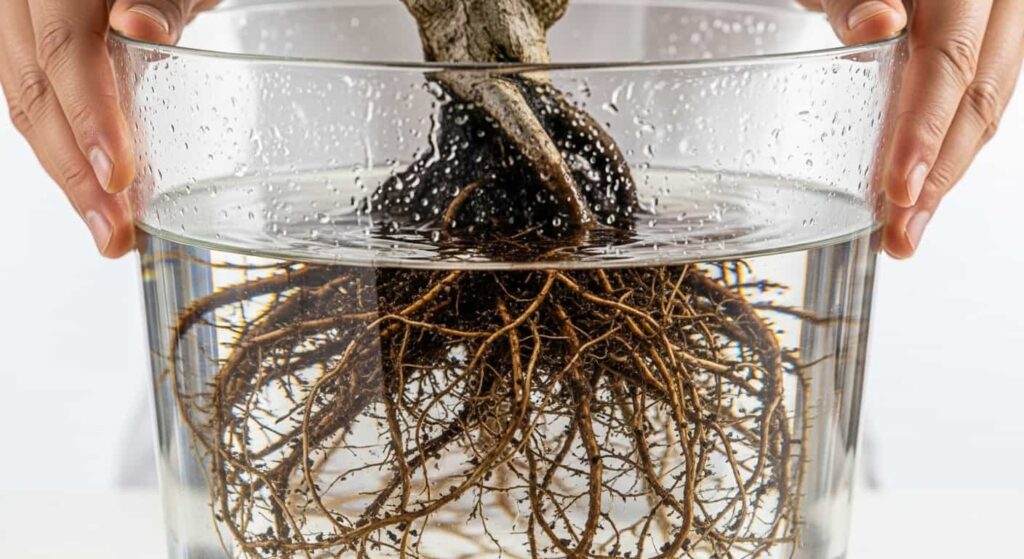
These steps assume you have already decided that root washing fits this tree and situation.
Step 1: Time it for early spring (unless it is an emergency)
Schedule root washing bonsai trees for early spring, as buds swell but before they open. Exception: severe root rot or another urgent problem—then saving the tree outweighs ideal calendar timing.
Step 2: Remove dry soil first
Do not start with high-pressure water. Use a root hook or chopstick to tease away the outer soil while the ball is still dry. Remove as much as you safely can before introducing water.
Step 3: Pick tub or hose based on risk
Match the method to species vigor and soil type. For beginners, weak trees, or conifers you are only partially refreshing, favor the tub method: soak, swish, and repeat gently.
Reserve the hose method for vigorous deciduous material or when you must clear stubborn mud quickly. Use a gentler spray pattern and keep the stream moving—avoid pinning one spot under hard pressure.
Step 4: Prune roots with the system visible
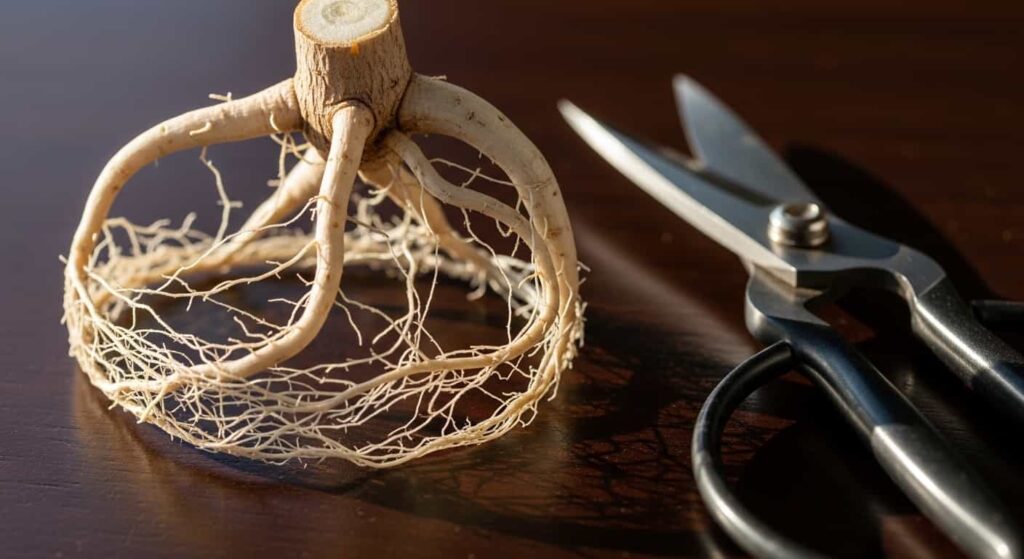
With soil removed, shorten overly long thick roots to encourage finer branching, and remove anything soft, black, or foul-smelling. Clean tools between cuts if you suspect disease.
Step 5: Protect roots and repot immediately
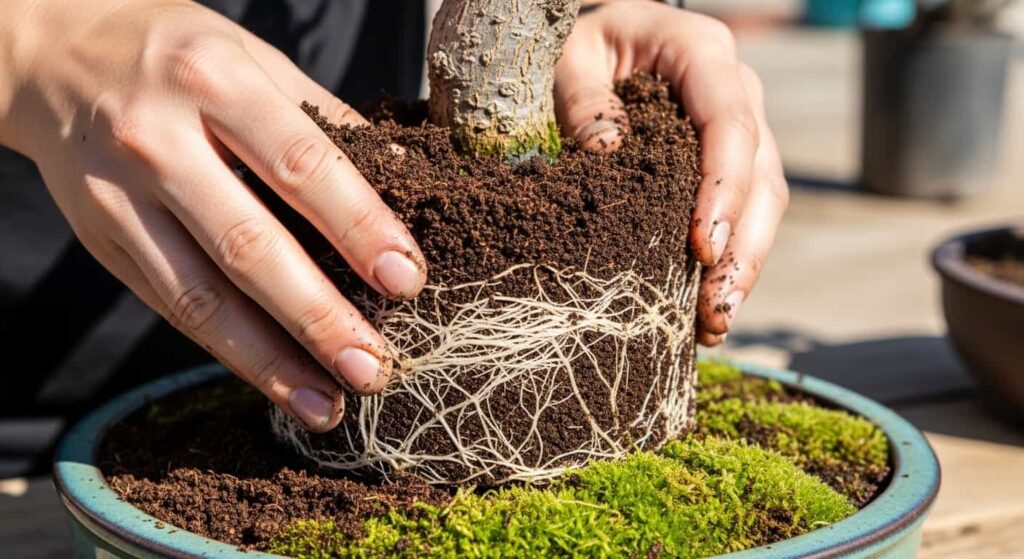
Do not let washed roots sit exposed. Some growers briefly dip problem cases in a very dilute hydrogen peroxide solution to reduce fungal risk; if you are unsure, skip extras and focus on fast, clean potting.
Fill with a free-draining bonsai mix suited to the species. Sphagnum around the base can help hold humidity while new roots establish, which matters a lot after root washing bonsai trees when the surface was heavily disturbed.
Aftercare after root washing bonsai trees
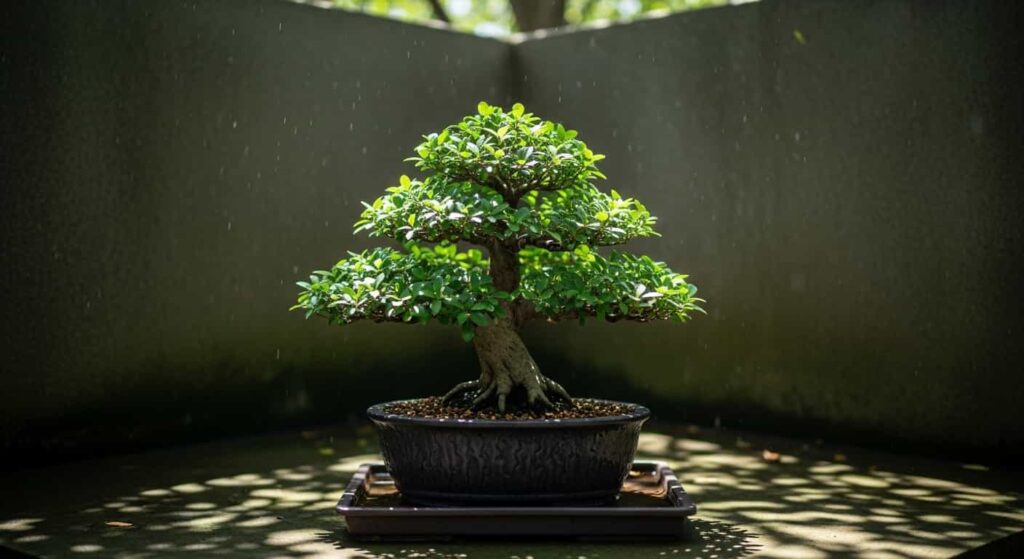
Treat the next weeks as recovery, not business as usual.
Shelter and light
Limit wind and harsh sun. The root system cannot support full transpiration load yet. Bright shade or dappled light beats full midday exposure until new growth hardens.
Water
Keep the mix evenly moist, not sodden. Open bonsai soil should drain; check daily while the tree is unstable.
Hold fertilizer
Avoid feeding for at least a month, often longer on weak trees. Roots need to heal before they can handle strong salts; early feeding risks burn. That pause also allows beneficial soil life to re-establish without being overridden by heavy nitrogen.
Summary
Root washing bonsai trees is not universally safe or universally harmful. It is a precise tool: powerful when species, timing, method, and aftercare line up, and risky when any of those are ignored.
When you are uncertain, default to gentler soil removal, staged work on sensitive species, and early spring timing. Patience and a chopstick often outperform a hose—until the situation clearly calls for more.
Practical rule: Match the intensity of root washing to the tree in front of you. The right approach for a vigorous maple in spring is not the right approach for a juniper on a hot afternoon.