
Last Updated on March 6, 2026 by Indoor Plant Nook
TL;DR: The Quick Verdict on Root Washing
- It depends on the tree: Deciduous trees and Azaleas usually tolerate root washing well in early spring. Conifers, like pines and junipers, despise it and can die from the shock.
- Timing matters: Only wash roots in early spring as buds begin to swell, unless you are dealing with an emergency like severe root rot.
- Choose your method: Use gentle teasing or the “tub method” for weak trees. Save the high-pressure “hose method” for vigorous trees or emergency rescues.
- Aftercare is crucial: Keep a newly washed tree shaded, sheltered from the wind, and completely unfertilized for at least a month while it recovers.
The Anxiety of Bare Roots
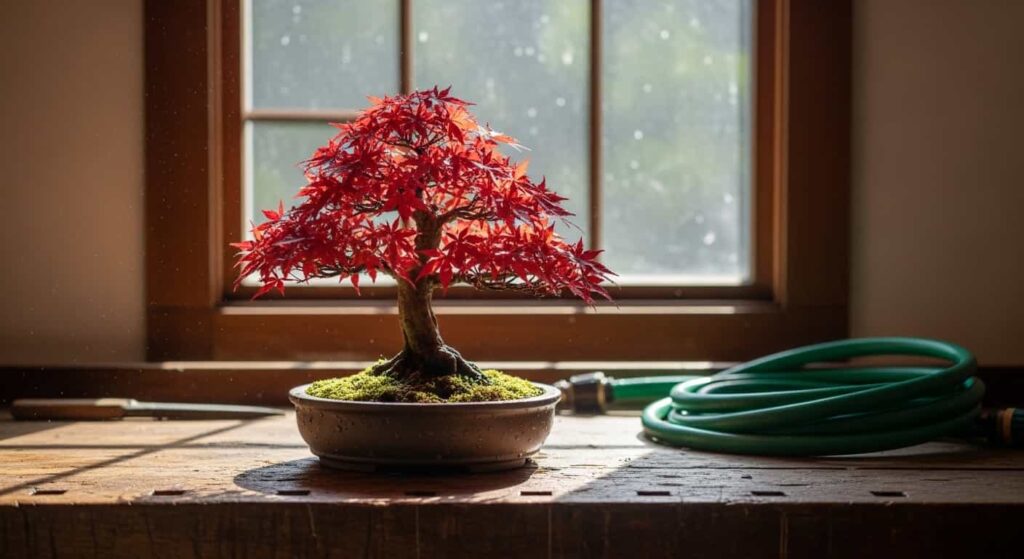
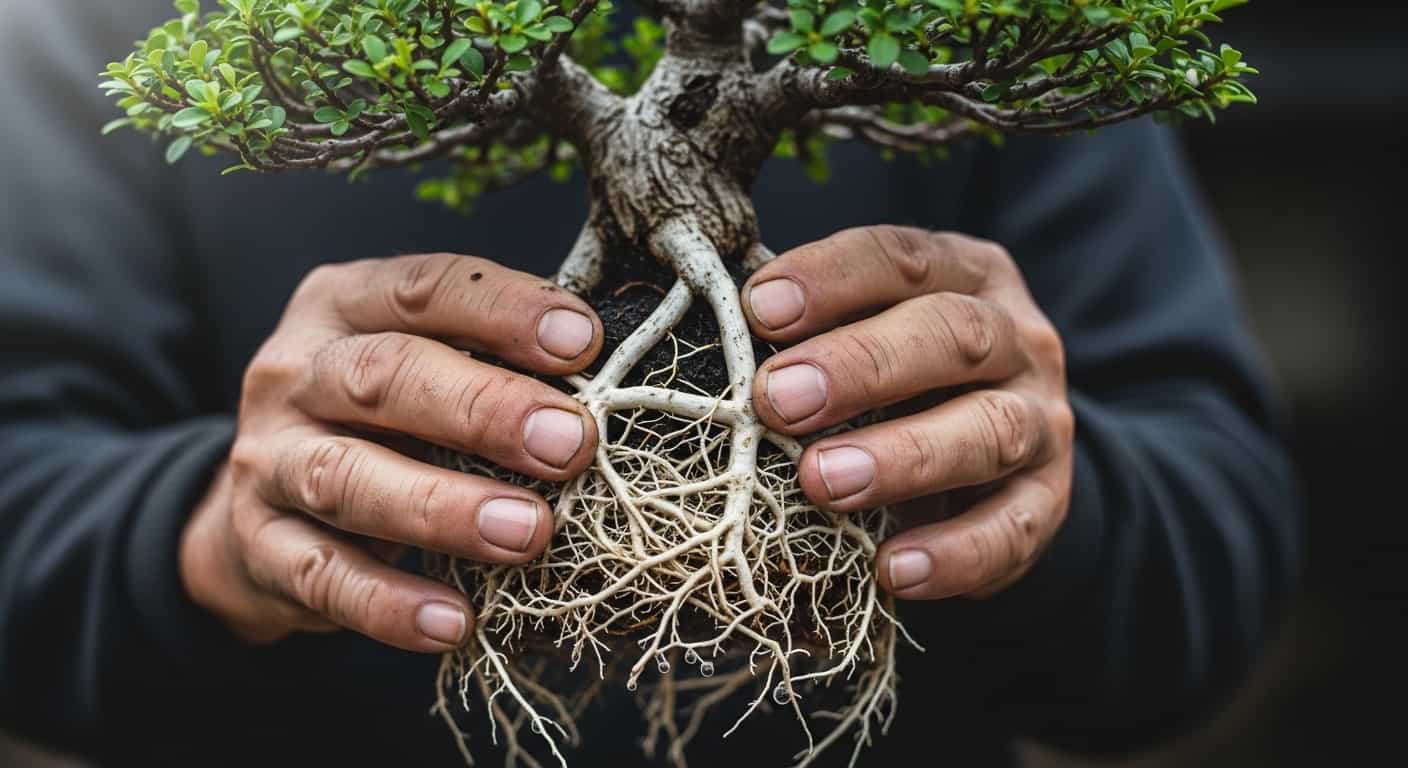
Root washing is one of the most heavily debated topics in bonsai tree care. Some enthusiasts view it as an essential step for long-term health, while others see it as an absolute death sentence. If you feel anxious about taking a hose to your prized tree’s root system, you are not alone.
A simple “yes” or “no” answer regarding the safety of root washing is dangerous. Blanket advice fails to account for the massive variables at play. The safety of this practice depends entirely on the exact species of your tree, the current season, and the condition of the soil.
Ultimately, root washing bonsai trees is a safe and necessary procedure in specific situations. It works wonders when you need to rescue a root-bound tree or remove old, waterlogged nursery mud. However, you must perform the procedure using a specific technique tailored to the exact physiology of your tree.
What Does “Root Washing” Really Mean?
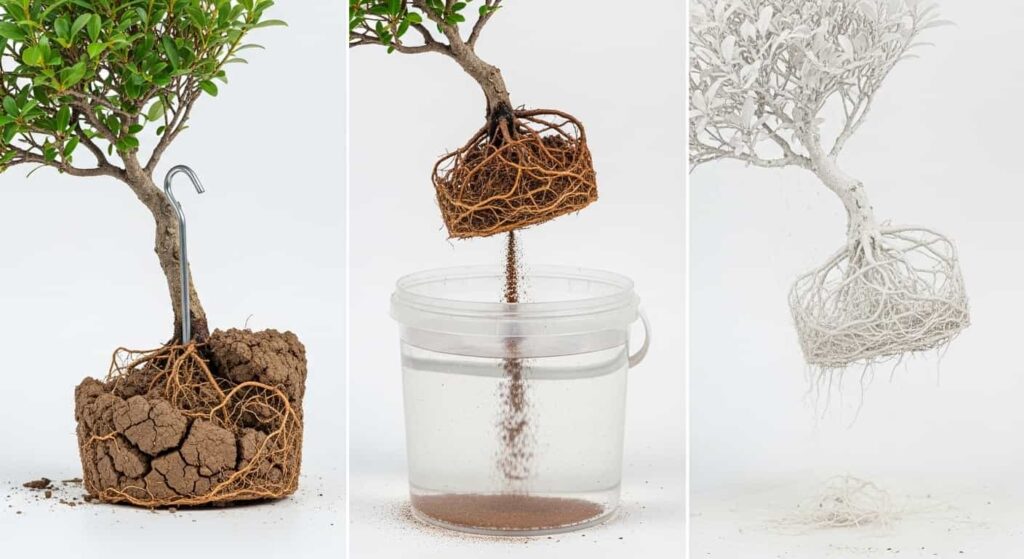
When people talk about root washing, they often mean entirely different things. Let’s clarify the spectrum of root intervention before you grab a hose.
Gentle Teasing
This involves using a wooden chopstick or a metal root hook to carefully loosen old soil. You do this completely dry, without introducing any water. This is the least invasive method and works well for routine repotting.
The “Tub Method”
This involves submerging the root ball in a bucket or tub of room-temperature water. You gently swish the roots around, allowing the soil sediment to naturally soften and fall away. It cleans the roots without applying harsh mechanical pressure.
The “Hose Method”
This is the most aggressive approach. You use a pressurized stream of water from a garden hose to blast away every single soil particle until the roots are completely bare.
The Bonsai Society of Portland uses a helpful analogy for this process. Gentle teasing is like taking off a heavy coat. The tub method is like stripping down to your underwear. The hose method leaves the tree completely naked. The more exposed the roots become, the more vulnerable the tree is to environmental shock.
The Great Debate: Why Some Trees Survive and Others Perish
Why do some growers swear by root washing while others strictly forbid it? Both sides have valid arguments rooted in biology.
The Case for Naked Roots
Those who advocate for washing roots point to a few massive benefits:
- Emergency Rescue: Sometimes, you buy a nursery tree planted in dense clay or mud. This heavy soil retains too much water and suffocates the roots in a small bonsai pot. Washing is the only way to remove this toxic soil completely and save the tree from root rot.
- Nebari Development: Washing allows you to see the entire root structure clearly. You can completely remove large, downward-growing roots to encourage beautiful radial surface roots, known as nebari.
- Complete Inspection: Bare roots allow for a 100% thorough inspection. You can easily spot and treat root mealybugs, rot, or circling roots that threaten to strangle the trunk base.
The Case for Root-Ball Integrity
Those who argue against washing roots highlight some serious risks:
- Mycorrhizal Destruction: Many trees rely on beneficial fungi, called mycorrhizae, which live on their roots. These fungi help the tree absorb nutrients and water. Washing completely strips these beneficial organisms away.
- Root Hair Trauma: High-pressure water easily destroys the microscopic, delicate root hairs responsible for water uptake. This causes severe, sometimes fatal, transplant shock.
- Immediate Hydration Stress: A “naked” root dries out in a matter of seconds when exposed to wind and air. This requires you to work at lightning speed and provide meticulous aftercare.
Species Sensitivity: The Deciduous vs. Evergreen Rule
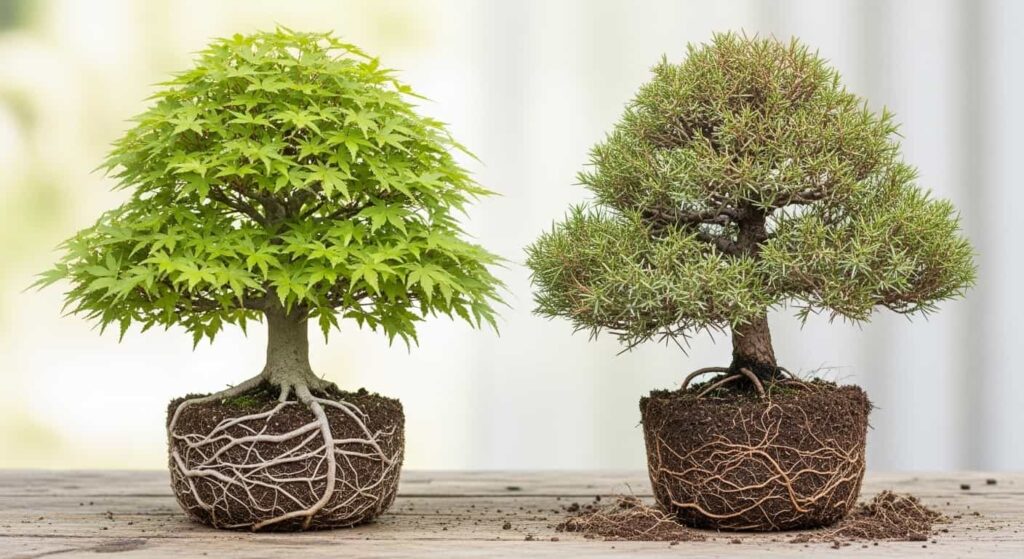
The most critical factor in safe root washing methods is the species of the tree. The physiological difference between deciduous trees and evergreens dictates how much shock they can handle.
The main factor is “foliage load.” Deciduous trees drop their leaves and go completely dormant in the winter. In early spring, before leaves appear, they have zero foliage load. They do not need to push massive amounts of water upward, meaning they can handle severe root shock. Evergreens, however, hold their needles or leaves all year. They are constantly trying to support foliage, making root disturbance incredibly stressful.
The “Safe” List (Higher Tolerance)
- Deciduous Trees: Japanese Maples, Elms, and Trident Maples generally tolerate root washing well. Growers routinely bare-root these species in early spring during normal repotting.
- Azaleas (The Exception to the Rule): Azaleas are incredibly resilient. Experienced growers frequently report great success using both the tub and hose methods on Azaleas, provided they pot them immediately into pure Kanuma soil afterward.
The “Risky” List (Lower Tolerance)
- Conifers: Pines, Junipers, and Spruce trees absolutely hate bare roots. Because they retain their foliage year-round, they have a constant, non-stop demand for water. A bare-rooted conifer often cannot supply enough moisture to its needles, leading to rapid decline. You should never thoroughly wash their roots. If you need to change their soil, do it in stages. Replace half the root ball’s soil one year, and wait until the following repotting season to do the other half.
- The “Proceed with Caution” List: Broadleaf evergreens like Olives and Boxwoods fall in the middle. They are tougher than pines but more sensitive than maples. If you must work on their roots, the “Tub Method” is strongly preferred over the “Hose Method.”
The Step-by-Step Guide to Safe Root Washing Methods
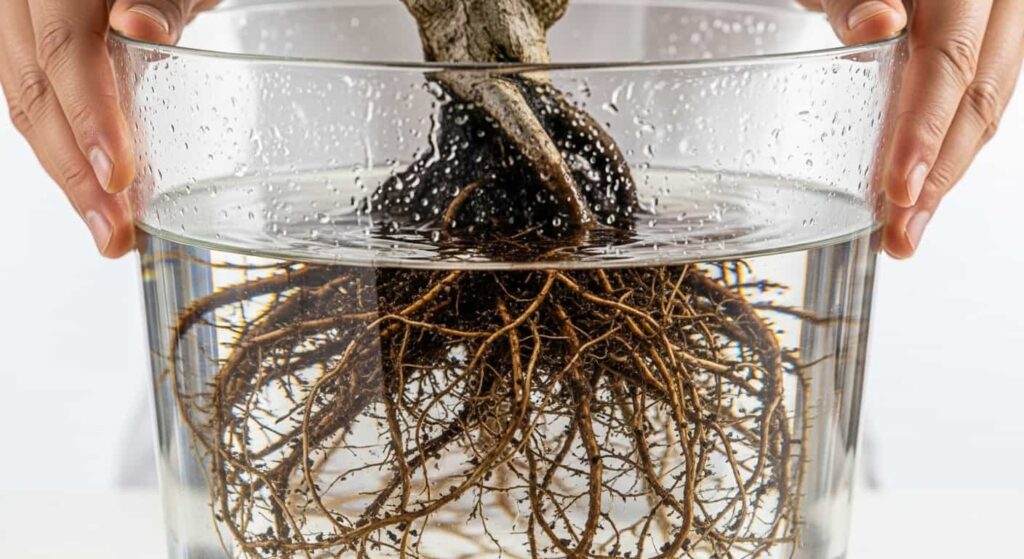
If you decide your tree needs a wash, follow these steps to minimize stress and maximize success.
Step 0: Timing is Everything
Only wash roots in early spring, just as the buds begin to swell but before they open. The only exception is an emergency. If you discover severe root rot during the summer, you must take immediate action. In a true emergency, the priority is saving the tree from an immediate threat. A compromised root system in rotting soil has no chance of survival, so intervention, regardless of season, is the only option.
Step 1: Dry Removal
Never start with water. Use a root hook or chopstick to gently tease away the bulk of the old soil. Remove as much as you can while the root ball is still dry.
Step 2: Choosing Your Method Based on Risk
Assess the tree’s health and species.
For beginners or weak trees, use the Tub Method. Submerge the roots and swish gently to avoid mechanical damage.
For advanced growers working with vigorous deciduous trees or heavy mud rescues, carefully use the Hose Method. Use a gentle spray nozzle to clear away the remaining debris.
Step 3: Root Pruning
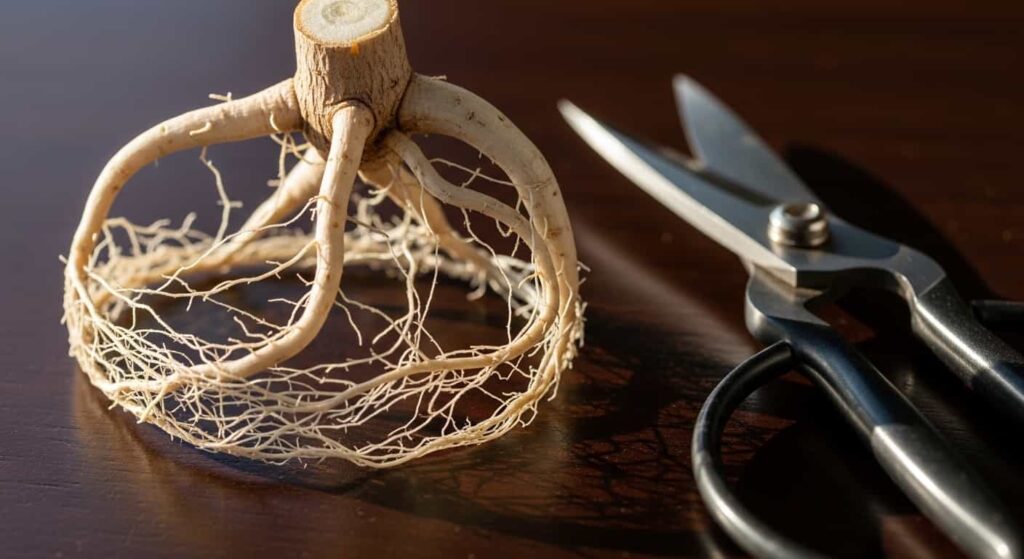
Once the roots are completely clean and visible, prune back the long, thick roots. This encourages the growth of fine, fibrous feeder roots. Immediately cut away any mushy, black, or foul-smelling roots.
Step 4: Protection and Potting
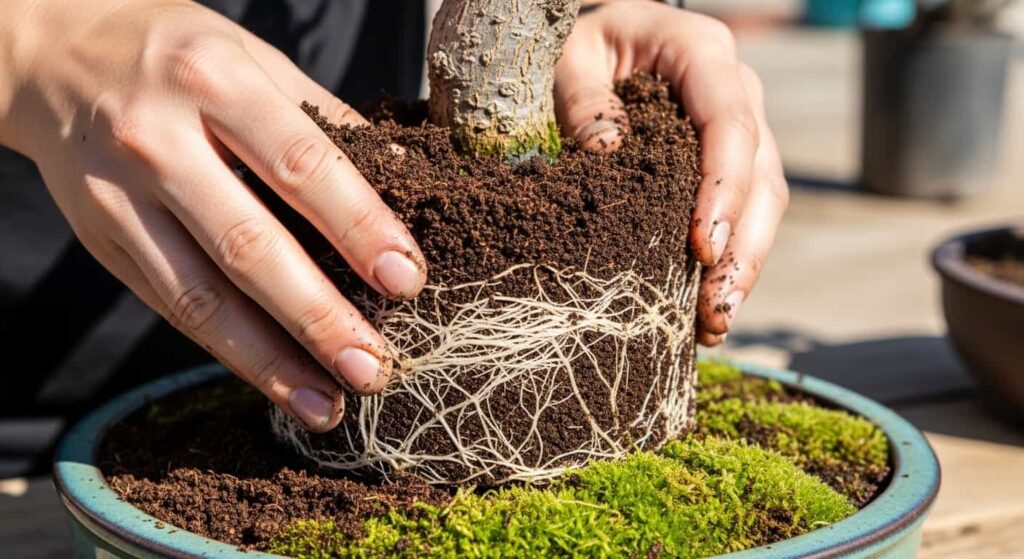
Do not let the roots dry out. If you are working on a delicate rescue, consider dipping the roots in a heavily diluted hydrogen peroxide solution to sterilize them and prevent fungal infections. Pack high-quality bonsai soil around the roots immediately.
Some growers pack sphagnum moss around the base to encourage new surface rooting. Sphagnum moss creates a humid microclimate around the base of the tree, which is incredibly effective at encouraging the growth of new, fine feeder roots from the trunk and major root stubs, accelerating recovery and nebari development.
Aftercare: The Recovery Zone
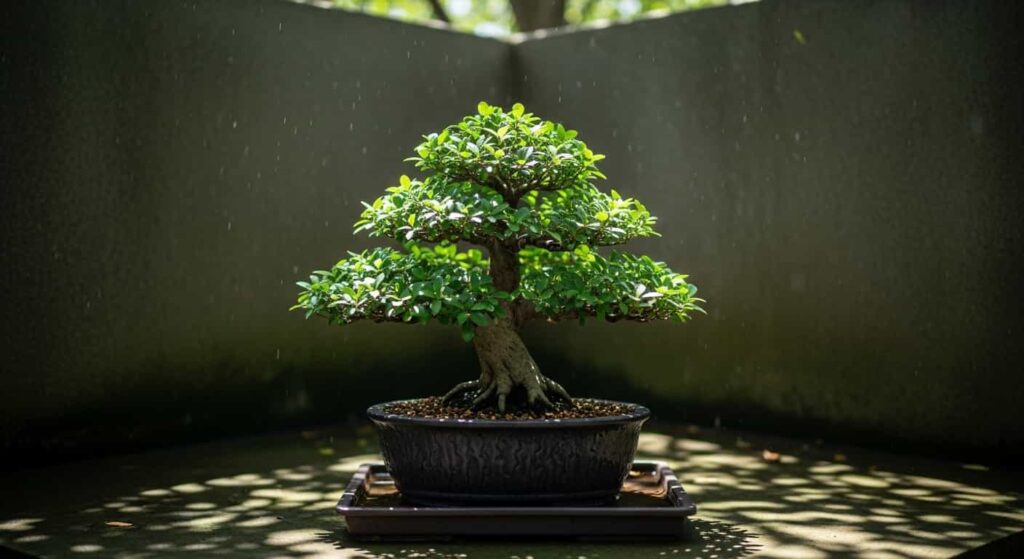
Root washing is a major surgery. Your tree now requires an intensive care protocol to survive the recovery period. Excellent bonsai tree care immediately following a wash dictates whether the tree lives or dies.
No Wind and Partial Shade
Your tree cannot transpire properly with a freshly pruned and washed root system. Place the pot in a highly sheltered spot away from drying winds. Provide bright shade and protect the tree from harsh, direct sunlight until new growth hardens off.
Careful Watering
Keep the new soil moist, but never waterlogged. Your fresh, clean bonsai soil mix should drain freely. Monitor the moisture levels daily.
Absolutely No Fertilizer
Do not feed the tree for at least a month, and sometimes longer. Fertilizing a recently root-washed tree is like giving a heavy steak dinner to a patient recovering from stomach surgery. The damaged roots cannot process the heavy nutrients, and the fertilizer salts will simply burn them.
This waiting period is not just about avoiding root burn. It gives the tree time to begin rebuilding its relationship with beneficial mycorrhizal fungi in the fresh soil. High-nitrogen fertilizers can actually inhibit this crucial re-establishment process.
The Verdict
So, is root washing safe for bonsai trees? Yes, but only with informed consent and careful execution.
Think of root washing as a scalpel, not a hammer. It remains perfectly safe when you use it for the right reasons, on the right trees, at exactly the right time of year. It becomes incredibly unsafe and destructive when applied indiscriminately to sensitive conifers or attempted during the heat of the active growing season.
Final Tip: When in doubt, proceed cautiously. The next time you get the garden hose out to blast away soil from your trees, think about the specific species in front of you. A little patience and gentle teasing often goes much further than a high-pressure wash.