
If you have ever stared at a beautiful Phalaenopsis or Cattleya and wondered, “Can I grow this from scratch?”, you are not alone. Many plant enthusiasts dream of growing orchids from seed, but they often hear it is impossible for the average home gardener.
So, can you grow orchids from seeds at home?
The short answer is yes, but it is not like planting sunflower seeds in the garden. Growing orchid seeds requires patience, specific conditions, and a bit of scientific know-how. Unlike standard garden plants, orchids have a unique relationship with fungi in nature that makes their germination process complex. However, with the right tools—like an orchid flask—and careful attention to detail, you can successfully raise your own orchid seedlings.
In this guide, we will break down exactly how to plant orchid seeds, explain the fascinating science behind orchid seed germination, and walk you through the process from pod to bloom.
Do Orchids Have Seeds?
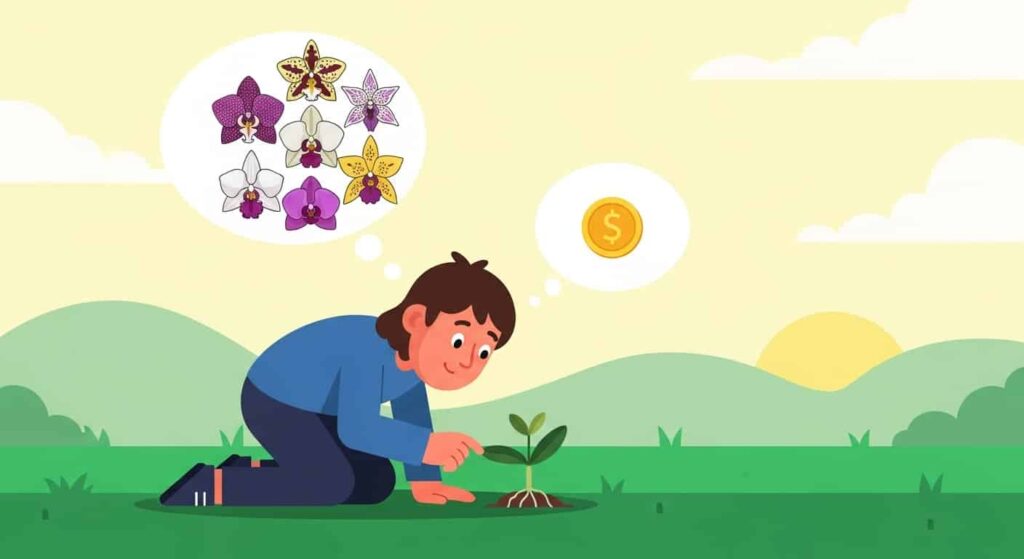
Yes, orchids absolutely have seeds. In fact, a single orchid pod (seed capsule) can contain millions of them. After an orchid flower is pollinated, the ovary swells and eventually develops into a capsule packed with dust-like seeds.
In the wild, these pods burst open, and the wind carries the tiny seeds to new locations, often settling on tree bark or moss. Because the seeds are so small and lack their own energy reserves, only a tiny fraction of them survive to become adult plants. This is why an orchid produces so many seeds at once—it is a numbers game for survival.
What Do Orchid Seeds Look Like?
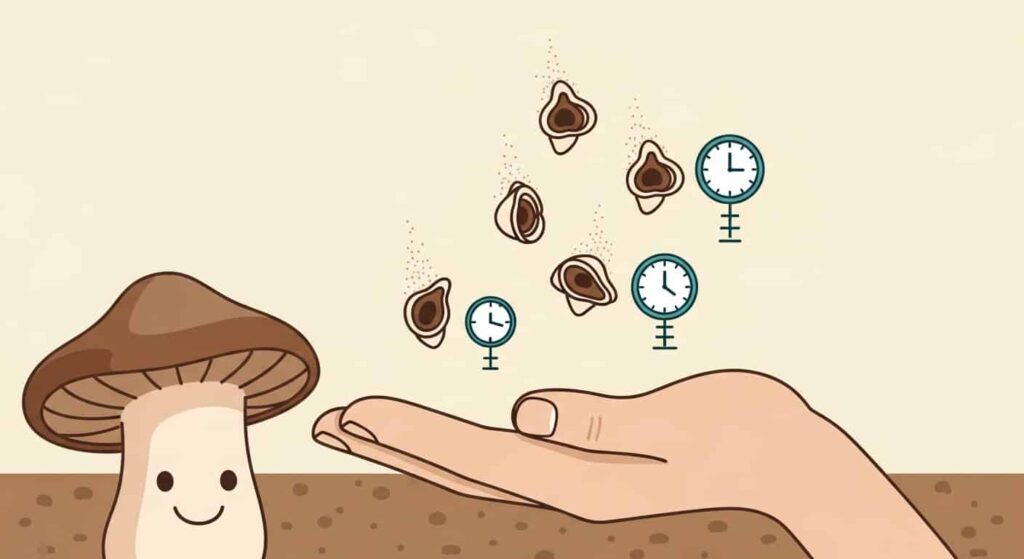
If you are expecting something that looks like a bean or a grain of rice, you will be surprised. Orchid seeds are microscopic.
So, what do orchid seeds look like to the naked eye? They look like fine dust or powder.
- Size: They are often as small as a speck of dust.
- Structure: Unlike most seeds (which have an endosperm to provide food for the embryo), orchid seeds have no food storage. They are just a tiny embryo inside a thin, papery coating.
- Color: They can range from cream to yellow or brown.
Because they lack energy reserves, they cannot germinate in regular soil like a vegetable seed. They need an external food source immediately upon germination, which leads us to the unique way how to grow orchids from seed works.
How Orchid Seed Germination Works
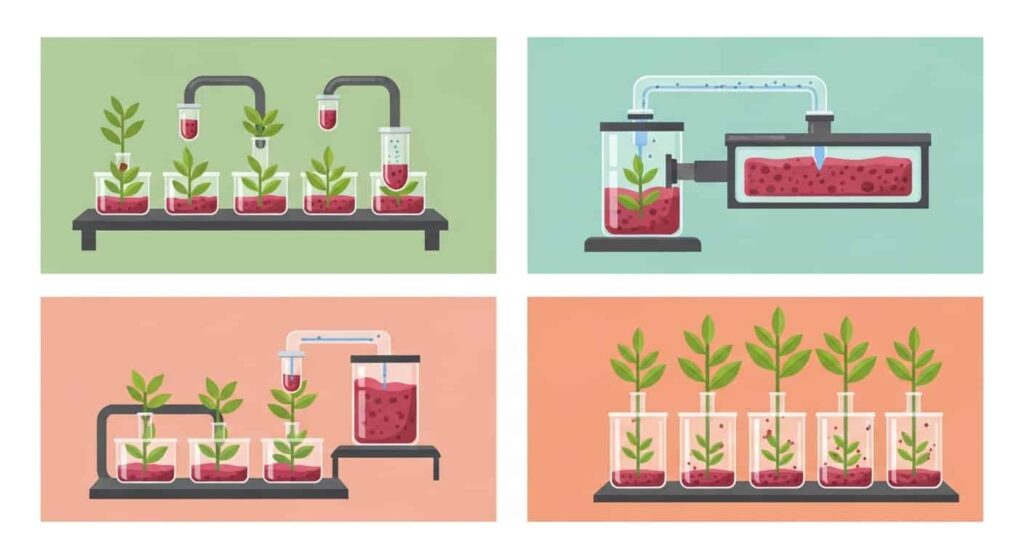
Orchid seed germination is a symbiotic process. In nature, the seed lands on a substrate and must be infected by a specific type of mycorrhizal fungus. This fungus penetrates the seed and provides the necessary nutrients (sugars) for the embryo to grow.
In cultivation, we replicate this relationship in two ways:
- Symbiotic Germination: Using the actual fungus (rare for beginners).
- Asymbiotic Germination (Flasking): Placing the seeds in a sterile bottle (flask) on a nutrient-rich agar jelly that replaces the fungus. This is the most common method for growing orchids from seeds at home.
How to Plant Orchid Seeds Step by Step
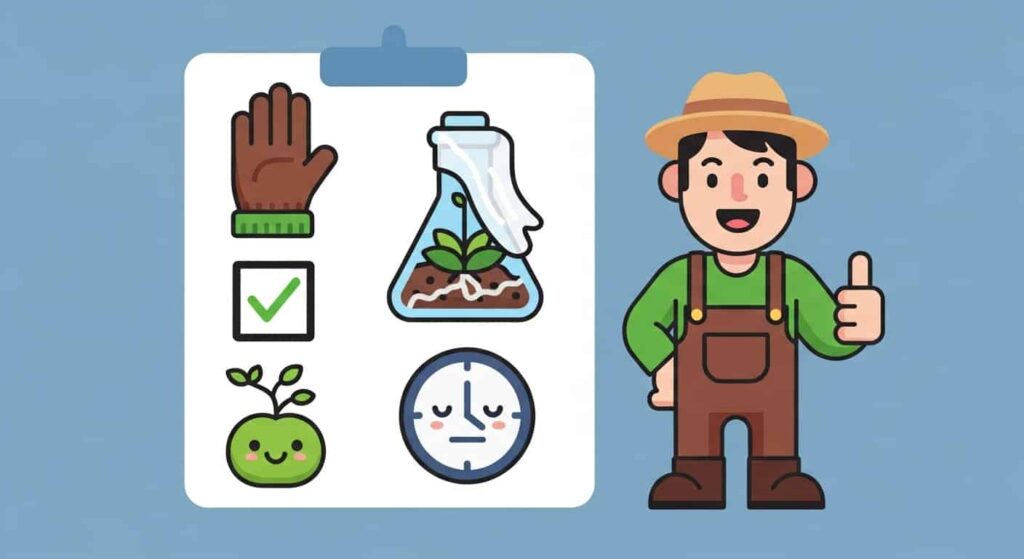
The most reliable method for how to germinate orchid seeds is the flasking method. This requires creating a sterile environment to prevent mold and bacteria from killing the tiny seedlings.
Step 1: Harvest the Orchid Pod
Knowing how to harvest orchid seeds is the first hurdle. You must wait for the pod to mature but harvest it just before it splits open (green pod method) or right after it splits (dry seed method). Green pods are often easier because the seeds inside are still sterile.
Step 2: Prepare the Flasking Medium
You will need a special orchid seed germination kit or materials to make your own agar medium. This usually contains:
- Agar (a gelling agent)
- Sugars (energy source)
- Nutrients (minerals and vitamins)
- Sometimes banana pulp or coconut water
Boil the mixture, pour it into glass jars (flasks), and sterilize the jars in a pressure cooker to kill any bacteria.
Step 3: Sterilize the Seeds
If you harvested a split pod, the seeds are contaminated with airborne bacteria. You must sterilize them.
- Place the “dust” seeds in a small tube.
- Add a solution of small bleach and water (often with a drop of dish soap).
- Shake gently for a few minutes.
- Rinse with sterile distilled water.
Step 4: Sowing the Seeds
This is the most critical step of planting orchid seeds. You need a “glove box” or a sterile workspace (often created with a plastic storage bin turned on its side) to prevent mold spores from entering your jar.
- Open your sterile flask inside the clean box.
- Use a sterile dropper or loop to transfer the seeds onto the surface of the agar jelly.
- Seal the jar tightly immediately.
Step 5: Incubation
Place the flasks in a warm area with low light. Do not put them in direct sun, or you will cook the seeds. Now, the waiting game begins.
Growing Orchids From Seed Without Agar
Is it possible to learn how to grow orchids from seed without agar? Technically, yes, but success rates are extremely low.
Some growers attempt to sprinkle seeds around the base of the mother plant. The idea is that the parent plant’s roots already have the beneficial fungus needed for germination.
- The Method: Sprinkle fresh seeds directly onto the potting media of an established orchid.
- The Reality: It rarely works. The environment in a home is usually too dry, and the specific fungus might not be present or active enough to support the seedling.
For reliable results, sticking to orchid flasking is highly recommended.
Orchid Flasking Explained
Orchid flasking is essentially in-vitro fertilization for plants. The flask acts as a mini-greenhouse that is 100% free of disease.
Inside the orchid flask, the high humidity prevents the tiny seedlings from drying out, and the sugary agar provides all the food they need. The seeds will stay in this flask for months, sometimes up to a year, transforming from dust into small green blobs (protocorms) and finally into recognizable orchid seedlings with tiny leaves and roots.
You can buy a pre-made orchid seed germination kit online, which simplifies this process by providing pre-sterilized flasks and instructions.
Best Growing Medium for Orchid Seedlings
Once your seedlings are large enough to be removed from the flask (de-flasking), they need to be acclimated to the real world. They cannot go straight into bark chips. They need a softer, more moisture-retentive mix.
The best growing medium for orchids at the seedling stage includes:
- Sphagnum Moss: High quality, long-fiber sphagnum moss is the gold standard. It holds moisture evenly without being soggy.
- Fine Perlite: Adds aeration.
- Fine Bark: Very small grade bark can be mixed in as they get older.
What kind of soil do orchids need when they are babies? None. Never use standard potting soil. It will suffocate the delicate roots of a seedling orchid immediately.
Can Orchids Grow in Soil?
A common question is: Do orchids grow in soil, and can orchids be planted in soil?
Generally, no. Most orchids we grow as houseplants (epiphytes) grow on trees in nature. Their roots need air circulation. Planting them in dense potting soil will cause root rot and kill the plant.
However, there are terrestrial orchids (like Cymbidiums or Jewel Orchids) that grow in the ground. But even for these, standard garden soil is too heavy.
- Epiphytic Orchids (Phalaenopsis, Cattleya): Need chunky bark, charcoal, and perlite.
- Terrestrial Orchids: Need a lighter, well-draining mix, often containing peat moss, sand, and perlite.
So, what do you plant orchids in? Always choose an orchid growing medium specific to the variety you are growing.
Orchid Growing Stages (Seed to Bloom)
Understanding the orchid growing stages helps manage expectations. Growing orchid seeds is a marathon, not a sprint.
- Germination: The seed swells and turns green. This can take weeks or months.
- Protocorm Stage: The seed becomes a small, round, green blob called a protocorm.
- Differentiation: Tiny leaves and roots begin to emerge from the protocorm.
- Seedling Stage: The plant looks like a miniature orchid. It is still in the flask.
- De-flasking: The seedlings are removed from the jar and planted in community pots (compots) with sphagnum moss.
- Hardening Off: The plants adjust to lower humidity and normal air.
- Maturation: The plant grows larger, developing pseudobulbs or larger leaves.
- Flowering: Finally, the plant produces its first bloom.
How Long Does It Take to Grow Orchids From Seed?
If you are asking how long does it take for orchids to grow from seed to flower, prepare yourself.
- Germination: 1 to 9 months.
- Flask Time: 6 to 12 months inside the jar.
- Seedling to Bloom: 3 to 8 years (depending on the species).
Phalaenopsis (Moth Orchids) are among the faster ones, sometimes blooming in 3–4 years. Vandas or Cattleyas can take 5–7 years or more. How to grow an orchid from seed is a project for the truly patient gardener.
Common Mistakes to Avoid
When learning how to plant orchid seeds, beginners often stumble on these blocks:
- Contamination: This is the #1 killer. If your workspace isn’t sterile, mold will eat your agar jelly and seeds within days.
- Old Seeds: Orchid seeds lose viability quickly. Harvest and sow as soon as possible.
- Wrong Medium: Using standard garden soil instead of specialized growing medium for orchids.
- Direct Sun: Cooking the flasks in a sunny window. They need gentle, indirect light.
- Rushing De-flasking: Taking seedlings out of the humid jar too early often results in them drying out and dying.
Beginner Tips for Better Success
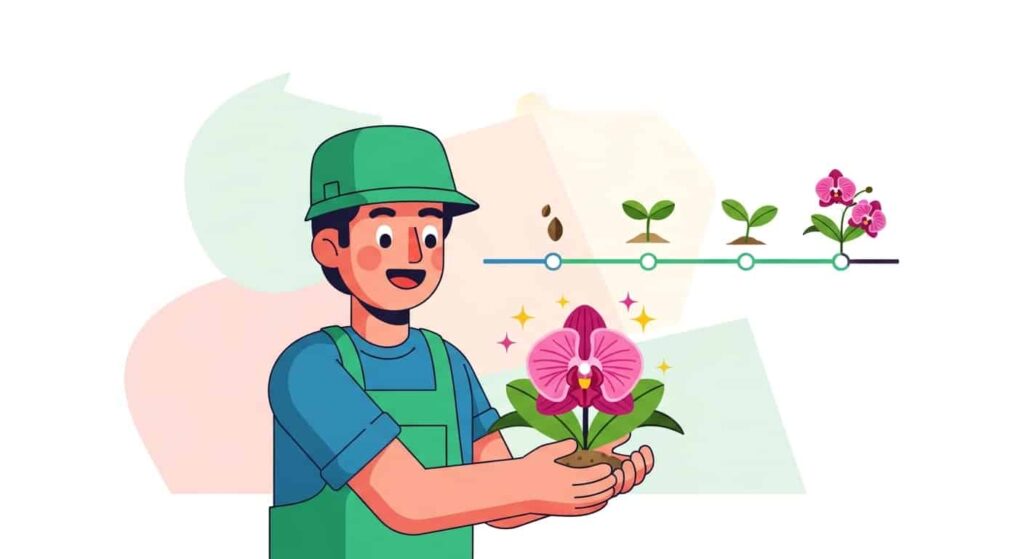
To improve your odds of how to grow an orchid from seed:
- Start with a Kit: Buy a pre-made flasking kit rather than trying to mix agar from scratch your first time.
- Buy Flasks: Instead of sowing seeds, try buying a flask of seedlings that are already germinated. You can practice “de-flasking” and raising the babies, which is easier than the laboratory work of germination.
- Research Species: Start with easier varieties like Phalaenopsis or Epidendrum.
- Join a Society: Local orchid societies often have members who do flasking and can mentor you on orchid cultivation.
Growing orchids from seeds is one of the most rewarding challenges in horticulture. While it requires patience and precision, seeing that first speck of green dust turn into a blooming flower years later is an experience unlike any other. Whether you try your hand at orchid flasking or just appreciate the complexity of orchid seed germination, you now have the knowledge to understand how these incredible plants begin their lives.
Frequently Asked Questions (FAQs)
Can you grow orchids from seeds easily?
No, it is considered an advanced gardening technique. Because orchid seeds lack energy reserves, they require sterile laboratory conditions (flasking) and a special nutrient-rich agar to germinate successfully. It is difficult to do in a standard home environment without specific equipment.
What do you plant orchids in?
Adult epiphytic orchids should be planted in a well-draining orchid growing medium, typically consisting of fir bark, charcoal, perlite, and sometimes sphagnum moss. Terrestrial orchids may tolerate a peat-based mix, but never use standard garden soil.
How do I germinate orchid seeds at home?
The best way is to use the flasking method. You sterilize the seeds and place them inside a sterile glass jar containing a nutrient agar gel. The jar is sealed to keep out bacteria and mold while the seeds germinate over several months.
Where to plant an orchid once it is grown?
Once an orchid is mature, plant it in a pot with drainage holes using a bark-based medium. Place the pot in a location with bright, indirect light, usually near an east-facing window. Do not plant epiphytic orchids directly in the ground or in heavy soil.
How to harvest orchid seeds?
Watch the seed pod carefully after pollination. As it begins to turn yellow or brown, you can harvest it. The “green pod” method involves harvesting just before it splits to ensure the seeds inside are still sterile. If it splits, catch the dust-like seeds in a paper envelope, but be aware they will need sterilization.
Do orchids grow in soil like regular flowers?
Most popular orchids (like Phalaenopsis) do not grow in soil. They are air plants that grow on trees. Their roots need significant airflow. Planting them in dense soil will suffocate the roots and cause the plant to die.