
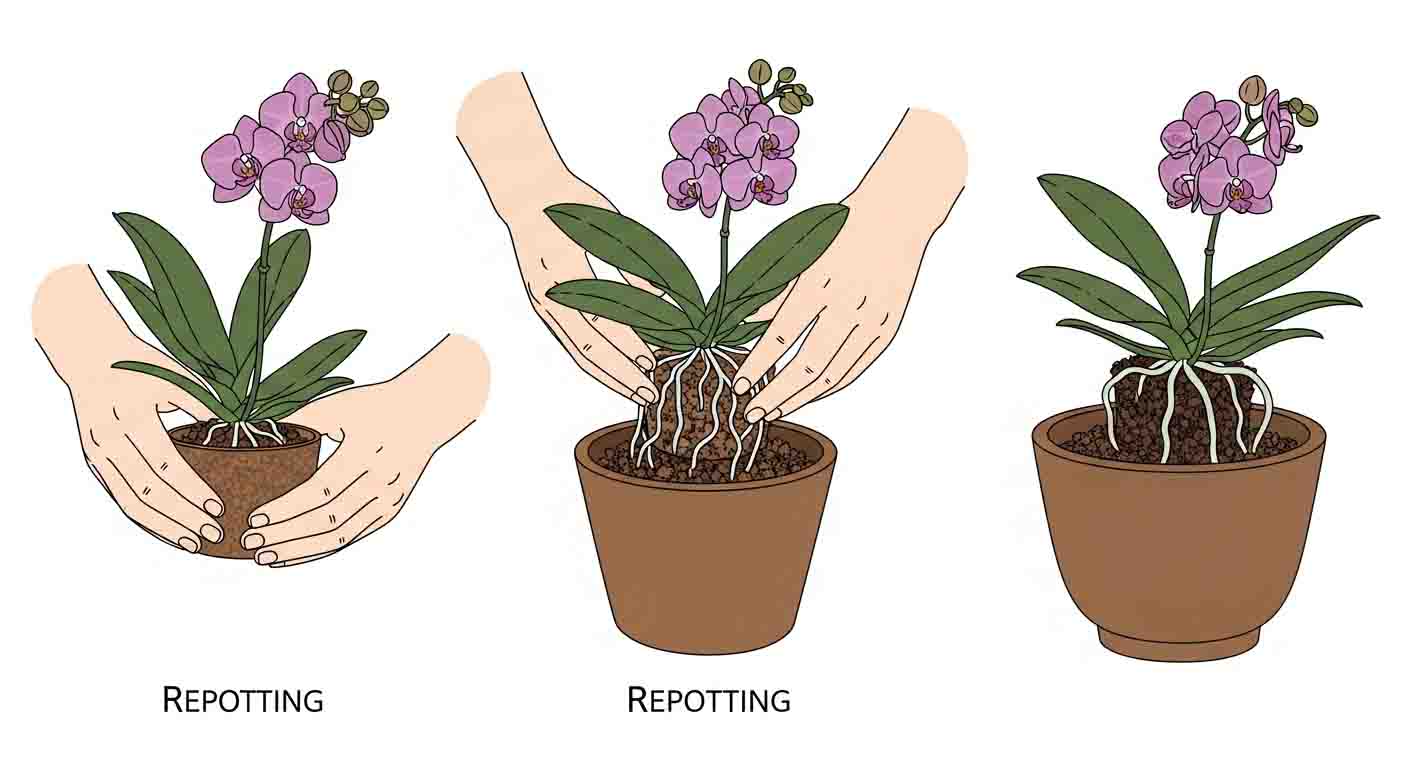
10 Proven Tips for Stunning, Long-Lasting Blooms
Mini orchids are the perfect solution for plant lovers who want elegance without the footprint of a full-sized plant. These petite beauties offer the same graceful flowers as standard orchids but fit perfectly on a desk, shelf, or narrow windowsill.
If you want to keep your plant healthy, learning how to care for mini orchids is simpler than you might think. This guide covers everything from watering mastery to seasonal light requirements.
What Are Mini Orchids?
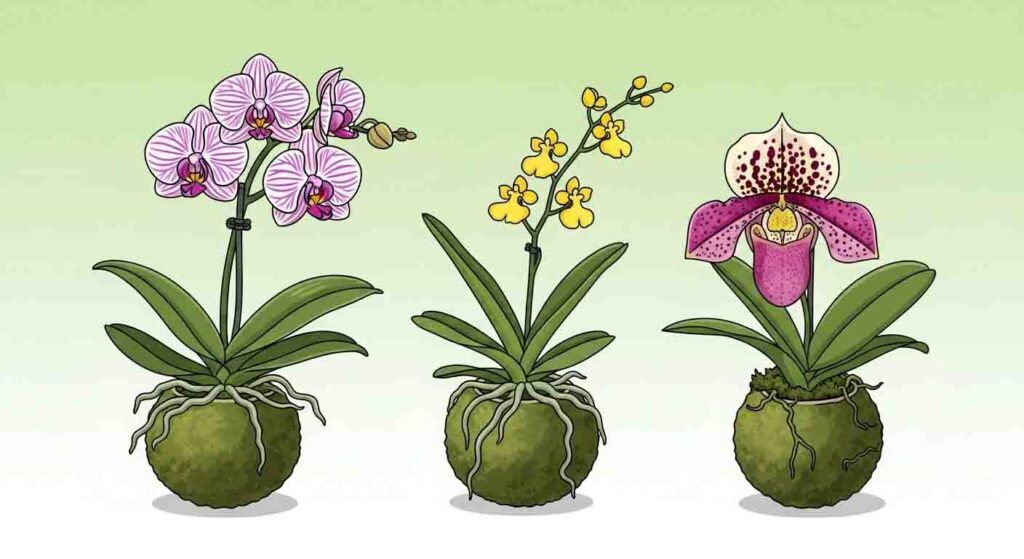
Mini orchids are not “babies” or immature plants. They are distinct varieties bred to remain compact, usually reaching only 6 to 10 inches in height.
Fun Fact: Some petite orchids bloom more frequently than standard orchids because of their compact size and shorter energy cycles.
Choosing the Right Plant and Environment
Before you can master how to care for mini orchids, you must start with a healthy plant. When shopping, inspect the leaves and roots. Avoid any plants with yellowing foliage or mushy, brown roots.
- Ideal Home Conditions:
- Temperature: 65–75°F (18–24°C).
- Humidity: 50–70% (Mini orchids love moisture in the air).
- Light: Bright, indirect light is essential for flowering.
How to Care for Mini Orchids: Watering Mastery
Watering is the most critical part of orchid health. Because mini orchids grow in smaller pots, they can dry out faster than standard orchids.
- The Soak and Drain Method: Water the plant until it flows freely out of the bottom drainage holes.
- Frequency: Generally, water once a week in winter and 2–3 times a week during the hot summer months.
- Pro Tip: Never let water sit in the “crown” (where the leaves meet the stem), as this causes rot.
Lighting and Airflow Essentials
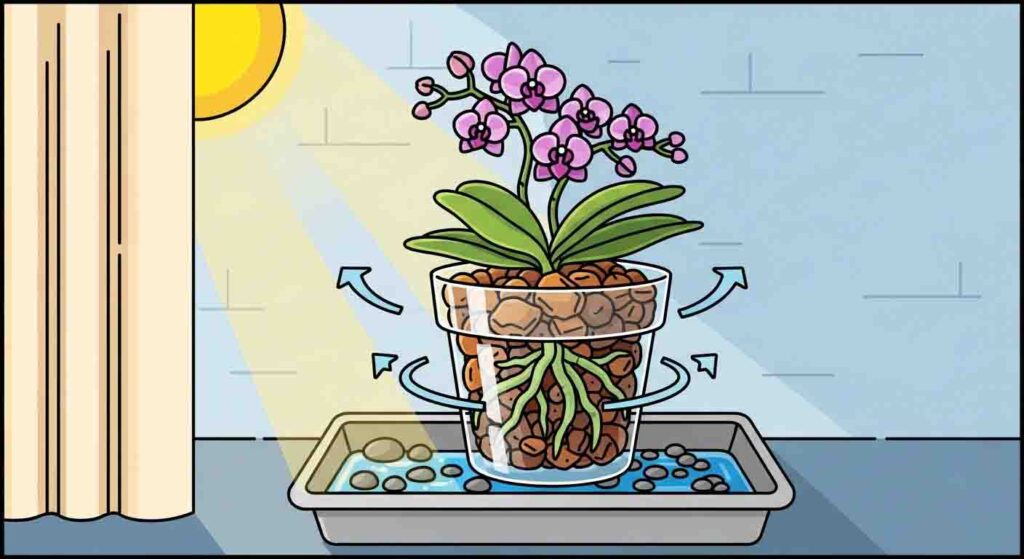
Mini orchids flourish in bright, indirect light.
- Best Placement: East-facing windows are perfect. A shaded south-facing window also works well.
- Signs of Light Stress: If leaves turn dark green, they need more light. If they turn yellow or develop bleached spots, they are getting too much sun.
- Air Movement: Use a small fan to keep air circulating, which prevents fungal growth on the small leaves.
The Best Potting Media for Small Orchids
One of the most important rules of how to care for mini orchids is to never use regular garden soil. Mini orchids need a medium that breathes.
- Sphagnum Moss: Excellent for holding moisture in very small pots.
- Fine Orchid Bark: Provides superior airflow to the roots.
- Clear Pots: Using clear plastic pots allows you to see the roots—green roots are hydrated, while silvery-grey roots mean it is time to water.
Feeding and Fertilizing
To encourage reblooming, your mini orchid needs nutrients.
- Formula: Use a balanced orchid fertilizer (20-20-20).
- The “Weakly, Weekly” Method: Dilute the fertilizer to one-quarter strength and apply it once a week during the growing season.
- Flush: Once a month, use plain water to flush out any salt buildup from the fertilizer.
Repotting Your Miniature Orchid
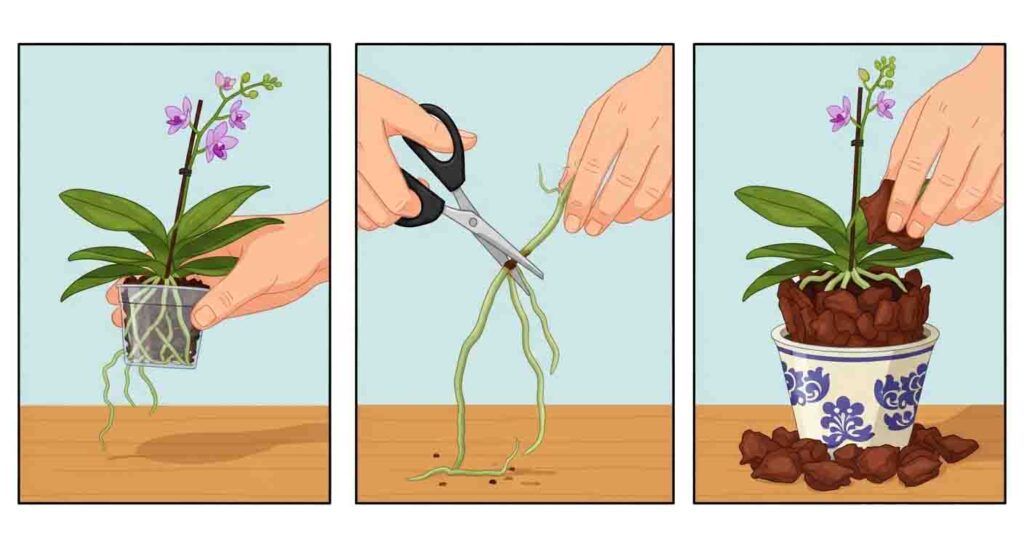
Repotting should happen every 1 to 2 years. If the bark starts to look like dirt or the moss becomes “slimy,” it is time for a change.
- Remove the plant and trim any dead or mushy roots with sterilized scissors.
- Place the orchid in a slightly larger pot with fresh moss or bark.
- Repotting gives the roots the “breathing room” they need to stay healthy.
Troubleshooting Common Problems
If your orchid looks unhappy, check for these signs:
- Yellow Leaves: Usually a sign of overwatering or too much direct sun.
- Wrinkled Leaves: A sign of dehydration or root loss.
- No Blooms: The plant likely needs more light or a slight drop in temperature at night to “trigger” the flower spike.
Seasonal Care Adjustments
How to care for mini orchids changes with the seasons:
- Spring/Summer: Increase watering and stick to a strict fertilizing schedule.
- Fall/Winter: Reduce watering as the plant’s metabolism slows down. Ensure the plant isn’t near a cold, drafty window.
Encouraging Long-Lasting Blooms
To keep your flowers looking beautiful for weeks:
- Rotate the plant: Turn the pot 90 degrees every week so it grows evenly toward the light.
- Clean the leaves: Gently wipe dust off the leaves with a damp cloth so the plant can photosynthesize efficiently.
- Support: Use small bamboo stakes to support the flower spikes.
FAQs: How to Care for Mini Orchids
How often should I water my mini orchid?
Typically once a week, but check the moss or bark daily. If it feels dry to the touch, it is time to water.
Can mini orchids survive in low light?
They may survive, but they will not rebloom. To see flowers again, they need bright, indirect light.
Do mini orchids need special soil?
Yes. Never use dirt. Always use a specialized orchid mix containing bark or sphagnum moss.
How long do mini orchid blooms last?
With proper care, mini orchid flowers can last between 2 to 3 months!