
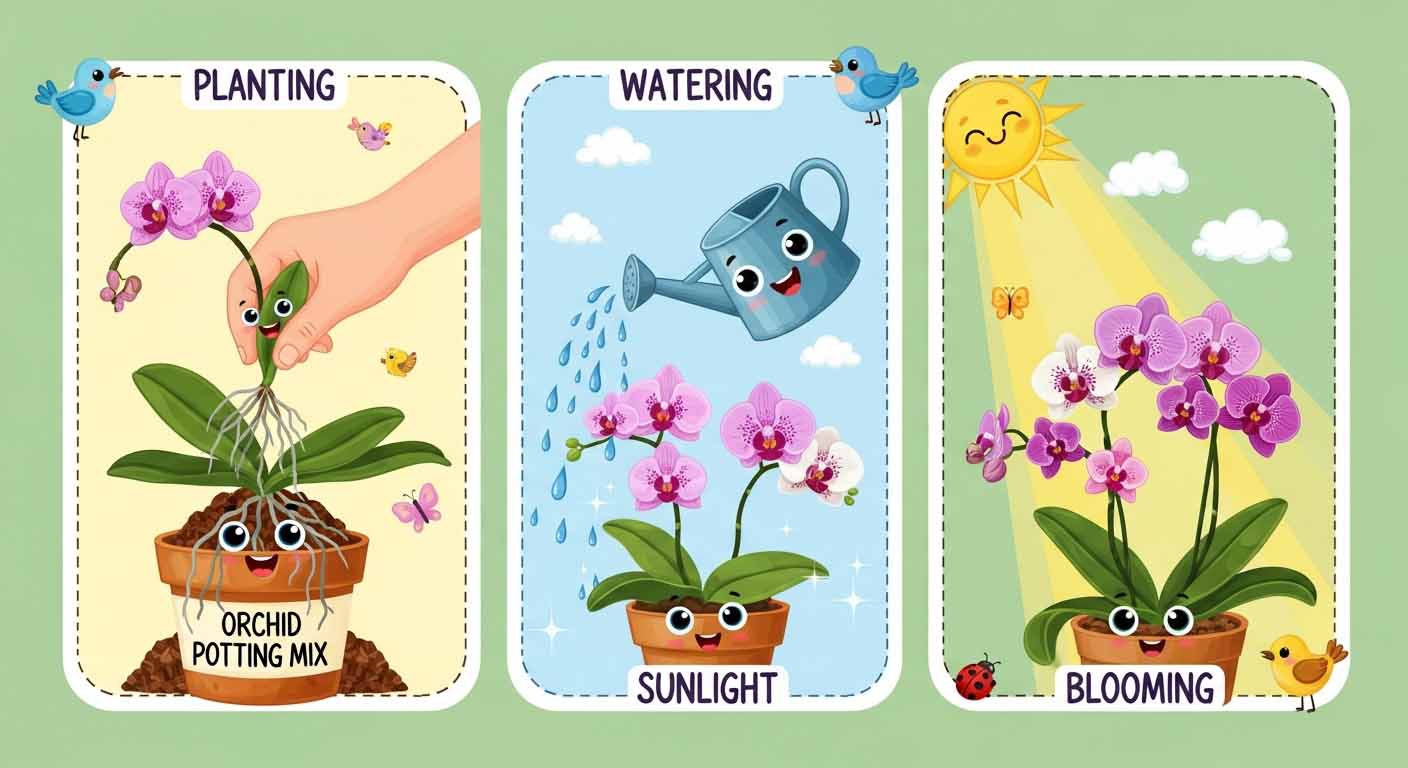
10 Proven Tips for Thriving Blooms
Orchid growing can feel intimidating for beginners, but it is easier than you think. If you have ever admired a graceful Phalaenopsis or a bright Dendrobium and wondered how to grow an orchid plant successfully, you are in the right place.
Whether you want to learn how to plant an orchid in a pot or find out what kind of soil works best indoors, this guide covers the essentials.
1. How Do Orchids Grow? (Understanding Epiphytes)

Before you start planting, you must understand your orchid’s story. Learning how to grow an orchid plant is different from growing regular houseplants because most orchids are epiphytes.
In nature, epiphytes cling to trees, rocks, or moss rather than rooting in the ground. They soak up water and nutrients from the air and rain.
- Do orchids need soil? No. Most do not grow in dirt at all.
- Why avoiding dirt matters: Using regular potting soil causes root rot because it suffocates the roots.
2. Choosing the Right Orchid for Beginners

Not all orchids are created equal. Some require greenhouse conditions, while others thrive on a windowsill. For the easiest start, look for these varieties:
Cattleya: Known for large, fragrant, showy flowers.
Phalaenopsis (Moth Orchid): The #1 choice for beginners. They are hardy and bloom for months.
Dendrobium: Excellent for handling varying light conditions.
3. The Best Potting Media: Why Dirt Won’t Work
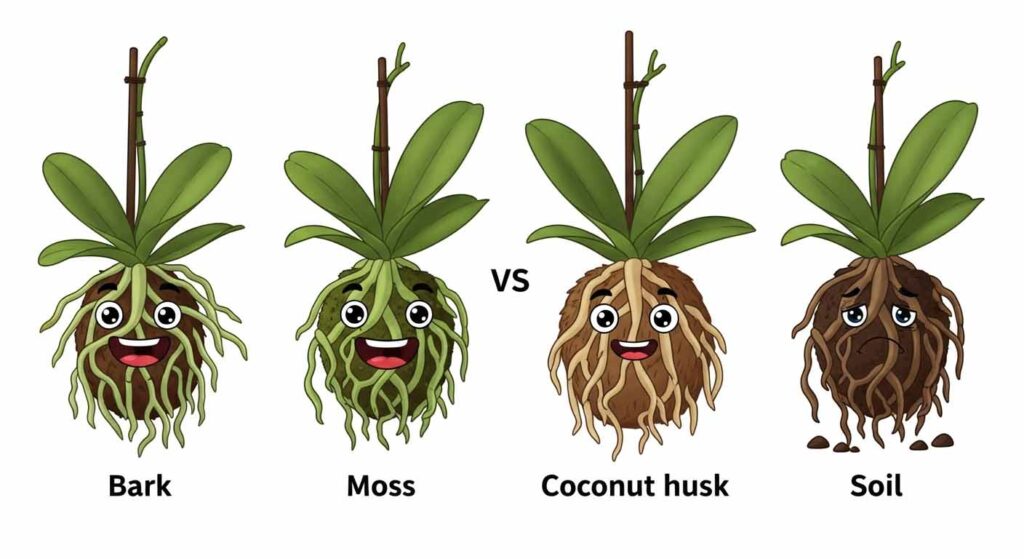
If you are asking, “Can I plant orchids in dirt?”, the answer is a firm no. Dirt holds too much water and blocks the airflow that orchid roots crave.
If you want to know how to grow an orchid plant that lasts for years, you must use a specialized orchid mix.
- Bark chips: Mimic the tree bark orchids grow on in the wild.
- Sphagnum moss: Holds moisture while remaining airy.
- Coconut husk: Eco-friendly and allows for excellent drainage.
- Perlite: Prevents compaction and improves aeration.
4. How to Plant Orchids in a Pot
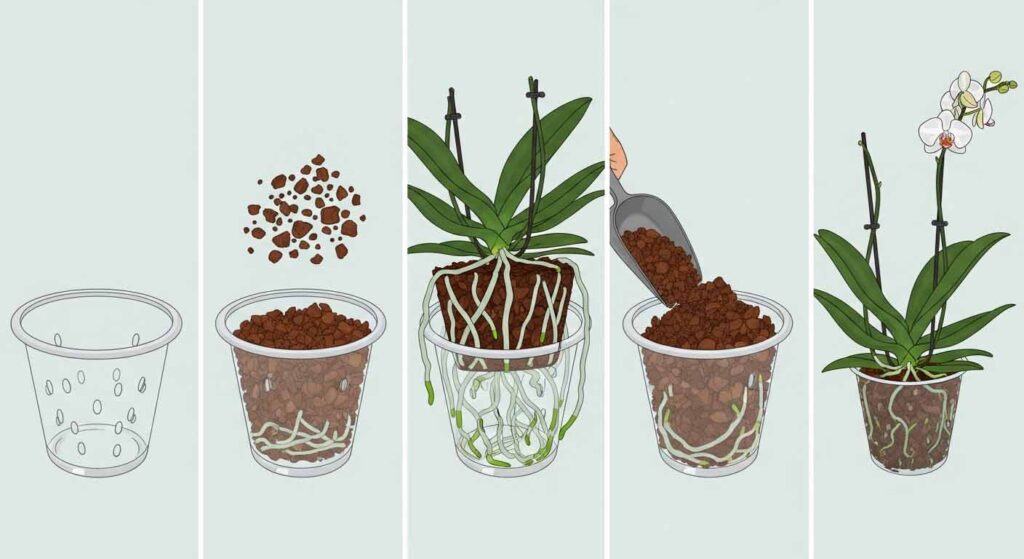
Proper potting is the foundation of a healthy orchid. Follow this simple method to plant your orchid successfully:
- Select the right pot: Use a clear plastic pot or a pot with drainage holes. Clear pots allow you to monitor root health.
- Prepare the base: Place large bark pieces at the bottom for drainage.
- Position the plant: Gently place the orchid roots into the pot without bending them aggressively.
- Fill with mix: Softly fill the gaps with your orchid mix. Do not press down hard; roots need air pockets to breathe.
5. Light Requirements for Indoors
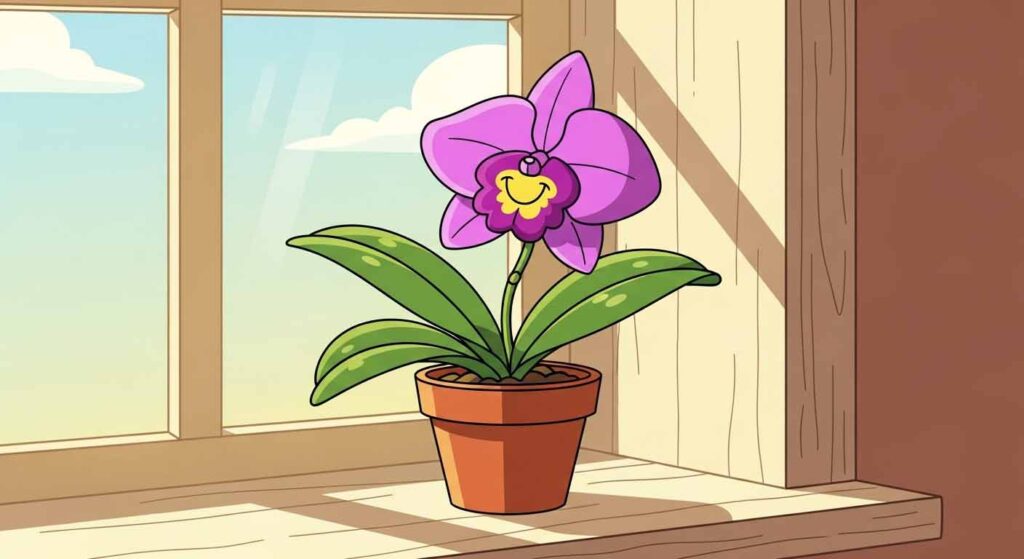
Most orchids prefer bright, indirect sunlight.
- East-facing windows are ideal.
- Avoid direct noon sun, which can scorch the leaves.
- Low light? If your room is dark, use full-spectrum grow lights to supplement.
6. Watering: The “Soak and Dry” Method
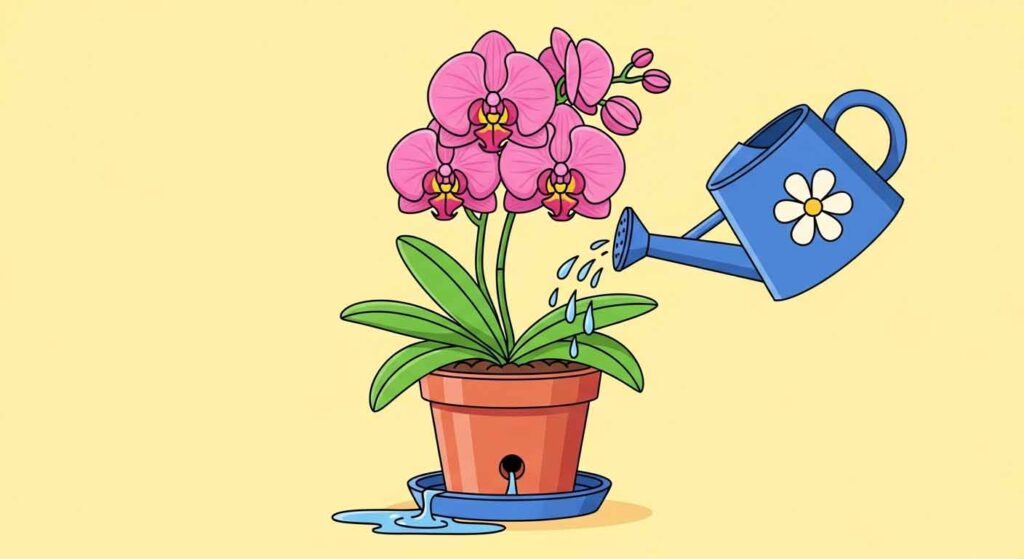
Overwatering is the fastest way to kill an orchid.
- When to water: Only when the potting mix feels almost dry.
- Frequency: Usually once a week. In humid climates, water less; in dry climates, water more.
- Pro Tip: Avoid getting water in the “crown” (the center where leaves meet), as this causes rot.
7. Feeding and Fertilizer
Orchids need food to bloom. Use a balanced fertilizer (like a 20-20-20 NPK ratio) diluted with water.
- The “Weakly, Weekly” Rule: Apply fertilizer at a quarter-strength every week during the growing season.
8. Temperature & Humidity
- Temperature: 60–80°F (15–27°C) is the “sweet spot” for most orchids.
- Humidity: They thrive in 50–70% humidity.
- Dry Home Solution: Place your pot on a humidity tray (a shallow tray with pebbles and water) or run a humidifier nearby.
9. How to Trigger Reblooming
Don’t throw your orchid away when the flowers fade!
- Cut the spike: Trim the flower spike just above a “node” (the bump on the stem).
- Continue care: Keep watering and feeding. With patience, a secondary spike may form and bloom again.
10. Common Mistakes to Avoid
To master how to grow an orchid plant, avoid these top errors:
- Planting in garden soil. (Causes suffocation).
- Leaving standing water in the saucer. (Causes root rot).
- Direct sunlight exposure. (Causes sunburned leaves).
- Ignoring humidity. ( causes stunted growth).
FAQs
Do orchids grow in soil?
No, most epiphytic orchids suffocate in regular soil. They require an airy mix like bark or moss.
Can you plant orchids in dirt?
No. Dirt is too dense and holds too much water, leading to root rot.
What kind of soil for orchids indoors should I use?
Use a commercial “Orchid Mix” containing bark chips, sphagnum moss, and perlite.
How do I grow orchid plants indoors successfully?
Provide bright indirect light, water only when dry, maintain high humidity, and use a breathable potting mix.