
It is a moment every orchid owner dreads: you walk by your beautiful plant and spot a bright yellow leaf. Panic sets in. Is it dying? Did you do something wrong? An orchid leaf turning yellow can be alarming, but it is not always a sign of disaster.
So, why are my orchid leaves turning yellow? The most common causes are overwatering, natural aging, and improper lighting. Overwatering is the number one culprit, leading to root rot that prevents the plant from absorbing nutrients. However, an orchid plant leaves turning yellow can also be a normal part of the plant’s life cycle, especially if it is a bottom leaf.
Understanding the difference between a minor issue and a major problem is the key to successful orchid care. This guide will walk you through all the possible reasons for yellow leaves on orchids, helping you diagnose the problem and nurse your plant back to health.
Do Snake Plants Like Humidity? 7 Proven Tips to Keep Them Thriving (Essential Guide)
Is It Normal for Orchid Leaves to Turn Yellow?
Yes, sometimes it is perfectly normal for leaves on an orchid to turn yellow. Like all plants, orchids shed old leaves to make way for new growth. If you see one of the bottom leaves slowly turning yellow, and the rest of the plant looks healthy and green, it is usually just the natural aging process.
However, if multiple leaves are yellowing at once, if the new leaves are affected, or if the yellowing is accompanied by other symptoms like mushy roots or spots, it signals a problem. The location of the yellow leaf is your first major clue.
Bottom Orchid Leaves Turning Yellow (Natural Aging)
The most common and least worrisome reason for a yellow leaf is simple aging. Orchids, especially Phalaenopsis, will periodically shed their oldest, lowest leaf.
What to Look For:
- Location: Only the very bottom leaf on the plant is affected.
- Progression: The leaf turns yellow slowly over several weeks. It may become dry and papery before it falls off on its own.
- Plant Health: The rest of the plant, including the upper leaves and roots, looks vibrant and healthy. New leaves may be growing from the top.
If you see the bottom orchid leaves turning yellow in this manner, do not panic. This is your plant redirecting its energy to new growth. There is nothing you need to do except let nature take its course. The leaf will detach on its own when it is ready. Pulling it off prematurely can create a wound that may become infected.
Overwatering and Root Problems
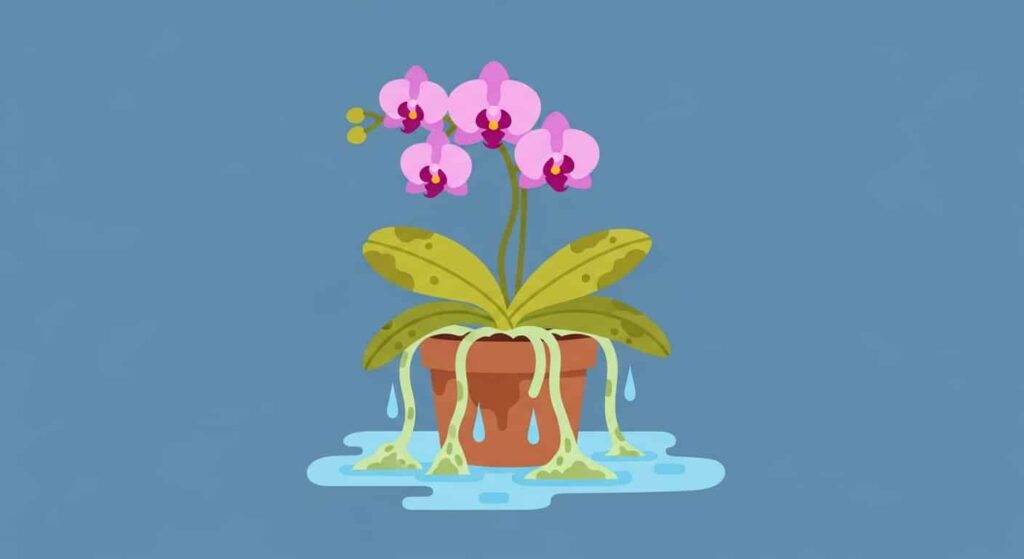
Overwatering is the most frequent cause of orchid leaves turning yellow. Many beginners, wanting to care for their plant, give it too much water. Unlike houseplants that grow in soil, most orchids are epiphytes, meaning their roots are adapted to cycles of wet and dry, with plenty of air circulation.
When an orchid is overwatered or its pot lacks proper drainage, the roots suffocate. They cannot absorb oxygen and begin to rot. These rotting roots can no longer supply water and nutrients to the plant, causing the leaves on an orchid to turn yellow.
Signs of Overwatering:
- Leaves: Leaves turn a dull or bright yellow, often feeling soft and limp, not crispy. The yellowing can affect any leaf, not just the bottom ones.
- Roots: Healthy orchid roots are plump and green or silvery-white. Rotted roots are brown or black, mushy, and may have a foul smell.
- Potting Medium: The bark or moss feels constantly damp and may be breaking down into mush.
If you suspect overwatering is why your orchid leaves are turning yellow, you must act quickly to save the plant.
Underwatering and Dehydration
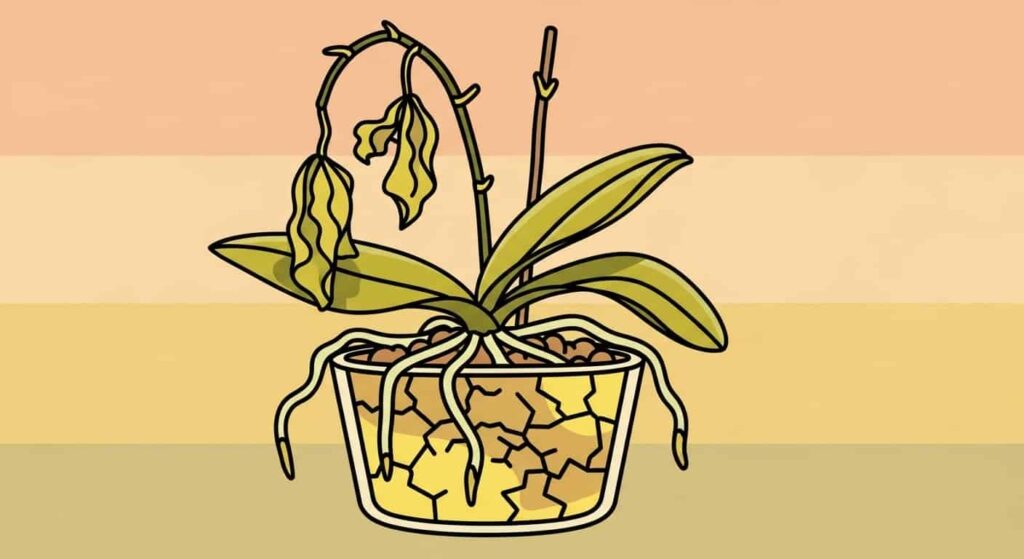
While less common, underwatering can also lead to yellowing of orchid leaves. An orchid that goes too long without water cannot support all of its foliage. The plant will begin to sacrifice its older leaves to conserve moisture for the newer growth.
Signs of Underwatering:
- Leaves: The leaves will appear leathery, limp, and wrinkled before turning yellow and eventually crispy brown. It usually starts with the bottom leaves.
- Roots: Healthy roots will look silvery and may appear shriveled or dry.
- Pot Weight: The pot will feel extremely light.
An underwatered orchid leaf looks very different from an overwatered one. Think “crispy and dry” for underwatering, versus “soft and mushy” for overwatering. An orchid leaf turned yellow from dehydration needs a good soak to recover.
Light Issues (Too Much vs Too Little)
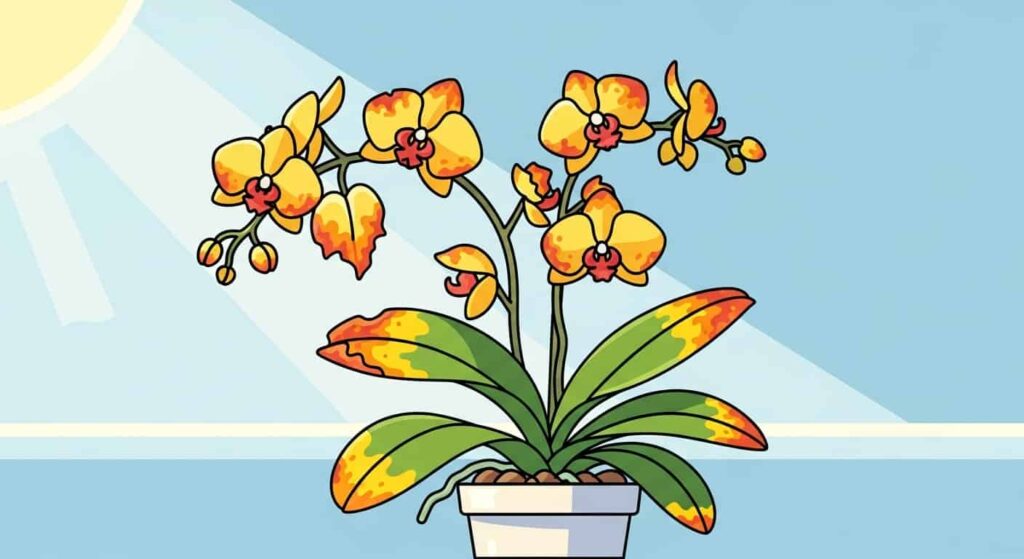
Orchids have specific light requirements. Both too much and too little sunlight can answer the question, “why are the leaves on my orchid turning yellow?”
Too Much Direct Sunlight
Placing an orchid in a south-facing window with no protection will scorch its leaves. The intense sun damages the leaf cells, causing them to turn yellow, then white or black.
- Symptoms: You will see a bleached or sunburned yellow patch on the part of the leaf most exposed to the sun. It might feel hot to the touch and can turn black and crispy quickly.
Not Enough Light
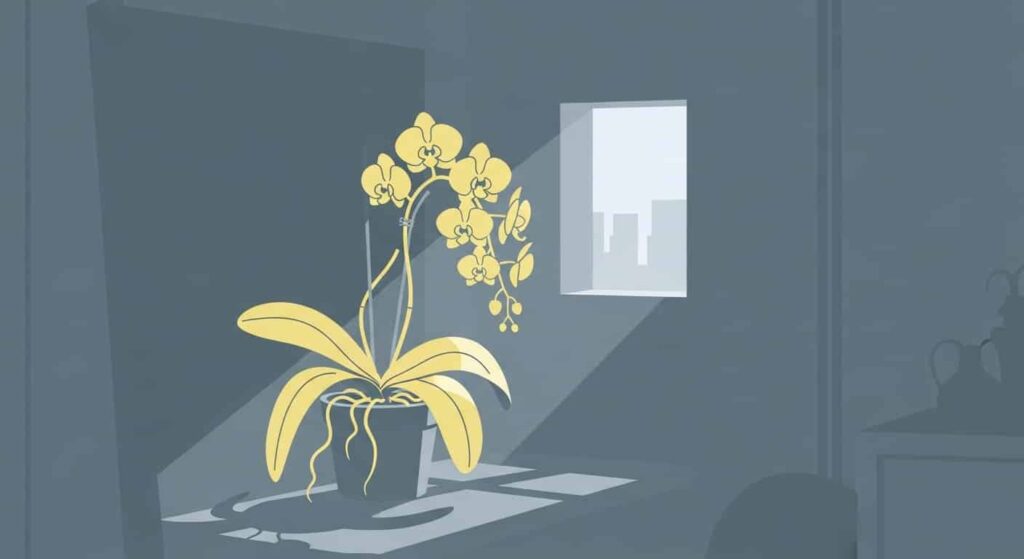
Orchids need bright, indirect light to photosynthesize. If the light is too dim, the plant cannot produce enough energy to sustain itself. It will begin to shed its lower leaves to reduce its energy needs.
- Symptoms: The leaves may turn a pale, uniform yellow, and the plant will look generally unhealthy with no new growth. The leaves may also be a very dark green before they start to turn. My orchid leaf is turning yellow, and the plant has not bloomed in years, often points to insufficient light.
Nutrient Imbalance
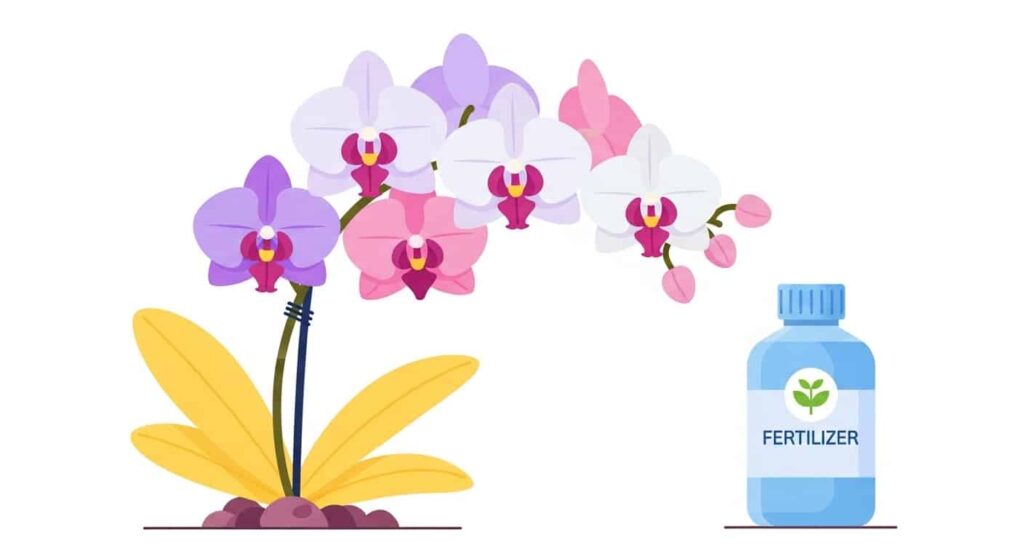
A nutrient deficiency, or in some cases an excess of nutrients, can cause orchid leaves to turn yellow.
- Nitrogen Deficiency: Nitrogen is a mobile nutrient, so the plant will pull it from older leaves to support new growth. This results in the bottom orchid leaves turning yellow.
- Iron Deficiency: This often causes yellowing on new leaves while the old leaves remain green.
- Magnesium Deficiency: Can cause yellowing along the margins of older leaves, sometimes in a V-shape.
- Fertilizer Burn: Using too much fertilizer can damage the sensitive roots, leading to root burn. Damaged roots cannot absorb water, causing yellow leaves similar to overwatering.
If you have never fertilized your orchid, a deficiency could be the cause. If you fertilize heavily, you might be causing burn.
Temperature Stress
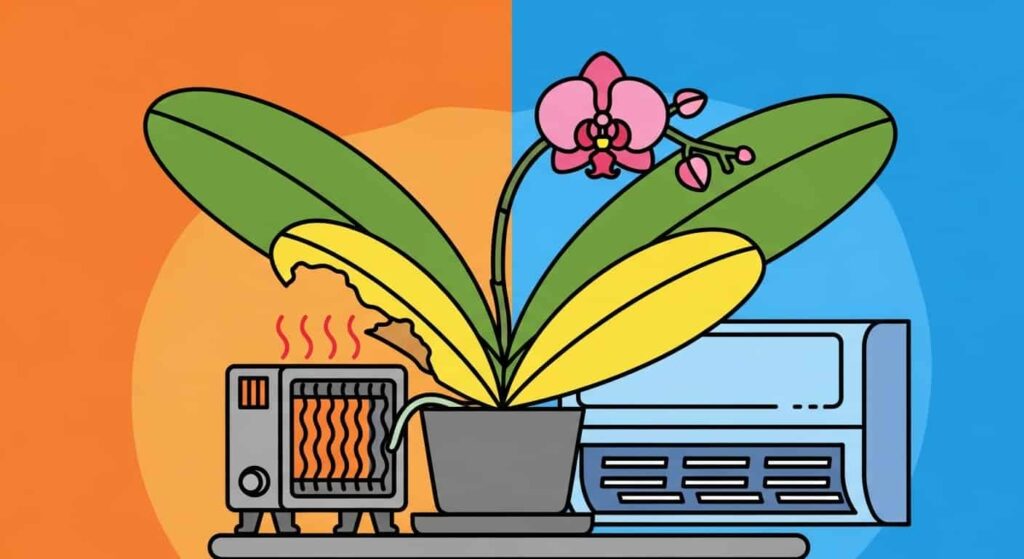
Orchids are tropical plants and do not like sudden or extreme temperature changes.
- Cold Shock: Exposure to a cold draft from a window or an air conditioner can cause a leaf to turn yellow and drop suddenly. My orchid leaf turned yellow overnight is often a sign of cold damage.
- Heat Stress: High temperatures can cause the plant to become dehydrated quickly, leading to yellowing, limp leaves.
Maintaining a stable environment is crucial for keeping your orchid healthy and its leaves green.
Orchid Leaves Turning Yellow and Falling Off
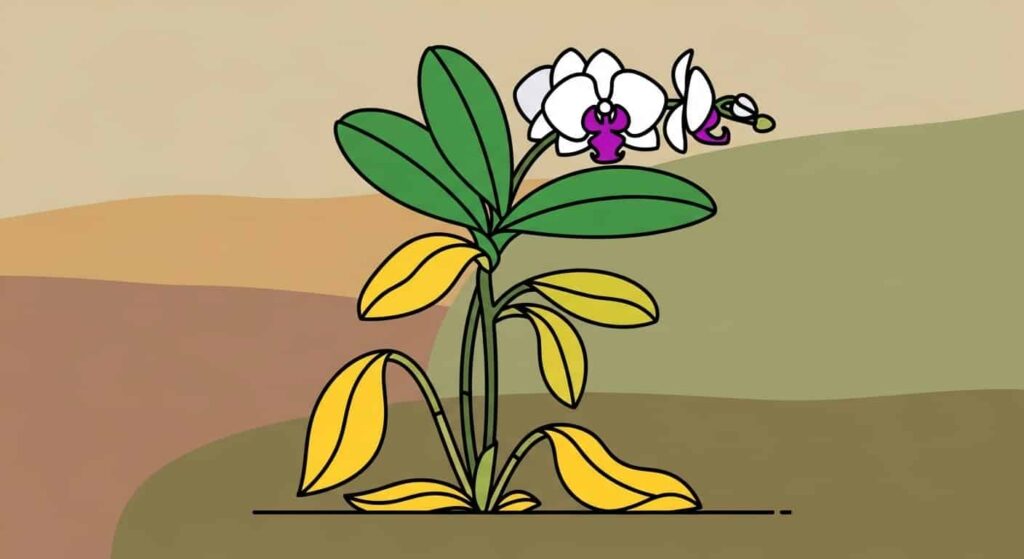
When orchid leaves are turning yellow and falling off, it can be alarming. The cause determines the severity.
- Normal Aging: If it is one bottom leaf at a time, and it detaches cleanly after a few weeks, it is normal.
- Overwatering/Root Rot: If multiple leaves turn yellow and mushy and then fall off, root rot is the likely cause. The plant is shedding leaves it can no longer support.
- Disease: A sudden drop of multiple green or yellow leaves can be a sign of a fungal or bacterial infection, especially if it starts near the base or crown of the plant.
If you are seeing orchid leaves turning yellow and flowers falling off at the same time, it often points to a significant stress event, such as repotting shock, a sudden temperature change, or a severe watering issue.
Orchid Stem Turning Yellow – What It Means
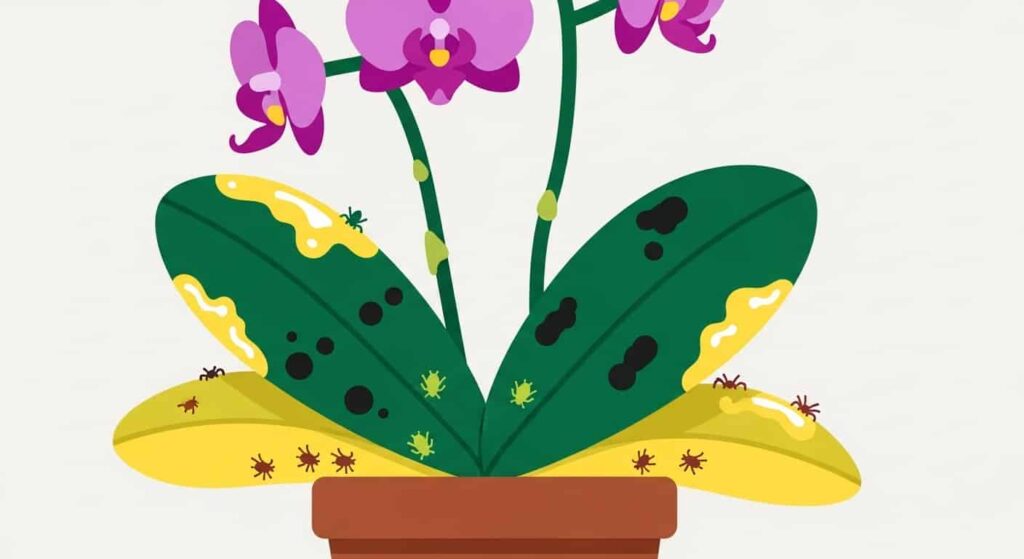
Sometimes it is not the leaves but the flower spike that is the problem. An orchid stem turning yellow (the flower spike) is usually a normal part of the plant’s cycle.
After the last flower fades, the plant may decide it no longer needs that spike. It will begin to pull the energy back from the spike, causing the orchid stem to turn yellow, then brown and dry. This is completely normal. Once the orchid yellowing stem is entirely brown and crispy, you can safely cut it off at the base.
However, if the main stem of the plant (the part the leaves grow from) is yellowing, this is a very serious sign, often indicating advanced crown rot, and the plant may not be salvageable.
Phalaenopsis Orchid Yellow Leaves
Phalaenopsis, or moth orchids, are the most common type for beginners. The advice in this article largely applies to them. When you see Phalaenopsis orchid yellow leaves, here is a quick diagnostic checklist:
- Is it the very bottom leaf? Likely normal aging.
- Are the leaves soft and are the roots mushy? You are overwatering.
- Are the leaves wrinkly and the roots silvery-dry? You are underwatering.
- Is there a bleached spot on the top of the leaf? Too much direct sun.
- Are multiple leaves turning a pale yellow? Check for low light or a possible nutrient deficiency.
For a yellow orchid leaves phalaenopsis, the most common mistake is keeping it in the decorative pot without drainage and letting water pool at the bottom.
How to Fix Yellowing Orchid Leaves
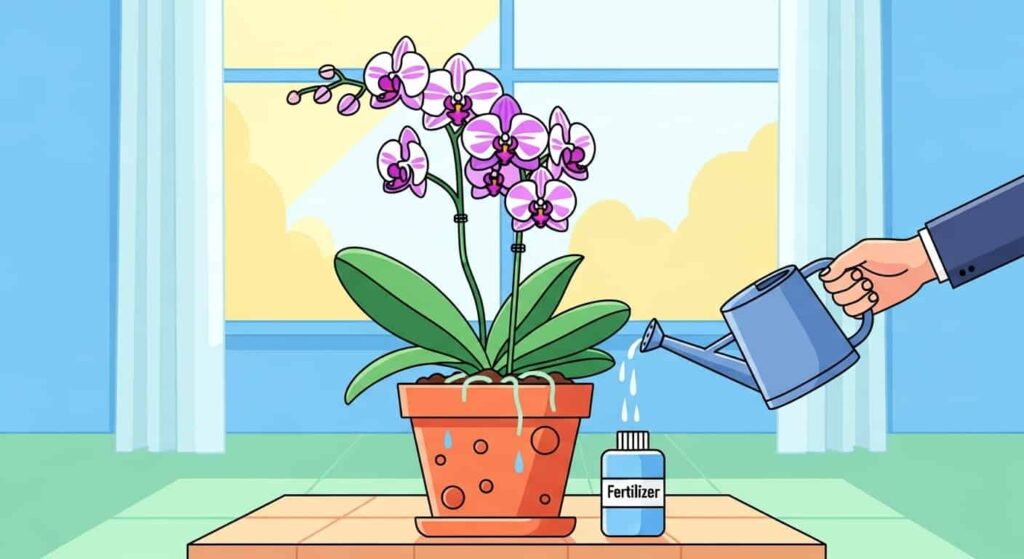
Once a leaf has turned yellow, it will not turn green again. The goal is to stop the problem from spreading to other leaves.
- Diagnose the Problem: Use the signs above to determine the cause. The most important step is to check the roots. Gently slide the plant out of its pot to inspect them.
- Address Overwatering: If you find mushy, brown roots, you must perform surgery.
- Unpot the orchid.
- Using sterile scissors, trim off all dead roots.
- Repot the plant in fresh, dry orchid bark in a pot with ample drainage holes.
- Wait about a week before watering it.
- Address Underwatering: Give the plant a thorough soak. Place the pot in a bowl of water for 20-30 minutes to allow the medium to rehydrate fully. Then, let it drain completely.
- Adjust Light: Move the orchid away from direct sun or closer to a bright window, depending on the issue. An east-facing window is often ideal.
- Fertilize Correctly: Use a balanced orchid fertilizer at quarter-strength, about once a month during the growing season. Flush the pot with plain water periodically to prevent salt buildup.
Frequently Asked Questions (FAQs)
Why are my orchid leaves turning yellow at the base?
When orchid leaves are turning yellow at the base, near the main stem, it is a serious red flag. This often indicates crown rot, a fungal infection caused by water sitting in the crown (the center where new leaves emerge). This condition can be fatal if not caught immediately.
What do I do if my orchid has yellow leaves?
First, identify the cause. If it is just one bottom leaf, do nothing. If you suspect overwatering, check the roots and repot if necessary. If it is a light or water issue, adjust its care routine accordingly. Do not remove the yellow leaf until it is fully dry; the plant is still reabsorbing nutrients from it.
Can yellow orchid leaves turn green again?
No, once an orchid leaf turns yellow, it cannot revert to green. The plant has already begun to reabsorb the chlorophyll and nutrients from that leaf. The goal is to correct the underlying issue to prevent more leaves from turning yellow.
Why are the leaves on my orchid turning yellow and limp?
Limp, yellow leaves are a classic sign of a watering issue. It can be either overwatering (leading to rotted roots that cannot absorb water) or severe underwatering. To know for sure, you must feel the roots. Mushy roots mean overwatering; dry, brittle roots mean underwatering.
Should I cut off yellow orchid leaves?
It is best to wait. The plant is salvaging valuable energy and nutrients from the dying leaf. Wait until the leaf is completely yellow and dry, or until it falls off on its own. Pulling it off early can create an open wound that is susceptible to infection.
Why do my orchid leaves have yellow spots?
Yellow spots on orchid leaves can be caused by several things. It could be a fungal or bacterial infection, damage from pests like spider mites, or a specific nutrient deficiency. Small, sunken yellow spots may indicate a fungal issue that requires a fungicide treatment.
Is it normal for orchid roots to be yellow?
Yes, orchid roots yellow in color are not necessarily a problem. Roots that do not get any light (those deep inside the pot) will not photosynthesize and will naturally be a yellow or tan color. As long as they are firm to the touch, they are healthy. Mushy yellow roots, however, are rotted.