
Last Updated on May 1, 2026 by Indoor Plant Nook
Pothos earns its popularity for good reason: it adapts to many homes, propagates eagerly, and looks lush whether trailing across a bookcase or climbing a moss pole. That forgiveness has a limit—root rot still happens, pest pressure still appears, and variegated cultivars still punish dark corners. This consolidated care guide distills the fundamentals into one reference you can return to season after season: light, water, soil, pots, temperature, humidity, feeding, training, propagation basics, troubleshooting instincts, and pet-aware placement.
Think of it as the hub article that connects to deeper dives on lighting schedules, watering calendars, soil recipes, container engineering, and fertilizer science.
What pothos is (brief botanical orientation)
Most “pothos” sold as houseplants belong to Epipremnum aureum cultivars—golden, neon, marble-variegated forms, and more. Related species such as selections of Epipremnum pinnatum (for example Cebu Blue or Baltic Blue branding) share care overlap yet may differ in mature leaf behavior, especially when climbing.
Ecologically, pothos-like vines encounter dappled light, warm nights, and cycles of rain plus rapid drainage on bark and slopes—not saturated bog soil. Indoor care succeeds when you imitate drainage and oxygen at roots more than when you imitate perpetual wet feet.
Light: bright indirect as the default happiness zone
Bright indirect light is the broadest recommendation for healthy growth, steady internodes, and attractive color expression in variegated cultivars.
Good examples of placements: several feet inside a south or west window with sheer diffusion, east windows with gentle morning sun, well-lit rooms supplemented by quality grow lights for winter.
Low light survival is possible for many pothos longer than for calatheas, but expect smaller leaves, longer gaps between leaves, and muted variegation. Neon may lose electric tone; Marble-type cultivars may push greener leaves.
Direct sun can work when gradually acclimated; harsh unfiltered midday beams through hot glass often bleach or burn leaves—pale variegated sectors show damage first.
Rotate plants occasionally so one side does not lean into perpetual shadow.
Watering: thorough watering plus real dry-down
The most reliable beginner upgrade is this pairing: water deeply, then allow the potting mix to approach appropriate dryness before the next deep watering—rather than frequent shallow sprinkles that tease surface roots and leave deeper zones unpredictably wet or dry.
Exact timing depends on pot size, substrate chunkiness, temperature, humidity, light intensity, and root mass. A 4-inch pot in airy mix may dry in days during summer growth; a 10-inch pot in dense peat may hold moisture far longer than intuition guesses.
Signals help but should not replace substrate checks: slight leaf softening or subtle droop can mean thirst, but chronic wilting cycles stress roots. Yellowing multiple leaves while soil stays soggy suggests overwatering or poor drainage.
Always discard standing water in saucers unless you use a deliberate reservoir system you understand—most pothos do best without roots soaking.
Soil and repotting: prioritize aeration
Use chunky well-draining indoor mixes, not heavy garden soil scooped from the yard unless you deliberately amend structure for containers. Perlite, bark, coco chips, or pumice increase pore space for oxygen.
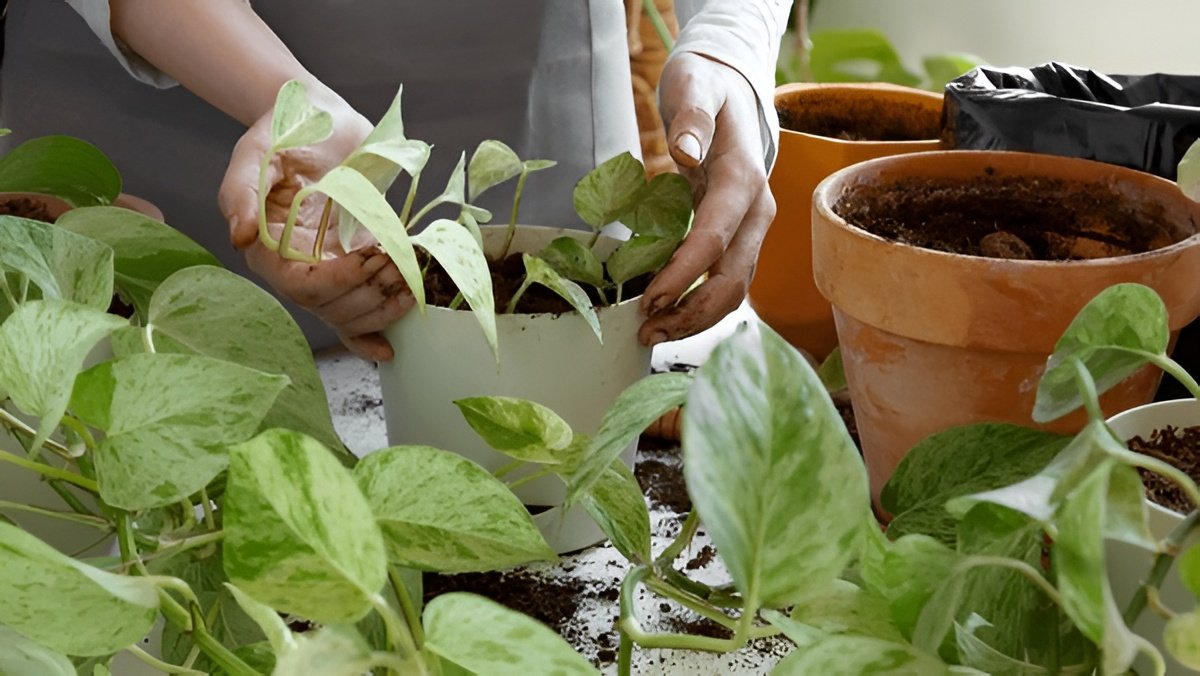
Repot when roots are truly circling or media has degraded into a muddy, slow-draining mass—often every year or two for fast growers, longer for slow cultivars in stable conditions.
When repotting, avoid jumping to enormous decorative pots; oversized volumes retain moisture longer than small root systems can exploit—root rot risk climbs.
Pots: drainage first, aesthetics second
Choose containers with drainage holes or engineer inner pots that drain into outer cachepots you empty. Material affects dry speed—terra-cotta breathes moisture faster than glazed ceramic; plastic sits in the middle; thick ceramic can slow evaporation from sidewalls.
Match pot depth and width to root architecture; deep narrow pots vs wide shallow pots shift moisture profiles.
Temperature and drafts
Pothos prefers stable warmth typical of indoor living spaces. Protect from frost, prolonged cold near single-pane glass, and aggressive heater drafts that desiccate leaves. Repeated chill stress weakens growth even if outright death does not occur immediately.
Humidity: supportive, rarely the primary lever
Typical household humidity often suffices. Extremely dry winter air plus heat vents can marginally increase edge browning in sensitive setups; grouping plants or using humidifiers can help mildly but does not replace correct watering.
Misting is not a substitute for watering; it temporarily raises surface moisture and can contribute to foliar issues if leaves stay wet in stagnant air.
Fertilizer: dilute and seasonal
During active growth, apply balanced liquid fertilizer at reduced strength on a restrained schedule—perhaps half-strength every two to four weeks depending on light and observed growth. Pause or reduce in low-light winter unless grow lights maintain photosynthetic demand.
Salt buildup can burn tips; occasional thorough watering to flush excess (where appropriate for your medium) may help if you feed regularly.
Cleaning and pest monitoring
Dust reduces photosynthesis efficiency and glamor—rinse or wipe leaves occasionally. Inspect undersides for spider mites, node crevices for mealybugs, and stems for scale. Early intervention beats spectacle infestations.
Training styles: trail, climb, or bush
Trailing suits hanging baskets and high shelves—trim occasionally to encourage fullness near the crown.
Climbing on moss poles or boards may promote larger leaves in some setups as plants mature—patience required.
Bushing through rotation and pinch pruning can create compact table specimens—requires light from multiple vectors or regular turning.
Propagation snapshot
Cut below nodes, supply warmth and gentle light, root in water or substrate. Transition brittle water roots carefully if moving to soil. Maintain some chlorophyll in variegated cuttings for sustainable growth.
Common problems: how to think like a diagnostician
Yellow leaves: If many new leaves yellow and soil stays wet, suspect irrigation and drainage. If a few old basal leaves yellow while plant grows, possibly normal senescence—context matters.
Brown crispy edges: Low humidity plus uneven watering or salt stress—audit systematically.
Wilting: Underwatering vs root rot both wilt—smell and inspect roots on repot if uncertain; rotten roots smell sour.
Pests: Webbing, stippling, cottony fuzz—identify and treat on schedules that beat reproduction cycles.
Loss of variegation: Often light-related—brighten environment and prune reverted sections if desired.
Toxicity and households with animals
Pothos is frequently described as toxic if ingested for cats and dogs due to compounds that irritate tissues—severity varies with amount and individual. Practical planning: elevate plants, use hangers, supervise pets, and seek veterinary guidance promptly if ingestion is suspected. Specialized pet articles provide expanded checklists.
Outdoor summer option (temperate climates)
Some growers move pothos outdoors after frost danger passes, bringing plants back before frost returns. Use shade-first acclimation, perfect drainage, and pest checks before reentry.
Seasonal rhythm indoors
Summer: faster growth, faster drying in bright warm setups, more cautious fertilization discipline.
Winter: slower growth, slower drying, reduced feeding unless lighting compensates—avoid autopilot watering.
Philosophy: observation over superstition
The best pothos growers keep light notes—watering dates, repot dates, pest sightings—because homes differ. Your mother’s schedule is not your schedule unless your environments match.
Room-to-room placement without magical thinking
East-facing home offices often deliver gentle morning photons that keep variegation expressive without midday bake; north-only rooms may sustain life but rarely maximize color—supplement honestly or choose greener cultivars there. Open kitchens with bright adjacent windows can work when grease and dust receive occasional leaf rinses.
New plant parent week-one checklist
Confirm drainage path the day a pothos arrives—lift inner pots from cachepots, verify holes, and discard pooled water. Wait at least several days after transport before repotting purely for aesthetics; stability reduces transplant shock.
Building resilience through incremental experiments
Once fundamentals feel stable, trial modest changes one at a time: slightly brighter station after acclimation, incremental pole height for climbing goals, or careful grow-light addition in winter—avoid simultaneously shifting five variables and wondering which caused leaf tone drift.
When to seek cultivar-specific articles
Return to deep dives on Golden, Marble Queen, Neon, Cebu Blue, and comparison pieces when general guidance feels insufficient—specialized morphology and shopping pitfalls hide in cultivar details this hub summarizes but cannot exhaust.
Toolkit essentials worth owning early
A simple watering can with a narrow spout reaches soil without flooding rosette centers; soft microfiber supports leaf dusting; pruning snips stay sharper than kitchen scissors for clean cuts that heal faster. None of these replace observation, but they reduce friction that makes beginners avoid maintenance.
When to call a problem “solved enough”
Some lower yellow leaves are simply old age on vines you refuse to prune for sentimental length. Accepting aesthetic imperfection while metabolic health is strong protects mental health and prevents compulsive intervention spirals that stress plants more than original issues.
Roommates, partners, and shared watering calendars
Shared apartments confuse plants when everyone helps—agree whether bottom watering, top watering, or “only Umar waters Sundays” governs your pothos. Mixed strategies in one month teach roots contradictory lessons.
Closing hub statement
Pothos is not a riddle; it is a set of relationships between light, roots, and water you can learn by watching leaves weekly. Master the basics here, then branch into specialized articles for strict light metering, watering calendars, soil chemistry, pot physics, and fertilizer math—each deepens the same core: give roots oxygen, give leaves honest photons, and adjust with seasons instead of fighting them.
Related Pothos Guides
- How Much Light Does Pothos Need? (Low Light vs. Bright Indirect)
- How Often Should You Water Pothos? (Beginner-Friendly Watering Schedule)
- The Best Soil Mix for Pothos — What to Use and What to Avoid
- What Is the Best Pot for Pothos? (Material, Size & Drainage Tips)
- Best Fertilizer for Pothos: When, What, and How Much to Use