
Last Updated on May 1, 2026 by Indoor Plant Nook
Healthy pothos (Epipremnum aureum and popular cultivars) often feels indestructible until something weakens the roots or invites pathogens into wounded tissue. Diseases in residential pothos are less dramatic than in commercial greenhouses, but they still cause yellowing, spotting, collapse, and spreading decline when humidity stays high, airflow stays low, and watering habits stay sloppy. This guide walks through the most common disease-like problems people mislabel as “mysterious bad luck,” how to tell rot from underwatering stress, what bacterial spotting looks like versus fungal speckling, and when you should isolate a plant, prune aggressively, or discard it for the sake of the rest of your collection.
Root rot: the disease pothos owners meet first
Root rot is usually less about a magical fungus appearing from nowhere and more about conditions that let anaerobic microbes flourish: soggy substrate, compacted potting mix, pots without drainage, cold wet roots, or watering on a calendar instead of according to dryness. Roots need oxygen between drinks. When pore spaces stay saturated too long, fine root hairs die, thicker roots soften, and opportunistic organisms finish the job.
Early symptoms can masquerade as anything: a leaf or two yellowing, slight wilt despite wet soil, slowed growth, or a faint sour smell when you disturb the surface. Late symptoms include pronounced wilting, widespread yellowing, blackened stems at the soil line, and leaves that detach with a gentle tug because the vascular connection has failed.
Inspection protocol: unpot gently, rinse soil away, and look at root color and texture. Healthy roots are firm and pale (white/cream/tan/greenish depending on cultivar and age). Rotten roots are brown to black, mushy, slimy, or stringy with outer tissue slipping off. If only the distal tips are compromised but the crown looks firm, you often can salvage the plant by trimming dead roots, replacing substrate, and correcting watering.
Treatment mindset: rot management is half surgery, half prevention. Sterilize scissors or blades with alcohol between cuts. Remove every soft root until you reach firm tissue. If the base of the stem is blackened and mushy, cut above healthy green stem, propagate from nodes if needed, and treat the remnant like a cutting restart. Repot into a chunky, fast-draining mix; choose a pot sized to the remaining root mass, not to your aesthetic ambitions. Water sparingly until new root growth resumes—usually meaning lighter drinks more frequently rather than heavy soaking while roots are sparse.
Stem and crown rot: when the problem climbs above soil
Sometimes infection isn’t confined below the mix line. Stem rot may appear as a dark, sunken lesion where the stem touches wet medium or where a vine rests against persistently damp moss on a pole. Crown rot targets the central growing point on badly drained specimens or those kept overly wet in cool corners.
These presentations demand quick action because pothos does not regenerate from a destroyed crown on that stem line the way some plants sprout from basal buds easily. If rot encircles the stem, everything above may die from interrupted water transport. Strategic pruning above clean tissue, aerial rooting in water or perlite, or converting healthy tips into cuttings can preserve genetics even when the mother looks doomed.
Bacterial leaf spot and blight: water splashes and humid stagnation
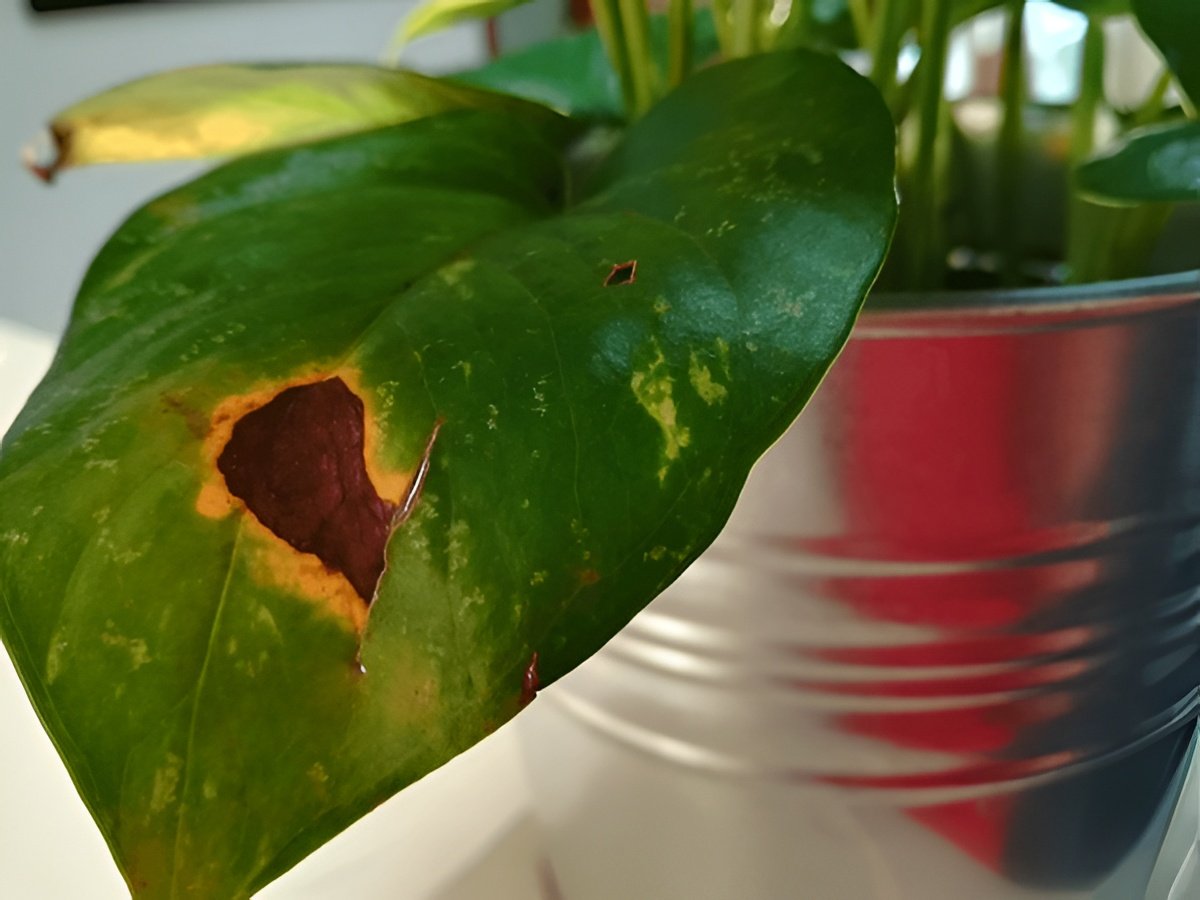
Bacterial leaf spot on pothos often appears as small water-soaked lesions that enlarge, sometimes developing tan or necrotic centers with a yellow halo—classic textbook language that reality only loosely follows because kitchen-lit smartphone diagnosis is imperfect. Lesions may merge into blotches; leaves may feel slimy or look greasy before collapsing. High humidity, crowded leaves, and overhead watering that keeps foliage wet for hours increases risk.
Differentiation headaches: nutrient splash burns, cold damage, physical abrasions, pest rasping, and fungal spotting can resemble bacterial symptoms. Context matters. Did spots appear after misting heavily next to a chilly window? Did you fertilize with strong solution splashed on leaves? Did spider mites stipple uniformly across older leaves? Use magnification on leaf undersides; scout for mites, thrips scarring, or meal residue.
Management: remove badly affected leaves and increase airflow. Avoid wetting foliage unnecessarily; if you must rinse dust, do it early in the day in a ventilated room. Isolate the plant if lesions spread rapidly. Copper-based sprays are referenced in agricultural texts for bacterial pathogens on ornamentals, but indoor growers should treat chemistry cautiously—read labels for indoor use legality in your region, test on one leaf, wear PPE, and never combine amateur diagnosis with aggressive spraying on stressed plants.
Fungal leaf spots and anthracnose-type lesions
Several fungi can produce circular to irregular tan/brown spots with defined margins. These often expand under humid conditions. Unlike purely physiological browning from low humidity desiccation along vein arcs, fungal spots may show concentric texture or sporulating fuzz in extreme cases when humidity is greenhouse-high—rarer in typical homes unless tents or cabinets trap moisture.
Reduce leaf wetness duration, prune overcrowded vines that create micro-climates, and dispose of fallen debris in the pot. For valued plants and spreading lesions, specialist fungicides exist, but cultural correction solves most hobby-level outbreaks.
Powdery mildew: uncommon but possible
Powdery mildew favors humid nights with warm days and poor air circulation; it is less common on pothos than on some ornamentals but can appear as white dusty patches on leaf surfaces. Increase airflow, reduce crowding, avoid chilling wet leaves, and remove severe infections. Horticultural oils and sulfur products appear in references for mildew management; always confirm label suitability for your plant type and setting.
Southern blight and serious stem lesions (regional/greenhouse risk)
Serious pathogens like Sclerotium (southern blight) produce mustard-seed-like sclerotia and rapid collapse—more typical in warm wet nursery environments than dry apartments, but mention-worthy because imported plants occasionally carry problems home. Rapid yellowing, white fungal mats at the crown, and collapse within days justify isolating the specimen, sealing it for disposal if confirmed, and sanitizing tools and bench surfaces.
Physiological disorders masquerading as disease
Many “disease” threads are actually environmental physiology:
Edema can create blistered or corky leaf tissue when roots take up water faster than leaves transpire—often after warm wet substrate meets cool humid air. It looks alarming but is not an spreading infection.
Salt buildup from synthetic fertilizers or softened water can cause marginal burn and tip necrosis resembling spotting.
Cold injury creates tan water-soaked patches hours after exposure.
Light burns bleach sections facing harsh sun.
Leaf chlorosis from sustained overwatering precedes rot and isn’t a foliar pathogen—it’s a root-function crisis.
Separating these saves money on sprays and saves plants from mis-treatment.
Tool sanitation and quarantine discipline
When you touch compromised tissue, assume tools carry inoculum. Wipe blades with 70% isopropyl alcohol or a diluted bleach solution between plants. Lay down newspaper when repotting messy rot cases. Bag discarded tissue for municipal compost only if your program accepts diseased plant waste; otherwise sealed trash reduces spread.
Quarantine new purchases two to four weeks. Watch for unexplained spots during transition stress—plants shipped wet sometimes arrive with latent issues.
Irrigation hygiene without paranoia
Bottom watering reduces foliage wetting and can decrease spotting risk in susceptible setups. If top watering, aim soil-only, water morning-ish so incidental splashes dry sooner, and keep fans circulating gentle air—not hurricanes—near humid clusters.
Soil mixes as prevention
A preventive stance beats heroic cures. Chunky mixes with perlite, bark, coco chips, or pumice maintain aeration. Avoid “moisture control” gimmicks if they encourage beginners to water blindly. Refresh degraded peat-heavy substrates that have collapsed after a couple years; old mixes hold water strangely.
When to discard calmly
If rot consumes most roots, crown tissue is compromised, spreads despite intervention, and sentimental value doesn’t justify laboratory diagnosis, replacing the plant is rational. Pothos is economically accessible for many growers; your time and neighboring plants have value too.
Recovery timeline expectations
After root pruning and repot, pothos may look sad for weeks. New roots initiate in warm stable conditions with moderated watering. Expect leaf yellowing as the plant reallocates resources—it sheds older leaves under stress routinely. Patience plus bright indirect light and stable temps beats micromanaging fertilizer during recovery.
Honest limits of smartphone diagnosis
Photographs compress texture cues that distinguish slime-coated bacterial collapse from dry-tip fertilizer burn. When multiple plants show simultaneous spotting after a new batch of mix or reused outdoor pots, consider cross-contamination or contaminated tools. Sanitize pots with a ten-minute soak in nine-parts-water, one-part bleach solution, rinse thoroughly, dry fully, and never stash soggy saucers under benches where sporulating debris accumulates. If lesions explode overnight across several specimens sharing a humid shelf, isolation and environmental drying beat speculative sprays.
Integrated takeaway
Most pothos “disease” indoors traces back to waterlogging and poor airflow enabling rot and secondary infections. Learn to unpot and inspect roots without shame—early rot whispers before it screams. For spotting diseases, prioritize mechanical cleanup, isolation, environmental drying, and careful differentiation from pests and physiological damage. Chemical treatments belong where diagnosis is reasonably confident and label directions align with home use. Master drainage, sanitation, and observation, and pothos returns to the resilient companion you bought it to be.
Related Pothos Guides
- Why Are Pothos Leaves Small? Causes and How to Encourage Bigger Leaves
- Is My Pothos Dead? How to Revive a Severely Neglected Pothos
- Is Pothos Toxic to Cats? What Pet Owners Must Know
- Is Pothos Toxic to Dogs? Symptoms, Risks & What to Do
- Is Pothos Safe for Humans and Children? Toxicity Facts Explained