
Last Updated on May 1, 2026 by Indoor Plant Nook
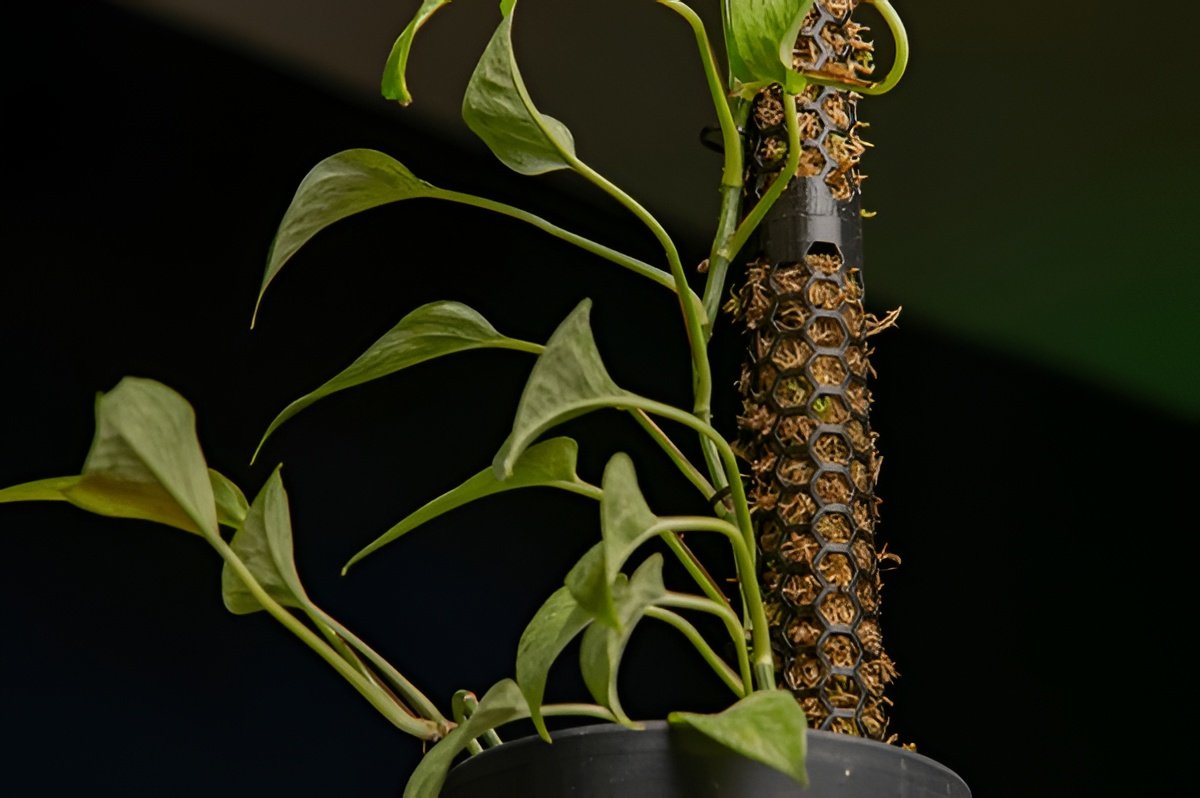
A moss pole is more than décor. For climbing aroids like pothos (Epipremnum aureum and familiar cultivars), a vertical support can change growth habit, leaf size potential, and the entire silhouette of the plant in your room. Whether you choose a classic sphagnum-wrapped pole, a coco coil, or a DIY equivalent, the underlying idea is the same: give the vine something to root onto and something to climb, mimicking fragments of its natural inclination to ascend tree trunks under forest light. This guide covers benefits, setup, attachment techniques, aftercare, and realistic expectations.
Why climbers behave differently than perpetual trailers
Trailing pothos is beautiful and valid—but vines hanging indefinitely in lower light often mature slowly in leaf size. When pothos climbs, nodes contact a moist substrate, adventitious roots can anchor, and the plant’s architecture shifts toward supported vertical growth. Many growers report larger leaves over time on well-supported climbers in good light compared with thin trailers in dim corners.
Not every cultivar expresses giant foliage instantly indoors; ceilings and pots limit ultimate scale. Still, climbing usually produces a more “sculptural” plant than endless stringiness.
Choosing a pole: moss, coir, and practicality
Sphagnum moss poles hold moisture and invite aerial roots to grip; they require periodic remoistening.
Coco coir poles are common retail supports; ease wins, though they can dry quickly depending on room humidity.
DIY options include plastic mesh cylinders stuffed with moss, wooden boards wrapped with moss for shingling growth, or even sturdy trellises—pick what matches your watering habits.
Height should suit your space and stake stability; overly tall narrow poles in tiny pots tip easily unless the root ball is substantial.
Pot and stability: avoid the leaning tower
Moist moss adds weight. Choose a pot heavy enough or embed the pole deeply enough that the assembly does not torque when you water or bump it. Some growers add a inner rod anchored into pot bottom foam or heavy substrate layers—without blocking drainage.
If you report onto a pole, do that during repot so you do not repeatedly break roots while forcing a pole through established soil like a surprise spear.
Positioning the plant on the pole
Gently arrange vines so nodes face the pole surface—roots will not grab air aimlessly if nodes press toward moisture. Do not snap stems; warmth-softened vines bend easier (carefully).
If stems are rigid from years trailing downward, train gradually: bring sections up over weeks using soft ties, increasing contact bit by bit.
Securing stems without strangulation
Use soft plant ties, gentle Velcro garden tape, or strips of fabric. Tight zip ties across petioles damage tissue over time. The goal is temporary assistance until aerial roots attach; loosen ties as the plant anchors.
Keeping moss moist: the secret sauce—or chore
Moisture encourages aerial rooting. Many growers mist moss, drip water down the pole while watering, or employ a reservoir pole approach depending on design. Letting moss bake bone-dry for weeks can limit attachment progress.
Balance: persistently soggy moss near the crown can encourage stem issues—airflow and avoiding constant sogginess at petiole bases matter.
Light: climbing does not fix darkness
A pole will not replace photons. Place moss pole specimens in bright indirect light for best results. Dark corners produce thin leaves even on poles; you simply elevated the thinness.
Rotate the plant occasionally so one side does not reach outward like a lone tentacle hunting sun.
Fertilizing and watering with a pole present
Water the pot normally based on soil dryness; treat moss as an add-on that receives periodic moisture. Nutrients still primarily enter through substrate roots unless you are advanced enough to manage foliar or moss drench routines—most beginners should keep it simple: healthy soil feeding supports the whole plant, including new aerial roots as they mature.
When aerial roots wander into your wall paint
Redirect aerial roots into moss or trim if they claw trim in ways you dislike. In rentals, keep climbing directed away from surfaces you cannot clean. Some growers use flat boards behind pots as deliberate rooting surfaces.
Long-term maintenance: extending or rebuilding poles
Mature climbers may outgrow poles. Options include stackable extensions, rebuilding taller moss cylinders, or taking a cutting from the top and restarting intentionally. Pothos tolerates pruning and reshaping—design maintenance is normal.
Why you should consider it (honest version)
Not “should” as moral imperative—should as design and growth logic: if you want larger leaves, a vertical visual anchor, or less tangled floor vines, a moss pole is among the highest-impact changes you can make without switching species.
Common pitfalls
- Pole too thin/tippy
- Never remoistening moss, wondering why roots ignore it
- Tying stems too tight, creating scars
- Expecting instant monster leaves in week two—patience required
Moss alternatives and renter realities
If you worry about drip marks on hardwood from moss rewetting, place a waterproof mat beneath the pole pot and favor controlled watering with a narrow-spout vessel rather than showering the entire bookshelf. Coconut-lined poles may shed fibers—vacuum occasionally. If mold appears on outer moss surfaces in stagnant corners, improve airflow and reduce nightly leaf wetness while keeping moss slightly damp rather than eternally saturated.
Combining poles with cabinets and HVAC realities
Heat rises; moss near ceilings can dry faster than moss at knee height even indoors. Check upper poles weekly in winter when furnaces run. Air conditioning returns can desiccate moss poles on one side of the room—rotate slightly or remoisten the stressed face more often if the alternative is abandoning the pole plan entirely.
Closing image
Picture a pole in a bright corner, stems spiraling upward, aerial roots gripping moss like quiet hooks, leaves turning toward light in orderly tiers. That is the moss pole promise—not magic, but a better match between pothos habit and indoor architecture, with you as the gentle choreographer tying loose ends until the plant takes over the climb on its own.
Cork, bark, and creative climbs
Some growers mount pothos on cork bark panels with occasional sphagnum pockets—half sculpture, half plant support. The idea mirrors moss poles: contact surfaces plus intermittent moisture invite aerial roots. If you experiment, anchor panels securely and consider resin finish risks near moisture; rentals still need damage control.
Watering the pole without soaking your bookshelf
Direct a narrow stream of water along the pole while the pot drinks normally; pause if water sheets sideways into books or electronics. Saucers and mats matter more with vertical setups because drips travel down lines you do not notice until paperwork warps.
Coordinating pole height with ceiling fixtures
Before committing, trace future vine paths against pendant lights and ceiling fans. A pole that collides aesthetically with fixtures becomes a chore; shifting furniture six inches early saves resentment later.
Integrating poles into open shelving systems
Metal shelving units can host poles anchored between shelves like tension rods—if stable—so vines climb without wall adhesives. Weight limits still apply; wet pots are heavy.
Kids, curious hands, and tipping hazards
Tall skinny pole pots tempt toddlers to tug. Choose heavier bases or lower setups in play zones. Toxicity discussions belong here too—pothos should not be toddler snacks.
Closing reminder
Moss poles succeed when moisture, light, and stability cooperate. Miss one leg of that tripod and you get dry ignored moss or a leaning drama; nail all three and climbing becomes the most interior-architecture-friendly habit pothos offers.
Experiment notebook prompts
Record pole height, approximate watering frequency to keep moss viable, and the date first aerial roots cling—those timestamps turn intuition into reproducible skill. If you mentor a friend, hand them your notes rather than vague encouragement; specifics shorten their learning curve.
When moss is the wrong tool
In extremely dry homes with owners who refuse to moisten poles, climbing might better use a wood board with occasional splashes—or accept trailing instead of watching crispy moss pretend to be a cloud forest. Honest self-knowledge beats aspirational gear.
Closing integration
Moss poles connect pothos aesthetics with aroids’ natural gestures: upward search for light, outward search for anchor points. You are not forcing a sculpture onto a victim—you are offering footholds the genus recognizes, then stepping back while leaves climb toward photons like well-trained dancers finding their marks.
Long-form care calendar sketch
Spring: repot and extend poles before major growth pushes. Summer: watch moss dry-down speed; remoisten thoughtfully. Autumn: ease up on aggressive feeding if light drops. Winter: verify poles are not chilling against cold glass; condensation on indoor windows can soak moss oddly on one side. None of this is mystical—just aligning chores with what your rooms actually do across months.
When aesthetics disagree with plant ergonomics
A skinny pole may look sleek but fail physically with a heavy top; widen bases before you chase Instagram proportions that ignore torque. Plants owe us nothing for looking fragile on bad engineering.
Closing coda
Moss poles are promises: moisture near nodes, stability under weight, light strong enough that climbing matters. Keep those promises and pothos keeps climbing—sometimes slowly, always honestly.
Moss pole myth vs. reality
| Myth | Reality |
|---|---|
| “Any pole fixes tiny leaves.” | Poles help architecture; photons still set the photosynthesis budget. |
| “Never trim climbers.” | Strategic pruning refreshes density and yields propagation material. |
Seasonal note: winter furnace drafts often dry moss unevenly—spot-check the pole face nearest vents before assuming the whole plant “stopped liking climbing.”