
If you are looking for a houseplant that is nearly impossible to kill, the snake plant (Sansevieria) is your best friend. Known for their striking, upright sword-like leaves and incredible resilience, these plants are a staple in homes and offices worldwide. But even the toughest plants have preferences. If you want to know how to take care of a snake plant indoors so it doesn’t just survive but actually thrives, you have come to the right place.
Many beginners assume that because snake plants are “indestructible,” they don’t need any attention at all. While they are forgiving, snake plant care does require understanding a few key basics regarding light, water, and soil. Whether you have a classic green snake plant or a dwarf snake plant, this guide will walk you through everything you need to know about keeping snake plant alive and happy.
7 Surprising Reasons Why are Orchids so Hard to Keep Alive (and How to Fix It)
Why Are Snake Plants So Popular?
Before we dive into the indoor care guide for snake plants, it is worth noting why they are so beloved. Aside from their architectural beauty, they are air-purifying powerhouses. What do snake plants do? They filter indoor air, removing toxins like formaldehyde and benzene. Unlike most plants, they release oxygen at night, making them perfect bedroom companions.
Plus, are snake plants easy to care for? Absolutely. They are often called the “Mother-in-Law’s Tongue” due to their sharp, pointed leaves and durability. If you travel often or tend to forget about your plants, this is the species for you.
Snake Plant Sunlight Requirements
One of the most common questions is: How much light for snake plant health is necessary? The answer is one of the reasons they are so versatile.
Best Light for Snake Plant Indoors
Ideally, snake plants prefer bright, indirect light. Placing them near an east-facing window or a few feet back from a south-facing window is perfect. In these conditions, you will see faster snake plant growth rate and vibrant colors.
Can Snake Plants Live in Low Light?
Yes! Snake plant sunlight requirements are incredibly flexible. They are famous for being able to survive in low-light corners, bathrooms, and offices with only fluorescent lighting. However, survive does not mean thrive. In low light, growth will slow down significantly, and the vibrant patterns on the leaves may fade.
Direct Sun
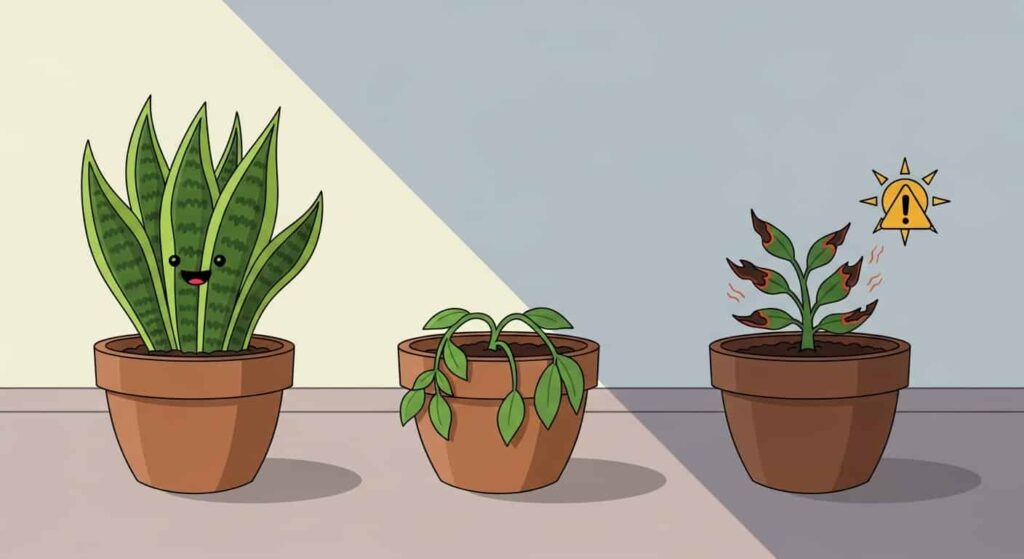
While they are tough, be careful with intense, direct mid-day sun. Too much scorching light can burn the leaves. If you move your plant from a dark corner to a sunny window, do it gradually to acclimate it.
How to Water Snake Plant Indoor
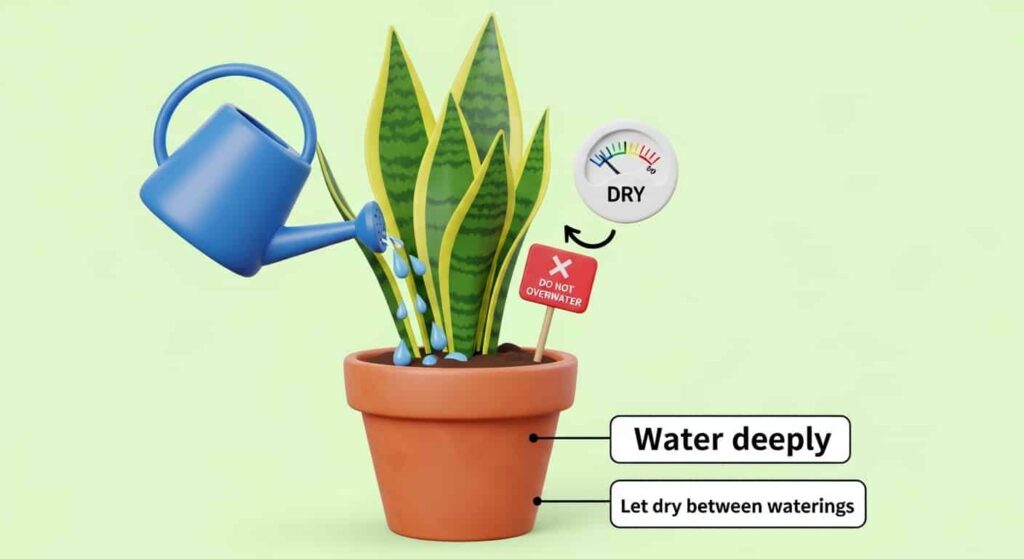
The quickest way to kill a Sansevieria is overwatering. Learning how to water snake plant indoors is the most critical part of snake plant care.
The “Soak and Dry” Method
The best snake plant watering technique is the “soak and dry” method.
- Wait: Let the soil dry out completely. Not just the top inch—the entire pot.
- Soak: When you water, pour water generously until it flows out of the drainage holes at the bottom.
- Drain: Empty the saucer immediately. Never let the plant sit in standing water.
How Often to Water Snake Plants
There is no strict schedule because snake plant water needs depend on your home’s temperature and light.
- Summer/Spring: How often do you water snake plant in growing season? Usually every 2–3 weeks.
- Winter: Snake plant winter care is crucial. In cooler months, they go dormant. You might only need to water once every 6–8 weeks.
Signs of Watering Issues
- Snake Plant Underwater: If leaves are wrinkled and dry, the plant is thirsty. Why is my snake plant wrinkled? Usually dehydration.
- Overwatering: If leaves turn yellow, mushy, or droop heavily, you are watering too often. This leads to root rot.
Using a snake plant moisture meter level checker can help. You want the meter to read “dry” (level 1 or 2) before watering again.
Soil and Potting: The Foundation of Care
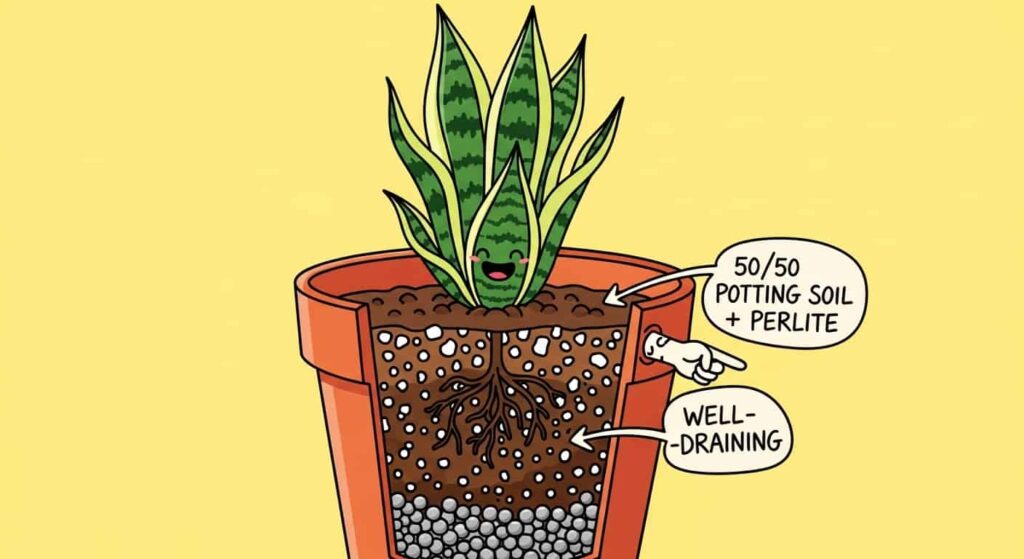
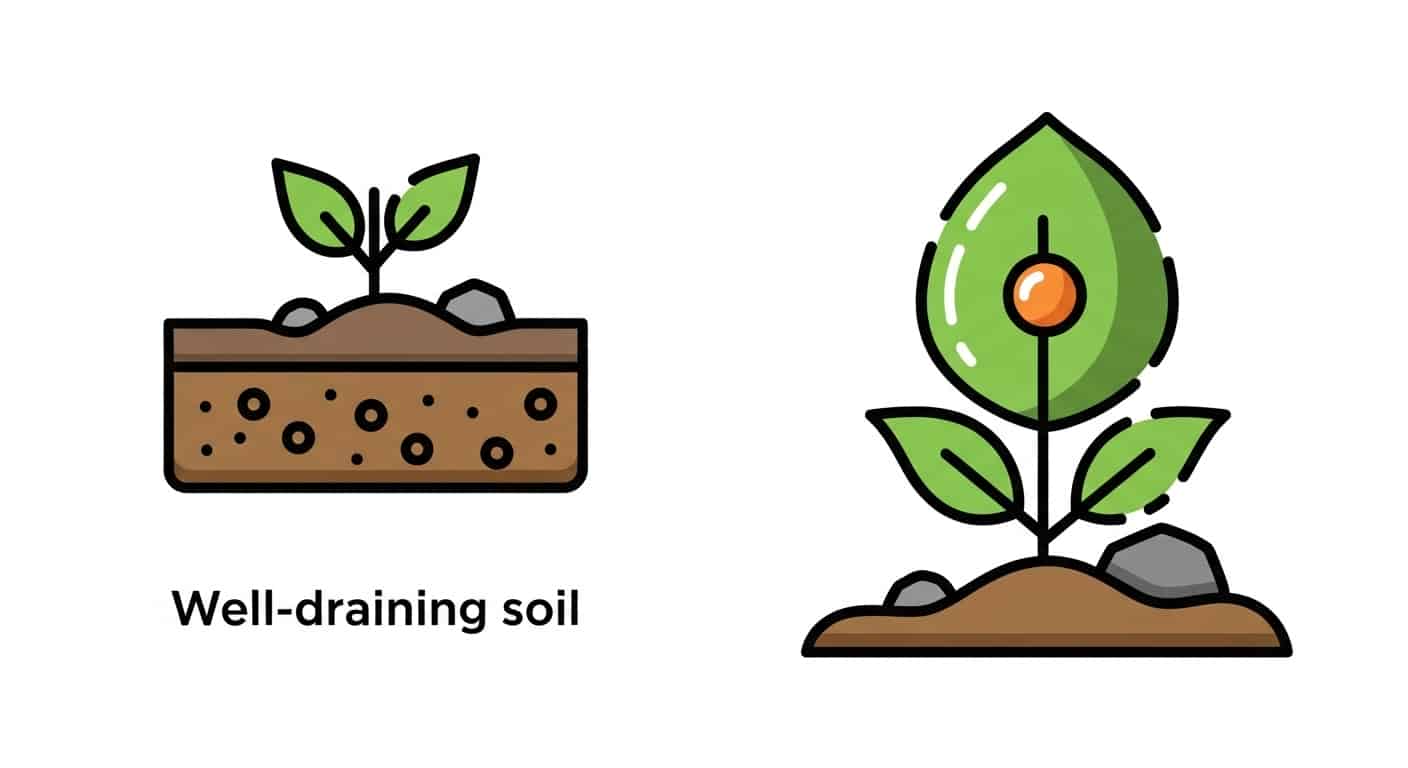
Standard potting soil is often too dense for snake plants care. These plants originate from arid regions in Africa and need excellent drainage.
What Potting Soil for Snake Plant?
The best snake soil is a well-draining cactus or succulent mix. You can also make your own by mixing regular potting soil with plenty of perlite, pumice, or coarse sand. Do snake plants like acidic soil? They prefer slightly acidic to neutral soil (pH 5.5 to 7.0), but they aren’t super fussy about pH. The drainage is what matters most.
Choosing the Right Pot
Best pots for snake plants indoor must have drainage holes.
- Material: Terracotta is the best planter for snake plant varieties because the porous clay allows the soil to dry out faster, preventing root rot.
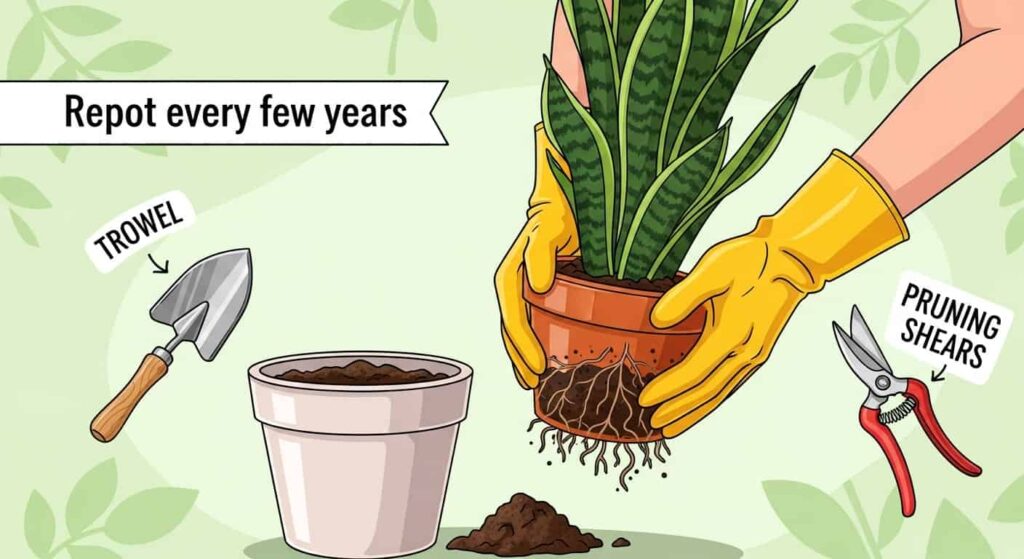
- Size: What size pot for snake plant is best? Keep them tight. Snake plants like to be root-bound. Only repot when the roots are cracking the pot or the plant is toppling over.
Does Snake Plant Need Drainage?
Yes, absolutely. Never plant a snake plant in a pot without a hole. If you have a decorative pot without a hole, keep the plant in a plastic nursery pot and set it inside the decorative one.
Temperature and Humidity
Snake plant indoor care is easy because they like the same temperatures humans do.
Temperature Tolerance
The ideal temp for snake plant growth is between 70°F and 90°F (21°C–32°C).
- Lowest Temperature for Snake Plant: They do not like the cold. Keep them above 50°F (10°C). Snake plant cold tolerance is low; drafts from windows in winter can damage the leaves.
- Heat: They tolerate heat well, but keep them away from radiators or heaters that dry them out too fast.
Humidity
Snake plant humidity requirements are low. They do not need misting or pebble trays. High humidity, especially combined with cool temperatures, can actually encourage fungal diseases. Standard household humidity is perfect.
Fertilizing: What to Feed a Snake Plant
Do snake plants need fertilizer? They are light feeders, but a little boost helps.
Best Fertilizer for Snake Plants
Use a balanced houseplant fertilizer or a specific cactus/succulent fertilizer.
- How to Fertilize Snake Plant: Dilute the fertilizer to half-strength.
- Frequency: Feed them once in the spring and once in the summer. Do not fertilize in the winter when the plant is dormant.
Avoid over-fertilizing, which can cause the leaf tips to burn.
Trimming and Maintenance
Snake plant maintenance is minimal, but occasionally you will need to tidy up.
Trimming Snake Plant
If a leaf is damaged, brown, or unsightly, you can trim it.
- How to: Use clean, sharp scissors. You can cut the leaf off at the soil line for the cleanest look.
- Brown Tips: If only the very tip is brown (often from low humidity or sporadic watering), you can snip just the tip off. However, the cut edge will remain brown/calloused.
Cleaning
Dust can accumulate on the broad leaves, blocking sunlight. Wipe the leaves down gently with a damp cloth every few weeks to keep the snake plant green and photosynthesizing efficiently.
How Big Do Snake Plants Get?
Snake plant size varies by variety.
- Tall: Varieties like Sansevieria trifasciata can grow 3 to 4 feet tall indoors.
- Dwarf: Dwarf snake plant care is the same, but they stay compact, usually under 12 inches.
- How Fast Does a Snake Plant Grow? In low light, they are slow growers. In bright light, you might see several new leaves per year.
Troubleshooting Common Problems
Even with the best care of snake plants, issues can arise. Here is snake plant help for common symptoms.
Brown Tips or Holes
- Hole in Snake Plant Leaf: This can be physical damage (pets or bumping into it) or a sign of a fungal issue if the hole has a yellow halo.
- Brown Tips: Usually inconsistent watering. If you let it go bone dry for too long and then flood it, the tips may die back. It can also be from tap water chemicals like chlorine.
Wrinkled Leaves
Why is my snake plant wrinkled? This is a classic sign of thirst. The plant is using up the water stored in its leaves. Give it a good soak.
Falling Over
If leaves are falling over or the whole plant is unstable, it might be:
- Low Light: The leaves are stretching for light and becoming weak.
- Root Rot: The roots have rotted away and can no longer anchor the plant. Check the roots immediately.
Yellowing Leaves
Snake plant yellowing almost always means overwatering. Stop watering immediately. If the soil is soggy, you may need to repot into fresh, dry soil to save it.