
A Low-Maintenance Indoor Favorite for Small Spaces

Snake plants are legendary for being nearly indestructible, but many people don’t realize they come in small, decorative shapes. The Sansevieria bird’s nest snake plant (technically known as Dracaena trifasciata ‘Hahnii’) is a unique, dwarf variety perfect for desks, shelves, and windowsills.
Botanical Background of the Bird’s Nest Variety

The Sansevieria bird’s nest snake plant has an interesting history. Originally discovered in the 1930s as a natural mutation of the taller snake plant, it was developed for its distinct, low-growing features.
- Scientific Name: Dracaena trifasciata ‘Hahnii’ (formerly Sansevieria trifasciata ‘Hahnii’).
- Origin: Native to the tropical regions of West Africa.
- Structure: Unlike its tall cousins, this variety grows from underground rhizomes into a tight, circular pattern.
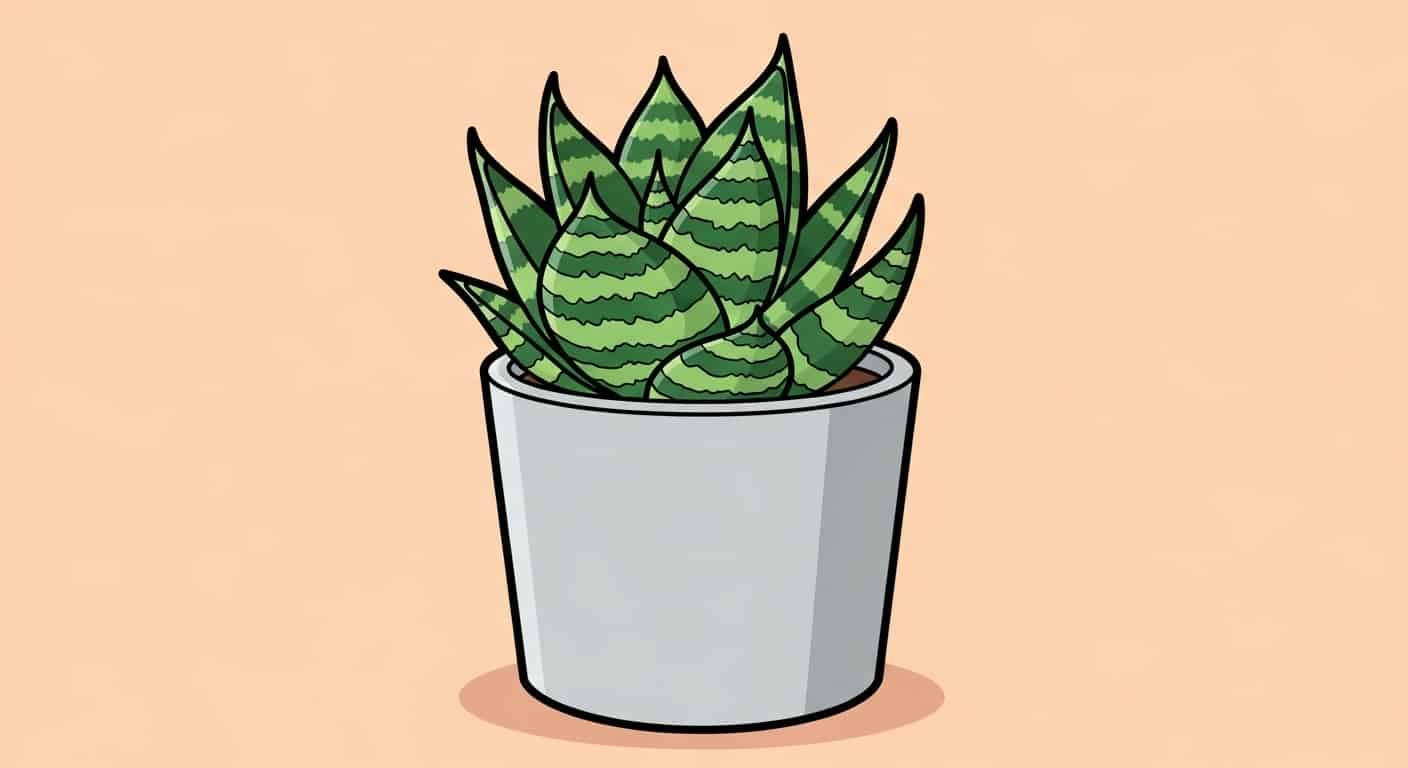
Did You Know? The name “Bird’s Nest” comes from the way the leaves curve inward and grow in a rosette, making the plant look like a small, green nest.
Key Morphological Features

The Sansevieria bird’s nest snake plant stands out because of its neat, symmetrical growth.
- Size: It stays small, usually reaching only 6 to 12 inches in height.
- Foliage: The leaves are thick, waxy, and shaped like pointed ovals.
- Color: Most feature dark green leaves with silvery-gray horizontal bands.
How to Care for a Sansevieria Bird’s Nest Snake Plant

To keep your plant thriving, follow these simple care requirements:
A. Lighting Needs
This plant is incredibly flexible. It grows best in bright, indirect light but is famous for its ability to survive in low-light corners of homes and offices.
B. Watering Mastery
Overwatering is the number one killer of snake plants.
- The Rule: Let the soil dry out completely before watering again.
- Frequency: Every 2–3 weeks in summer; once a month in winter.
Expert Tip: Avoid pouring water directly into the center of the rosette. If water sits in the “nest,” it can cause the core of the plant to rot.
Propagation: Growing New Plants

The Sansevieria bird’s nest snake plant is very easy to propagate.
- Division: When the plant grows “pups” (offsets), gently separate them from the parent plant.
- Leaf Cuttings: You can root a leaf in soil, though it takes longer to see growth.
Air Quality and Health Benefits

Snake plants are world-renowned for their ability to filter indoor air. Based on research similar to the NASA Clean Air Study, these plants help remove toxins like formaldehyde and benzene from your home. They are also unique because they produce oxygen at night, which can improve sleep quality.
Safety Warning: Is it Toxic?

While beautiful, the Sansevieria bird’s nest snake plant contains natural chemicals called saponins. According to the ASPCA, this plant is toxic to cats and dogs and can cause nausea or vomiting if ingested. Always keep it on a high shelf away from pets and small children.
FAQs: Sansevieria Bird’s Nest Snake Plant
Can I use regular potting soil?
No. Regular soil holds too much moisture. Use a succulent or cactus mix to ensure the roots stay dry and healthy.
Is it the same as a ‘Hahnii’ snake plant?
Yes! “Hahnii” is the specific cultivar name, while “Bird’s Nest” is the common name used by most plant lovers.
How often should I water my snake plant?
Only when the soil is 100% dry. For most homes, this is every 14 to 21 days.