
Last Updated on May 1, 2026 by Indoor Plant Nook
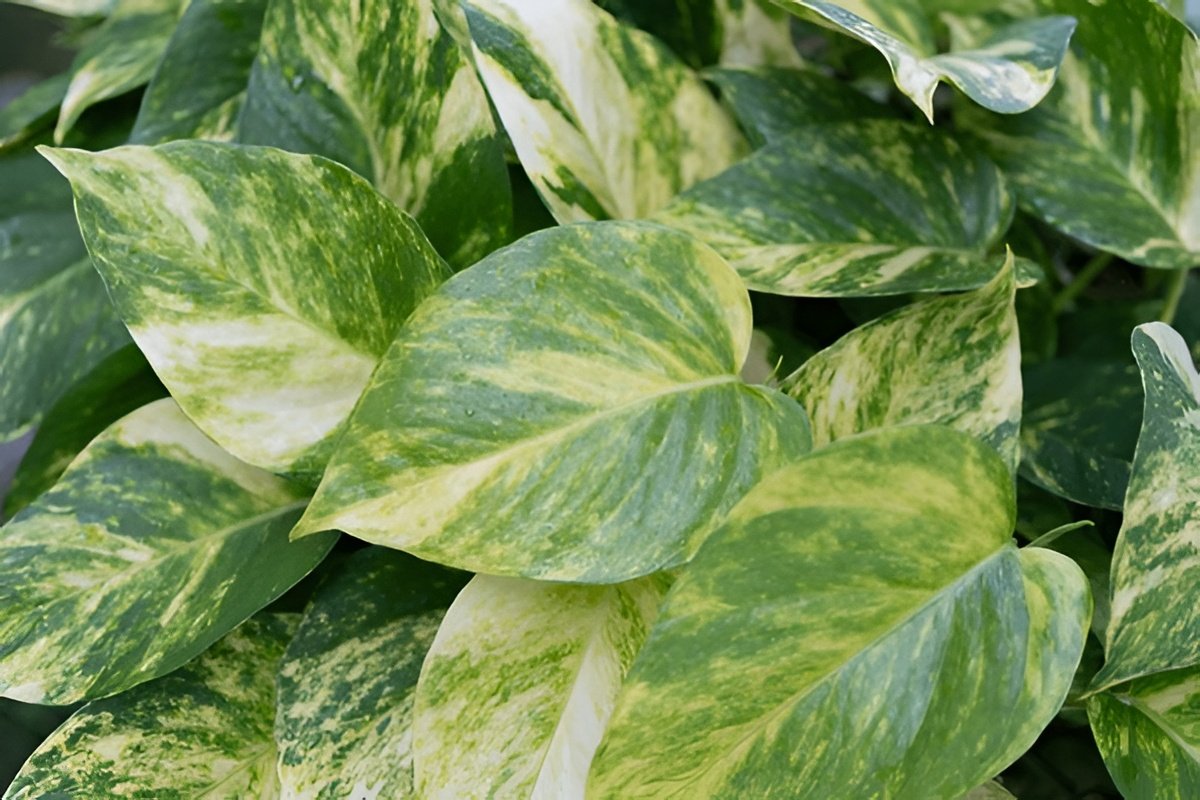
Golden Pothos is the cultivar most people picture when someone says “pothos”: heart-shaped leaves, climbing or trailing stems, and that splashy yellow-to-cream variegation against a deep green background. It is widely sold, widely propagated, and widely forgiving—qualities that made it a global houseplant icon long before social media plant trends existed. Golden Pothos is not magically unkillable: root rot, prolonged cold, chronic darkness, and pest outbreaks can still take plants down. What is true is that Golden tends to adapt across a broader range of imperfect indoor conditions than many comparably lush vines.
This guide explains what makes Golden distinctive, how to grow it well indoors (and briefly outdoors where climate allows), how to train it, and how to avoid the most common care mistakes.
Identification: how to recognize Golden Pothos confidently
Golden Pothos leaves are typically broadly heart-shaped with pointed tips, emerging from sturdy stems that often show slight ridging. Variegation patterns vary with light, genetics, and maturity: some leaves look nearly half yellow; others show scattered flecks; some come almost fully green in lower light.
Aerial roots appear as knobby bumps along nodes—useful anchors for moss poles and indicators for propagation cuts. New leaves unfurl from a thin, papery sheath; observing that unfurl rhythm helps you connect environmental changes to growth speed.
If you shop in big-box stores, labeling errors happen. Compare candidate plants to known Golden markers: variegation warmth (yellow rather than pure white blockiness), leaf shape, and stem thickness. If you need certainty for collecting reasons, buy from specialty growers who track clones.
What Golden offers that other cultivars do not
Golden’s primary advantage is balanced performance in typical homes.
- It usually grows faster than heavily white-variegated cultivars that carry less chlorophyll per leaf.
- It tolerates moderate indirect light more gracefully than icy types that revert or weaken in dim corners.
- It is affordable and easy to replace or share—healthy culture matters more than scarcity mindset.
Golden is also emotionally versatile: it can read minimal in a ceramic planter near modern furniture or jungly when allowed to trail three meters across shelving.
Light: the single biggest quality dial
Golden Pothos benefits from bright indirect light for the strongest growth and most attractive variegation balance. East windows and set-back south or west exposures often work well. Direct sun through a harsh window can bleach leaves or leave papery brown patches unless you acclimate carefully.
In lower light, Golden often survives by producing greener leaves with tighter spacing on thinner-looking vines—technically an adaptation. If you want the classic yellow variegation to persist, prioritize brighter conditions, rotate the pot occasionally for even canopy development, and clean leaves gently if dust accumulates in urban air.
Under quality grow lights, Golden can grow surprisingly fast—watch pot size and watering frequency as photosynthetic demand increases.
Watering: thorough drinks, not constant sips
Golden Pothos prefers a cycle where the potting mix approaches partial dryness between waterings rather than staying perpetually wet. Exact timing depends on pot volume, substrate chunkiness, humidity, temperature, and root mass.
Practical method for beginners: learn to read soil moisture with a finger or thin probe in smaller pots; in larger pots, check deeper than the superficial crust because dryness at the surface can hide wet pockets below in peat-heavy mixes.
Water until liquid runs from drainage holes, then discard standing water in saucers or cachepots to reduce anaerobic rot risk. If water instantly channels through without moistening the root ball, you may have hydrophobic peat or extreme compaction—address repotting and mix quality rather than doubling frequency blindly.
Symptoms of imbalance appear on leaves: chronic overwatering contributes to generalized yellowing and collapsed texture; underwatering can cause wilting that perks after watering but may leave older leaves yellow if repeated too aggressively.
Soil and repotting: prioritize oxygen at the roots
Golden grows well in chunky, well-aerated potting blends—indoor mixes amended with perlite, bark, coco chunks, pumice, or similar materials depending on availability and personal philosophy. Dense garden soil straight from the yard usually drains poorly in containers and invites suffocation in root zones.
Repot when the plant is demonstrably root-bound and the timing aligns with active growth—or when media has broken down into a muddy, slow-draining mass. Jumping to an oversized pot rarely speeds growth; it often increases moisture retention out of proportion to root volume.
When repotting, tease compacted roots gently rather than yanking, add support stakes if you plan vertical training, and hold off heavy fertilization until plants settle.
Temperature and humidity: typical home ranges work
Golden appreciates stable warmth. Avoid placing pots against single-pane glass on freezing nights or directly above radiators that bake roots. Short temperature dips might not kill an entire plant instantly, but repeated cold stress weakens growth.
Humidity is rarely a limiting factor indoors the way it is for some ferns. That said, extremely dry winter air plus heat vents can accelerate transpiration; if leaf edges crisp while you are watering correctly, investigate airflow, light intensity, and whether roots are damaged.
Feeding: light hands beat heavy salts
During active growth, use a balanced liquid fertilizer at dilute strength on a modest schedule—examples include half-strength applications every few weeks rather than full-strength weekly megadoses. In low-light winters without supplemental lighting, growth slows; reduce or pause feeding since unused nutrients accumulate and can damage roots.
If leaf tips burn despite good watering habits, consider fertilizer salt load, tap water chemistry, or a need to flush the substrate occasionally with thorough watering in a controlled way.
Training: trail, climb, or bush—choose a style
Golden excels in three common presentations.
Trailing: Simple and dramatic. Hang baskets high enough that vines do not snag foot traffic; trim to encourage fullness at the crown.
Climbing on a pole: A moss pole or coir stake lets stems engage aerial roots—often producing larger leaves over time compared with unsupported trailing in some setups, though outcomes vary with genetics, light, and maturity.
Tabletop bush: Rotate and prune vines to promote side shoots; patience yields a fuller silhouette.
Whatever style you choose, remember light reaches leaves unevenly; reposition occasionally if one side etiolates.
Propagation: the confidence booster
Cut below a node, place in water or substrate, provide warmth, and wait. Golden roots quickly enough that water propagation feels rewarding for beginners—just transition cuttings to soil before fragile water roots become brittle giants if soil is your end goal.
Keep multiple nodes per cutting for faster establishment, and avoid burying leaves under mix.
Pests and hygiene
Spider mites thrive in dry, dusty conditions—inspect leaf undersides. Mealybugs hide in node crevices. Scale can appear as tan bumps along stems. Treat early with consistent physical removal plus appropriate houseplant-rated interventions, repeating schedules long enough to catch egg cycles.
Regular rinses or gentle wiping benefit large-leaf displays in dusty homes.
Toxicity and household placement
Golden Pothos is frequently listed as toxic if ingested for pets and humans, consistent with calcium oxalate patterns in Araceae. Practical caution: keep trailing vines away from curious animals and young children. Severity varies with amount consumed and individual sensitivity; when uncertain, contact appropriate medical or veterinary guidance promptly rather than guessing.
Outdoor summering (temperate climates)
If you move Golden outdoors for warm months, prioritize shade-first acclimation, excellent drainage, and protection from herbicide drift and hail. Inspect before returning indoors to limit pest import.
Never assume outdoor success implies winter hardiness in cold climates.
Common mistakes summarized
- Chronic overwatering in heavy soils
- Dark corners for variegated beauty expectations
- Oversized decorative pots with no drainage
- Ignoring pests until webbing appears
- Aggressive direct sun without transition
Training Golden vertically (optional but rewarding)
Golden Pothos climbs moss poles enthusiastically when aerial roots encounter moisture and humidity. If you prefer a bookshelf jungle rather than a floor tangle, add a sturdy pole secured in the pot, keep the moss damp but not stagnant, and guide new growth upward with loose ties until roots attach naturally. Vertical growth often produces slightly different spacing between leaves than pure trailing—but both can look spectacular when light is adequate.
Long-term grooming: dust, shine, and honest leaf removal
Older leaves accumulate dust that reduces photosynthetic efficiency subtly and makes mites harder to detect. Gentle rinsing under lukewarm water or periodic wiping removes grime without pretending you need leaf shine sprays that sometimes clog stomata unnecessarily. Trim yellow leaves at the petiole base once they are obviously senescing—not every yellow spot deserves panic, but chronic basal yellow may signal watering culture issues worth root inspection calmly.
Fertilizing Golden without salt buildup dramas
Prefer dilute fertilizers during active growth, pause during obvious slowdowns, and occasionally flush porous mixes if you fertilize routinely. Let plant response—not bottle bravado—decide whether you are feeding too often indoors.
Why Golden remains the reference cultivar
Plant trends rotate; Golden Pothos endures because it pairs accessible care with striking, classic appearance. It teaches observation: how light sculpts leaf color, how watering interacts with pot geometry, how propagation rewards patience. If you master Golden, you carry skills into Marble Queen’s higher demands, Cebu Blue’s silvery trellis dreams, and the broader aroid collection ecosystem—without abandoning the vine that likely started the journey.