
Last Updated on April 13, 2026 by Indoor Plant Nook
TL;DR (Quick Wins)
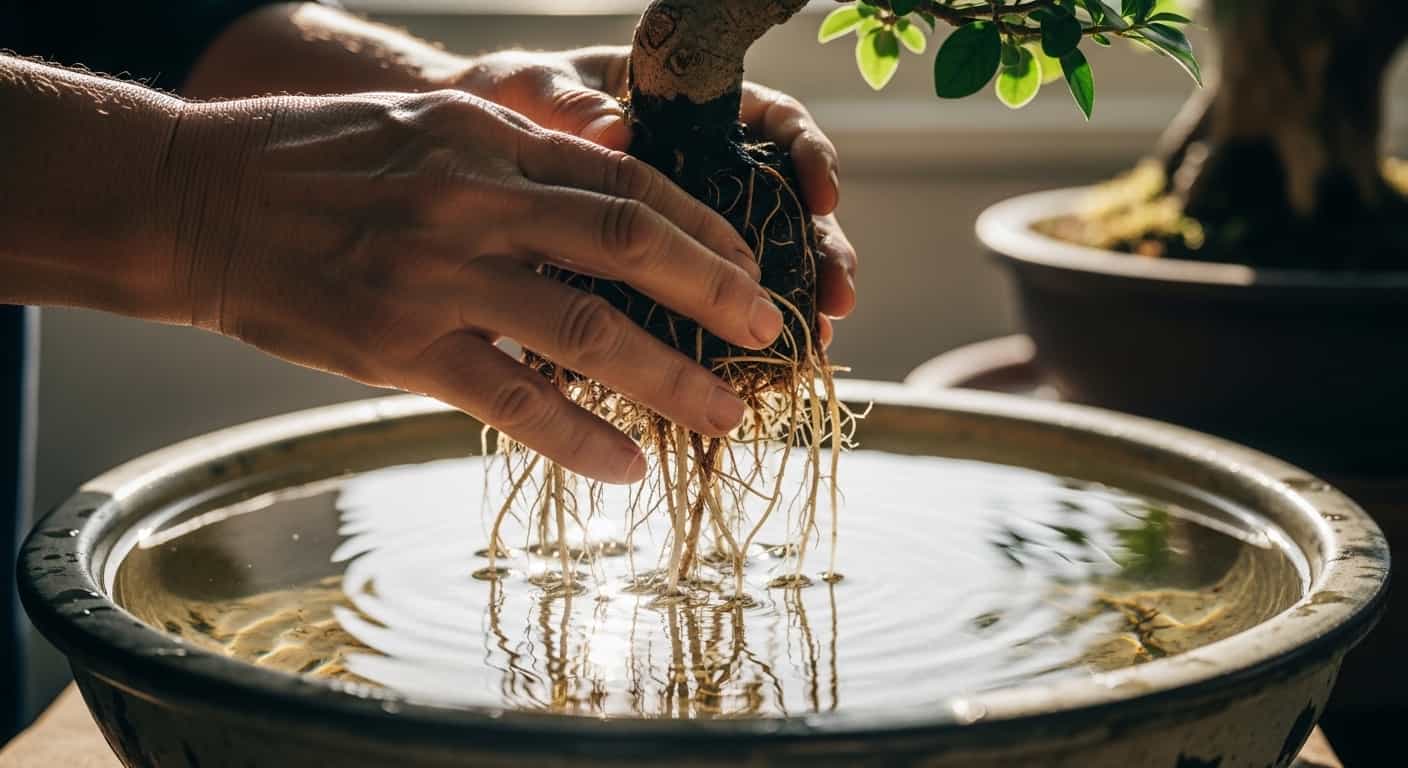
- What it is: Bonsai root pruning underwater means trimming roots while the root mass stays submerged—usually in a tub of clean water—so you can see structure clearly and limit air entering cut vessels.
- Why people do it: Cuts stay water-filled (less risk of embolism in fine roots), soil washes away for precision, and feeder roots stay hydrated during long sessions.
- Best for: Water-adapted species such as Bald Cypress, willows, river birch, and mangrove-type material.
- Avoid for: Species that need sharp drainage—pines, junipers, olives, and similar Mediterranean or dry-habitat trees. Keep pruning sessions reasonably short; if roots stay wet for a long time, aeration matters.
Introduction
Bonsai root pruning underwater is a specialized repotting technique: you work the root ball in water instead of on a dry bench. At first, it can sound wrong—roots need oxygen—but the point is controlled, short-term submersion while you wash, untangle, and cut, not indefinite drowning.
Searchers looking for bonsai root pruning underwater usually want a clear picture of benefits, a safe workflow, species limits, and risks. This article stays on that topic: what the method is, why it helps some trees, how to do it step by step, and when to skip it entirely.
What Is Bonsai Root Pruning Underwater?
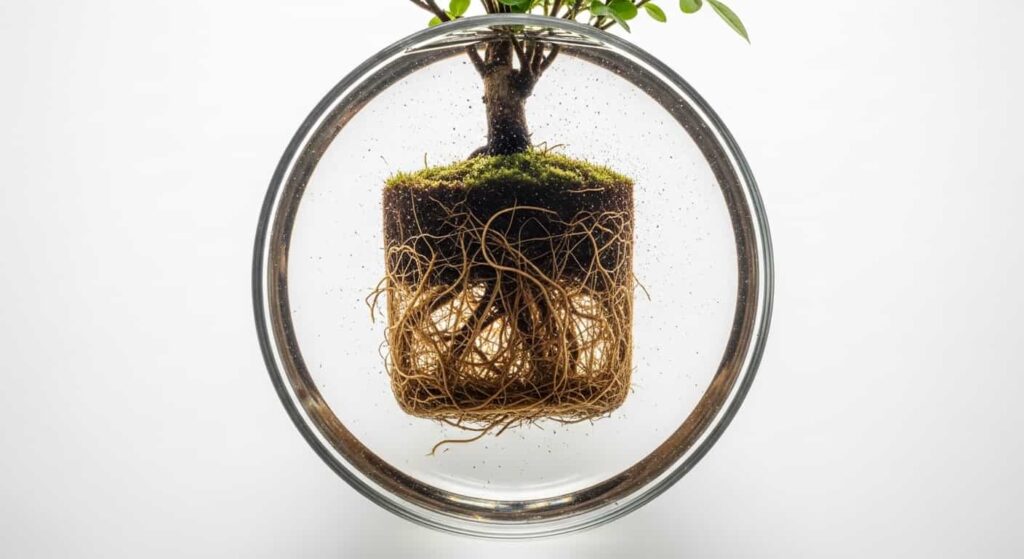
Bonsai root pruning underwater means trimming and restructuring roots while the root mass is underwater—typically in a shallow tub—rather than exposing cut surfaces to air for long stretches.
Common situations:
- Repotting “dunk and work”: Wash out old soil, inspect nebari and structure, then prune with the roots still wet and visible.
- Difficult root masses: Long sessions where air-drying would stress fine roots.
- Rescue work: Severely root-bound or dehydrated material (only when the species tolerates wet roots).
This is still root surgery during repotting or emergency care—not the same as growing a tree permanently in a vase. Long-term water culture is a different discipline and needs aeration and species that truly suit it.
Why Prune Bonsai Roots Underwater?
1. Less drying and embolism risk at the cuts
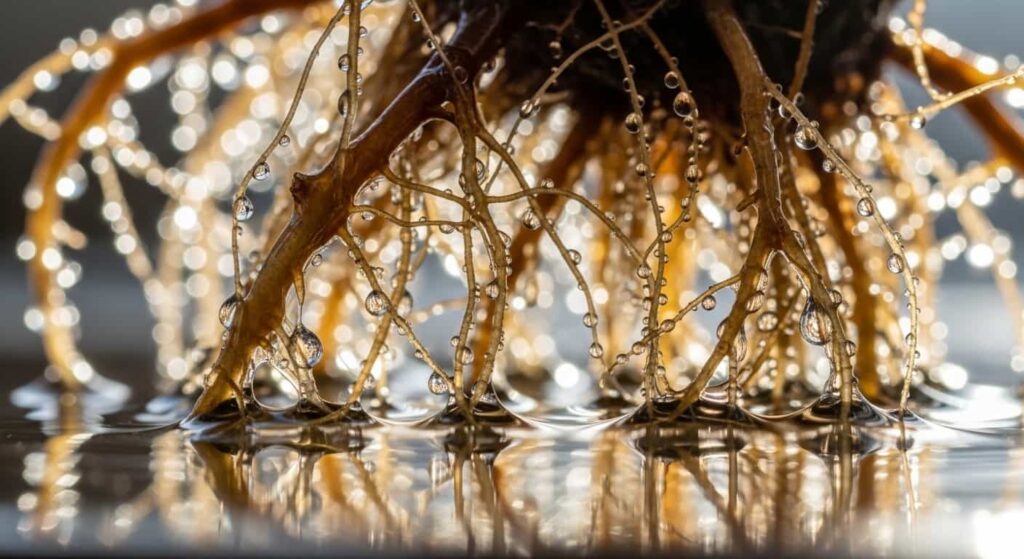
When roots are cut in open air, fine tissue and xylem can see air drawn into conduits; underwater, cuts stay water-filled, which many growers use to reduce transplant shock on species that handle wet work.
2. Visibility and precision
Moving water clears silt and old substrate so you can see thick roots, circling roots, and the nebari without as much tearing. Fine roots separate and read more clearly against the water.
3. Hydration through the job
A long underwater bonsai root pruning session keeps feeder roots from desiccating while you decide what to remove—important when the work is slow, or the mass is dense.
Species Notes: When Bonsai Root Pruning Underwater Fits
Bald Cypress and similar trees
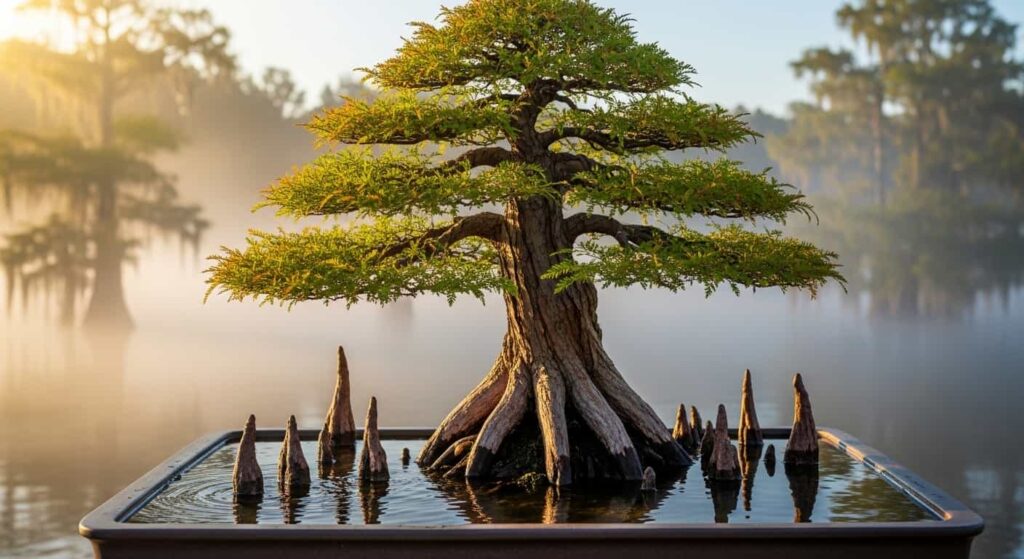
Bald Cypress (Taxodium distichum) is often cited because it tolerates wet roots and swampy conditions:
- Submersion during work can align with how the species grows in nature.
- Growers report aggressive root reduction with recovery when culture afterward matches the tree (proper soil, water, and aftercare—not generic dry-pine care).
- Aesthetic goals like buttressing and “knee” character tie to wet culture for that species, not to every bonsai.
Other species often grouped with underwater-friendly work include willows, river birch, and mangrove-adapted material—again, because they tolerate oxygen-poor, water-rich root environments better than dry-climate conifers.
When to avoid underwater pruning for bonsai
Pines, junipers, olives, and other drought-adapted or sharp-drainage species are poor candidates. For them, keep roots minimally wet and prefer quick rinses and fast repotting into appropriate mix—not extended tubs.
Risks of Bonsai Root Pruning Underwater (and How to Lower Them)
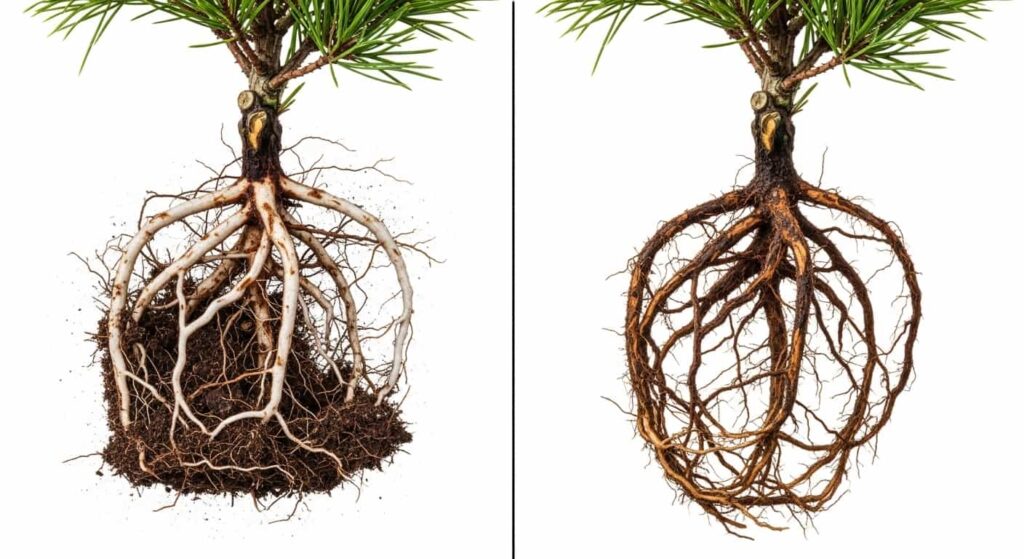
1. Oxygen and time limits
Roots need oxygen. Short bonsai root pruning underwater sessions (often cited up to roughly 30–60 minutes for tolerant species, less for marginal ones) differ from leaving a tree sitting in stagnant water for days.
Mitigation: Plan the cut list before you submerge. For any experiment with longer wet exposure, research aeration; that moves toward water culture, not basic repot pruning.
2. Wrong species
Mediterranean and desert-lineage trees can decline fast if roots stay saturated. Even a modest mistake in duration can matter more for a ponderosa pine than for a swamp cypress.
Mitigation: Match technique to evolutionary background. If you are unsure, do not use full underwater pruning—use brief rinse, dry-side work, and immediate repot.
3. Temperature and water quality
Cold water shocks roots; chlorinated water can stress tender cuts.
Mitigation: Use room-temperature, dechlorinated water. Let tap water sit if needed so temperature and chlorine are acceptable.
4. Pathogens in the bath
Standing water can carry fungi and bacteria toward fresh wounds.
Mitigation: Start with clean tubs and fresh water. Some growers use a very dilute hydrogen peroxide bath for susceptible material; research rates for your species before trying.
Longer water contact and aeration
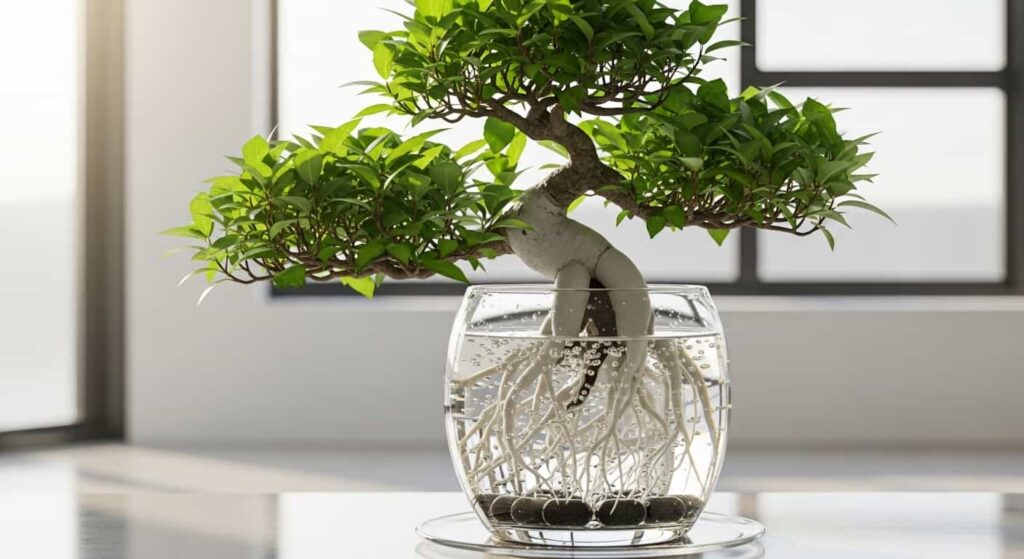
Standard bonsai root pruning underwater should end with repotting into soil for most trees. If you ever extend wet exposure—for recovery soaks or experiments—stagnant, oxygen-poor water becomes a separate risk; air stones, gentle movement, and water changes are how growers offset that. This does not change the core repot workflow: prune underwater, then get the tree into appropriate substrate and aftercare.
How to Prune Bonsai Roots Underwater: Step-by-Step
1. Prepare. Fill a tub with room-temperature, dechlorinated water. Lay out sharp, clean root scissors, concave cutters, and a saw if needed. For large trees, a second pair of hands helps keep the mass submerged without crushing branches.
2. Submerge quickly. After slipping or unpotting, get the root ball underwater before fine roots film-dry in the air.
3. Clean underwater. Gently shake and swish to release old soil. Work out tangles with patience so you see true structure and nebari.
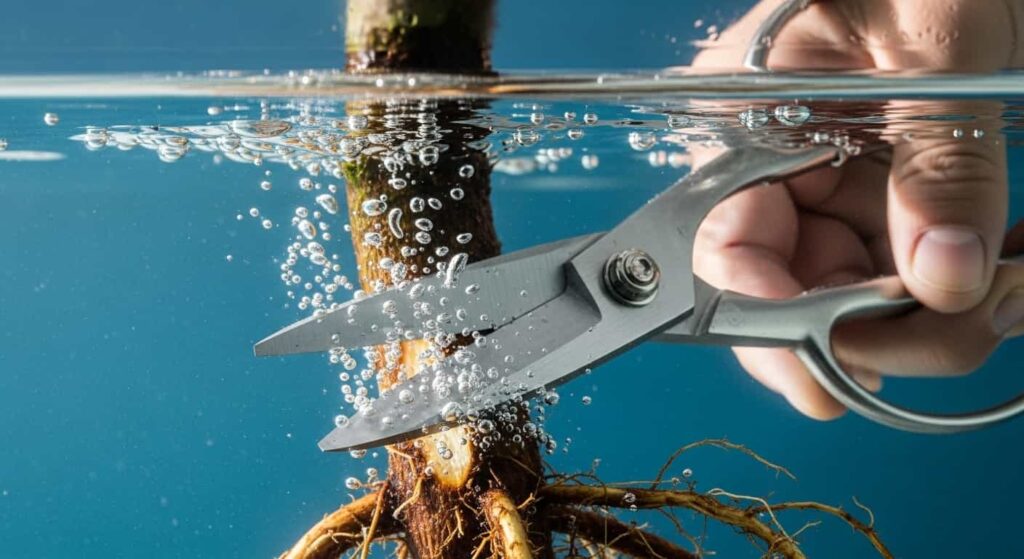
4. Prune. Either lift a section just above the surface for a cut and return it immediately underwater, or practice cutting fully submerged with sharp tools so tissue is sliced, not crushed. Remove thick downward roots, dead wood, and severe circling roots according to species limits and season. Bonsai root pruning underwater does not replace sound styling and repotting timing.
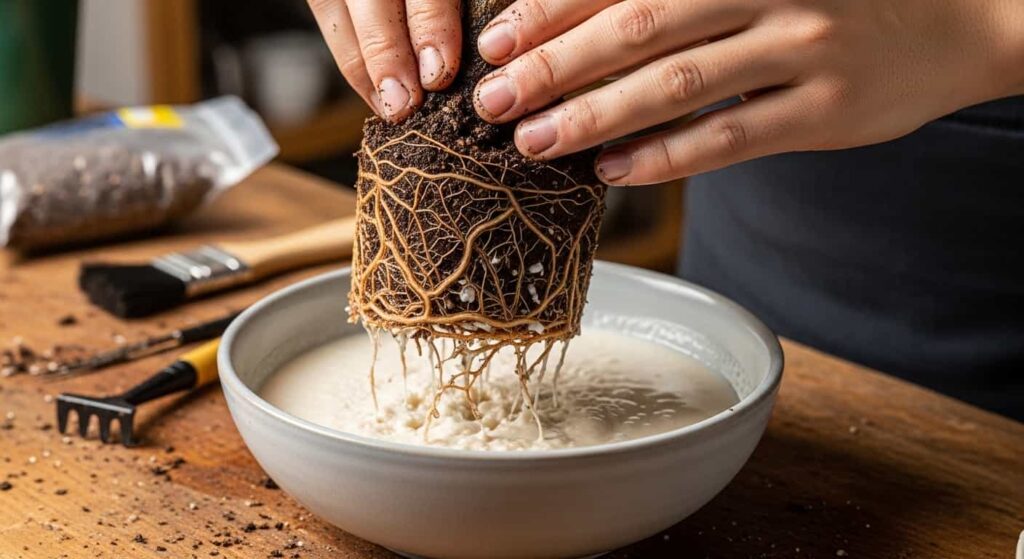
5. Exit the water and repot. For typical soil culture, move straight into a moist (not sopping) bonsai substrate. Some growers dip cut ends in a thin slurry of water and mycorrhizal inoculant, if that fits their program. Do not leave the tree floating indefinitely unless you are deliberately running a documented water-culture setup with aeration and the right species.
Conclusion
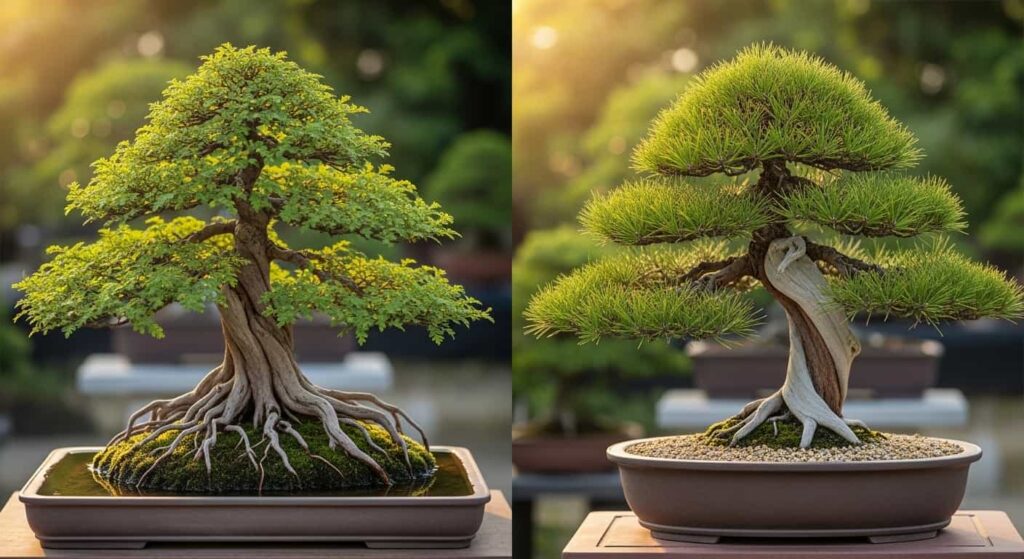
Bonsai root pruning underwater is a practical option for species that tolerate wet roots and for jobs where visibility and hydrated tissue matter. It is not a default for every tree.
Match the method to the plant: swamp-adapted material can be a strong candidate; dry-habitat conifers and Mediterranean species belong on a different workflow—dry brush, minimal wet time, sharp drainage. Know the species, and you know whether underwater work belongs in your repotting toolkit.
Frequently Asked Questions
Is bonsai root pruning underwater safe for every bonsai?
No. Reserve it for water-tolerant species. For desert and Mediterranean types, prefer minimal wet exposure and conventional repotting.
How long can I keep roots underwater during pruning?
For many tolerant species, roughly 30–60 minutes of active work is commonly discussed; shorten that for anything marginal. Finish and repot rather than extending “soak time” without a reason.
What tools work for bonsai root pruning underwater?
Standard stainless root shears and cutters work. Rinse, dry, and oil tools after use to limit rust.
Can I use this on stressed nursery stock?
Sometimes, for root-bound, water-loving plants, a gentle underwater session can be part of recovery—still species-dependent, and still followed by correct soil and aftercare.