

Last Updated on April 15, 2026 by Indoor Plant Nook
Knowing how to choose bonsai root scissors saves you from buying the wrong tool twice: a pair that looks fine in photos but dulls after one repot, or one sized for foliage when you need precision at the root ball. This guide walks through what actually matters when you compare models—steel, blade shape, handles, and how to sanity-check a pair before you buy—so you can pick scissors that match your trees, your hands, and how often you work on roots.
Why root scissors are different from regular bonsai scissors
Most beginners assume scissors are interchangeable. For root work, they are not.
Root scissors face conditions foliage scissors never do:
- Soil abrasion. Roots leave the pot with grit on them; every cut drags particles across the edge.
- Thicker, fibrous material. Fine tips are delicate, but structural roots near the nebari can be tough.
- Wet, acidic environments. Moisture speeds corrosion on tools that only ever touch dry foliage.
A scissor meant for canopy trimming will dull quickly on roots. A dull edge tears instead of slicing, leaving wounds that invite rot—so choosing a tool built for roots is not optional if you repot regularly.
How to choose bonsai root scissors: what matters most
These four factors cover most of what separates a good root scissor from a disappointing one.
1. Blade steel
This matters more than brand photos, and it is rarely explained clearly in listings.
High-carbon steel holds a finer edge and is easier to sharpen. It is the traditional choice for Japanese bonsai tools. The trade-off is rust if you skip care: after each root session, wipe, dry, and apply a light coat of camellia oil. If you will do that routinely, high-carbon rewards you with an edge that lasts.
Stainless steel resists rust and asks less daily attention. For occasional repotting, that can be the right compromise. Many budget stainless scissors are soft enough that the edge rolls instead of wearing evenly, which is harder to fix—so grade still matters.
What to avoid: listings that say only “stainless” with no steel grade. Reputable makers often cite grades such as 440C, AUS-8, or VG-10. If the listing is vague, assume the steel is a cost-saving choice.
2. Blade length and tip shape
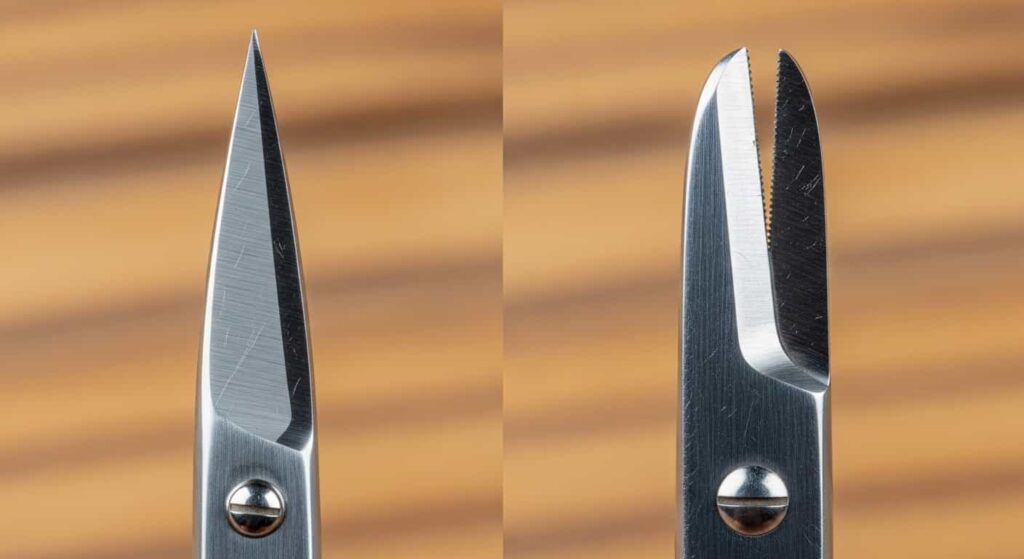
For choosing among root scissors, shorter blades (about 13–16 cm overall) usually give better control in tight spaces around the root ball. Very long blades meant for foliage feel clumsy between roots in a shallow pot.
Tip shape is part of the same decision:
- Pointed tips reach into dense root masses and suit refinement work.
- Rounded tips are safer when you work quickly or close to delicate nebari you do not want to nick.
Most dedicated root scissors use a pointed tip. If a tool is sold as general-purpose bonsai scissors with a wide, blunt tip, it is often a weaker fit for serious root work.
3. Handle design and hand fit
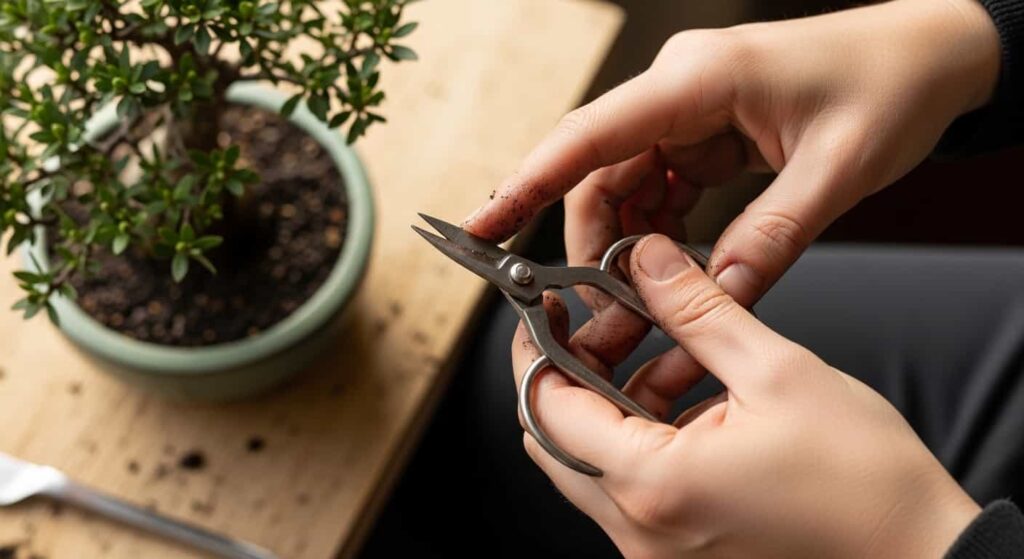
You will open and close the tool for long stretches. Poor handle geometry causes fatigue fast.
Traditional Japanese scissors often use a ring handle with a smaller thumb hole and a larger finger hole. That suits smaller hands and classic grips. People with larger hands sometimes prefer more symmetrical or ergonomic patterns.
If you cannot handle the scissor first, favor sellers with clear return policies and check reviews that mention hand size or comfort.
4. Blade thickness (grind)
Thinner blades tend to slice fibrous root tissue cleanly. Thick blades can wedge and bruise at the cut line.
Listings rarely show grind detail. A practical signal is weight for the size: a lightweight scissor of a given length often has thinner, better-ground blades; an unusually heavy one may hide extra material from cheaper manufacturing.
Choosing between Japanese, Chinese, and Western options
Origin is not destiny, but it helps you set expectations when you compare prices and sellers.
Japanese (Ikenobo, Masakuni, Kaneshin, Kikuwa, and similar)
Often the quality benchmark: high-carbon steel, refined geometry, and long craft tradition. Real Japanese root scissors commonly land in roughly the $60–$180 USD range when sourced legitimately. Counterfeits exist—Japanese branding at giveaway prices on generic marketplaces is a warning sign.
Chinese alternatives
Quality spans from soft tools that fail in a season to mid–high-end options that experienced growers describe as close to Japanese performance at lower cost. When choosing, buy from a specialist bonsai supplier who lists steel grades and stands behind the product, not from a generic listing with only stock photos.
Western distribution and crossover brands
ARS (widely sold in Europe and North America) and Felco are examples of precision brands some growers use for bonsai root work. Availability and verified sourcing can make them easier to choose confidently than an unknown import.
How to evaluate bonsai root scissors before you buy (or right after they arrive)
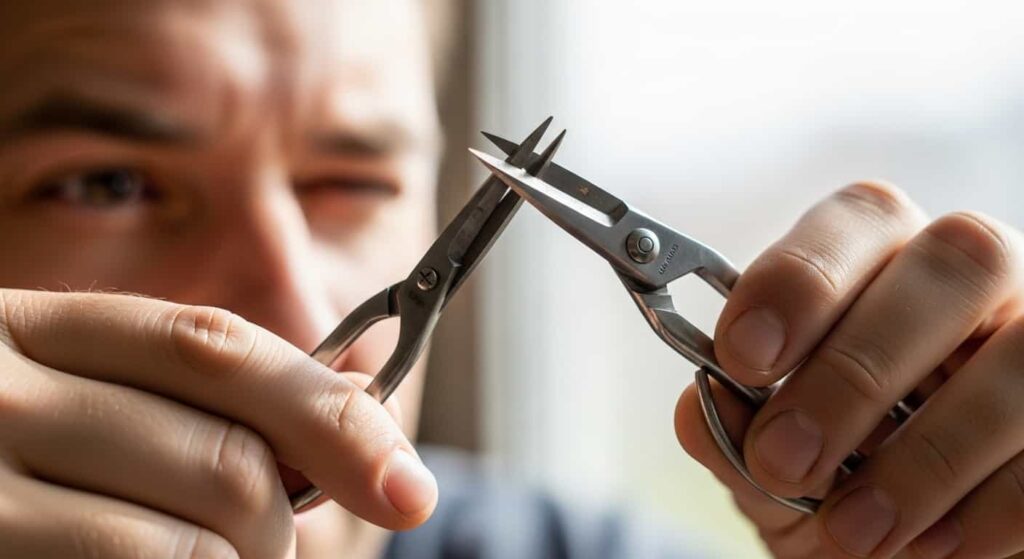
If you can handle the scissor in person:
- Open and close slowly. The pivot should feel smooth, without slop or wobble.
- Hold it to the light and look along the blades. The cutting edges should meet cleanly at the tip; a visible gap means crushing, not slicing, at the point.
- Test the grip for balance and ring fit.
If you are shopping online:
- Prefer dedicated bonsai suppliers over random garden or marketplace storefronts.
- Insist on a listed steel grade, not vague “stainless” or “carbon steel.”
- Weigh reviews that describe use after six to twelve months, not only first impressions.
How maintenance should influence your choice
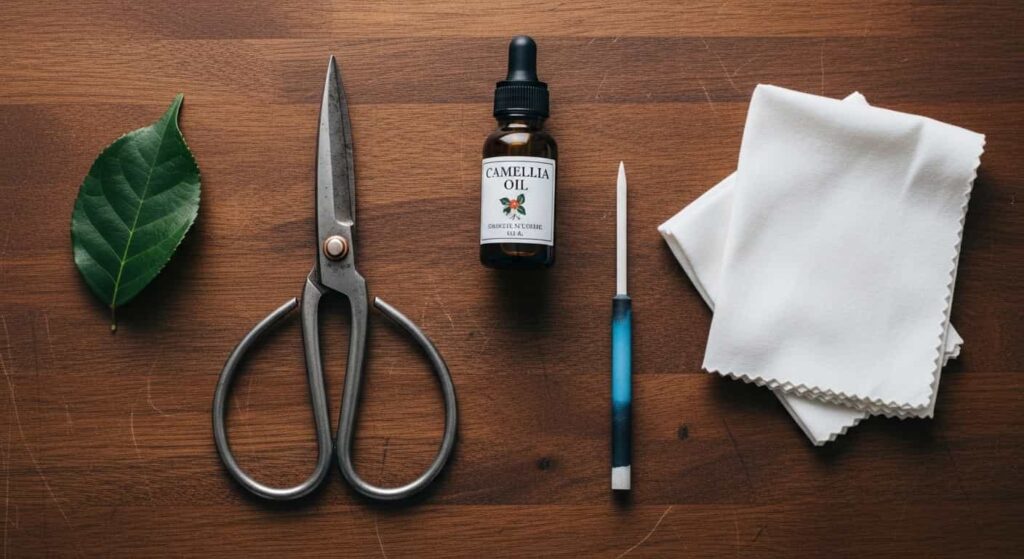
Your final choice is partly a choice about upkeep. High-carbon steel only makes sense if you will clean and oil; stainless fits lower-maintenance habits. After each use, wipe grit off, remove organic residue (a cloth lightly dampened with isopropyl alcohol works), then oil carbon steel with camellia oil or stainless with light mineral oil on blades and pivot during active seasons. Honing on a ceramic rod or fine diamond stone at the factory bevel (often about 25–35° on Japanese tools) beats waiting until the edge is ruined. Check the pivot occasionally—looseness lets blades flex and crush tissue. A mid-range scissor you maintain will usually outperform an expensive one you neglect, so align your steel choice with the routine you will actually follow.
Mistakes to avoid when you choose bonsai root scissors
- Matching the wrong tool to your level. Casual repotting every year or two often suits a solid mid-range stainless pair. Frequent, intensive root work usually justifies high-carbon Japanese or trusted high-end Chinese options.
- Choosing by looks alone. Cheap scissors can mimic premium ones cosmetically. Finish and handle color do not replace steel grade and geometry.
- Buying one “do everything” pair. Scissors marketed for foliage and roots together are often optimized for neither. Serious practice usually means separate tools.
- Ignoring scale. A large scissor for field material is awkward on shohin. Match tool size to the trees you actually work on.
Quick reference: how to choose bonsai root scissors at a glance

| Feature | What to look for | What to avoid |
|---|---|---|
| Steel | Listed grade (440C, high-carbon, VG-10) | Vague “stainless” with no grade |
| Blade length | 13–16 cm for precision root work | Overly long blades (18 cm+) |
| Tip | Pointed (for root mass navigation) | Wide, blunt general-purpose tips |
| Weight | Light-to-moderate for size | Unusually heavy (poor grinding) |
| Seller | Dedicated bonsai supplier | General garden or marketplace-only listings |
| Price signal | Roughly $40–$180 for reliable tools | “Japanese” branding at impulse-buy prices |
Summary
The right pair depends on your tree sizes, how often you repot, your hand size, and whether you will maintain carbon steel. No ranked list replaces those variables—but if you know how steel, length, tip shape, handles, and grind fit your situation, you can choose bonsai root scissors confidently whether you shop at a show, a specialty nursery, or online.