

Last Updated on March 17, 2026 by Indoor Plant Nook
Root pruning is one of the most powerful — and most dangerous — techniques in bonsai cultivation. Done at the right moment, it invigorates your tree, improves nebari, and keeps your bonsai thriving in its container for decades. Done at the wrong time, it can kill an otherwise healthy tree in a matter of weeks.
Most beginner guides tell you when to prune roots. This article takes the opposite approach: it tells you exactly when not to, season by season, so you never make a timing mistake that costs you a tree.
Why Timing Root Pruning Correctly Is Non-Negotiable
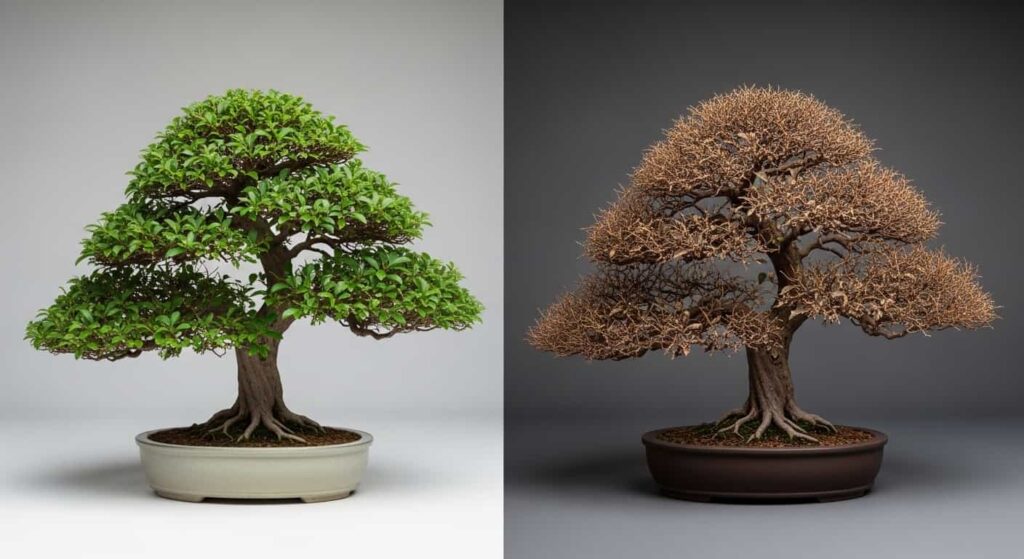
Unlike branch pruning — which is relatively forgiving — root pruning creates significant physiological stress. You are literally cutting away the tree’s water and nutrient absorption system. The tree must regenerate fine feeder roots quickly to survive.
That regeneration depends entirely on two things:
- The tree has sufficient stored energy (carbohydrates) to fuel new root growth
- Environmental conditions that support rapid recovery
When either condition is missing, root pruning becomes life-threatening. Understanding the bonsai calendar through this lens is what makes the seasonal warnings below so critical.
The Golden Rule Before Any Root Pruning
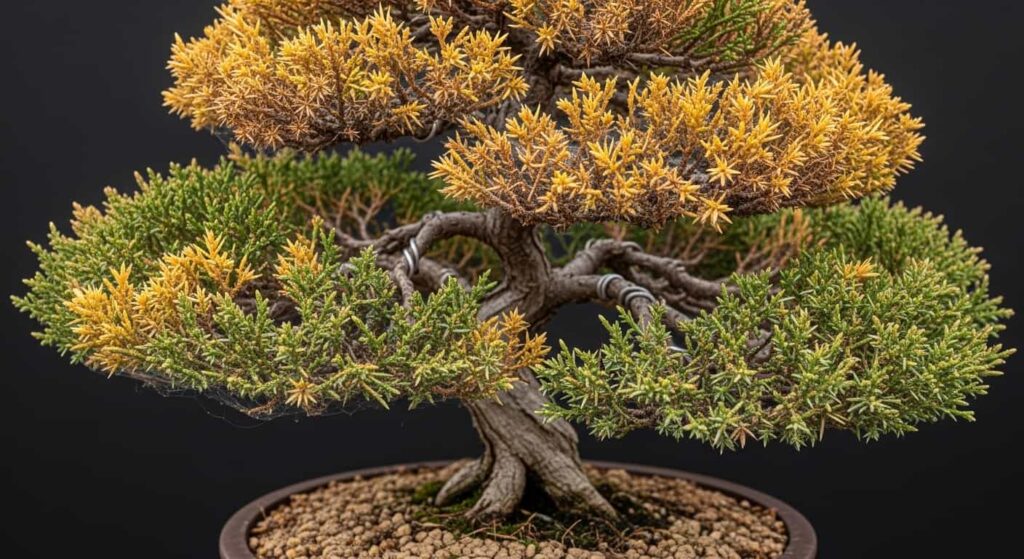
Never root prune a tree that is already stressed.
This applies regardless of season. A tree showing any of these signs should never have its roots pruned:
- Recent repotting within the past 12–18 months
- Visible signs of disease or pest infestation
- Sparse, yellowing, or dropping foliage
- Recovering from winter damage or frost injury
- Newly acquired trees are still adjusting to your care environment
- Trees that failed to flush strongly in the previous spring
If your tree checks any of these boxes, delay root pruning for at least one full growing cycle.
Season-by-Season Warnings
🌧️ Late Autumn — Avoid Root Pruning as Dormancy Begins
Why it’s dangerous: As temperatures drop in late autumn, deciduous trees begin pulling carbohydrates out of their leaves and storing them in the trunk and roots for winter dormancy. Evergreens slow their metabolism significantly. Pruning roots at this stage:
- Disrupts energy storage at a critical phase
- Removes the root mass that the tree was counting on for winter reserves
- Leaves fresh root cuts exposed to cold soil with no chance to callous before frost
- Triggers the tree to spend precious energy on wound response instead of dormancy preparation
The specific danger window: Once night temperatures consistently drop below 50°F (10°C), root pruning becomes increasingly risky for most species. Once your tree has begun dropping leaves naturally or has significantly slowed its growth, the window for safe root pruning is closed for the season.
What to do instead: This is an excellent time to assess your pot and soil. Take notes on what you observe when you water — drainage speed, surface root visibility, pot-to-tree size ratio — so you’re ready to plan your spring repotting schedule.
❄️ Winter — The Most Dangerous Time to Root Prune
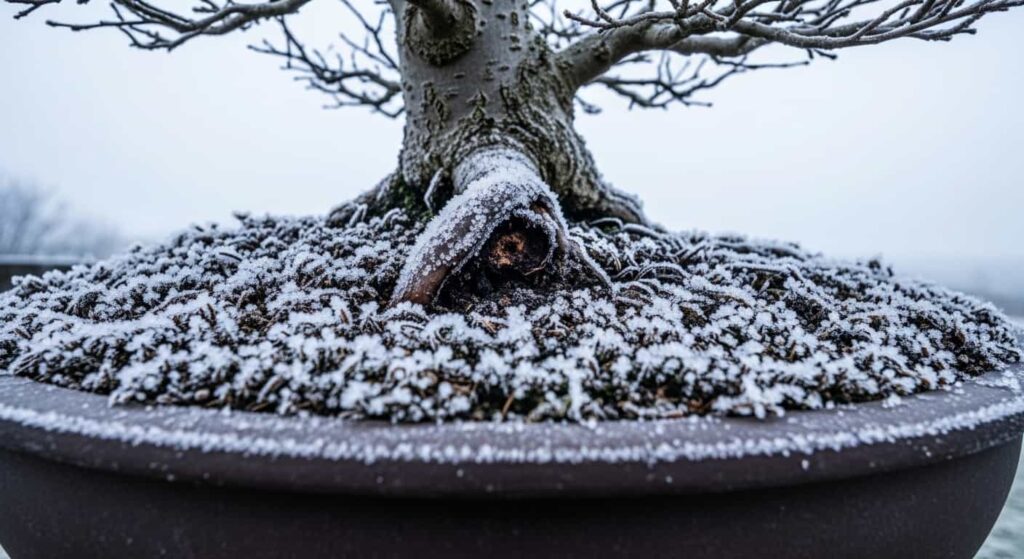
Winter is, without question, the worst time to prune bonsai roots for nearly all species. Here’s why:
Trees in dormancy cannot regenerate roots. The metabolic processes required to produce new feeder roots are essentially paused. A freshly pruned root system sitting in cold, wet soil is not healing — it is simply decaying. Cut surfaces are vulnerable to rot, fungal infection, and freeze damage simultaneously.
Frozen soil compounds the problem. Even if you work in a heated environment, replanting into cold outdoor soil means the roots are immediately exposed to conditions that prevent callous formation. The tree cannot form a barrier between the cut and the pathogens in the soil.
Species-specific winter warnings:
| Species Type | Winter Root Pruning Risk |
|---|---|
| Deciduous (Maple, Elm, Oak) | Extremely high — avoid entirely |
| Tropical (Ficus, Jade, Bougainvillea) | High — cold root stress + cut stress combined |
| Conifers (Pine, Juniper) | Very high — slow to regenerate roots even in ideal conditions |
| Mediterranean (Olive, Pomegranate) | High — cold sensitive even when dormant |
The one exception: Some experienced practitioners in mild climates (USDA Zone 9+) with specific species like certain Ficus will root prune in the warmest weeks of “winter.” This is an advanced practice and not appropriate for beginners or cold-climate growers.
🌸 Early Spring — Proceed With Extreme Caution (Timing Is Everything)
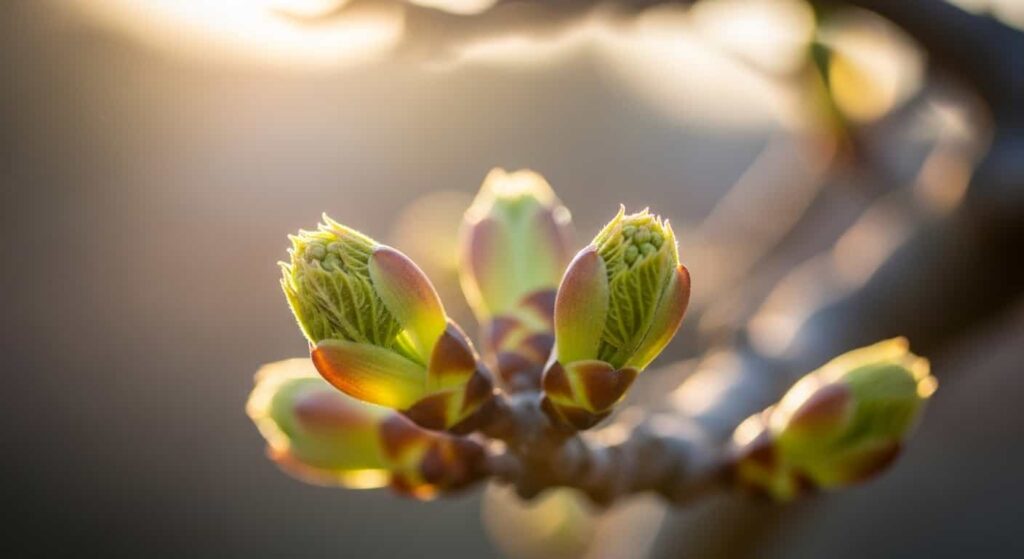
Early spring is widely cited as the best time for root pruning — and this is true, but only if you understand the narrow window involved. Getting it slightly wrong in either direction turns the best season into a costly mistake.
Too early (before buds swell): The tree has not yet begun mobilizing its stored energy for the growing season. Root regeneration requires active metabolism. If you prune before the tree has “woken up,” it behaves similarly to a winter pruning — the roots simply sit in moist soil without healing.
How to identify “too early”:
- Buds show no visible swelling or color change
- No new bud tissue is visible at the branch tips
- Night temperatures are still regularly below freezing
- Soil temperature remains below 45°F (7°C)
The correct target: Root pruning is safest when buds have just begun to swell — showing visible green or color at the tips — but before any leaves have opened. This is sometimes called the “bud break” window, and it is often only 1–3 weeks long, depending on your climate and species.
Miss this window, and you enter a new danger zone: the fully leafed-out tree.
☀️ Late Spring Through Summer — When Foliage Is in Full Growth
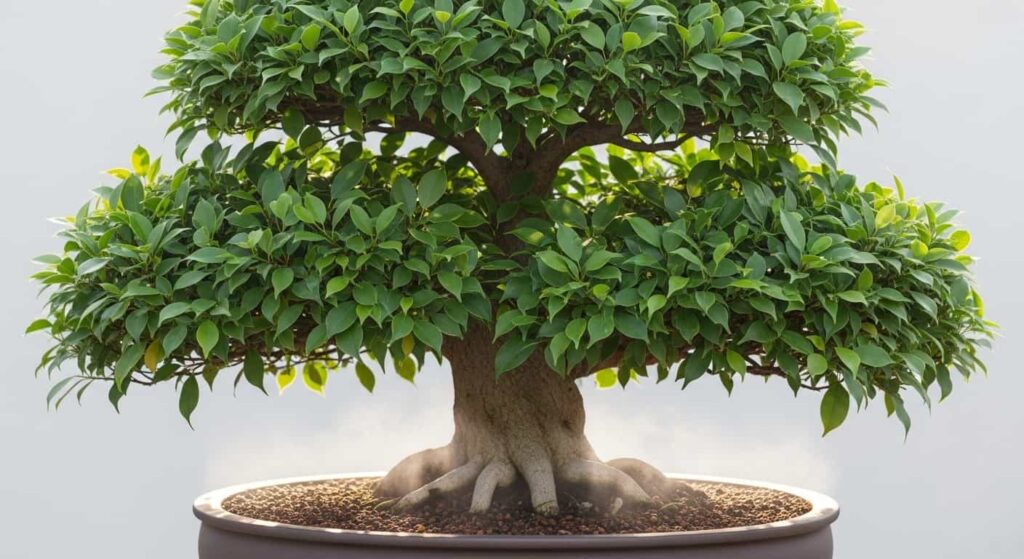
Once your bonsai has leafed out fully and is in active growth, root pruning becomes highly stressful. Here’s the science behind why:
Transportation demand spikes. A fully leafed-out tree is transpiring water through thousands of leaf pores continuously. The roots are working at full capacity to keep up with this demand. Removing a significant portion of the root system while the canopy is demanding maximum water uptake is a recipe for immediate wilting, leaf scorch, and potential collapse.
Energy is directed upward, not downward. In the height of the growing season, the tree’s carbohydrates are being pushed toward extending shoots, hardening new growth, and building leaf mass. This is not the time the tree is investing in root regeneration. A root pruning at this stage competes with ongoing growth for limited resources.
Summer-specific dangers:
- Heat stress: Freshly root-pruned trees are highly sensitive to heat. Summer temperatures accelerate water loss from cut roots before they can regenerate, and hot soil speeds up decay at cut surfaces.
- Extended wilting: Without adequate root mass to match canopy size, summer root-pruned trees often wilt daily even with regular watering — placing enormous ongoing stress on the tree.
- Sunscald: A stressed tree may lose leaves suddenly, exposing branches that were previously shaded to direct sun, causing sunscald on top of root stress.
The summer exception — tropical species: Tropicals like Ficus, Schefflera, and some succulents are naturally adapted to warm, humid conditions. Experienced growers do root-prune these species in summer, particularly in humid climates. However, this still requires shade management, careful watering, and close monitoring. It is not a beginner practice.
🍂 Early Autumn — A Closing Window With Real Risk
Early autumn occupies a gray zone in root pruning timing. In warmer climates, it can represent a secondary window — especially for species like Ficus or certain evergreens. In cooler climates, it is already too late.
Why it’s risky:
The tree is beginning to transition toward dormancy. Carbohydrates are shifting from foliage back into storage. Pruning roots now interrupts this process and leaves the tree heading into winter with:
- A reduced root system that has had minimal time to regenerate
- Cut surfaces that may not fully callous before cold sets in
- Depleted carbohydrate stores (spent on wound response instead of being stored)
The rule of thumb for autumn root pruning: Unless you are in a warm climate (consistent temperatures above 60°F/15°C through autumn) and your tree still shows active growth, avoid autumn root pruning entirely. The risk-to-reward ratio is simply not in your favor.
Species That Demand Extra Caution Year-Round
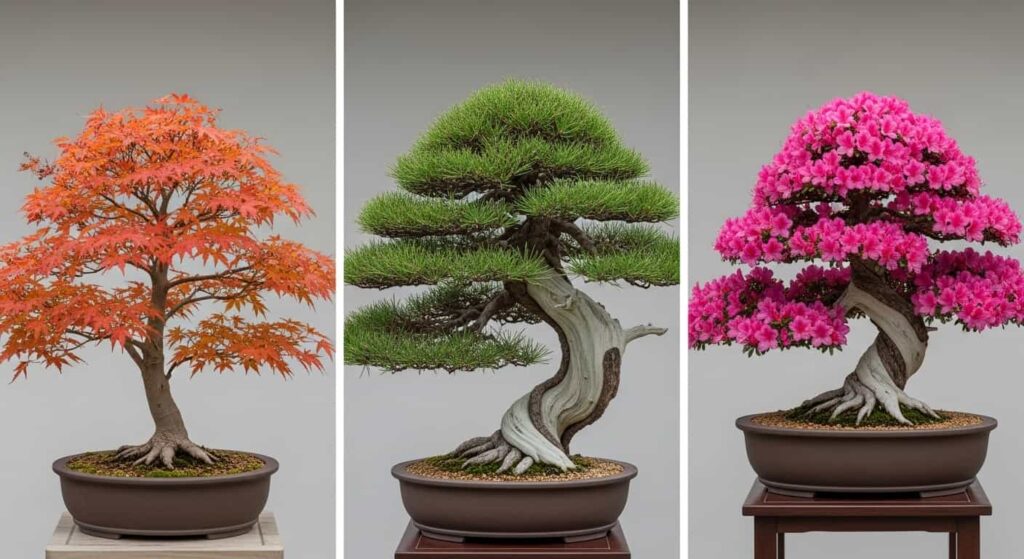
Some species have additional constraints beyond the seasonal calendar:
Japanese Maples (Acer palmatum)
Highly sensitive to root disturbance. Even in the ideal spring window, they require extra care. Avoid root pruning in any other season. They are notoriously slow to recover from poorly timed root work and may drop leaves entirely when stressed.
Pines (Pinus spp.)
Pines form mycorrhizal relationships with soil fungi that take time to re-establish after repotting. Root pruning disrupts this network. Pines should only be root pruned in very early spring, every 3–5 years (not annually), and should never be bare-rooted completely.
Junipers (Juniperus spp.)
Junipers are slow root regenerators compared to broadleaf species. They require a longer recovery window and should not be root pruned unless they are showing active vigor. Weak junipers should never be root pruned regardless of season.
Azaleas (Rhododendron spp.)
Azaleas have fine, fibrous root systems that are particularly prone to drying out after pruning. Root pruning must be done immediately after flowering in spring and the tree must be kept in humid, shaded conditions during recovery.
Warning Signs That You’ve Root Pruned at the Wrong Time
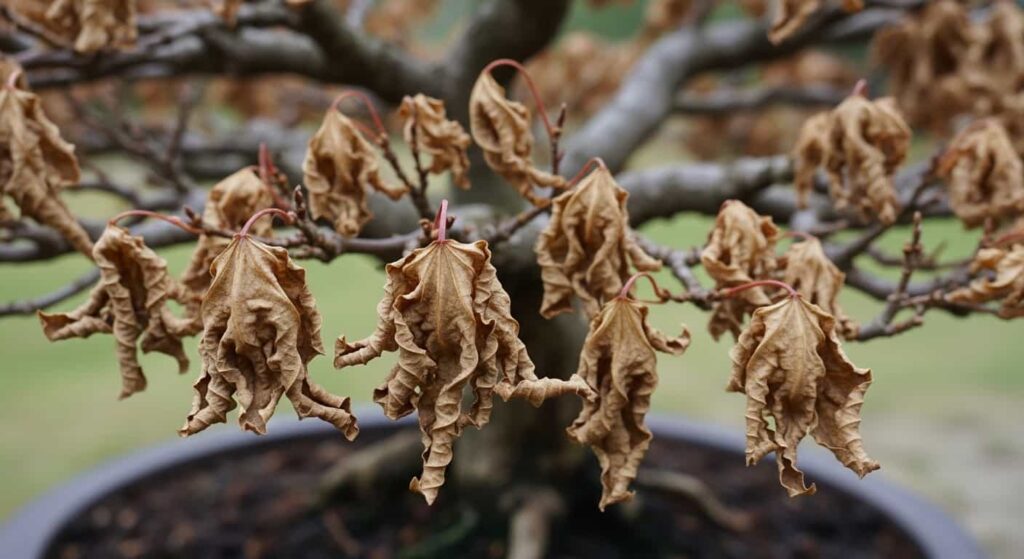
Even with the best intentions, timing errors happen. Know these warning signs so you can act quickly:
In the first 1–2 weeks:
- Severe, persistent wilting even after watering
- Leaves dropping en masse (not just lower leaves)
- Leaf edges are turning brown or crispy
- No new bud movement or growth activity
At 3–6 weeks:
- Bark beginning to wrinkle or shrink
- Branches showing die-back from tips inward
- Mushy, dark roots visible near the surface (root rot)
- No root regeneration is visible when gently lifting from the soil
Immediate recovery actions:
- Move the tree to a shaded, wind-protected location
- Mist foliage twice daily to reduce transpiration
- Check soil moisture carefully — do not overwater, but never let it dry out completely
- Avoid fertilizing until new growth appears
- Consider removing some foliage to reduce transpiration demand on the damaged root system
How to Know When the Time IS Right
After all these warnings, here is a clear checklist for the safe root pruning window:
- [ ] Buds are visibly swelling, but leaves have not yet opened
- [ ] Night temperatures are consistently above 40°F (4°C)
- [ ] The tree has been in your care for at least one full year
- [ ] The tree flushed vigorously in the previous growing season
- [ ] No pest or disease issues are present
- [ ] You have the right soil mix prepared and ready
- [ ] You can provide shade and shelter during recovery
- [ ] It has been at least 2 years since the last root pruning (3–5 years for conifers)
Check every box before you pick up the scissors.
Final Thoughts
Root pruning is not inherently dangerous — poor timing is. The difference between a tree that thrives for generations and one that quietly declines after a repotting session often comes down to a matter of weeks on the calendar. The seasons are not arbitrary restrictions; they reflect the actual physiological state of your tree and its capacity to heal.
When in doubt, wait. A tree that is root pruned one spring later than necessary will recover and thrive. A tree root pruned in the wrong season may not recover at all.
Learn to read your tree, respect the calendar, and the results will speak for themselves.
Always observe your specific species’ behavior and consult regional bonsai society resources for climate-specific guidance in your area.