
Last Updated on March 16, 2026 by Indoor Plant Nook
Root washing is one of the most transformative — and potentially dangerous — techniques in bonsai care. For Japanese maple bonsai (Acer palmatum), which are prized for their delicate feeder roots and seasonal sensitivity, getting this process wrong can mean losing a tree you’ve spent years cultivating.
This guide walks you through every safety precaution you need to know before, during, and after washing the roots of your Japanese maple bonsai — so you can repot with confidence and protect your tree’s long-term health.
What Is Root Washing and Why Does It Matter?
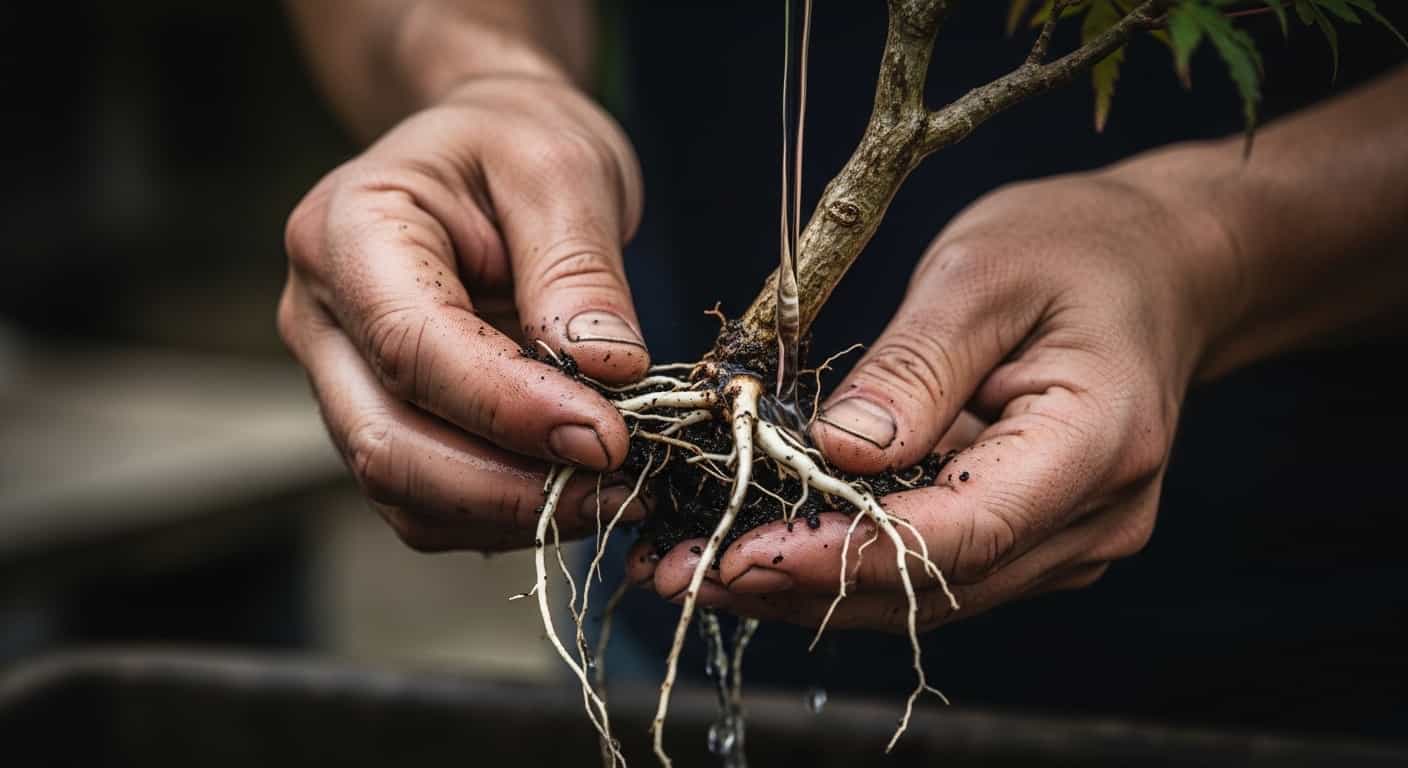
Root washing is the process of removing all soil from a bonsai’s root system — typically during repotting — to allow for a thorough inspection, pruning of dead or circling roots, and placement into fresh, well-draining substrate.
For Japanese maples, root washing offers several benefits:
- Allows full visibility of the root structure and health
- Removes compacted or degraded soil that impedes drainage
- Let’s you identify and remove diseased, rotting, or pot-bound roots
- Enables precise positioning of radial roots (nebari) for aesthetic improvement
However, Japanese maples have fine, hair-like feeder roots that dry out rapidly and are highly sensitive to temperature, harsh water, and physical trauma. Without proper precautions, root washing can send the tree into severe shock — or kill it entirely.
Best Time to Wash Japanese Maple Bonsai Roots
Timing is the single most important safety factor in root washing. Japanese maples are deciduous, and their root systems follow a predictable seasonal rhythm.
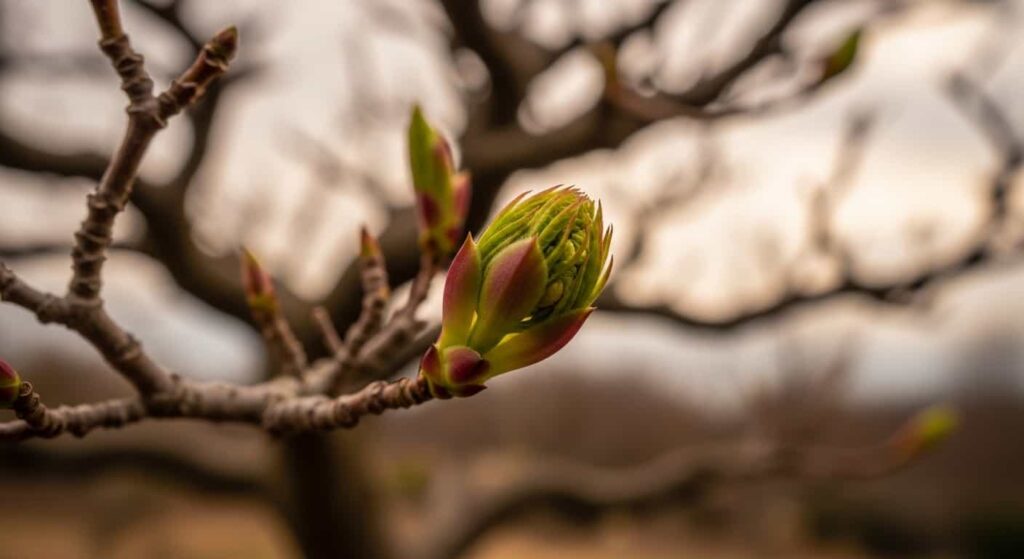
Ideal Window: Early Spring (Before Bud Break)
The safest time to wash roots is in early spring, just as the buds begin to swell but before leaves open. At this point:
- The tree is emerging from dormancy and has stored energy in its roots
- Root growth is about to accelerate, which speeds recovery
- Temperatures are cool, reducing the risk of dehydration and stress
Acceptable Alternative: Late Autumn (After Leaf Drop)
After the leaves have fully dropped and the tree is entering dormancy, a second root washing window opens. The tree is not actively transpiring, which reduces stress. However, late-autumn work leaves less time for root recovery before winter.
Windows to Strictly Avoid
- Summer: Active transpiration combined with exposed roots causes rapid desiccation and heat stress
- Midsummer repotting is a common cause of Japanese maple bonsai death
- During heavy leaf flush: The tree is directing maximum energy to foliage — disturbing roots at this time is dangerous
Tools and Supplies to Prepare Before You Begin
Having everything ready before you remove the tree from its pot prevents the roots from sitting exposed longer than necessary.
Essential supplies:
- A clean bucket of room-temperature water (never cold or hot)
- Soft spray nozzle or gentle hose attachment
- Root hook or chopstick for loosening soil
- Sharp, sterilized pruning scissors or root shears
- Clean work surface or tray
- Fresh bonsai substrate (e.g., Akadama, pumice, and lava rock mix)
- A spray bottle filled with water to keepthe roots misted
- Rooting hormone powder (optional, for cut surfaces)
- Clean the pot with adequate drainage holes
Sterilize your tools with isopropyl alcohol or diluted bleach before use. Introducing pathogens to exposed root tissue is a leading cause of post-repotting disease.
Step-by-Step Root Washing Safety Protocol
1. Work in Shade, Not Direct Sun
Never wash roots in direct sunlight. UV exposure and heat accelerate moisture loss from fine feeder roots dramatically. Set up your workspace in a shaded area, ideally with a temperature between 50–65°F (10–18°C).
2. Remove the Tree Gently
Run a root sickle or thin spatula around the inside edge of the pot before attempting to lift the tree. Forcing the root ball out can tear anchor roots unnecessarily.
3. Loosen the Soil Before Washing
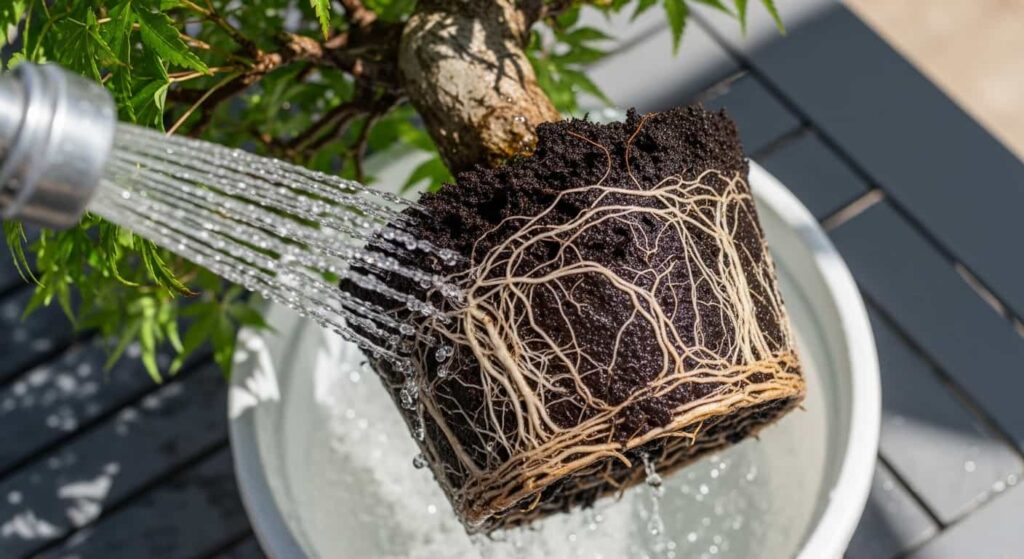
Use a chopstick or root hook to break apart the outer soil mass first. Work from the outside in, removing soil in sections. This reduces the force of water needed later, protecting the finest roots from being blasted away.
4. Use Lukewarm, Gentle Water Only
Water temperature matters more than most growers realize. Cold water (below 50°F / 10°C) can shock Japanese maple roots and constrict fine root hairs. Use water at or slightly above room temperature. A soft spray nozzle — not a pressure washer or strong hose — is ideal.
Work systematically, rinsing soil from the top of the root mass downward and rotating the tree to access all angles.
5. Mist Constantly Between Steps
Any time you pause — to inspect, to take a photo, to answer the phone — mist the exposed roots immediately. Japanese maple feeder roots can begin to die within minutes of drying out in warm, low-humidity conditions.
Keep a spray bottle in your non-dominant hand throughout the entire process.
6. Inspect Roots Systematically
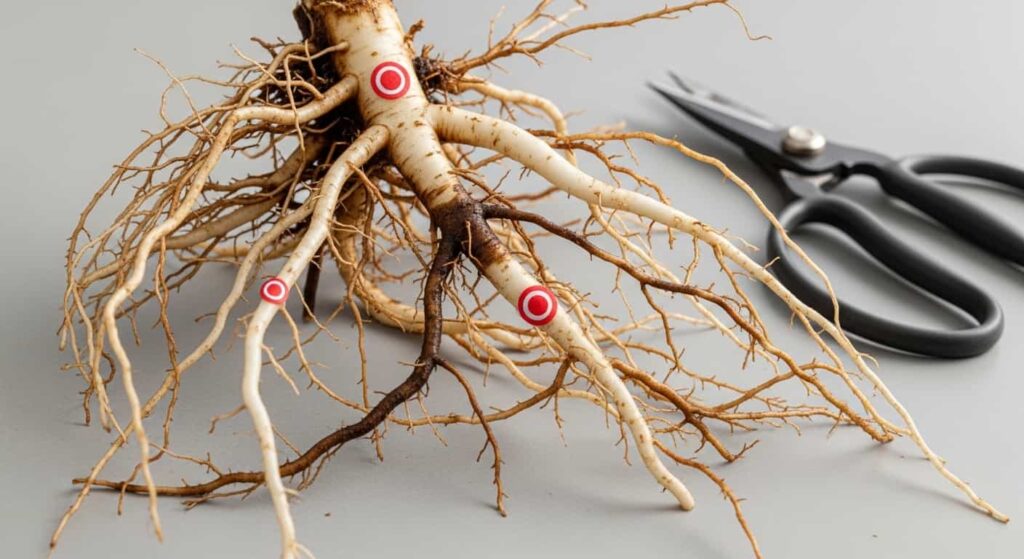
Once the roots are clean, examine them under good light. Look for:
- Healthy roots: Firm, white or tan in color, flexible
- Dead roots: Dark brown or black, mushy, hollow when pressed
- Circling or girdling roots: These restrict vascular flow and must be removed or redirected
- Signs of rot or fungal infection: Discoloration, foul odor, soft texture
Remove all dead and diseased roots back to healthy tissue. Cut cleanly, never tear.
7. Prune Conservatively
A common mistake is over-pruning during root washing. For Japanese maples, a safe rule is to never remove more than one-third of the total root mass in a single session. Heavy pruning combined with full root exposure creates compound stress that can overwhelm the tree’s recovery capacity.
If the root system is heavily pot-bound or diseased, spread the corrective pruning over two or three repotting cycles rather than attempting full correction at once.
8. Cut at an Angle, and Seal Larger Cuts
Use sharp scissors to make clean, angled cuts on roots thicker than a pencil. Ragged cuts invite infection. For cuts larger than 5mm in diameter, applying a small amount of cut paste or rooting hormone powder provides an additional layer of protection.
Repotting After Root Washing: Critical Safety Steps
Do Not Pot Into Wet Substrate
Fresh bonsai substrate should be dry or barely damp when repotting. A wet substrate packed around washed roots can prevent oxygen from reaching root tissue and create anaerobic conditions that promote rot.
Position Roots Before Backfilling
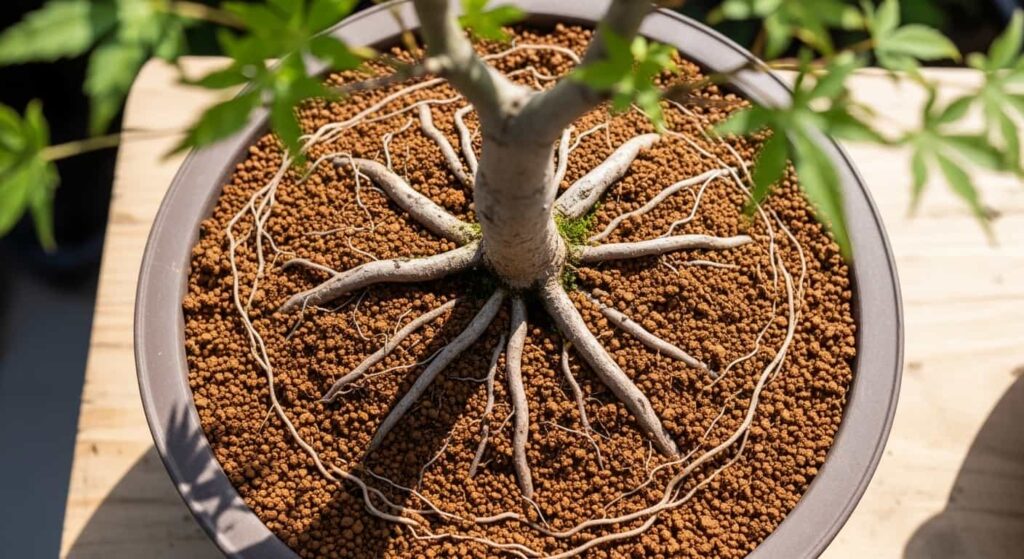
Take time to spread the roots naturally outward across the pot. Work fine substrate between root layers using a chopstick to eliminate air pockets. Air pockets cause root sections to dry out and die in the weeks following repotting.
Water Thoroughly, Then Let It Drain
After repotting, water the tree thoroughly from above until water flows freely from the drainage holes. This settles the substrate and ensures contact between roots and growing medium. Do not water again until the top layer of substrate shows slight dryness — overwatering a freshly repotted tree is as dangerous as underwatering.
Secure the Tree
Japanese maples, especially smaller specimens, must be wired or tied into the pot after repotting. Even slight movement of the tree in its pot disrupts the formation of new root hairs at the cut surfaces. Use aluminum wire through the drainage holes to anchor the root ball firmly.
Post-Wash Recovery Care
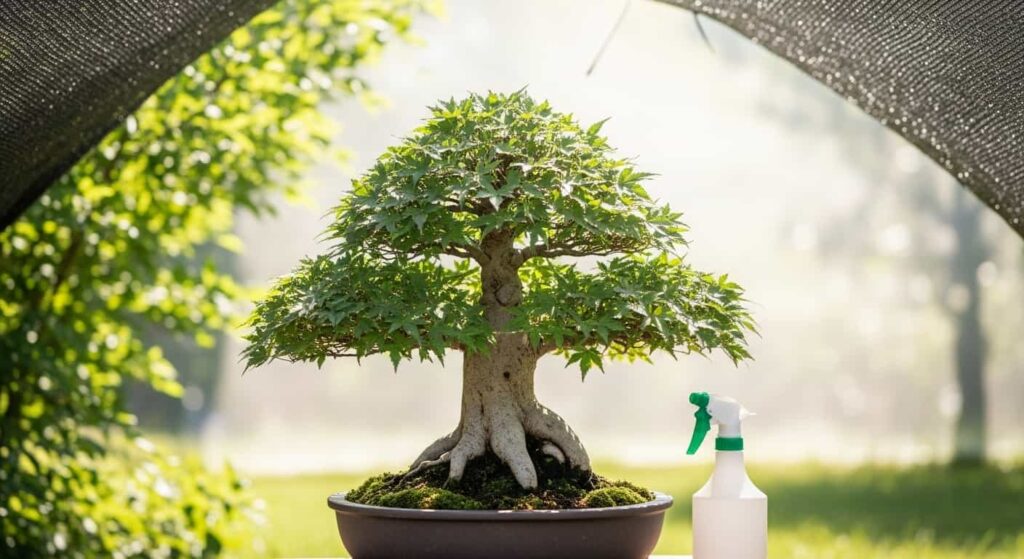
The weeks immediately following root washing are the most vulnerable period for your Japanese maple bonsai.
Keep Out of Direct Sun for 2–4 Weeks
Place the freshly repotted tree in bright, indirect light. Full sun exposes the tree to transpiration demand that it cannot yet meet with a reduced root system. Gradually reintroduce sun exposure as new growth hardens off.
Avoid Fertilizing for 4–6 Weeks
Fresh cuts on root tissue are sensitive to fertilizer salts. Hold off on any feeding until you see clear signs of healthy new growth — typically new leaf buds elongating and unfurling. Then begin with a diluted, balanced fertilizer (half the recommended dose).
Monitor for Wilting Closely
Some temporary wilting after root washing is normal, especially if the tree has lost significant root mass. However, persistent, progressive wilting that does not recover overnight is a warning sign of root failure. If this occurs, move the tree to a humid, shaded recovery position and mist foliage lightly twice daily.
Protect from Frost
If root washing is done in early spring, monitor overnight temperatures carefully. A freshly repotted Japanese maple with reduced root function is far more vulnerable to frost damage than an established tree. Be prepared to move it indoors or cover it if temperatures drop below freezing.
Common Mistakes That Damage or Kill Japanese Maple Bonsai During Root Washing
| Mistake | Why It’s Dangerous | Safer Alternative |
|---|---|---|
| Removing more than 1/3 of the roots | Rapid root desiccation | Work in full shade |
| Using cold water | Root shock, constriction of fine hairs | Use room-temperature water |
| Leaving roots exposed too long | Feeder root death within minutes | Mist continuously |
| Use a dry or barely damp soil mix | Severe stress, collapse | Prune conservatively over multiple seasons |
| Repotting into wet substrate | Anaerobic root rot | Use dry or barely damp soil mix |
| Fertilizing too soon | Salt burn on cut roots | Wait 4–6 weeks for new growth |
| Skipping tool sterilization | Pathogen introduction | Sterilize all tools beforehand |
| Washing in summer | Combined heat and root stress risk | Stick to early spring or late autumn |
Special Considerations for Older or Stressed Trees
If your Japanese maple bonsai is already weakened — from disease, drought, pest damage, or previous repotting stress — approach root washing with extra caution:
- Consider bare minimum root work rather than a full wash: remove the tree, clear outer soil only, prune the most problematic roots, and repot without a complete wash
- Give the tree a full recovery season before attempting root washing if it has shown signs of decline in the past year
- Consult an experienced bonsai practitioner before proceeding with trees with significant sentimental or monetary value
Frequently Asked Questions
How often should I root wash my Japanese maple bonsai?
For younger, developing trees in training, root washing during repotting every 2–3 years is typical. For older, more refined specimens, every 3–5 years is sufficient. Always let the health and vigor of the tree guide the schedule, not a rigid calendar.
Can I root wash a Japanese maple bonsai in a container versus a nursery pot?
The process is the same regardless of the container. What matters most is the timing, technique, and post-wash care — not the type of pot the tree was previously growing in.
Should I use tap water or filtered water?
If your tap water is heavily chlorinated or very hard, leaving it in an open bucket overnight allows chlorine to dissipate. For most growers, tap water that has been allowed to reach room temperature is perfectly adequate.
What if I accidentally remove too many roots?
Immediately move the tree to a high-humidity recovery environment (a humidity tent made from a clear plastic bag works well). Keep in shade, mist regularly, and avoid any fertilizer or stress. Recovery is possible but not guaranteed — the more root mass lost, the lower the odds.
Final Thoughts
Root washing a Japanese maple bonsai is a high-reward but high-risk procedure. The trees that survive and thrive after a root wash are those tended by growers who respect the timing, work quickly and gently, keep roots moist throughout, and provide careful post-repotting recovery conditions.
Respect the process, prepare thoroughly, and your Japanese maple will reward your care with vigorous new growth and an increasingly refined root structure for years to come.