
Last Updated on March 18, 2026 by Indoor Plant Nook
Repotting is one of the most stressful events a bonsai tree can go through. Its roots have been trimmed, its soil replaced, and its entire foundation disrupted. During this vulnerable recovery phase, how you water your bonsai can mean the difference between a thriving tree and a dead one.
This guide gives you a clear, week-by-week watering schedule after bonsai repotting — along with the reasoning behind each step so you can adapt to your tree’s specific needs.
Why Watering Changes After Repotting
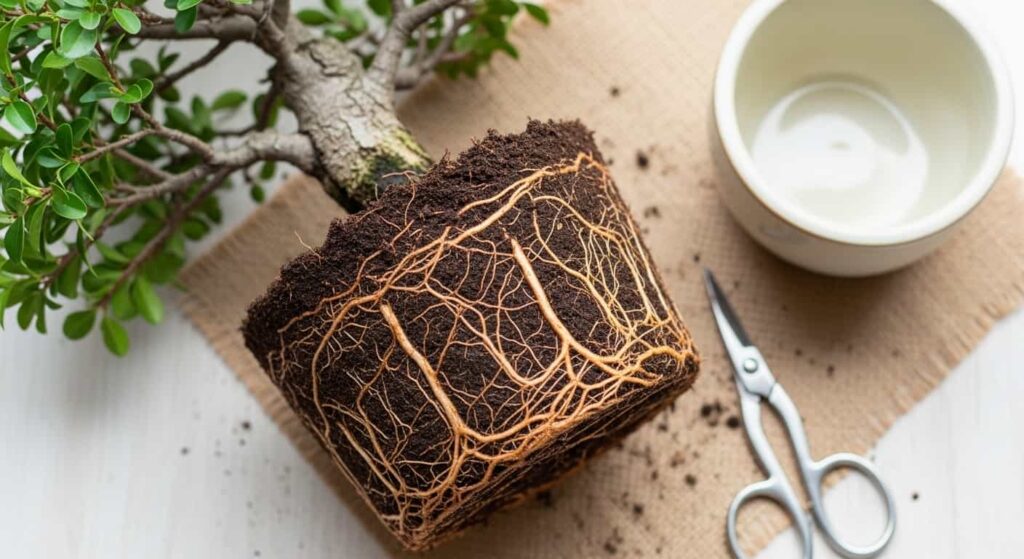
After repotting, your bonsai faces several challenges that directly affect how much water it needs:
- Reduced root mass — Pruned roots absorb water less efficiently than before.
- New, loose soil — Fresh bonsai substrate drains differently than settled, compacted soil.
- Root trauma — Damaged roots are prone to rot if kept too wet, yet will desiccate if kept too dry.
- Reduced transpiration — A stressed tree loses less moisture through its leaves, meaning it needs less frequent watering.
Understanding these factors is essential before following any schedule rigidly.
The Golden Rule: Moist, Not Wet
Before diving into the schedule, internalize this single principle:
After repotting, the soil should stay consistently moist — never waterlogged, never bone dry.
Soggy soil suffocates new root growth and invites fungal rot. Dry soil kills the fragile new roots that are trying to establish. You’re threading a needle.
Week-by-Week Watering Schedule After Bonsai Repotting
Week 1: The Critical First Days
The first week is the highest-risk period. Your bonsai is in shock, and its roots cannot absorb water normally.
What to do:
- Water thoroughly immediately after repotting — this settles the new soil and eliminates air pockets around the roots.
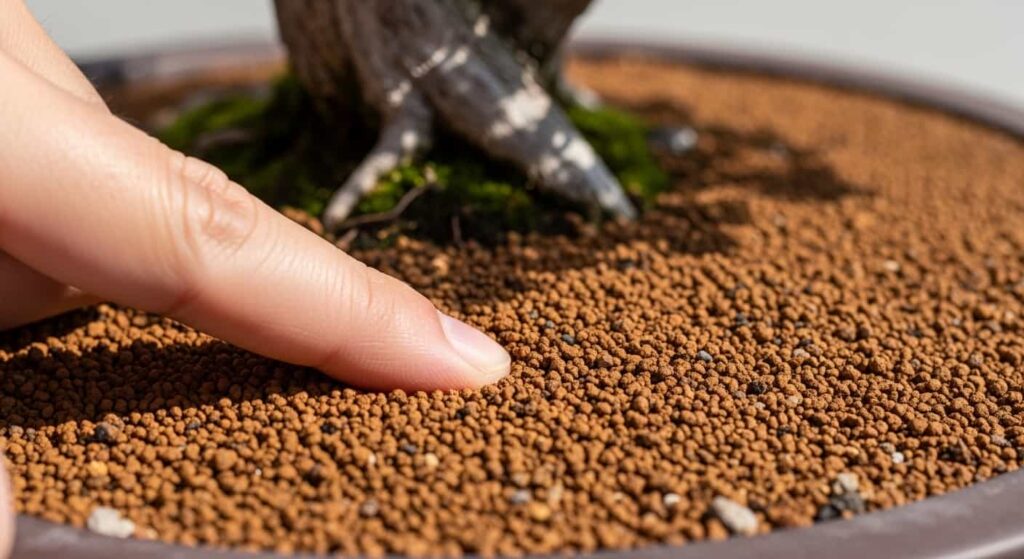
- For the rest of Week 1, check soil moisture once or twice daily using the finger test: insert your finger about 1 cm (½ inch) into the soil.
- Water only when the top layer begins to feel slightly dry, but before it dries out completely.
- Avoid letting water sit in the drip tray — empty it within 30 minutes after watering.
Frequency: Every 1–2 days, depending on temperature and humidity.
Pro tip: Place the bonsai in a shaded, sheltered spot during Week 1 to reduce evaporation and stress. Direct sun dramatically increases water demand.
Week 2–3: Early Recovery Phase
By Week 2, the tree is beginning to stabilize. You can relax your monitoring slightly, but consistency is still critical.
What to do:
- Continue the finger test before every watering session.
- Water when the top 1–2 cm of soil is dry to the touch.
- Begin misting the foliage lightly in the morning if humidity is low — this reduces water loss through the leaves without waterlogging the roots.
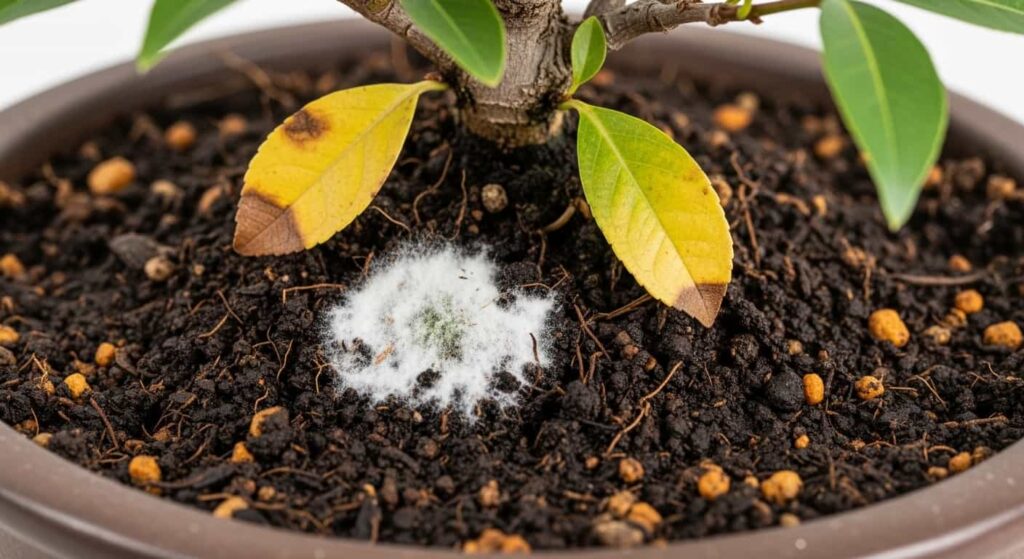
- Watch for signs of over-watering: yellowing leaves, a musty smell from the soil, or visible mold on the surface.
- Watch for under-watering: wilting, leaves curling inward, soil pulling away from the pot edges.
Frequency: Every 1–3 days, depending on species, pot size, and climate.
Week 4: Transitioning Back to Normal
By the end of the first month, most bonsai species show signs of new growth — a strong indicator that root recovery is underway.
What to do:
- Gradually transition back toward your pre-repotting watering routine.
- Continue monitoring soil moisture rather than following a fixed daily schedule.
- If you notice vigorous new buds or leaf growth, this is a green light that the root system is recovering well.
Frequency: Resume your normal species-specific routine, typically every 1–3 days.
How to Water After Repotting: Technique Matters
How you water is just as important as when you water, especially post-repotting.
The Thorough Soak Method (Recommended)
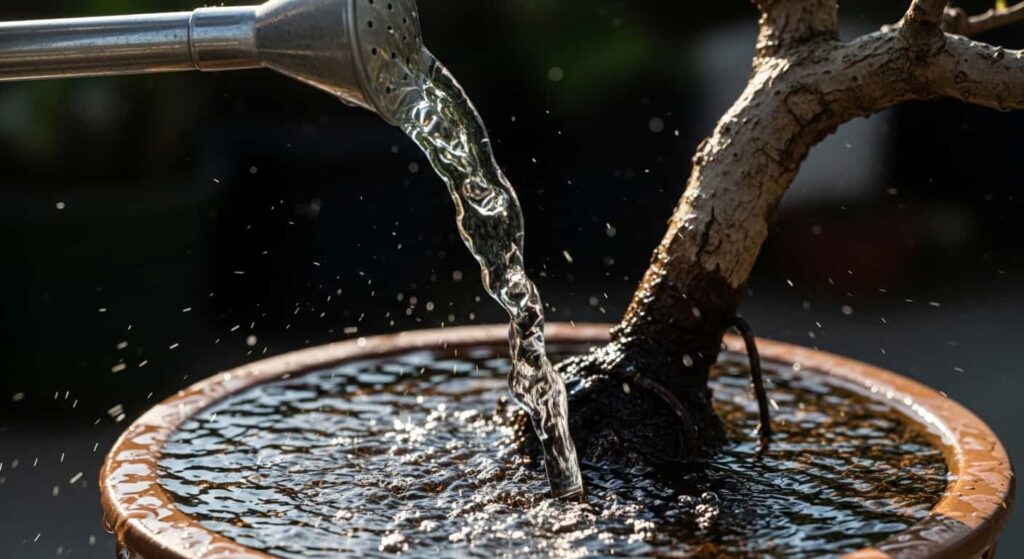
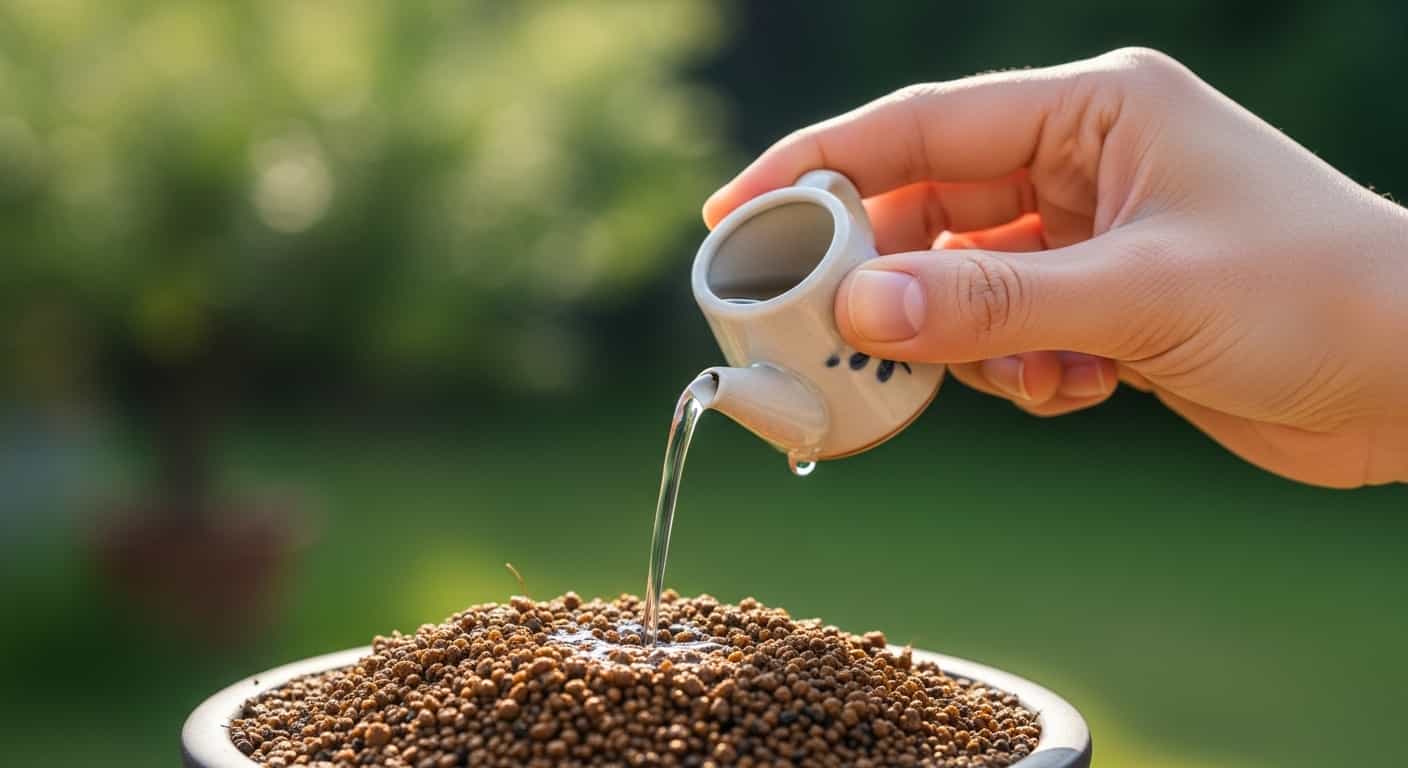
- Water slowly over the entire surface of the soil.
- Continue until water flows freely out of the drainage holes.
- Wait — then repeat once more to ensure even moisture distribution.
- Empty the drip tray after 20–30 minutes.
This method ensures the entire root zone gets moisture and flushes out any trapped air pockets in the new soil.
What to Avoid
- Overhead forceful watering — High-pressure water disturbs the fresh soil and can expose roots.
- Partial watering — Wetting only the surface leaves deep roots dry.
- Bottom watering only — In fresh substrate, this can create uneven moisture distribution.
Factors That Affect Your Watering Frequency
No single schedule works for every bonsai. Adjust based on these variables:
| Factor | Waters More Frequently | Waters Less Frequently |
|---|---|---|
| Temperature | Hot, above 25°C (77°F) | Cool, below 15°C (59°F) |
| Humidity | Low humidity | High humidity |
| Pot size | Small, shallow pot | Large, deep pot |
| Soil mix | Fast-draining (akadama/pumice) | Moisture-retaining mixes |
| Species | Tropical, deciduous trees | Junipers, pines |
| Season | Summer, active growing season | Winter, dormancy |
| Sun exposure | Full sun placement | Shade or indoors |
Species-Specific Notes
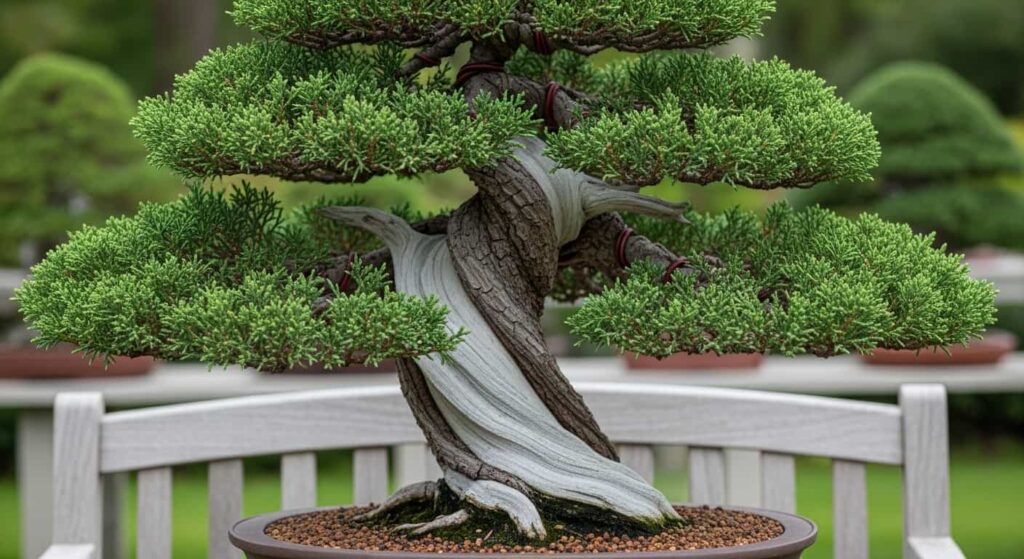
Junipers and Pines (Conifers)
Conifers are relatively drought-tolerant and highly susceptible to root rot. After repotting, err on the drier side. Allow the top 2 cm of soil to dry before watering. Water deeply but infrequently.
Maples and Elms (Deciduous)
These species prefer consistent moisture. They are more forgiving of slightly wetter conditions but still suffer in waterlogged soil. Keep soil evenly moist throughout recovery.
Ficus and Tropical Species
Tropical bonsai prefer warmth and humidity. They tolerate moisture well but still need good drainage. Mist foliage regularly and keep soil lightly moist at all times.
Azaleas
Azaleas prefer acidic, slightly moist conditions. Use rainwater or distilled water when possible. After repotting, keep them moderately moist and avoid letting them dry out completely.
Signs Your Watering Schedule Is Working
Look for these positive indicators during the recovery period:
- ✅ New buds or leaf growth emerging within 3–6 weeks
- ✅ Firm, healthy-looking foliage (not limp or yellowing)
- ✅ Soil that looks and smells fresh, not sour or musty
- ✅ Roots visible at drainage holes after 4–8 weeks (sign of healthy root growth)
Warning Signs to Watch For
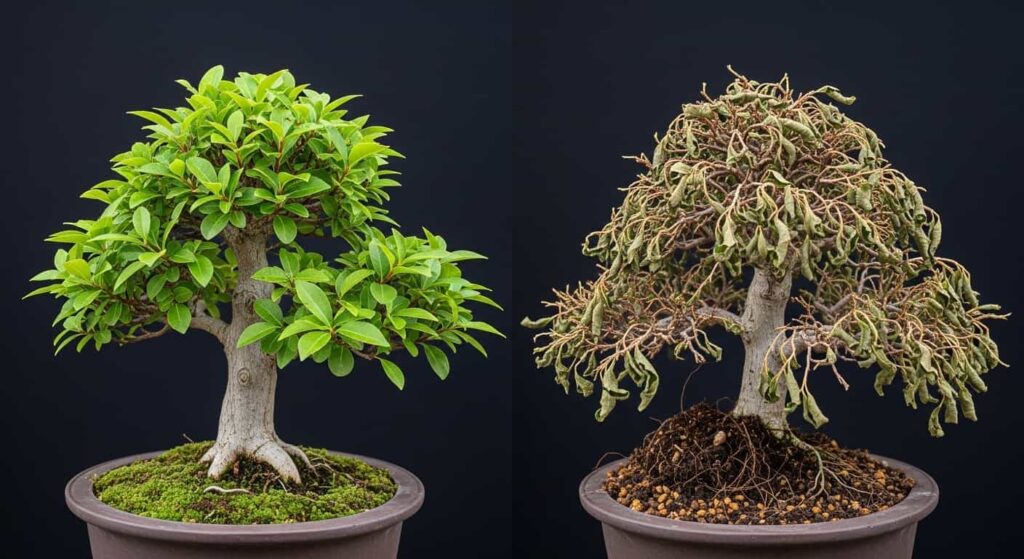
React immediately if you notice:
- ❌ Yellowing or dropping leaves — Possible over-watering or root rot
- ❌ Musty or sour smell from soil — Root rot developing; reduce watering immediately
- ❌ Wilting that doesn’t recover after watering — Root damage may be severe
- ❌ Mold on soil surface — Overwatering and poor airflow; improve drainage
- ❌ Soil shrinking away from pot edges — Extreme dehydration; water immediately and increase frequency
Should You Fertilize While Following This Watering Schedule?
No — do not fertilize for at least 4–6 weeks after repotting.
Fertilizer salts stress-damaged roots further. Fresh bonsai soil mixes typically contain enough nutrients for the first month. Once you see confirmed new growth and have resumed your normal watering schedule, you can reintroduce a diluted, balanced fertilizer.
Quick-Reference Watering Schedule Summary
| Phase | Timeframe | Frequency | Soil Moisture Target |
|---|---|---|---|
| Immediate post-repot | Day 0 | Once thoroughly | Even and saturated |
| Critical recovery | Days 1–7 | Every 1–2 days | Consistently moist |
| Early recovery | Weeks 2–3 | Every 1–3 days | Slightly moist; never dry |
| Late recovery | Week 4 | Resume normal routine | Species-dependent |
Final Thoughts
There is no single “correct” watering schedule that works for every bonsai in every environment. What this guide gives you is a framework — a starting point you adapt based on your species, your climate, and the signals your tree is sending you.
The most important skill you can develop as a bonsai grower is learning to read your tree. Touch the soil. Watch the leaves. Check the drainage. With consistent attention in those first critical weeks after repotting, your bonsai will reward you with strong, healthy new growth.