
Last Updated on March 18, 2026 by Indoor Plant Nook
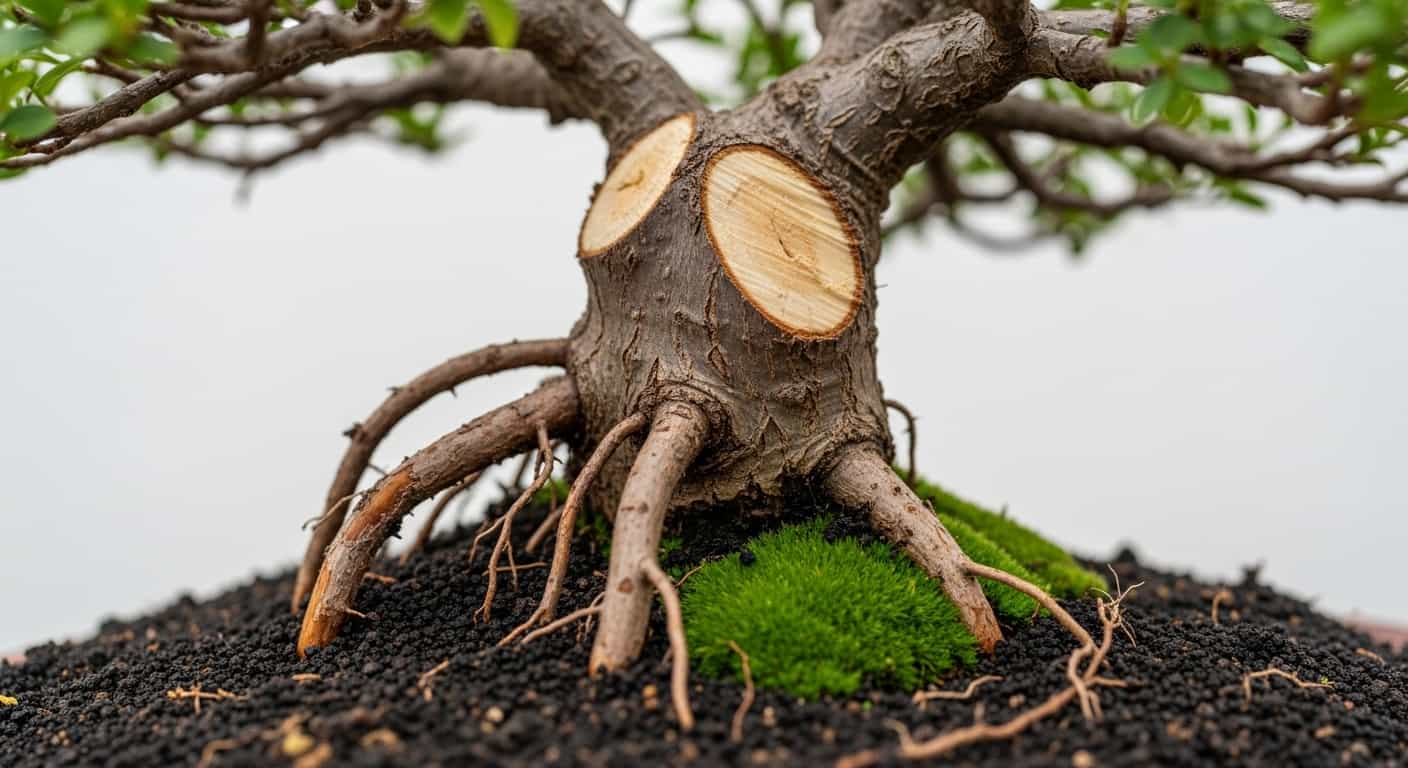
Root pruning is one of the most stressful events a bonsai tree can experience. Done correctly, it rejuvenates the root system and keeps your tree vigorous for years. Done carelessly — especially when followed by the wrong fertilizing approach — it can kill a tree that took decades to develop.
This guide breaks down exactly when to fertilize after root pruning, which fertilizers to choose, how much to apply, and the common mistakes that set trees back by an entire growing season.
Why Root Pruning Changes Everything About Fertilizing
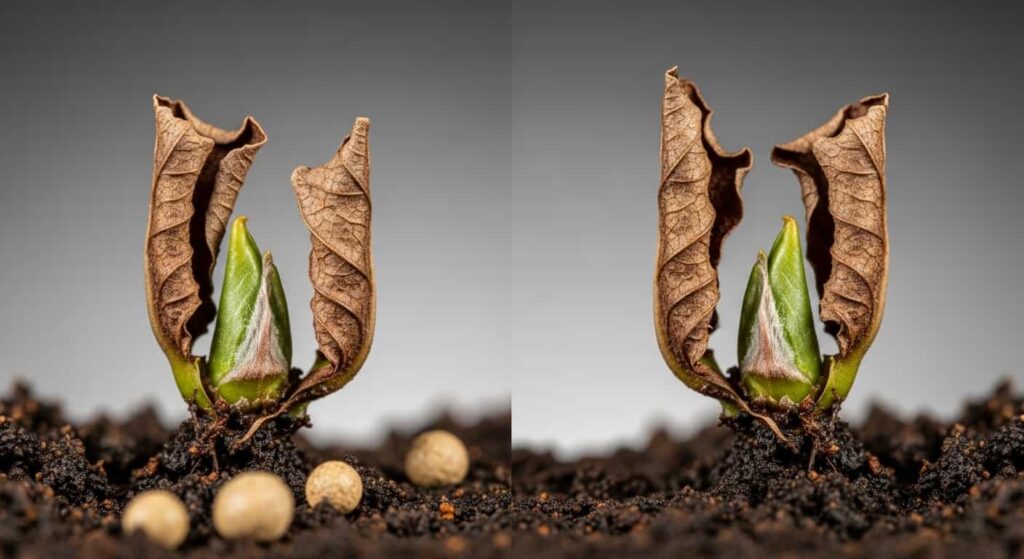
When you root-prune a bonsai, you remove a significant portion of the feeder roots — the tiny hair-like roots responsible for water and nutrient absorption. Until those roots regenerate, your tree simply cannot take up fertilizer efficiently. Applying standard doses of fertilizer at this stage does not accelerate recovery. It does the opposite.
Excess fertilizer salts in the soil draw moisture away from the severed root tips through osmosis, a process called fertilizer burn. This dehydrates the very tissue the tree needs to heal. The result is brown leaf tips, wilting, and in severe cases, complete dieback.
Understanding this biological reality is the foundation of post-pruning fertilization.
When to Fertilize After Root Pruning
The Waiting Period: 3 to 6 Weeks
The general rule is to wait 3 to 6 weeks after root pruning before applying any fertilizer. This window allows:
- Cut root ends to callus over and seal
- New feeder roots (white root tips) to begin emerging
- The tree is used to stabilize water and nutrient uptake
The exact timing depends on several factors:
| Factor | Shorter Wait (3 weeks) | Longer Wait (5–6 weeks) |
|---|---|---|
| Season | Spring (peak growth) | Late summer / fall |
| Species | Fast-growing (Ficus, Jade) | Slow-growing (Juniper, Pine) |
| Root pruning severity | Light trim (< 25% removed) | Heavy pruning (> 40% removed) |
| Tree health before pruning | Healthy, vigorous tree | Weakened or stressed tree |
| Pot size | Larger pot with more soil | Tiny pot, very limited media |
The Visual Cue: Watch for New Growth
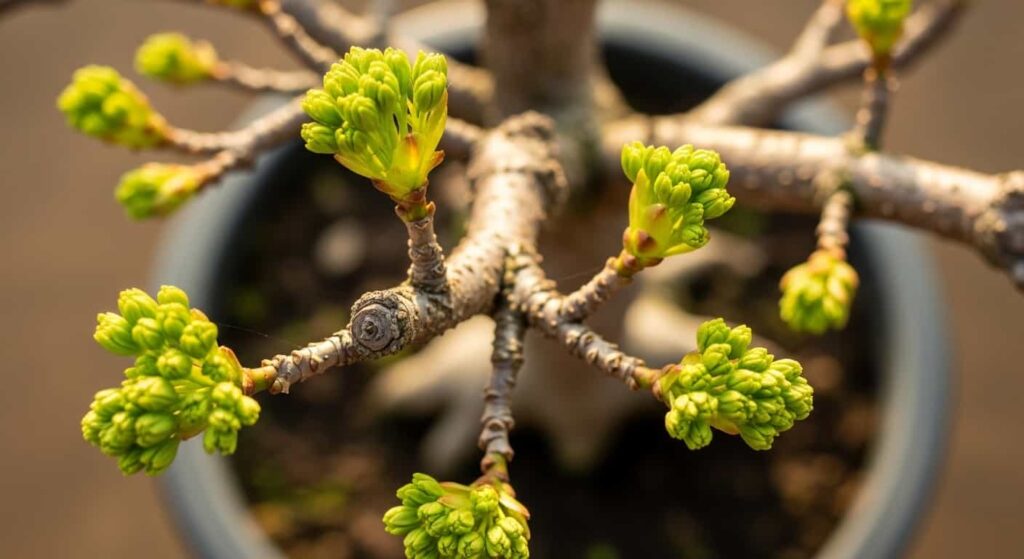
Rather than relying on a calendar alone, use your tree as the timer. When you see new leaf buds swelling or new shoots emerging, the tree is signaling that root regeneration is underway and nutrient demand is rising. This is the most reliable indicator that light fertilization can begin.
What to Do During the Waiting Period
Do not leave the tree without any support. While you hold off on fertilizer, focus on:
- Watering carefully — keep the soil evenly moist, never waterlogged. Roots suffocate in soggy conditions and cannot regenerate.
- Shade and wind protection — reduce transpiration stress by keeping the tree out of harsh midday sun for the first 2–3 weeks.
- No repotting disturbances — do not poke, prod, or disturb the root ball. Let it settle.
Choosing the Right Fertilizer After Root Pruning
Not all fertilizers are equal for a recovering bonsai. The two key decisions are: fertilizer type and NPK ratio.
Liquid vs. Slow-Release Fertilizer
Liquid fertilizer is generally preferred immediately after the recovery period ends because:
- It can be diluted to half or quarter strength easily
- It passes through the soil without accumulating salts rapidly
- It allows precise control over timing and dosage
Slow-release granular fertilizer (e.g., Biogold, Osmocote) is excellent once the tree is clearly in active growth — usually 4–6 weeks post-pruning. It provides a steady background supply of nutrients without large concentration spikes.
NPK Ratio: Prioritize Phosphorus Early
The three numbers on any fertilizer label represent Nitrogen (N), Phosphorus (P), and Potassium (K).
- Nitrogen (N) drives leafy top growth. Too much too early redirects energy away from root regeneration.
- Phosphorus (P) directly supports root development and cell division — exactly what your bonsai needs right now.
- Potassium (K) supports overall cell health and disease resistance.
For the first 4–6 weeks after resuming fertilization, choose a low-nitrogen, phosphorus-forward formula such as:
- 10-30-10 or 5-20-10 (classic root stimulator ratios)
- Seaweed-based liquid fertilizers (naturally low-N, rich in cytokinins that stimulate root growth)
- Fish emulsion at half strength (mild, organic, and buffered)
Once you see vigorous new growth and the tree is clearly recovering, transition to a balanced fertilizer (e.g., 6-6-6 or 10-10-10) for the rest of the growing season.
How to Fertilize After Root Pruning: Step-by-Step
Step 1: Confirm Recovery Has Begun (Week 3–6)
Before applying any fertilizer, check for:
- [ ] New buds swelling or shoots pushing
- [ ] Leaves looking healthy and firm (not wilted)
- [ ] No signs of root rot (foul smell, mushy soil)
If the tree still looks stressed, wait another week and reassess.
Step 2: Start at Half Strength
Mix liquid fertilizer at half the manufacturer’s recommended dose. This is non-negotiable for the first two applications. A tree with a reduced root system cannot process full-strength nutrient loads.
Step 3: Water Before Fertilizing
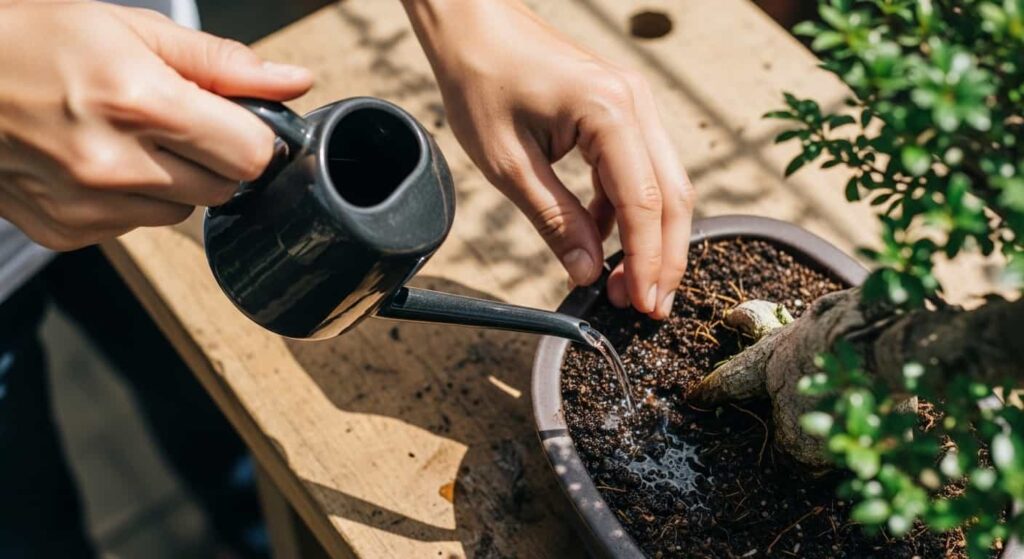
Always water your bonsai thoroughly before applying liquid fertilizer. Applying fertilizer to dry soil concentrates salts and dramatically increases burn risk. Moist soil dilutes the fertilizer solution as it moves through the medium.
Step 4: Apply Fertilizer Evenly
Pour the diluted solution slowly and evenly across the entire soil surface. Allow it to drain freely from the drainage holes. Never let fertilizer solution pool on the surface or sit in a drip tray for more than 30 minutes.
Step 5: Increase Gradually Over 4–8 Weeks
Follow this general ramp-up schedule:
| Timeline After Pruning | Fertilizer Strength | Frequency |
|---|---|---|
| Week 0–4 | None | — |
| Week 4–6 | Half strength, low-N / high-P | Once every 2 weeks |
| Week 6–8 | Three-quarter strength, balanced | Once per week |
| Week 8+ | Full strength, balanced | Weekly (spring/summer) |
Step 6: Switch to Balanced Fertilizer for the Growing Season
By midsummer (or 8–10 weeks after pruning), a healthy recovering tree can handle a normal fertilizing schedule. Use a balanced fertilizer weekly through late summer, then taper off with a low-nitrogen, high-potassium formula in autumn to harden the tree before dormancy.
Species-Specific Considerations
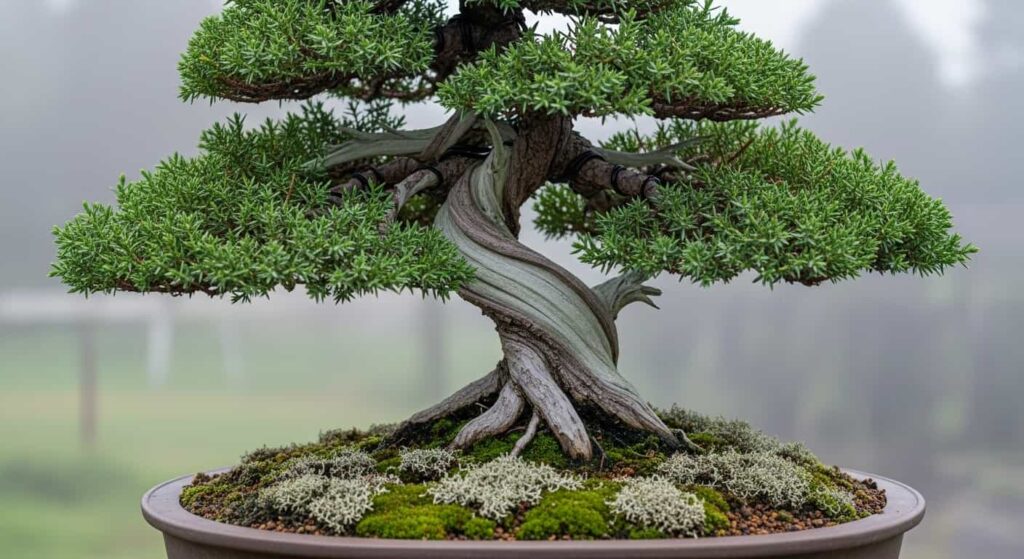
Deciduous Bonsai (Maple, Elm, Zelkova)
Deciduous trees are typically root-pruned in early spring, just as buds begin to swell. This timing is ideal because the tree’s stored energy drives initial recovery without relying on soil nutrients. Begin fertilizing at half strength when the first true leaves have opened fully — usually 4–5 weeks after pruning.
Conifers (Juniper, Pine, Spruce)
Conifers recover more slowly and are sensitive to fertilizer burn. Wait the full 5–6 weeks before introducing any fertilizer. Use an organic liquid fertilizer at quarter strength initially. Never apply high-nitrogen fertilizers to conifers in the post-pruning window — it causes excessive elongation of new growth and weak canopy structure.
Tropical and Subtropical Species (Ficus, Jade, Bougainvillea)
Tropical species root aggressively and tolerate a faster fertilizing return — often as soon as 3–4 weeks post-pruning if the tree is actively growing. Maintain warm temperatures (above 18°C / 65°F) to support rapid root regeneration. Use a diluted balanced fertilizer from week 4 onward.
Fruiting and Flowering Bonsai (Pyracantha, Azalea, Crabapple)
These species have high nutrient demands but are equally vulnerable post-pruning. Begin with a phosphorus-forward fertilizer at half strength from week 4, transitioning to a bloom-formula fertilizer (low-N, high-P, high-K) by week 8 to support flower bud development.
Common Mistakes to Avoid
1. Fertilizing Immediately After Repotting
This is the single most common cause of post-repotting death. Even well-intentioned gardeners assume the tree “needs nutrition” right away. It does not. It needs water, stability, and time.
2. Using Full-Strength Fertilizer Too Soon
Even after the waiting period, jumping straight to full-strength doses overwhelms the limited root surface area available for absorption. Always ramp up gradually.
3. Using High-Nitrogen Fertilizer in Early Recovery
High-nitrogen fertilizers push top growth aggressively. This forces the tree to spend energy on leaf production rather than rebuilding roots — the exact opposite of what you want.
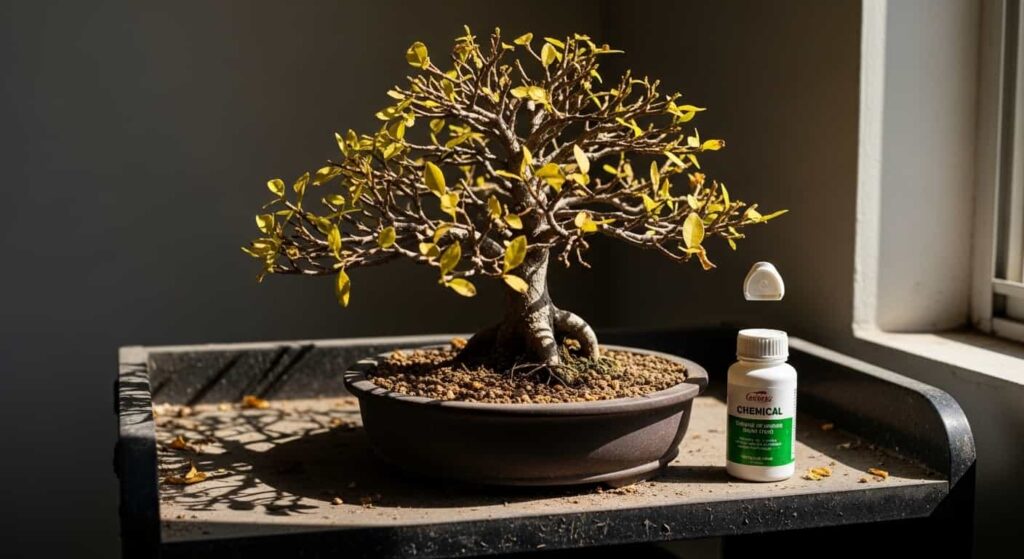
4. Fertilizing a Stressed or Sick Tree
If your bonsai is showing signs of stress beyond normal post-pruning recovery (yellowing leaves, leaf drop, soft or discolored roots), do not fertilize. Investigate and resolve the underlying issue first. Fertilizer will not fix a sick tree; it will make it worse.
5. Ignoring Seasonal Timing
Fertilizing a dormant or semi-dormant tree that has been root-pruned in autumn is largely wasted effort. Temperate species slow nutrient uptake dramatically as temperatures drop. Time root pruning for spring, whenever possible, so recovery aligns with the tree’s peak growth energy.
Quick Reference Summary
- Wait 3–6 weeks before any fertilizer after root pruning
- Use new growth as your visual signal to begin
- Start with half-strength, phosphorus-forward fertilizer
- Water before fertilizing to prevent salt burn
- Ramp up gradually over 8 weeks to full-strength balanced fertilizer
- Avoid high-nitrogen formulas in the first month post-pruning
- Adjust the timeline for species, season, and pruning severity
Final Thoughts
Fertilizing bonsai after root pruning is less about feeding and more about patience. The tree has its own internal recovery timeline, and your job is to support that process — not rush it. By waiting for genuine signs of recovery, starting gently with the right fertilizer type, and scaling up thoughtfully, you give your bonsai every advantage to come back stronger than before.
The trees that thrive after root pruning are not the ones that received the most fertilizer. They are the ones that received the right fertilizer at the right time.