
Last Updated on May 1, 2026 by Indoor Plant Nook
Soil is the infrastructure project pothos roots inhabit daily. Get it right and watering becomes intuitive, growth steadies, and root rot fear shrinks. Get it wrong—dense, airless muck in an oversized decorative pot—and even careful owners watch yellow leaves multiply. Pothos evolved for life where roots alternate between moisture and oxygen: tropical rain passes quickly through leaf litter on slopes and bark, rather than pooling weeks in clay.
This guide explains ideal soil properties for pothos, starter recipes using common retail components, adjustments for arid vs humid homes, repot timing, pitfalls of “just use garden dirt,” and how to recognize degraded mixes ready for refresh.
Soil goals translated from plant biology
The best pothos mixes prioritize:
Aeration: pore space for oxygen around roots. Drainage: water exits instead of saturating indefinitely. Moisture retention: enough capacity that roots access water between watering without constant dehydration—balance, not extremes. Structural stability: resistance to immediate collapse after a year—though all organic media breaks down eventually.
You are approximating “chunky forest floor lite,” not wetland peat bog.
What to use: dependable component categories
Peat or coco coir: moisture retention bases widely available. Coco often rewets more forgivingly than dried peat, but both work amended.
Perlite: lightweight white pop-rock aeration classic—reduces compaction.
Pine bark fines or orchid bark: creates chunky channels; improves long-term structure.
Coco chips / husk chunks: chunkiness with water retention—popular in aroid blends.
Pumice or coarse sand (select grades): weight and porosity variations depending on sourcing—use thoughtfully in heavier mixes if local.
Worm castings or compost (sparingly): mild organic nutrition—avoid overwhelming fine textures unless balanced.
Blend ratios depend on environment; start chunkier if you overwater, slightly more retentive if you travel or underwater chronically—still never pure mud.
Example mix frameworks (adapt to your supply chain)
Beginner balanced (simple): roughly equal thirds high-quality indoor potting mix, perlite, and bark—or two parts mix to one part perlite and one part bark if you want slightly more moisture.
High-aeration (overwatering rehab): increase perlite and bark proportion until watering demands attention sooner but roots breathe easier.
Travel-tolerant tweaking (use cautiously): modestly increase coir or peat fraction only if light levels are moderate and pots are not enormous—never use this to justify giant pots.
What to avoid: red-flag media choices
Untreated heavy garden soil alone: compacts in containers, drains poorly, invites anaerobic zones.
Pure peat with no structure: looks fine at first, becomes a wet brick or hydrophobic crust unpredictably.
Dense “moisture control” marketing mixes without amendment audit: sometimes acceptable base, sometimes disaster—verify behavior with your watering hand.
Non-draining novelty planters billed as plant hospitals: roots need gas exchange; drowning is drowning even if Instagram likes the glass.
Packing decorative rocks at the bottom “for drainage”: does not simulate a physics fix for poor media; often raises perched water tables inside pots—modern guidance favors uniform chunky mixes and real drain holes instead of gravel layers claiming magic.
Matching soil to pot material
Glazed ceramic slows evaporation from sides—lean chunkier if you see sluggish dry-down.
Terra-cotta accelerates moisture loss—slightly more retentive base may comfort beginners who underwater.
Plastic sits between—great for learning weight cues.
Environmental tuning
Hot, dry, bright setups may dry pots quickly—moderate retention helps avoid hourly anxiety.
Cool, dim winters slow metabolism—chunkiness prevents perpetual soggy winters after summer vigor fades.
Recognizing old soil needing replacement
Breakdown signals:
- Water sits on surface then channels instantly—hydrophobic peat.
- Pot stays wet absurdly long despite prior norms.
- Roots smell sour on inspection.
- Growth stagnates with no pest or light explanation.
Repot with fresh structured mix—spring or summer usually gentlest, emergencies excepted.
Root-bound vs soil-spoiled confusion
Being moderately root-bound does not always mandate emergency repot, but old soil + circling roots often coincide—address both when growth declines or watering acts weird.
Fertilizer interaction with soil choice
Highly organic mixes may supply minor nutrients early; long-term feeding still matters lightly—but salt buildup occurs faster in small pots if drainage poor—structure first.
Pest and gnat notes
Fungus gnats adore always-wet organic matter—better soil physics reduces their hospitality.
Specialized contexts briefly
Propagation jars: soilless until roots form—different rules.
LECA/semi-hydro: not soil—follow dedicated reservoir hygiene guides.
Outdoor summer pots: rainfall can necessitate chunkier or faster-draining blends than identical indoor pots.
Testing a new mix without risking prized plants
Pot a cutting or less sentimental clone; water observing dry speed over two weeks—cheap empirical proof beats ideology.
Myths
Myth: More peat equals happier tropicals. Reality: More peat often equals more root rot without chunk amendments.
Myth: Cactus soil alone is perfect for pothos. Reality: Sometimes too lean depending on brand—often better blended than solo if it is ultra-coarse.
Myth: Fancier bag = smarter chemistry. Reality: Inspect texture with your hands—labels lie less than fingers.
Repot choreography with messy mixes
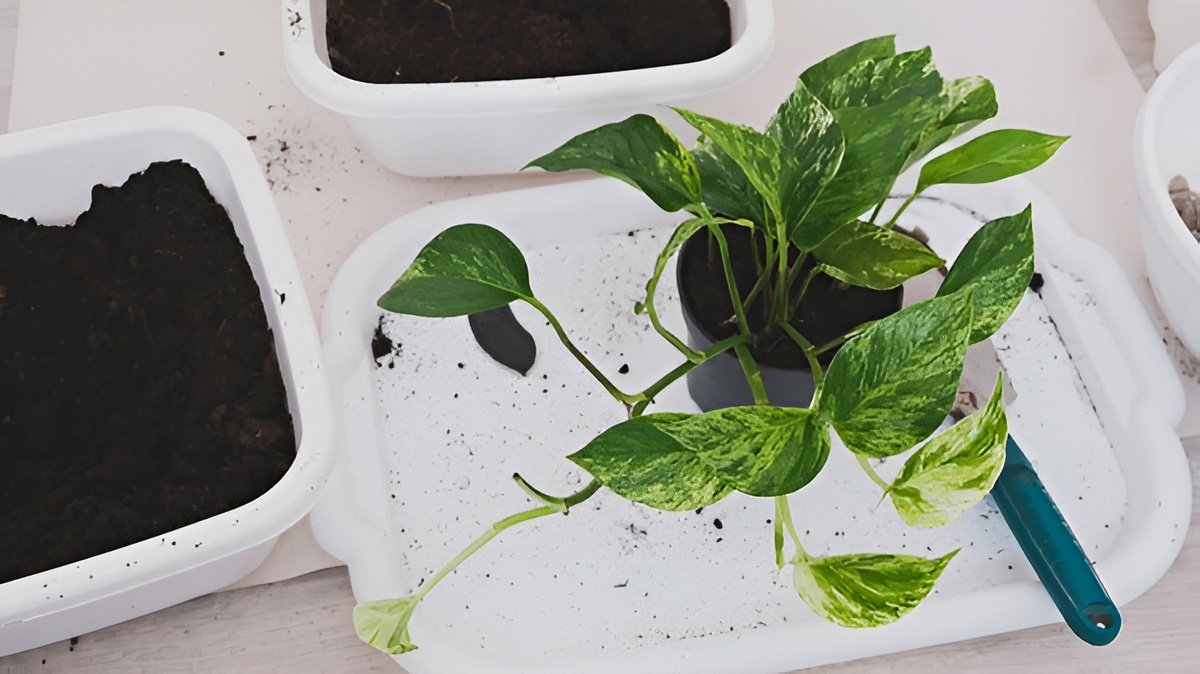
Repot outdoors or on tarped tables when blending bark-heavy mixes—cleanup beats carpet archaeology. Pre-moisten coir or peat slightly before mixing if dust is respiratory irritant.
Soil storage hygiene
Seal partial bags to limit gnats colonizing damp leftover media—dry storage beats mystery breeding bins.
Sustainable sourcing mindfulness
Local bulk suppliers sometimes offer bark or pumice cost-effectively; balance embodied transport costs with your values and budget.
Diagnosing pH drift (advanced nuance)
Most pothos tolerates typical peat/coco ranges; obsess less unless you run extreme amendments—structure usually dominates outcomes indoors.
Soil and cachepot dynamics revisited
Even perfect mix suffocates if outer pots trap water—engineering exits matters as much as recipe.
Worm bins and compost teas: hobby crossover cautions
Compost leachates carry microbial unpredictability indoors—if experimenting, isolate plants and accept odor logistics; many growers prefer predictable dilute synthetics for pothos simplicity.
Bark aging: when chunky becomes fine
Bark breaks down into finer particles over years, quietly reducing porosity—refresh before plants mysteriously “got harder” to water correctly.
Soil pathogens: reality without panic
Occasionally bags harbor undesirables; reputable sourcing and avoiding scorching-hot stored wet bags reduces odds—still isolate pricey imports.
Mulching interiors: style vs stem rot
Top dressings look tidy but can trap moisture against petioles if overdone—keep thin, airy, and clear of crown crowding.
Matching mix to your personal honesty about watering
Chronically generous waterers should lean chunkier than travelers who forget weeks occasionally—there is no morally superior particle size, only mismatch penalties.
DIY soil recipes beyond three-ingredient memes
Advanced blenders sometimes layer fine starter zones atop chunkier lower reservoirs for specialist plants—pothos rarely needs architectural soil stratigraphy if uniform chunkiness spans the pot. Complexity should earn measurable watering benefits; otherwise simplicity wins maintenance.
Vermiculite vs perlite cultural debates
Perlite cracks aeration; vermiculite holds more moisture and can compact—some growers prefer perlite-forward for pothos tolerance of dry swings; others blend modest vermiculite in arid climates. Watch your own dry speeds after tweaks.
Rice hulls and local agricultural amendments
In farm-adjacent communities, parboiled rice hulls sometimes substitute perlite partially—validate cleanliness and salt content before wholesale adoption.
Soil sterility: when pasteurizing enters chat
Rarely needed for typical pothos; if reusing suspicious outdoor mix, risk often outweighs savings—fresh commercial bases amortize sanity cheaply.
Testing drainage empirically
Pack mix into a nursery pot, water until runoff, observe seconds-to-first-drip timing and whether perched water sits visibly—informs amendments better than arguing online about ratios divorced from your tap water and peat batch.
Root-to-soil volume ratios across life stages
Cuttings want finer, evenly moist transitions; mature vines want generous pores—sometimes the same plant needs repotting not because marketing demands yearly upgrades but because fine cutting mix no longer suits an adult root plate.
Soil + fertilizer salts: flush rituals
If you feed regularly and never allow mild leaching, surface crust can appear—occasional thorough watering with mindful saucer dumping can reset buildup where drainage supports it.
Soil insects: isolation practicality
Gnat blooms signal moisture-time integration problems more often than apocalyptic soil contamination—still isolate new potted plants briefly when feasible.
Children, pets, and bag storage
Store opened media sealed away from curious kids and pets; inhaling dusty mix irritates airways—pour in ventilated spaces.
Coir ethical sourcing in brief
If sustainability motivates coco choices, skim supplier statements critically; imperfect options still beat chronic root rot from structureless mud—optimize both ethics and physics when you can.
Safety and sustainability notes
Handle bagged mixes with basic hygiene; moist products can harbor pathogens—buy reputable, store appropriately.
Consider coco vs peat environmental tradeoffs informedly—both appear in hobby circles; amendment quality matters as much as philosophical branding.
Coarse grit, sand, and when “cheap drainage” lies
Fine sand mixed into peat can paradoxically reduce large pore space by filling gaps between particles unless ratios stay disciplined—if you add grit, choose coarse horticultural grit and keep the overall blend visibly chunky when squeezed lightly in your hand. If squeezing yields a muddy puck that stays solid, pothos roots will resent it even if marketing calls the bag “well draining.”
Closing takeaway
Best soil for pothos is structured, breathable, and honest about drainage—whether you mix it yourself or amend a commercial base until water behavior feels predictable. Once roots inhale between drinks, leaves have the hydraulic stability to show you light and fertilizer effects cleanly. Soil is not glamor; it is oxygen diplomacy with microbes—and pothos thrives when diplomacy succeeds.
Related Pothos Guides
- What Is the Best Pot for Pothos? (Material, Size & Drainage Tips)
- Best Fertilizer for Pothos: When, What, and How Much to Use
- What Temperature Does Pothos Need? Cold & Heat Tolerance Explained
- Humidity Requirements for Pothos — Does It Really Need Misting?
- How to Repot Pothos: Step-by-Step Guide for Beginners