
Last Updated on May 1, 2026 by Indoor Plant Nook
“How long until roots?” is the most impatient question in propagation—and also one of the hardest to answer with a single number. Pothos (Epipremnum aureum and common cultivars) roots faster than many houseplants, yet rooting time is never a constant stamped on the stem. It is a range shaped by temperature, light, cutting quality, method (water versus soil versus semi-hydro), and seasonal rhythms inside your home. This guide gives realistic timelines, what milestones look like, and how to interpret slow rooting without spiraling into bad fixes.
Baselines: what many growers experience
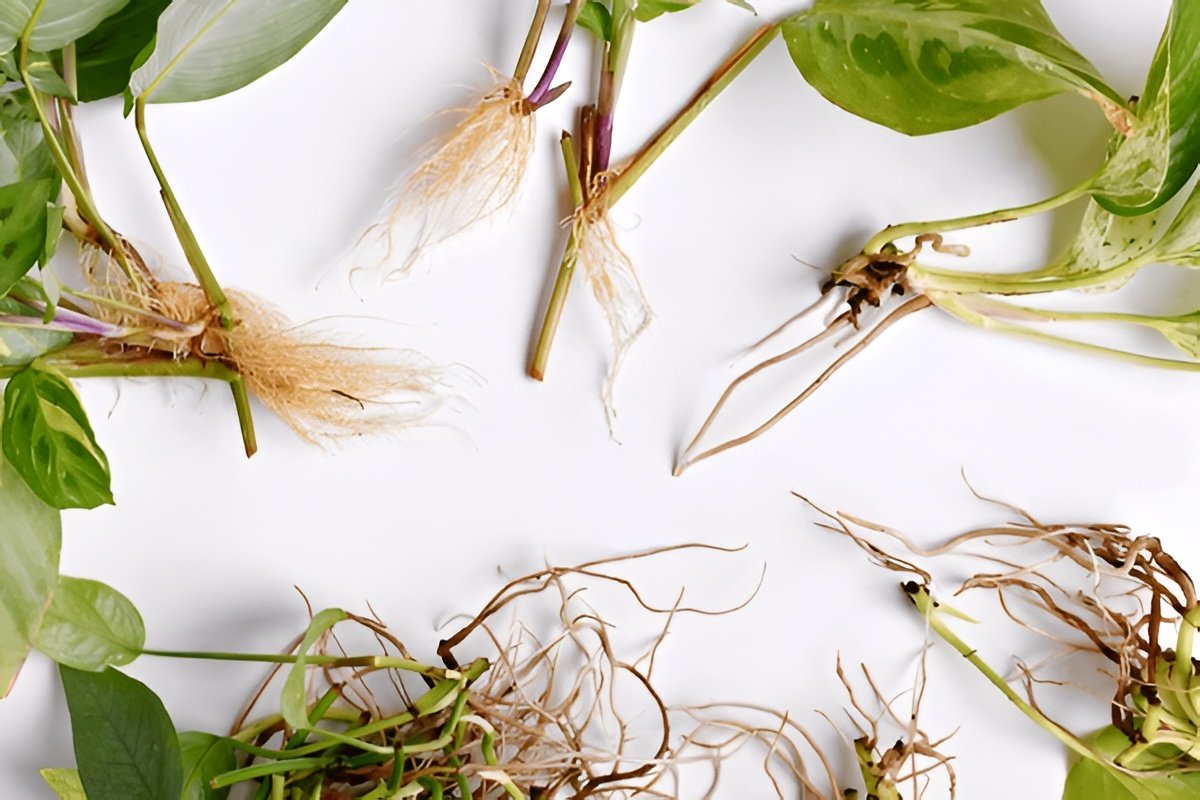
Under typical bright indirect light and comfortable indoor warmth, pothos cuttings in clean water often show initial root bumps within one to three weeks, with more usable roots developing over the following weeks. In soil, you may not see evidence for a similar period, with confidence building after two to six weeks depending on mix and moisture discipline. In LECA/semi-hydro, timelines overlap water and soil depending on setup and whether roots were established before transfer.
These are baselines, not contracts. A winter cutting in a cool room may idle far longer before doing anything visible.
The anatomy of rooting: invisible work before visible roots
Before white points appear, the cutting calluses and hormonal signaling activates cells at the node to form adventitious roots. During this silent phase, leaves may look static while internal chemistry prepares. Beginners sometimes declare failure during the invisible phase and overcorrect—usually by adding more interventions (warmer spots that are actually dark; more water that stagnates; repeated unpotting that breaks callus).
Patience plus observation beats panic plus poking.
Temperature effects: the hidden accelerator or brake
Rooting is a biochemical process; warmth within reasonable houseplant ranges speeds it, while cold slows it. If your propagation station sits on a windowsill, ensure night temperature drops are not chilling water jars repeatedly. If it sits in a dim, cool bathroom, expect slower timelines regardless of how “humid” the room feels.
Light: fuel for rooting
Cuttings rely on stored energy and current photosynthesis. Adequate light supports rooting more reliably than dark drawers—even if roots can form in dimmer spots, speed and survival rates often drop. Avoid harsh direct sun that overheats jars; aim for steady bright indirect conditions.
Water propagation timelines and what changes them
Fast water rooting usually involves:
- Healthy donor tissue
- One node cleanly submerged without leaf decay in the jar
- Regular water changes before cloudiness becomes chronic
- Warm stable room temperatures
Slow water rooting often traces to:
- Weak cuttings from stressed mother plants
- Murky, oxygen-poor water
- Cold conditions
- Submerged decaying leaves fouling the base
- Extremely dim sites
If roots finally emerge but remain stubby for a long time, reassess whether light is sufficient for the next stage—without roasting stems on hot glass.
Soil propagation: why it “feels” slower
Soil hides roots, so the emotional timeline lengthens even if biology is similar. Soil also punishes sloppy watering: too wet rots nodes; too dry stalls roots. A humidity dome can reduce transpiration stress early, but must be managed to avoid constant leaf wetness and stagnant rot.
Expect to wait several weeks before strong confidence—sometimes longer in winter.
Semi-hydro/LECA: variables layer on variables
If you place freshly cleaned soil roots into LECA, recovery time adds a conversion chapter. If you start from water roots transferred into LECA, adaptation may add pause before explosive growth resumes. Treat these as phase changes, not failures.
Signs rooting succeeded (or failed)
Positive signals
- White root tips with firm texture
- Stems firm, not collapsing
- New leaf buds forming at vine tips (often after roots exist—timing varies)
- Resistance to a very gentle tug in soil (use sparingly)
Warning signals
- Black mush at nodes
- Foul odor from jars or soil
- Persistent yellowing that accelerates
- Stem shriveling despite wet media (possible vascular damage)
Failures are data: clean cut, fresh media, better light, stable warmth.
Does rooting hormone change the calendar?
Sometimes slightly; not always dramatically on an easy plant like pothos. Hormone can help marginal nodes; it does not replace fundamentals.
Seasonal honesty: winter propagation in northern homes
Shorter days and cooler zones indoors stretch timelines. If you need faster results, consider supplemental grow lighting modestly—not blazing UFOs—just enough to extend usable photons in a stable way.
When to pot up from water
Opinions vary, but a practical rule is to wait until multiple roots are several inches long and branching before moving to soil—or commit to long-term water culture if that is your path. Early potting with micro-nubs invites transplant collapse.
Emotional expectations and batching cuttings
If you need success, take multiple cuttings. If one node rots, you still have siblings. This reduces the temptation to overmanage a single jar like a heartbeat monitor.
Vascular health: the cutting stem matters as much as the node
A rigid green stem can still harbor hidden bruising—bent stems during shipping, clamp marks from hair clips used as “prop hacks,” or pinches from falling books. Damaged vascular tissue can brown internally, slowing or preventing root emergence even when the leaf still looks fine for a while. When in doubt, recut higher above a healthy node with a clean blade and let the fresh surface air-dry minutes before returning to water if you are seeing mysterious stalls with perfect jars.
Mother plant care while you harvest nodes
Repeatedly stripping long vines from a stressed mother—recently repotted, heat-blasted, or mite-ridden—produces weaker cuttings that root slowly. Let donors recover a few weeks between heavy harvests when possible; your timeline improves because carbohydrate supply improves. Feed modestly during active growth if roots are healthy so nodes you later cut carry more “starting fuel.”
When to abandon a jar and restart cleanly
Sometimes algae, slime, and cloudy cycles mean the easiest win is a sanitized jar, trimmed node, and honest restart rather than heroic rescues of marginally healthy tissue. Pothos forgives fresh starts; it does not forgive infinite soggy neglect.
Summary ranges you can say without lying
- Water: often first signs within days to a few weeks; stronger root systems commonly within several weeks under good conditions
- Soil: often weeks before you know; sometimes longer in cold/dark scenarios
- Any method: winter and low light can push timelines toward many weeks
Closing reassurance
Pothos cuttings are not timers; they are living allocations of energy. Give them clean conditions, reasonable warmth, bright indirect light, and a steady hand, and roots tend to arrive—sometimes with a flourish, sometimes quietly—until one day you lift the jar and see the satisfying white architecture that means your plant is ready for its next chapter.
FAQ: rooting timelines
My cutting rooted in four days—is that fake? Early bumps can appear quickly on vigorous nodes in warm, bright setups; full branching systems still need time—celebrate early signs without rushing soil.
Nothing visible after a month in water—dead? Inspect tissue firmness and node color; if stems stay firm and leaves slowly decline without rot smell, try warmer placement and fresher water before declaring defeat.
Soil cutting looks fine but never grows—why? Roots may be minimal; tug tests lie sometimes—check for secretly soggy cores or pest stippling.
Myth vs. reality
| Myth | Reality |
|---|---|
| “Roots need darkness.” | Roots tolerate darkness in soil; water propagation benefits from reasonable ambient light for the leaves powering the process. |
| “Boiling water sterilizes jars forever.” | Biofilm returns from air and stems—hygiene is ongoing. |
| “Hormone shortcuts weeks.” | On pothos, fundamentals dominate—hormone is seasoning, not fuel. |
Method comparison checklist
- Water: visible progress; transition discipline later
- Soil: invisible phase; moisture mastery crucial
- LECA: reservoir literacy required; fewer gnats often
Seasonal propagation notes
Northern winters indoors commonly add one to three weeks versus peak summer attempts unless supplemental lighting stabilizes photoperiod for leaves.
Mini case study: two jars, same shelf
Observation: Identical cuttings; one jar roots two weeks faster.
Hidden variables: Slightly warmer microclimate behind electronics; fewer submerged leaf remnants; luckier node vitality—batch cuttings to smooth luck.
When timelines diverge, propagation teaches patience as a skill upgrade—skills that transfer directly to diagnosing mature pothos “stalls” later.
Social reality: managing expectations with gift jars
If you hand someone a propagation jar, tell them truthfully that first visible roots may take from a handful of days to several weeks depending on warmth and light, and that hovering does not speed mitosis. Teach clouded-water sniff tests and gentle rinses rather than daily stem fondling. When beginners understand that firm green tissue during a quiet week is often healthy patience rather than failure, fewer jars get tossed prematurely and fewer group chats fill with photos titled “is it dead.” The emotional timeline of propagation is as important as the biological one—calm checks beat theatrical rescues.
After roots: the clock changes meaning
Once a cutting is truly established, “how long” stops being the central question and maintenance becomes the story. That shift is useful emotional practice for the next growth plateau on mature plants: sometimes the plant is fine and simply reorganizing energy underground. Carry the same observant patience into repot weeks when leaves sulk for a few days—panic watering rarely helps newborn soil roots find their rhythm.