
Last Updated on May 1, 2026 by Indoor Plant Nook
Feng shui traditions vary by lineage, region, and teacher—never substitute internet summaries for mentorship you trust culturally. Many schools associate lush, healthy greenery with vitality and gentle upward movement; pothos offers forgiving vines that busy households can sustain without turning symbolism into shame when one leaf yellows during a deadline week.
Treat what follows as placement hygiene that overlaps sensible interiors advice—bright indirect light, stable pots, clutter-conscious trailing routes—plus optional symbolic framing if your practice welcomes it.
Watering guides get the spotlight, but placement quietly decides whether pothos thickens into lush curtains or stretches into thin ropes with tiny leaves. The plant tolerates imperfect conditions longer than many trendy houseplants, yet tolerance is not optimization. Where you put the pot shapes daily light totals, temperature swings, airflow, humidity pockets, pet access, watering convenience, and how quickly you notice yellow leaves before problems cascade. Think of placement as the slow-moving dial that makes every other care habit easier—or harder—for years.
Translate “bright indirect light” into something you can judge without gadgets
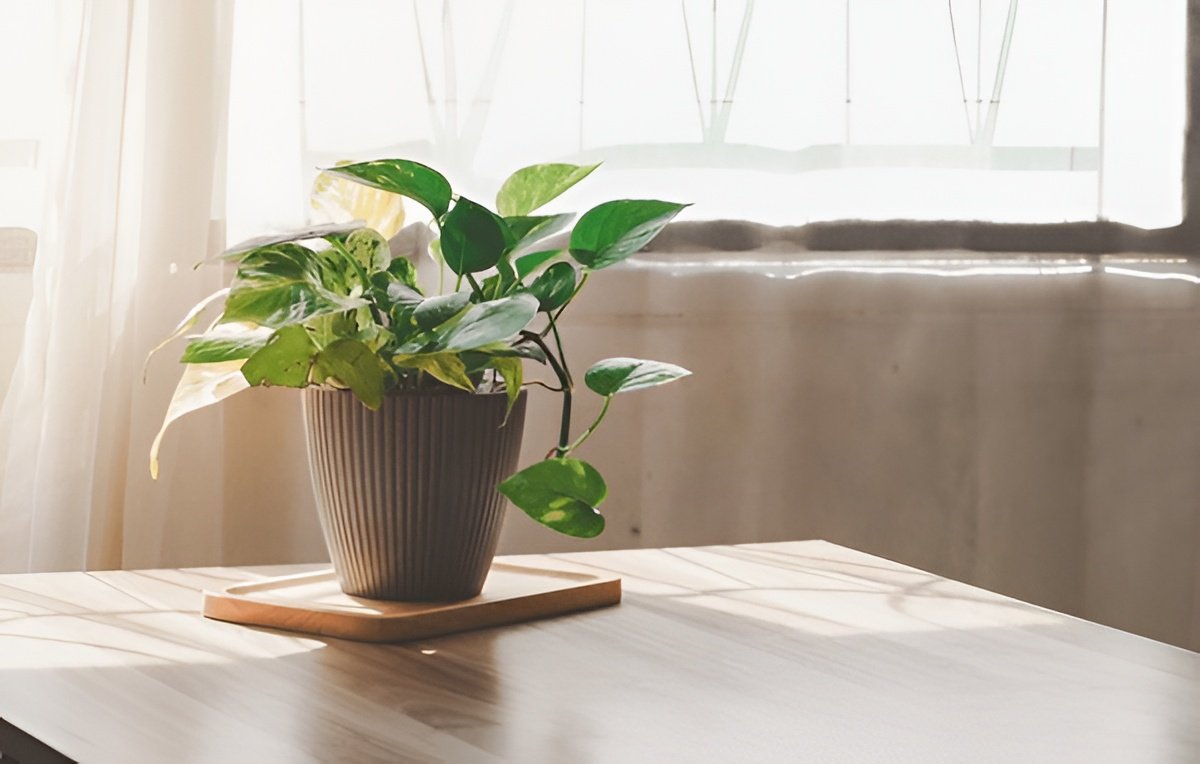
“Bright indirect” is shop shorthand for a zone that receives plenty of daytime illumination without leaves sitting in concentrated sunbeams long enough to bleach or burn. In practice, that often means a few feet back from a large window, or closer to gentler exposures such as many east-facing rooms, or southern and western rooms where sheer curtains, blinds, or neighboring buildings soften peak glare.
A practical heuristic: if you could read comfortably in that spot during daytime without turning on a lamp, it is probably reasonable for steady pothos growth. If the area feels persistently cave-like except for a stripe of sun marching across the floor at noon, assume you will see elongated stems and smaller leaves unless you supplement light or rotate the plant through brighter holding spots weekly.
Variegated cultivars usually need more honest brightness than deep-green selections because pale sectors do not photosynthesize as efficiently. If Marble-type leaves revert greener indoors, the first suspect is photon income before fertilizer fantasies.
Window direction matters, but distance and obstruction matter more
East-facing glass often delivers mild morning light that pothos accepts well once acclimated. West-facing exposures can become harsh in summer; watch for crisp patches on pale variegation and increase setback distance or add diffusion. South-facing rooms can host excellent pothos if you avoid pressing pots against panes where midday beams concentrate. North-facing rooms may sustain tolerant clones yet commonly yield leggy growth across months—fine aesthetically if you accept the look, frustrating if you expected dense bushes without adjusting placement seasonally.
Outdoor trees, new construction, winter bare branches, and dirty windows all change the effective brightness indoors. Re-evaluate placements at least twice a year—often when heating seasons shift and when summer sun angles steepen—so slow etiolation does not sneak past you.
Cold glass, hot glass, and root-zone reality
Sitting a plastic nursery pot directly against single-pane winter glass can chill damp roots at night even when the room thermostat reads pleasant a few feet away. Conversely, summer sun can heat exterior-facing pots enough to stress foliage touching glass. Use a modest inset—half a foot to a foot—between leaf tips and glass where layouts allow, especially for trailing ends that fall forward onto cold or blazing surfaces.
Radiators, vents, and invisible drying lanes
Radiators roast pot sidewalls asymmetrically after watering, accelerating uneven dry-down and crisping margins near heat plumes. Forced-air vents produce jets that strip humidity around leaf edges quietly; micro-adjust placements until airflow disperses rather than hammering one canopy corner nightly.
Avoid sticking pots where slamming doors introduce repeated winter cold bursts or where humidifiers blow constantly onto leaves without ever letting foliage dry between cycles—chronic wet leaf surfaces invite spotting issues in stagnant pockets.
Kitchens: brightness plus cleanliness
Kitchen windows can be excellent—high ambient activity means you notice wilt sooner—but grease films from cooking accumulate on leaves near stoves faster than you expect. Prefer placements offset from direct aerosol splatter zones, and rinse dust and films monthly with lukewarm water if you cook frequently. Humidity from boiling water helps leaf margins modestly; it does not replace insufficient photons above sink alcoves that look bright to human eyes yet photograph dim.
Living rooms and shelving: drama versus physics
Trailing pothos from tall shelves is visually satisfying but mechanically demanding. Wet soil weighs more than dry intuition guesses; anchor hangers into studs and reassess macramé knots after heavy watering days. Keep trailing ends away from door arcs, vacuum paths, and hallway elbows where stems snag and petioles snap weekly.
If pets or toddlers share the floor plan, elevation stops being optional décor and becomes risk management—pair trailing habits with household realities described in pet and child toxicity articles rather than gambling on perfect obedience.
Bedrooms: calm aesthetics and nighttime cooling
Bedrooms often cool at night—usually acceptable—but pots clamped beside pillows against chilly exterior walls can experience marginal leaf yellowing from compound cold + irrigation timing mistakes. Shift inward after frost season if you notice outer-canopy decline clustering beside glass.
Hallways and interior rooms: honesty over hope
Dark interior hall pockets rarely support vigorous pothos indefinitely without supplemental lighting or a disciplined rotation schedule into brighter zones. If you insist on a hallway specimen for symmetry, treat it like a museum loan: swap it monthly with a healthier twin kept in better light, or install an understated LED bar with a sane timer.
Bathrooms in one paragraph (details elsewhere)
Steam helps a little; darkness hurts a lot. Only bathroom placements with truthful ambient light—often frosted windows still outperform shower corners—make long-term sense. If your bathroom is windowless, lean on dedicated grow lighting or accept that pothos becomes a short-term rotating guest, not a permanent resident.
Grow lights without sci-fi aesthetics
Full-spectrum LED fixtures rescue northern rooms and winter months when daylight quantity collapses. Hang lights per manufacturer distance guidance, run timers near plausible day lengths—often ten to twelve hours for foliage houseplants—and adjust intensity if leaves bleach or stems stretch. Raise fixtures before you blame fertilizer.
Clustering plants for mild humidity buffering
Grouping several indoor plants can lift local humidity slightly and reduce harsh winter edge browning at the margins—emphasis on slightly. Avoid packing leaves into stagnant closets where fungal issues thrive; leave modest airflow corridors, especially behind curtains.
Watering logistics determine honest placement discipline
If draining saucers requires furniture gymnastics, you will postpone dumping runoff—silent rot accelerator. Place pots where maintenance stays boringly convenient: reachable saucers, stable footing, enough clearance to lift pots when needed.
Rotation cadence that avoids dizzy spells
Slow weekly quarter-turns keep crowns symmetrical. Avoid chaotic daily spinning that confuses leaf orientation; pothos is adaptable but not a carnival ride.
Seasonal migration for climates with real winters
Some growers summer plants outdoors in shade after careful hardening off; autumn placement indoors should prioritize the brightest stable table you can honestly sustain through short days—not the leftover corner where last year’s pothos barely survived February gloom.
Variegation retention as a placement diagnostic
If older leaves remain attractive yet new leaves emerge smaller and greener, light often slipped below threshold—sometimes because outdoor shade increased or because a newly parked car reflects differently—not because the cultivar “got tired.” Respond by relocating earlier rather than doubling fertilizer.
Common placement mistakes worth naming plainly
Putting sentimental importance on the darkest stylish nook; hanging heavy baskets from drywall anchors rated below wet swings; hiding struggling plants where problems go unseen until rot smells emerge; assuming bathrooms cure low light; pressing variegated clones against harsh western glass without acclimation.
Quarterly placement audit you can schedule
Take dated photos from the same angles every three months. Compare internode length and leaf size trends. Note draft paths and HVAC changes when renovations happen. Adjust before vines memorize leggy architecture permanently.
Renters, lighting limits, and realistic compromises
Rental walls constrain where you mount hangers; north-facing apartments may forbid drilling altogether. Freestanding plant stands beside the brightest legally reachable window beat heroic ceiling ambitions that violate leases or fail plaster anchors. Portable LED setups travel between flats—worth budgeting if you rotate rentals frequently yet insist on dense pothos canopies rather than accepting perpetual stretch.
Reflective surfaces and understated brightness boosts
Pale walls, mirrors angled without concentrating beams onto foliage, and light-toned shelving subtly scatter light deeper into rooms. Those tweaks modestly stretch workable pothos zones before you rearrange furniture around one prized hanger.
Short trials beat permanent commitments
Try a lesser clone or a rooted cutting for two weeks wherever you crave drama but doubt photons honestly. Trails that firm up internodes modestly reassure louder than pinning hope to a prized variegated mother plant day one blindly.
Humidifiers, tower fans, and seasonal HVAC changes revise dry-down rhythms—each time you relocate hardware, glance at pothos again to ensure old microclimates did not quietly drift.
Treat spots beside fireplaces like radiator zones: cozy visually, drying physically—shift pots if crisp margins repeat despite faithful watering.
Closing principle
Choose locations where honest brightness, stable temperatures, sensible airflow, reachable watering, and household safety overlap. Pothos rewards predictable environments more than dramatic makeshift heroics—placement is how you manufacture predictability indoors without touching the watering can twice daily obsessively.
When stuck choosing between two cute corners, pick the brighter indirectly lit one after accounting for harsh beams—future leaves usually validate that boring decision within weeks.
If you revise placement and still see leggy growth within a month, reassess before blaming roots: light is still the knob most beginners under-turn.
Related Pothos Guides
- 15 Fun Facts About Pothos That Every Plant Lover Should Know
- Where to Buy Pothos Plants Online and In-Store (Best Sources)
- Pothos as a Gift — Why It’s the Perfect Plant for Anyone
- How to Share and Trade Pothos Cuttings with Other Plant Lovers
- What Is Pothos? A Complete Introduction to the World’s Most Popular Houseplant