
Last Updated on May 1, 2026 by Indoor Plant Nook
Choosing between Jessenia and Marble Queen pothos is not a battle of good versus evil—it is a decision about how you want variegation to read from across the room. Marble Queen screams high-contrast white-and-green marbling on broadly heart-shaped leaves that most shoppers recognize instantly. Jessenia whispers intricate green-on-green mottling: subtle from a distance, mesmerizing up close, often slower and sometimes more expensive depending on propagation economics in your region.
This side-by-side guide compares identification, light and water behavior, growth speed, propagation strategy, shopping risks, and design use so you pick the cultivar that matches your maintenance style—not just your Instagram filter.
Quick visual snapshot
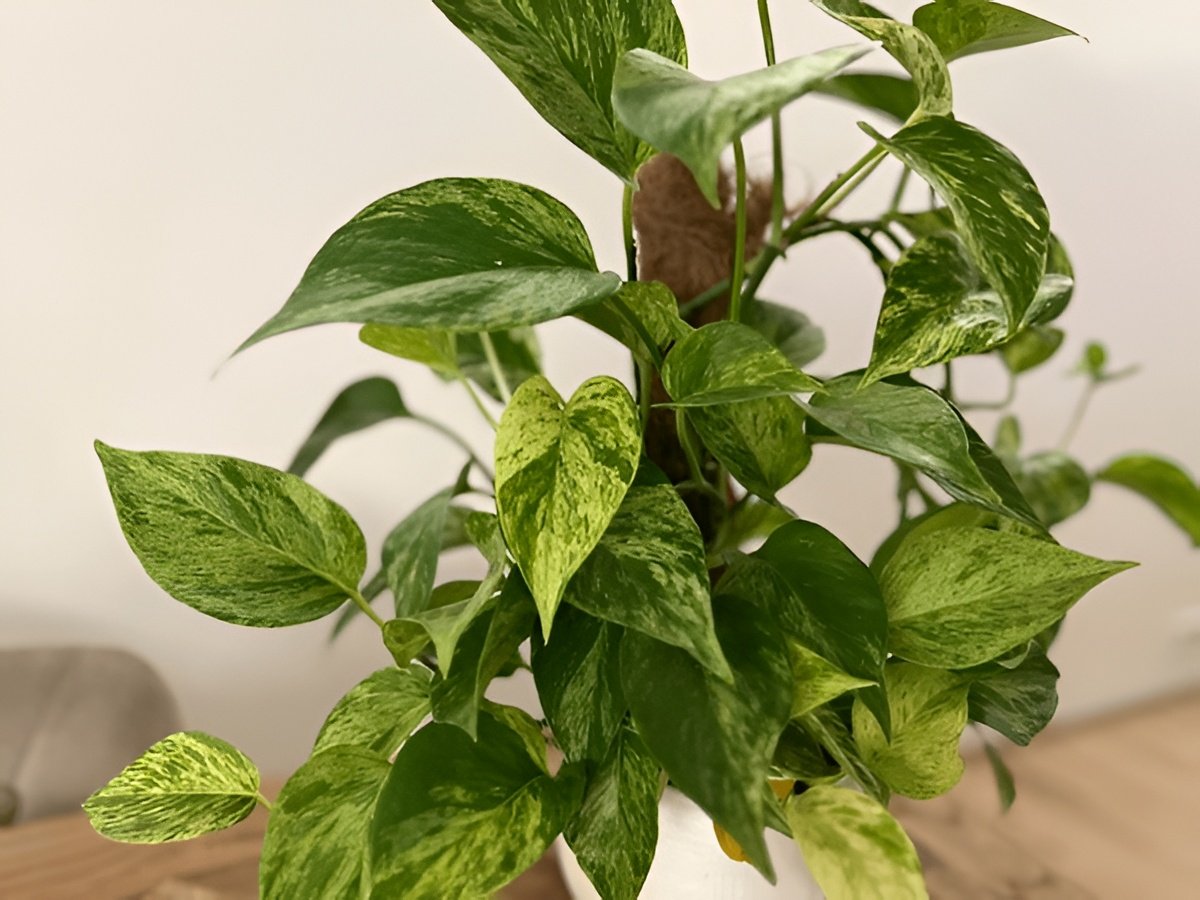
Marble Queen: creamy white swirls threading through green lamina; classic pothos heart silhouette in many nursery specimens; bold contrast under good light.
Jessenia: speckled mosaic of lighter and darker greens—less white, more “internal constellation” patterning; leaf shape remains pothos-familiar but pattern density differs markedly once you train your eye.
If you only glance from three meters away, Marble Queen announces itself; Jessenia may look “just green” until you approach—then you notice complexity.
Taxonomy and naming sanity
Both are typically encountered as cultivars within the houseplant community’s Epipremnum aureum conversation—commerce naming can wobble, but morphological comparisons remain the honest test. If a label disagrees with mature leaves, trust the leaves.
Light requirements compared
Both benefit from bright indirect light for best appearance and growth.
Marble Queen depends on bright light to maintain white sectors energetically; dim conditions commonly push greener leaves as the plant compensates for low photosynthetic income.
Jessenia is still light-hungry for pattern expression—dark rooms flatten the mosaic into a murky generic green even though it lacks white tissue. The difference is aesthetic: Marble Queen’s failure mode looks like “losing snow,” Jessenia’s looks like “losing pixel detail.”
Neither appreciates harsh unacclimated direct sun; pale portions burn or bleach fastest on Marble Queen, while Jessenia may show washed-out patches and uneven tone.
Watering and substrate: shared pothos physics
Both cultivars suffer in soggy, compacted mixes. Use chunky indoor potting blends with perlite, bark, coco chunks, or other aeration amendments tuned to your habits.
Because variegation-heavy aureum selections often grow slower than Golden Pothos, beginners sometimes overwater them on identical calendars—adjust to actual root volume, pot size, and seasonal growth rate.
Water thoroughly, discard drainage trays promptly, and remember winter indoor slowdown often lengthens dry times.
Growth vigor: what to expect emotionally
Marble Queen can still grow satisfyingly fast in bright light with healthy roots—it is slower than Golden but not necessarily glacial.
Jessenia frequently reports as slower in home conditions—partly genetics, partly market propagation bottlenecks—meaning impatient growers may feel underwhelmed if they expect Golden-speed jungle takeovers.
If rapid shelf coverage is your main goal, neither beats Golden; if intricate foliage is your goal, Jessenia delivers a different reward timeline.
Temperature and humidity
Routine household temperatures suit both. Avoid frost, radiators roasting plastic pots, and gusty cold drafts. Humidity is secondary unless your home is extreme; prioritize root health and light.
Feeding strategy
Dilute balanced fertilizers during active growth; reduce in low-light seasons. Neither cultivar needs heavy feeding to express variegation—light drives color far more than fertilizer brand.
Propagation comparisons
Both propagate from stem cuttings with nodes.
Marble Queen: aim for cuttings that include representative variegation—too much white on a cutting may root slowly; balanced sectors help.
Jessenia: select segments showing clear mottling if you want offspring to mirror parent patterning; low-variegation nodes may yield plainer offspring.
Transition water-rooted cuttings to soil gently; keep stable warmth during establishment.
Pest scouting: contrast changes visibility
Spider mite stippling appears on both but may be more visually obvious against Marble Queen’s pale zones. Jessenia’s mottling can camouflage early damage—force yourself to inspect undersides on schedule.
Shopping and mislabeling risks
Marble Queen mislabels occasionally but is widely recognizable at maturity.
Jessenia mislabels hurt wallets more because pricing can run higher—demand sharp photos of mature leaves, compare mottling style to reputable references, and be wary of “rare” claims on tiny immature starters that could be ordinary green sports.
Design placement ideas
Marble Queen shines in high-contrast interiors where white variegation pops against dark walls, charcoal shelving, or warm wood—literally a living marble accent.
Jessenia suits minimalist rooms where loud white feels chaotic—its complexity rewards close viewing on desks, bedside tables, and reading nooks.
Toxicity note
Treat both like typical pothos: commonly cited toxicity risk if ingested for pets and children. Prevention beats panic—place thoughtfully.
Troubleshooting parallel symptoms
Yellowing leaves: Investigate watering first, then light, then roots in that pragmatic order.
Brown tips: Possible salt buildup, inconsistent watering, low humidity combos—change one variable at a time when diagnosing.
Small leaves: Low light or unhappy roots—sometimes both.
Which should you buy first?
Buy Marble Queen if you want immediate recognizable drama and a well-trodden care knowledge base online.
Buy Jessenia if you crave collector nuance, enjoy slower stewardship, and have adequate light to preserve mosaic detail.
Buy neither first if your apartment is genuinely dim—start with Jade or Golden, upgrade lighting, then graduate.
Myths
Myth: Jessenia needs shade because it lacks white. Reality: Pattern clarity still wants bright indirect light.
Myth: Marble Queen is “more advanced” than Jessenia. Reality: Both are intermediate mainly due to slower growth and intolerance for soggy soil—not mysticism.
Seasonal rhythm
Summer growth spurts may increase water needs; winter short days reduce them—do not autopilot twelve months identically.
Long-term collection strategy
Owning both is rewarding if light budgets allow—your eye learns faster when contrasts sit next to each other. If space is tight, rotate aesthetic priorities annually rather than hoarding duplicates under mismatched conditions.
Closing takeaway
Marble Queen is the high-contrast billboard; Jessenia is the fine-art print. Care fundamentals overlap almost completely—light quality, soil aeration, watering discipline define outcomes. Pick the visual language you want to live with daily, then give that cultivar the bright, breathable conditions it needs to speak clearly.
Shopping for Jessenia without overpaying for mislabels
Inspect several mature leaves under neutral daylight. Jessenia’s mosaic should resolve into speckled green-on-green complexity, not merely sectoral white blocks. If a “Jessenia” looks like discounted Marble Queen with extra marketing, pause—price premiums deserve honest morphology.
Ask whether the plant was recently imported or locally propagated; either can thrive, but fresh imports sometimes need longer quarantine observation before joining a crowded shelf.
Building a shared care station for both cultivars
If you own both, resist watering them as one merged personality. Marble Queen’s white tissue may demand slightly brighter placement to stay satisfying, while Jessenia may tolerate identical light yet reveal or hide mosaic detail depending on subtle shifts. Two pots side by side teach calibrations faster than one pot watched alone.
Training, trellises, and gentle ties
Jessenia sometimes reads compact on some clones; Marble Queen may elongate quickly in bright light. If you trellis both, tie gently and step back weekly to ensure neither cultivar is rubbing leaves against rough wood or metal that scars pale tissue.
Photography and trading cuttings with less drama
Diffuse indirect light reduces glare on Marble Queen whites while still showing Jessenia speckle; harsh on-camera flash can erase subtle mottling. If trading cuttings online, include stem-node close-ups to reduce disputes about identity.
Patience timelines rooted in reality
Neither cultivar rewards impulsive weekly repotting or constant fertilizer shifts. Give each change at least two to three weeks to express effects—roots and leaves speak on slower human scales than anxiety prefers.
Refunds, guarantees, and photos you should keep
If either plant arrives shipped, photograph unboxing sequence and any cold damage within hours—clear timelines help legitimate claims without sounding accusatory. Local purchases benefit from walking around the block outside the shop to see leaves in daylight, not only under greenhouse sodium glow that flatters every cultivar equally.
Combining both in one long planter
Mixed planters look editorial in magazines but create watering risk if root systems diverge—Marble Queen roots in identical soil may still drink at different speeds depending on crown density and transpiration. Prefer separate pots inside shared outer boxes unless you truly run experimental horticulture calmly.
When one cultivar outcompetes another on a shelf
If Marble Queen starts shading Jessenia below it, lower leaves on the understory plant yellow from shade more than “mysterious illness”—adjust layering or spacing before panic repotting.
Longevity: what five years teaches
Jessenia sometimes stays visually satisfying in moderate-but-good light where Marble Queen owners feel disappointed; conversely, some Marble Queen clones remain stable for years with disciplined drainage. Clone-line and microclimate diversity means online absolutes deserve skepticism—your home writes the final cultivar review.
Drafts, radiators, and shelf microclimates
Radiator convection dehydrates leaves faster than you notice while soil two feet lower still feels damp—split diagnostics when crisping appears localized. Winter cold seeps laterally along floors toward exterior doors; a pothos that looked fine in October may sulk by January simply because someone rearranged boots beside it.
Long-run satisfaction metrics beyond Instagram
Rate success by steady new leaves, flexible stems that resist snapping under gentle training, and roots that smell earthy during repots. Photo likes fade; resilient plants do not.
For deeper dives, pair this comparison with cultivar-specific Marble Queen whitening strategies and the broader 20-types overview—context beats memorizing isolated names.
Related Pothos Guides
- Pearl and Jade, Snow Queen, Baltic Blue & Other Rare Pothos Varieties Explained
- Pothos Care Guide: Everything You Need to Know in One Place
- How Much Light Does Pothos Need? (Low Light vs. Bright Indirect)
- How Often Should You Water Pothos? (Beginner-Friendly Watering Schedule)
- The Best Soil Mix for Pothos — What to Use and What to Avoid