
Last Updated on May 1, 2026 by Indoor Plant Nook
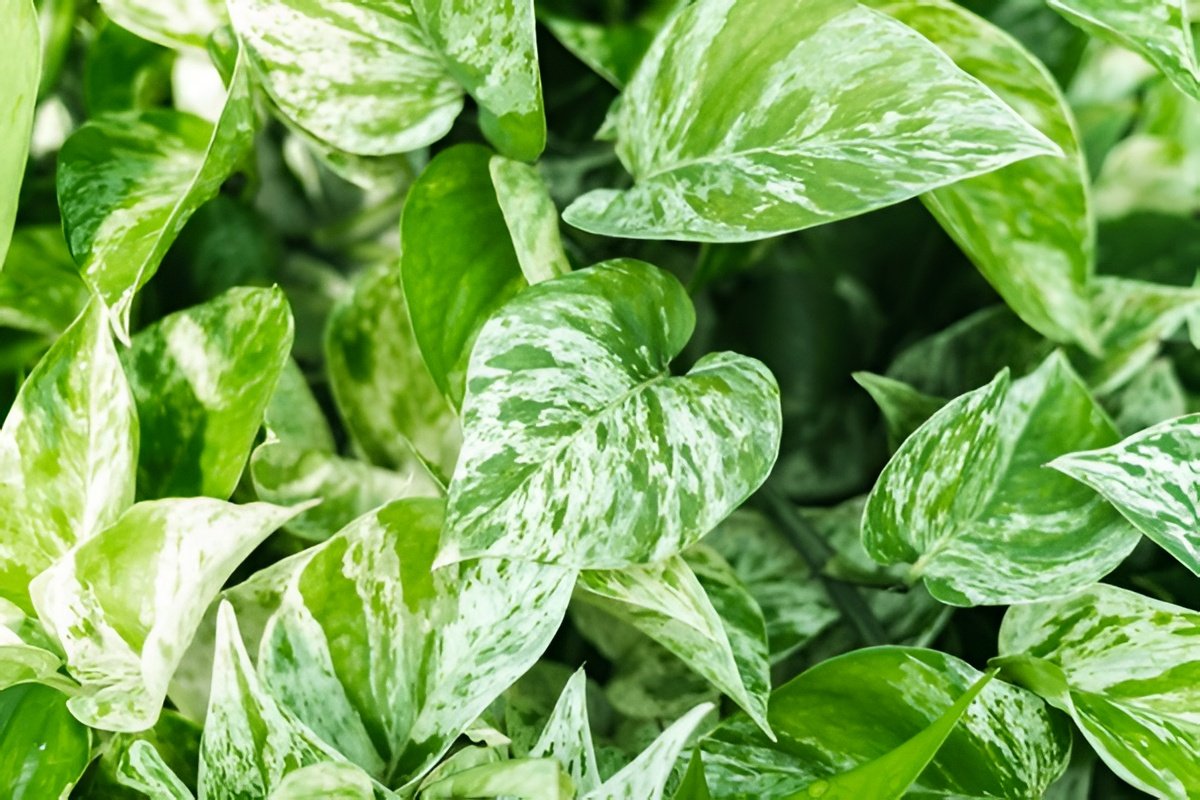
Marble Queen Pothos is the cultivar that convinced a generation of indoor gardeners variegation could look like spilled paint: creamy white swirls interrupting deep green, leaf to leaf a little different from the last. It is beautiful, dramatic, and slightly more demanding than classic Golden Pothos because white leaf tissue contains less chlorophyll. Less chlorophyll means the plant makes sugar more slowly under the same light, which translates to slower growth, higher sensitivity to soggy roots, and a stronger preference for bright, stable conditions.
If you bought Marble Queen hoping for snowy leaves but watched new growth slide toward green, or if leaves yellowed faster than on your other pothos, this guide explains how to keep whites crisp without promising genetics you do not have—some variation is clone-linked.
What “keeping it white” actually means biologically
Leaves do not stay white because you “wish” them to; they stay white because the plant can afford the energetic cost. In dim environments, many variegated plants produce more green surface area to survive. That is reversion-like behavior even if the cultivar name stays Marble Queen on your spreadsheet.
Translation to care: prioritize bright indirect light, avoid chronic stress from overwatering, and maintain fertilization and roots healthy enough to support pigment expression—not miracle sprays.
Light: the primary tool for crisp variegation
Marble Queen loves bright indirect light as its default. A few feet from a strong window with filtered sun, an east-facing sill with gentle morning rays, or a quality grow-light setup often outperform north-facing dim rooms.
If you dislike the technical phrase “bright indirect,” think about where you could read comfortably for hours without squinting from sunbeams—then confirm leaves are not cooking. Direct midday sun through hot glass can bleach or burn white sections faster than green ones because pale tissue lacks protective pigmentation equivalents.
Rotate the pot periodically so one side does not reach toward light while the other yellows in shade. Symmetry matters aesthetically and physiologically.
Watering: balance moisture with oxygen
Marble Queen’s slower growth can mislead beginners into watering on a Golden schedule in the same soil. If the Queen’s roots are smaller relative to pot mass, soil stays wet longer—root stress follows, and stressed plants may push greener leaves or drop foliage.
Water when the appropriate depth of your chunky mix dries—often a deeper dryness for standard nursery pots than you might guess if your mix is truly airy. Water thoroughly until drainage flows, then discard saucer water.
Cold, dark winter periods reduce water demand; combine reduced light with heavy watering and you get classic yellowing.
Soil: chunky mixes save variegated cultivars
Use well-aerated indoor blends—peat or coco bases with ample perlite, bark, or similar—tuned to your watering habits. Heavy garden soil is especially risky here.
Repot when media collapses or roots obviously circle, but avoid giant-pot jumps. Marble Queen shines when soil breathes and dries predictably.
Humidity and airflow: supportive but not magical
Humidity helps some tropicals dramatically; with pothos it is often secondary unless your home is extremely dry and warm. Focus first on light and roots.
Stagnant air plus wet leaves can encourage fungal spotting in bad luck scenarios; if you mist, do it when leaves can dry reasonably, not as a substitute for watering discipline.
Fertilizer: small meals, steady growth
Feed dilutely during active growth. Starved plants look lackluster; overfed plants show burnt tips or crusty media. If variegation dulls, do not assume fertilizer fixes it—often light is the missing ingredient.
If your tap water is harsh, rainwater or filtered water sometimes improves aesthetic leaf tone, though scientific certainty in individual homes varies.
Temperature stability
Avoid cold drafts and hot heater drafts. White sections may visually telegraph stress because any marginal browning contrasts sharply against pale tissue.
Pruning for aesthetics and vigor
Strategic pruning can encourage bushier growth and remove leaves that will never recover from mechanical damage. When vines stretch with tiny leaves, improving light matters more than clipping alone—but clipping redirects energy.
Propagation: choose cuttings with a healthy balance of green and white. All-white leaves look stunning but may root slowly or stall; include some chlorophyll-bearing tissue for robust new plants.
Reversion vs seasonal variation
Not every greener leaf means disaster. Young leaves sometimes deepen in variegation as they mature. True reversion trends show persistent green dominance across multiple nodes in adequate light—then intervention helps.
Interventions include: increasing bright indirect exposure, verifying watering, checking roots during repot, and removing strongly reverted sections if you want to steer growth—understanding pruning steers but does not rewrite genetics overnight.
Pest vigilance
Pale leaves display stippling and mite damage loudly. Inspect undersides, wash occasionally, and treat early.
Display tips that protect white leaves
Avoid cramming Marble Queen where walls or furniture rub leaves—mechanical damage shows as brown scars that look like disease but are impact trauma.
White tissue sunburn appears as tan papery patches; diagnose by recent lighting changes and exposed leaf orientation.
Marble Queen vs look-alikes (brief orientation)
Marble Queen’s marbling reads painterly compared with speckled types like Pearls and Jade on many specimens. Snow Queen naming sometimes overlaps in shops. If you care about precision for trading cuttings, track mother-plant photos.
See also dedicated comparison articles for Manjula vs Marble Queen and Jessenia vs Marble Queen when you want side-by-side nuance.
Toxicity caution (practical)
Treat Marble Queen like other pothos: keep away from pets and kids who might ingest leaves; seek guidance if ingestion occurs.
Seasonal rhythm indoors
Summer often brings faster growth and higher water demand; winter low light reduces both—adjust proactively instead of reacting after chronic yellow flags.
Myth correction
Myth: You need mist to “open stomata for whiteness.” Reality: Whiteness is structural variegation and lighting economics, not mist theater.
Myth: Epsom salts cure variegation fade. Reality: Unless you confirmed magnesium deficiency with context—which is uncommon in well-fed pothos—random salts risk harm.
Advanced play: grow lights and shelves
If you lack ideal windows, full-spectrum LED grow lights calibrated for houseplants can keep Marble Queen happy. Watch distance and hours; excessive photoperiod plus heat can still stress.
When to accept a greener plant
If your home cannot supply brighter indirect light—roommates, architecture, or schedule—choose a greener cultivar rather than fighting biology. Marble Queen can live in moderate light but may not match magazine photos. That is not failure; it is physics.
Rotating Marble Queen toward even light
Quarter-turn pots weekly during active growth so foliage develops evenly. Avoid snapping the plant toward harsh midday sun without acclimating gradually, because white sectors can bleach quickly when transitions are abrupt.
Pruning greener shoots without shocking the plant
Highly variegated plants sometimes produce greener stems as survival responses to dim interiors. If you selectively prune greener leaders, pace deletions rather than stripping half the plant overnight. Leave enough green tissue that the plant can still bank energy for healthy roots.
Spotting, residues, and why white leaves look “dramatic” faster
Whitened foliage shows spotting and mineral residues more conspicuously than all-green leaves. Avoid chronic leaf wetness at night, rinse dust gently, and scout pests early—damage reads starkly against white.
If fertilizers accumulate in the root zone, occasional thorough watering-to-drainage can help flush salts—only when drainage is excellent and you are not simply repeating an overwatering mistake.
Seasonal shifts in variegation expression
Variegation often looks subtly different across seasons as daylight length and window spectra change, even if you never move the plant. Accept calm seasonal variation; intervene with light upgrades when paleness clearly tracks chronic low energy rather than winter’s shorter photoperiod alone.
Propagation tips specific to Marble Queen
When you take cuttings, choose segments that retain both dramatic white patterning and veins with enough green pigment to bank energy after rooting. Nearly all-white wedges can root slowly—or look beautiful briefly and then stall when new growth demands more photosynthetic machinery than the cutting can supply.
Prefer warm rooting conditions and gentle bright light over cold shady counters; cool rooms slow pothos rooting timelines noticeably. After moving water-grown roots into chunky soil, keep the first indoor stretch evenly moist (never saturated) while new feeder roots learn the air-and-water rhythm of container life rather than perpetual water contact.
Dry winter interiors can desiccate fresh cuttings quickly. Loose vented lids on propagation trays—or clustering jars modestly—can curb constant moisture loss without turning propagation into stagnant soup, as long as you trade fresh air daily and avoid keeping foliage wet overnight.
Long-term expectations in real homes
Over years, Marble Queen often becomes easier to read as you learn your windows and seasons. Expect occasional aesthetic swings, celebrate stable health as the baseline, and treat crisp white patterning as a luxury output from good light and oxygenated roots rather than a constant guaranteed factory setting.
Closing encouragement
Marble Queen rewards growers who treat variegation as a budgeting problem: light income must cover white tissue’s higher maintenance cost, while green tissue pays the electric bill. Give it bright, consistently gentle indirect light; give roots oxygen-rich soil; give watering a thoughtful seasonal rhythm; give pests early attention. Do that and many Queens stay queens—striking, painterly, and worth the extra glance every time you walk past the shelf.
Related Pothos Guides
- Neon Pothos: How to Grow the Brightest Plant in Your Home
- Manjula Pothos vs. Marble Queen: What’s the Difference?
- Cebu Blue Pothos: Rare Care Guide & Where to Buy
- Jessenia Pothos vs. Marble Queen — Side-by-Side Comparison
- Pearl and Jade, Snow Queen, Baltic Blue & Other Rare Pothos Varieties Explained