
Last Updated on May 1, 2026 by Indoor Plant Nook
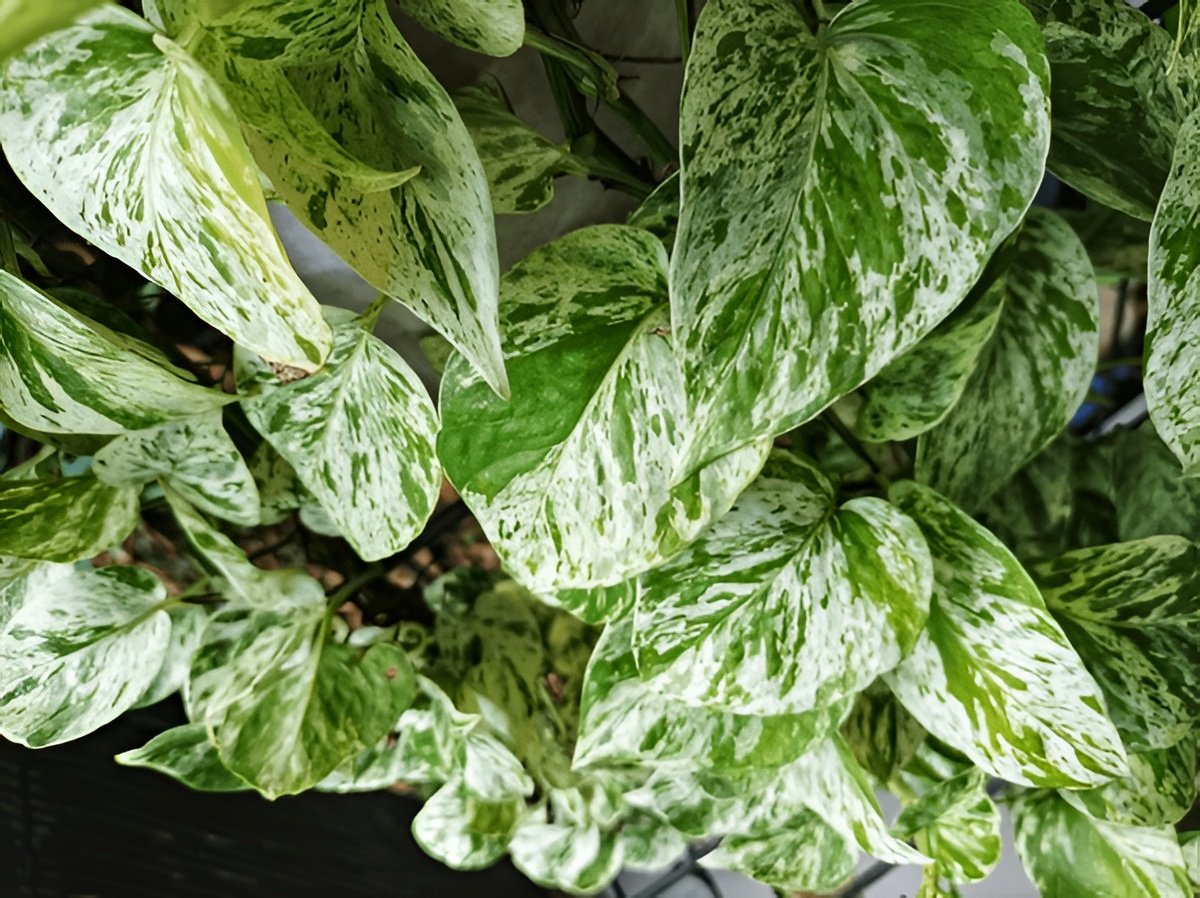
Watching the creamy sectors of Marble Queen fade into earnest green—or seeing Golden Pothos surrender its lemon freckling—can feel like a houseplant aesthetic emergency. In most cases, though, variegation loss is not permanent genetic doom; it is the plant’s frank accounting of energy economics. Variegated tissues contain less chlorophyll per area. In dim corners, the meristem “chooses” greener cells because they pay the photosynthetic rent. Move the story back toward bright, stable indirect light, manage feeding and pruning thoughtfully, and many cultivars reward you with dramatic pattern return on fresh growth.
Understanding why variegation fluctuates helps you avoid superstitions—mirrors do not coax chlorophyll magically, crystals do not replace photons—and invest in measurable inputs.
The science snapshot: chimera tissues and selective pressure
Many variegated pothos selections are chimera—or sport—lineages where genetic or periclinal layering differences create patchwork pigment. Cells that cannot photosynthesize vigorously depend on greener neighbors exporting sugars. Lower light lowers the subsidy available; meristems stabilize toward more self-sufficient green tissue. High light—with sane acclimation—raises the subsidy available to pale sectors again.
Some reversions are stubborn if the mutation was unstable from propagation; commercially, that is why respectable nurseries propagate from visibly patterned mother stock repeatedly.
Light is the primary dial for most pigment drama
Bright indirect light is the non-negotiable baseline for patterned Epipremnum aureum cultivars. “Indirect” excludes unfiltered noon sun blasting through southern glass in summer, which bleaches whites and scorches soft tissue; “bright” excludes the far side of dim interior hallways relying on bounced ceiling glow alone.
Experiment methodically over weeks: reposition half a meter closer toward a luminous window—but behind sheer fabric if midday beams are harsh—rotate weekly so all sides glimpse photons evenly. Compare new leaves only; mature laminae rarely repaint themselves wholesale.
Northern exposures in gray climates may require supplemental LED grow spectra tuned for foliage—full-spectrum fixtures placed according to manufacturer distance charts, timers mimicking plausible day lengths.
Prune reverted vines to cue patterned regrowth
If a stem runs fully green across multiple nodes despite improved light, that sector may genetically stabilize green. Leaving it attached quietly outcompetes paler budding points for hormonal signals. Trim back past the last visibly variegated node with sterile blades; roots store reserves that push fresh buds where you want artistry.
Preserve at least several leaves on vigorous plants when pruning aggressively; starvation pruning on weak specimens backfires emotionally and physiologically both.
Never compost suspiciously reverted vines into the same sentimental pot hoping pattern “spreads”; it behaves more like networked plumbing than dye mixing.
Fertilizer: necessary but overrated as a variegation switch
Nutrient scarcity can shrink leaves and muddy contrast indirectly, yet heavy nitrogen pushes lush green expansion—sometimes deepening the swampy green look newcomers fear. Prefer balanced fertilizers at conservative dilutions during active growth seasons; withhold or reduce feeds in darkest winter slowdowns indoors.
Micronutrient deficiencies occasionally yellow patterns unevenly—magnesium drama loves interveinal choruses—but guesswork mega-doses risk salt injury. Observation plus measured correction beats kitchen-sink supplementation.
Trace organic inputs like worm casting topdress behave gently but still respect “less if uncertain.”
Watering consistency supports predictable growth expression
Hydration extremes stress hormone balances; stressed plants allocate conservatively—which rarely means “invest in expensive white pigment displays.” Aim for chunky substrates allowing oxygen at roots, watering thoroughly when appropriately dry rather than dribbling perpetual surface moisture anxiety.
Healthy roots indirectly fund variegated leaf gambles upstream.
Temperature, humidity, and invisible environmental drift
Cold roots slow metabolism across the board; hotspots near radiators desiccate margins; ultra-low humidity plus mites can distort new leaves enough that pigments read oddly. Fixing those secondary stressors frees the photosynthetic machinery to flirt with bolder variegation again once light returns.
Seasonal swings indoors matter: relocate plants before summer glazing turns into ovens or winter sill drafts bite.
Age and natural maturation of certain selections
Juvenile pothos foliage sometimes reads differently before mature fenestrations or shifting texture in species like Cebu Blue—even when technically not “golden pothos lines.” Document cultivar realistically: not every pothos owes you giant white slabs forever; some subtly shift tones with cane thickness.
Retail labels misidentify aggressively; confirming cultivar aligns expectations emotionally.
Propagation choices lock in—or lose—the pattern lottery
Stem cuttings taken from boldly variegated nodes propagate more faithfully than scraps from creeping green sectors. Marble Queen notoriously throws high-white cuttings that root slowly yet look spectacular; greener cuttings sprint but disappoint visually.
Propagation medium choice—water versus moss versus soil—affects rooting speed yet matters less genetically than node selection. Maintain gentle warmth consistently.
When water-propagating, transition to chunky soil before brittle water roots become governance problems.
Pests affecting appearance without true genetic revert
Spider mite stippling bronzes whites; thrips rasp silvery corridors; fungal stipple can masquerade as pigment loss until you backlight leaves. Fixing pests restores the underlying canvas clarity.
Integrated cycles of showering leaves, diligent inspection, soaps or oils thoughtfully applied trump panic spraying everything weekly.
When reversion hints at unstoppable genetic drift
Rarely an entire specimen stabilizes entirely green regardless of greenhouse-grade light ethics. Hobbyists propagate fresh sports from greener parents hoping rediscoveries—or accept lush green grandeur with gratitude. Gardening embraces variation; catalogs sell stability, nature whispers maybe.
Patience metrics: what “getting it back” timelines look like
Expect one to two leaf generations—sometimes six to ten weeks in bright seasons—before fresh variegation reads clearly after environmental correction. Winter indoor lag can double patience requirements. Photograph petiole nodes weekly; journaling prevents anxious misremembering.
Design workarounds while you optimize conditions
Hang sheer panels to brighten corners without glare; elevate pots on overturned planters to seize unused vertical luminosity; prune lanky green runners temporarily for bushier clustered growth receiving even light—not just one apical lighthouse tip.
Mirrored trays bounce some photons but pale versus honest fixture repositioning truth.
Advanced note: supplementary lighting ergonomics
LED strips beneath shelves can halo trailing baskets gloriously—but watch heat buildup in enclosed cabinetry. Aim for diffuse, multidirectional supplementation rather than a single scalding diode inches away.
Timers matter: abrupt infinite photoperiods disturb plant rhythms indirectly through continuous stomatal choreography load.
Children, pets, and relocation ethics
Returning variegation only to leave toxic vines within toddler or cat mouth range trades one problem category for another ethically. Elevate responsibly; pothos toxicity remains non-negotiable chemistry separate from pigment joy.
Common myths debunked quickly
Painting leaves does not breed heritable sparkle. Cinnamon does not coax sectors. Loud music correlations remain anecdotal. Moon phase watering does not outperform measured soil moisture probes or honest finger audits in chunky mixes.
Integration strategy example
Picture a Marble Queen shelf-sulk two meters from a north window in December: leaves enlarge greener, internodes stretch. Stepwise plan: add a full-spectrum LED across the shelf at manufacturer-recommended hanging height, timer eleven hours, rotate weekly, prune the greenest runner back two nodes after three weeks of improved light, feed quarter-strength once new growth visibly initiates spring metabolism, scout undersides fortnightly—then reassess photographic evidence before escalating into heroic surgery.
Variegation is part physics, part genetics, part narrative patience. Steward the physics honestly, prune the genetics assertively where needed, narrate timelines calmly, and the plant usually cooperates aesthetically again.
Case studies gardeners recognize in the mirror
The “office cube fade”: fluorescent-only light slowly pushes greener leaf expansion over months—not overnight malice—until someone relocates the pot nearer a perimeter window supplemented by a discreet bar light; variegation often returns visibly on successive nodes within a couple leaf generations once photon income rises honestly.
The “panic nitrogen spring”: a well-meaning double-strength fertilizer event after idle winter sparks lush green leaps that mask white sectors without actually erasing genotype—back off dosage, brighten light moderately, prune the worst offenders, feed gently next cycle.
Micro-climate checks people skip
Warm air pooled at ceiling heights can dehydrate crowns while soil mid-pot stays wet—measuring dryness only at surface misleads—you may interpret cupped leaves as drought while roots rot quietly below. Feeling mid-container moisture through drainage holes—or using lengthened probes—closes that blind spot ethically before you escalate watering tragically opposite needs.
Photography as a horticultural instrument
Weekly top-down snapshots of consistent framing reveal variegation shifts earlier than nostalgic memory insists. Dates embedded on images reduce arguments with housemates whether “it used to look whiter”—evidence settles anxieties and guides repositioning objectively.
When to accept greener chapters happily
Interior design sometimes prioritizes tranquil green geometry over shimmering sector drama; repositioning aggressively toward photons risks clashing glare with human comfort. Selecting naturally greener cultivars for specific rooms honors realistic constraints without moral failure—you are curating coexistence—not prosecuting pigments.
Long-term stewardship mindset
Treat variegated pothos as dynamic performances, not lithographs. Celebrate seasons when artistry peaks; tolerate windows when practicality green dominates genetically conservative phases. Emotional steadiness parallels horticultural steadiness—both nourish outcomes more than frantic interventionism ever could.
If you revisit this plant years later, remind yourself cultivars marketed identically occasionally carry slightly different basal genetics from mass propagation—not every disappointment reflects personal lighting failure—but honest brighter conditions remain the honorable first hypothesis worth testing calmly before rebranding narratives despairingly.
Related Pothos Guides
- Overwatered vs. Underwatered Pothos — How to Tell the Difference
- Pothos Pests: How to Identify and Get Rid of Spider Mites, Mealybugs & More
- Pothos Diseases: Root Rot, Bacterial Leaf Spot & Other Common Issues
- Why Are Pothos Leaves Small? Causes and How to Encourage Bigger Leaves
- Is My Pothos Dead? How to Revive a Severely Neglected Pothos