
Last Updated on May 1, 2026 by Indoor Plant Nook
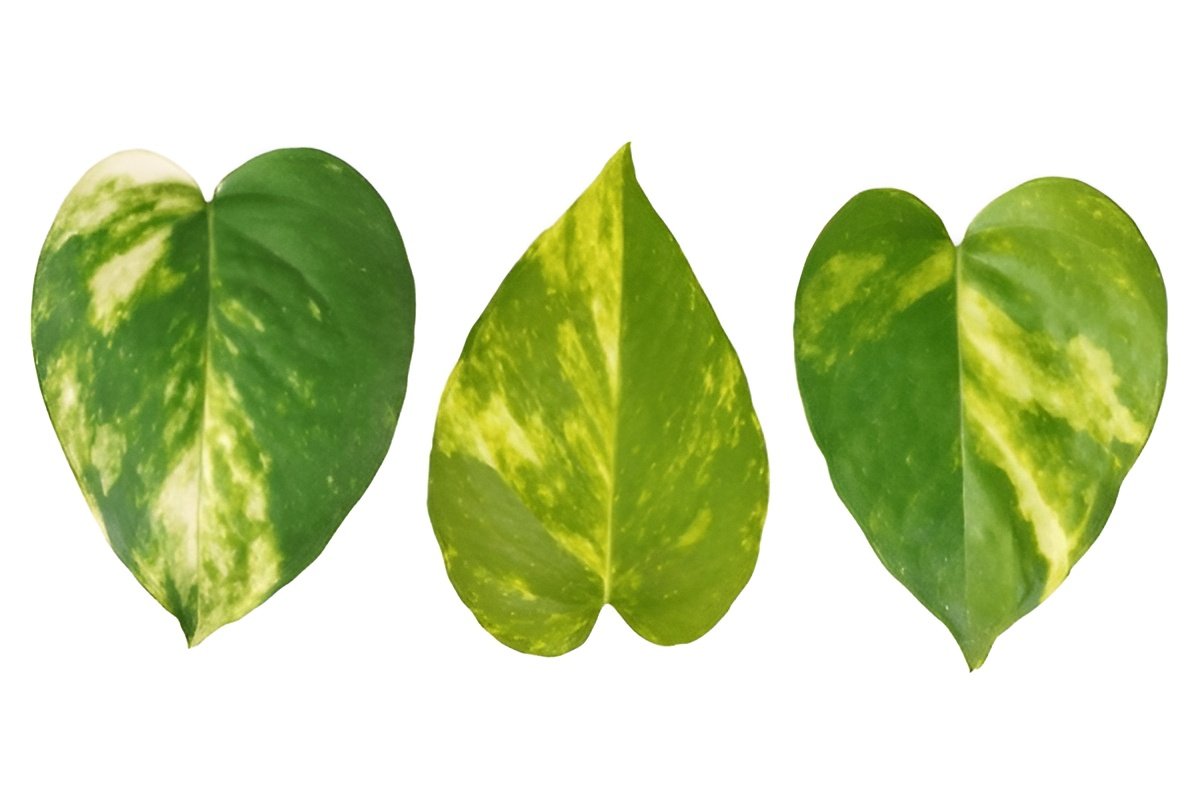
The houseplant aisles blur together: glossy heart-shaped leaves, flexible vines, forgiving reputations—and two names that shoppers use almost interchangeably, pothos (Epipremnum aureum and relatives) versus philodendron heartleaf species such as Philodendron hederaceum. Even experienced growers occasionally mis-tag a cutting in bright store lighting when labels go missing.
This comparison exists for a practical outcome: identification matters because overlapping care can hide subtle divergence in growth speed, light compensation points, pruning response, propagation quirks, pest vulnerability, and variegation behavior. Knowing which plant you truly have boosts diagnosis when leaves yellow unexpectedly, when vines stretch toward a single skylight, or when you propagate and wonder why rooting feels different from forums’ screenshots.
Photos help, yes—but memorizing macro patterns helps even when cameras lie about gloss and glare. Train your eye on stems, stipules/sheaths where new leaves emerge, petioles, leaf gloss, symmetry, rooting structures, behavior on a moss pole, and label consistency. Combined, those cues outperform single-feature guessing.
Quick identity checklist before you nitpick morphology
Ask five questions standing at your plant.
- Stem texture: Is the vine noticeably thick and slightly ridged (often grooved or “wrinkled” along its length), or slimmer and smoother?
- New leaf emergence: Does each new leaf appear from a tight, papery sheath that remains as a brownish stub, or do you see a different wrapping structure?
- Root nubs along nodes: Are aerial roots blunt, thick, and obvious even on healthy indoor humidity, or thinner and more delicate until conditions improve?
- Leaf surface: Under consistent side lighting, does the mature leaf look waxy and almost plastic-smooth, or softer with a velvety or matte heartleaf feel depending on hybrid?
- Growth habit at the same light level: Under identical placement, does one species push longer internodes faster, or stay denser?
No single answer is absolute because cultivars exist, juvenility changes leaf shape, and stressed plants distort norms. Still, the pattern usually points clearly after a week of casual observation.
Stems: The most reliable “at a glance” cue for many indoor specimens
Pothos commonly shows a stouter, more sculptural stem with visible longitudinal ridges or corrugations you can feel when rolling a vine between fingers. The stem often looks almost architectural—like soft green plumbing with subtle channels.
Heartleaf philodendron typically presents a slimmer, rounder, smoother vine that feels more like green string with evenly spaced nodes. It can still become woody at older nodes, but the youthful houseplant form usually contrasts with pothos.
Why stems matter: grooved channels affect how water and nutrients move, how mechanical strength scales for climbing, and how readily nodes root in propagation media. They also change how prone a cutting is to rot if submerged too deeply in water props—pothos often tolerates deep water contact at nodes more comfortably than some philodendrons, though either can rot with poor hygiene.
Cataphylls, sheaths, and the brown “flags” on new growth
When a new leaf unfurls, aroids often protect the baby leaf with modified tissue. Philodendron frequently leaves behind a papery cataphyll—a lingering sheath that browns and may remain attached at the node like a tiny weathered flag. That persistent brown tissue is a classic philodendron hallmark in many vines.
Pothos often appears to sheath new growth differently; the remnants may be less conspicuous or behave differently depending on developmental stage—leading to debates online—but in practice many pothos vines do not accumulate the exact same tidy brown papery sleeves as classic heartleaf philodendrons at each node sequence.
Rather than memorize Latin terms, memorize process: snapshot your plant after each new leaf. If consistent papery-brown sleeves stack at nodes, philodendron probability rises.
Petioles, leaf symmetry, and the “bend” question
Leaf shape alone misleads because both genera sport heart-ish outlines when young indoors. Tilt the leaf sideways and inspect where the sinus (the indentation at the lobes) dips and how symmetrical the halves feel.
Heartleaf philodendron foliage often conveys a softer, occasionally more symmetrical heart—even if subtle—while pothos hearts can skew slightly asymmetric with a subtly different apex curve depending on cultivar. Petioles (leaf stalks) also diverge:
- Philodendron petioles can show more pronounced curvature and a rounder cross-section sensation at the junction.
- Pothos petioles often feel comparatively stiffer relative to blade size because the blades are mechanically broader and thicker in mature sections.
Variation exists; use petioles as corroborating evidence, not courtroom proof.
Leaf gloss, thickness, and the “plastic shine” pothos earns
Retail lighting exaggerates glare, hiding actual surface texture—your phone camera may lie. In neutral daylight, pothos foliage often exhibits a thick, lustrous epidermis that looks almost laminated. Finger drag across pothos blades typically feels slicker compared with many matte heartleaf forms.
Certain philodendron cultivars shimmer too; hybrids blur lines. Gloss therefore pairs with stems and sheath patterns rather than standing alone.
Variegated representatives intensify perceptual pitfalls. Golden Pothos’s yellow streaks distort depth cues; Brasil philodendron stripes differ in tone and vascular pattern visibility. Comparison photos framed identically—for example Golden pothos next to Brasil—help more than solitary macro shots.
Aerial roots: bumps versus threads
Along each node pothos pushes thick, blunt aerial root primordia resembling pale knuckles—even when ambient humidity discourages exuberant branching. Touch them: pothos stubs feel chunky.
Philodendron vines may develop aerial roots, but indoors they often emerge fine and wispy, expanding opportunistically toward moss or humid air. Behavior matters as much as morphology: pothos rooting “confidence” boosts its reputation as the quintessential water-propagation superstar.
Propagators note secondary differences: pothos roots in water flush white and robust swiftly when temperatures are warm and light adequate; philodendron roots similarly but sometimes with marginally thinner texture early on depending on lineage and vitality.
How each plant behaves climbing a moss pole (when you bother to experiment)
Giving identical supports under identical humidity reveals temperament.
Pothos mechanically grips with stouter stems and prominent aerial roots, attaching assertively once humidity around the pole reaches moderate levels misted or passively boosted. Growth may appear “chunkier” vertically.
Philodendron, especially heartleaf types, climbs delicately—with slimmer vines that may twine or latch with thinner root pads until conditions coax stronger attachment.
If your moss pole dries constantly, pothos sometimes still bulldozers upward more convincingly purely from mass production of nodes; philodendron might hesitate until intermittent moisture returns.
Neither failure to climb indicts taxonomy—some growers never hydrate poles—but success patterns illuminate identity when combined with other cues.
Light response: stretching, chlorosis drift, internode length
Assume both sit in mediocre office lighting: pothos famously tolerates it while losing density; philodendron likewise stretches. Instead of diagnosing identity from slump alone, inspect recovery after relocation.
Move both to brighter indirect exposure for fourteen days. Pothos often thickens stems and crowds nodes faster when energy returns—a coarse generalization softened by cultivar—while philodendron may produce smaller, heartier leaves at slightly different cadence.
Variegated forms shift variegation differently under low light: highly variegated pothos may revert toward greener survival leaves; certain philodendron variegation patterns respond with color band shifts—not identical choreography but distinct enough photographers notice timelines.
Precise physiology varies; growers should treat light response as supporting evidence reinforcing structural tells.
Watering misunderstandings amplified by mistaken identity
People conflate both as “bulletproof ivy,” then overwater. Yet subtle differences emerge if you scrutinize wilt signatures—though overlap remains large:
- Chronic overwater yellowing strikes both via root hypoxia, but diagnosing early requires smell and root color regardless of genus label.
- Underwater wilt similarities confuse beginners: both soften blades and droop collectively.
Hence identity matters less during emergency revival than substrate diagnostics, but taxonomy matters culturally when exchanging cuttings—“my philo props slow” versus “your pothos water props explode”—because anecdotes often reference different plants.
Pest susceptibility and inspection angles
Both attract spider mites in dry air, mealybugs along nodes, and occasionally thrips. Inspection technique remains universal: bright LED raking light across undersides, systematic node checks, quarantine for new acquisitions.
Subtle difference: grooved pothos stems trap dust and webbing differently than smooth philodendron stems—mites exploit either, but early web visibility may appear along ridge channels on pothos.
Treatment philosophy stays integrated: improve airflow, wash foliage judiciously, rotate biological or soft pesticidal interventions, avoid pairing heavy oil sprays with scorch-risk windows simultaneously.
Misidentification rarely changes treatment; it changes psychological pacing regarding expected bounce-back timing.
Propagation lab: side-by-side “same jar” fairness test
Conduct a repeatable experiment honoring ethics of plant sharing:
- Take equal-node cuttings—including a leaf and node each—from suspected pothos versus suspected philodendron under warm stable indoor temperatures (avoid cold windowsills).
- Place in identical clean jars with chlorine-evaporated or filtered water refreshed weekly.
- Photograph roots at consistent intervals starting day five.
Observe root thickness, lateral branching, root cap translucency, time to first primordia swelling. Pothos often unveils thick white roots earlier under ideal conditions; philodendron may trail slightly—though individuals vary more than internet absolutes admit.
Soil propagation reveals moisture sensitivity differences: perlite/peat blends staying too wet punish both, yet thin philodendron stems sometimes rot at cut faces if buried excessively deep without callus.
Document your outcomes; personal data beats inherited forum dogma.
Label literacy: why stores misname plants Pathologically
Big-box retailers print batch labels from supply chains where common names float and young plants look generically heart-shaped. “Assorted foliage” could be either. Nurseries with serious aroid culture label more precisely.
When buying, ask: provenance, mother plant photos, cultivar codes. If answers vague, trust morphological triangulation over stickers.
Online swaps compound mislabel risk because lighting and compression erase stem grooves. Request side-node close-ups and video rolling a stem between fingers—serious traders oblige.
Taxonomy snapshot without drowning in Latin
Pothos in everyday commerce generally maps to Epipremnum, prominently Epipremnum aureum lineage with cultivars (Golden, Marble Queen, Neon, etc.). Cebu Blue aligns with Epipremnum pinnatum ‘Cebu Blue’ depending on lineage naming conventions—sometimes discussed separately but still pothos discourse.
Classic philodendron comparisons involve Philodendron hederaceum clones like green heartleaf, ‘Brasil’, ‘Micans’, Lemon Lime variants—each subtly shifting leaf textures.
Names evolve; morphology + provenance persists.
What to photograph for confident crowd-sourced ID
When posting forums, assemble:
- Top lighting blade photo with sinus visible.
- Underside veins sharply focused.
- Node cluster displaying emerging leaf and any residual sheath.
- Stem cross-angle showing grooves versus smoothness.
- Scale reference (coin or ruler) because macro lenses distort.
Narrate environment: light direction, watering rhythm, pot size, mix components. Context reduces mis-ID frequency.
Care convergence: where differences barely matter domestically
For most apartments, converge on fundamentals:
- Bright indirect light baseline.
- Well-draining aroid-esque mix.
- Water on dryness thresholds, not weekdays.
- Stable warmth excluding draft trauma.
- Occasional balanced fertilizer at dilute concentrations during obvious growth bursts.
Neither genus rewards soggy martyrdom or dark cupboard aesthetics long term.
Care divergence subtle enough to mention
Philodendron aficionados chasing velvety Micans textures obsess over gentle humidity arcs; pothos Cebu Blue collectors fiddle with climbs for fenestrated mature morphologies. Specialized articles explore cultivar demands.
Broad brush: pothos expresses aerial root boldness facilitating water culture experiments; philodendron climbers sometimes demand more conscientious moss pole rewetting for optimal attachment—again generalization, not law.
Myth-busting: “If it roots fast in water, it’s pothos”
Fast rooting indicates health, temperature, node vitality, light, not guaranteed genus. Cold philodendron cuttings root slowly; warm pothos cuttings explode. Reverse can appear with robust philodendron in summer.
Use rooting speed statistically, not metaphysically.
Bringing it home mentally
Separate the genera mentally by tactile stem architecture, sheath residue patterns, blunt aerial roots, laminar gloss, and cumulative climbing physics. Supplement with purposeful propagation snapshots and careful retail skepticism.
You do not require taxonomic virtuosity—just sharper observation converting vague “ivy vibes” into named companions whose quirks you anticipate.
Either plant enriches interior jungles; accuracy simply accelerates mastery when leaves speak in puzzling pigments.
Happy comparing—photograph conscientiously and trust fingers as much as labels.
Related Pothos Guides
- The History and Origin of Pothos — Where Does It Come From?
- Why Pothos Is the Best Plant for Beginners (and Everyone Else)
- Pothos Scientific Classification: Family, Genus, Species, and Name Changes Explained
- Is Pothos an Indoor or Outdoor Plant? Where Can It Grow?
- 20 Types of Pothos Varieties You Should Know About