
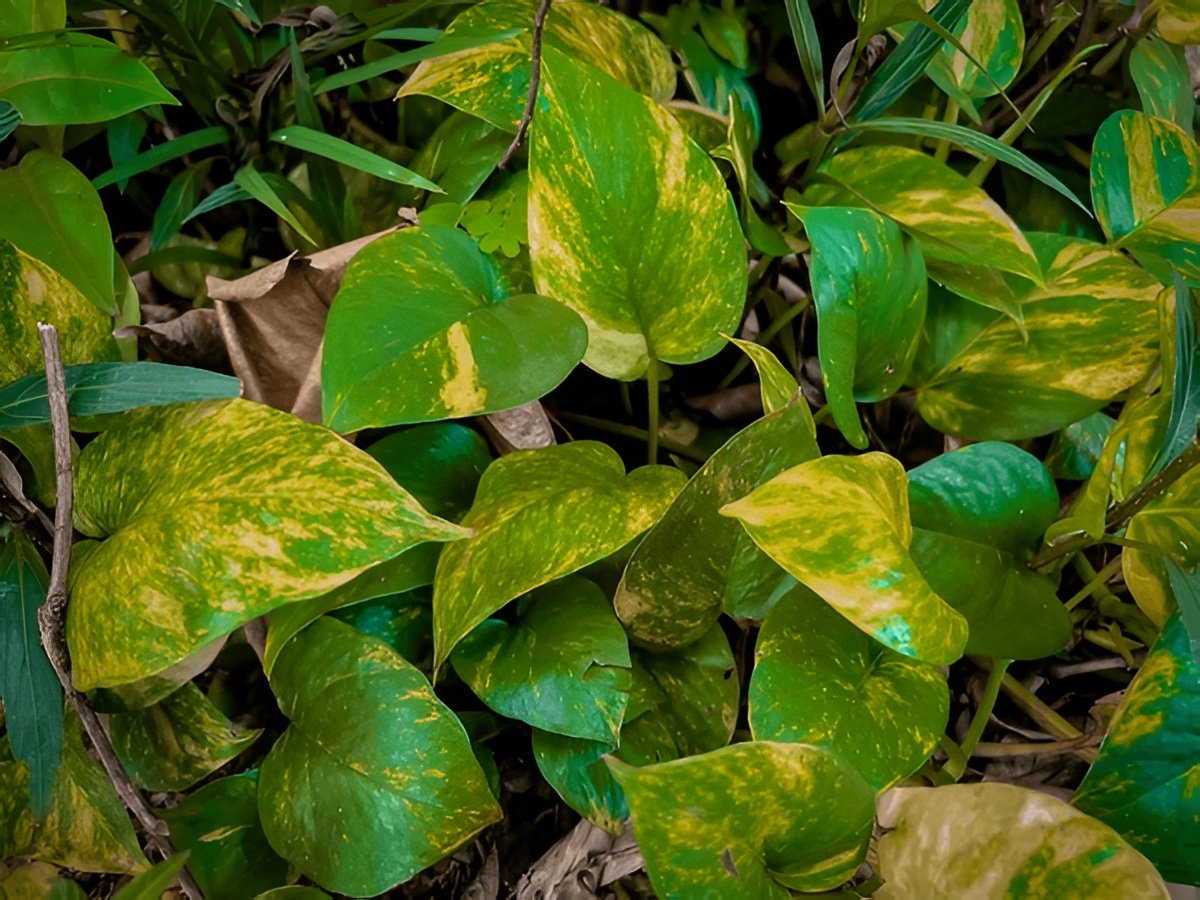
Last Updated on May 1, 2026 by Indoor Plant Nook
Popular houseplants often arrive in our kitchens as mute commodities wrapped in peat—beautiful, convenient, oddly historyless. Yet pothos carries a sprawling story spanning tropical islands, botanical exploration, nineteenth-century horticultural fashion, globalization of nursery supply chains, and the modern meme economy of propagation jars cluttering sunny windows worldwide. Tracking where pothos originates clarifies why it thrives (and sometimes suffers) indoors, why taxonomic names bounced across generations, why certain cultivars dominate commerce, and how cultural narratives attach to greenery far from ancestral forests.
This article balances botanical geography with horticultural anthropology without pretending every detail is uncontested scholarship; plant taxonomy revises labels, geopolitical naming evolves, and commercial cultivar lineages conceal proprietary corners. Nonetheless, anchors exist: pothos lineage reflects wet tropical climates, shade-tolerant vines, opportunistic climbing adaptations, dispersal mediated by botanical gardens and plantations, propagation ease amplifying introductions, culminating in pothos occupying “default houseplant” mindshare.
Understanding origin also reframes stewardship—imported beauties demand responsible disposal outdoors in frost-free climates lest they behave invasively, while indoor pots remain ethically contained arenas.
Native range in ecological context
Textbook summaries cite French Polynesia (notably Tahiti neighbors like Mo‘orea historically highlighted) alongside broader Southeast Asian and adjacent island contexts influencing modern understanding as exploration and genetic study refined maps. Ecology—not political borders—defines survival: pothos thrives in humid forests navigating dense understories with occasional brighter canopy gaps prompting climbing escalation.
Nature crafts templates indoor growers mimic unconsciously:
- Roots encounter ephemeral dryness atop bark juxtaposed moisture pockets in debris.
- Leaves angle toward chlorophyll-balanced light spectra filtered through tiers of foliage overhead.
- Vines mechanically invest in elongation scouting contact surfaces—trees, rocks, moss.
These pressures yield the familiar houseplant phenotype: elongated internodes stretching until stability returns, hearty leaves resisting mechanical tearing during attachment attempts, resilient cuticle reducing desiccation when aerial roots exploratory-probe dryer microclimates.
Botanical discovery and nineteenth-century cosmopolitan plant exchange
European imperial botanical networks circulated tropical species globally during the 1800s through glasshouse competitions, conservatory displays, aristocratic estates, missionary gardens, plantation biodiversity experiments—even if pothos lineage distribution predates imperial packaging. Catalogues transformed exotic vines into collectible foliage statements.
Scientists described and redescribed morphology as herbarium sheets accumulated; naming churn followed as collectors realized morphological overlaps between juvenile and mature leaves confused early classification. Hobbyists scarcely cared about Latin drama; conservatory curators prioritized survival under misted arches and ornamental impact.
Industrial urbanization amplified demand for forgiving indoor greenery during sooty eras when windows darkened parlors yet middle classes aspired ornamental culture. Tough-leaved climbers requiring moderate light filled niches demanding low emotional overhead.
Though precise “first pothos indoors” anecdotes resist tidy citation absent time machine, pattern recognition suffices: pothos embodies Fordist houseplant practicality bridging aristocratic conservatory heritage with mass-produced suburban windowsills post–World War II economic expansions accelerating plastic pot ubiquity.
Taxonomic wanderings explaining modern confusion
Public frustration when scientific names mutate reflects deeper labor: delineating species boundaries among plastic-developing clones, geographically separated island populations convergently resembling each other juvenilely, horticultural hybrids masquerading as wild types.
Historical handles include terms once grouped under genus Scindapsus in consumer memory (labels persist inconsistently internationally), provoking forum flame wars outsiders find incomprehensible. Modern consensus largely centralizes pothos staples under Epipremnum, emphasizing evolutionary relationships alongside philodendron relatives—but nuance survives in specialty circles dissecting Cebu Blue lineage versus canonical Golden Pothos.
Why care historically? Imported plants facing international regulation hinge on scientifically recognized names—mislabeling threatens traceability controlling invasive pathways. Hobbyists confronting collector pricing speculate provenance legitimacy via accurate IDs.
Historical naming whiplash also influences search engine archaeology: archival blog posts tethered obsolete Latin frustrate newcomers until updated glossaries unify.
Spread through nursery economies and ornamental trade
European glasshouse infrastructure seeded distribution; twentieth-century globalization scaled it. Tropical plant stock flows along:
- Cutting-based multiplication lowering cost.
- Bare-root shipments reducing freight weight ethically when legally compliant—though illicit smuggling historically threatened ecosystems.
- Tissue culture for select cultivars when laboratory setup merits investment.
Golden pothos’s visual drama combined propagation throughput propelled default retail presence. Neon and Marble variants diversified palettes without rewriting cultural care scripts drastically.
Developing nations’ ornamental export farms integrated pothos benches because turnover velocity beat slower woody shrubs for container volume economics.
Pothos in tropical landscapes beyond living rooms
In suitable climates pothos climbs road cuts, drapes municipal trees, invades disturbance edges—a cultural mirror showing exuberant vitality outdoors. Regions caution residents: ornamental release discards degrade native plant communities shading seedlings, altering decomposition cycles.
Responsible gardening includes never dumping pot soil containing viable stem fragments frost-free habitats lack seasonal reset buttons annihilating tropical vines.
Historical irony: ancestral niche specialist becomes cosmopolitan escapee illustrating humanity’s underestimated transport kinetic energy.
Contrast indoors: climatic insulation caps expansion; contained pots respect biogeochemical boundaries ethically.
Ecological education repurposes pothos popularity: discuss invasion mechanics using familiar teacher’s lounge vine tangibly.
Cultural symbolism layering atop biology
Symbolic readings vary geographically:
In some Asian diaspora communities pothos evokes prosperity narratives associating leafy circular shapes with auspicious qi circulation—localized interpretations differ; universal claims mislead.
Corporate offices adopt pothos signifying benign productivity biophilia without demanding specialized horticulture staff.
Minimalist Scandinavian interior photography weaponizes trailing vines juxtaposed rigorously restrained furniture palettes—cultural semiotics repurposing tropics-as-contrast.
Historical Victorian language-of-flowers analogies scarcely canonized pothos explicitly; symbolic modernity evolves via Instagram algorithmic amplification more than folklore continuity.
Symbolic layers influence placement choices—elevated shelving protecting pets interplay toxicological facts detailed elsewhere—not genetics.
The cultivar cascade: Marble Queen emergence economics
Historical mutation sports captured attention whenever stable variegation propagated vegetatively—not sexually—preserving clones. Stable chimeras command premiums until micro-propagation floods markets collapsing rarity pricing temporarily.
Rare cultivar hype cycles synchronize with influencer unboxings retrospectively seeming inevitable yet historically contingent.
Why origin matters for propagation ethics
Understand island endemism fragility confronting habitat loss; ethically sourced nursery stock contrasts poached wild uprooting—hopefully rare pothos—but principle extends generally.
Responsible trading involves disease awareness: pathogens hitchhiking cuttings threaten collections—historic epidemics haunt commodity monocultures.
Historical perspective teaches humility: pothos seeming ubiquitous domestically originates finite wild templates deserving conservation ethos even if pothos escapes some regions troublingly illustrating paradox.
Pothos in botanical gardens as living archives
Formal gardens archive genetic diversity safeguarding mutation discovery reservoir supporting future breeding—even if pothos overshadowed by rarer spectacle genera publicly.
Historians dissect accession notebooks clarifying lineage introduction dates though gaps persist.
Garden interpretation signage educates public linking interior biophilic trends with wild ancestry—pedagogically potent.
Academic research footprints beyond ornament
Scientists leverage pothos in studies probing:
- Indoor air rhetoric (scrutinized realistically elsewhere).
- Tolerance physiology under fluctuating VOC loads experimentally exaggerated relative homes.
- Phytoremediation conceptual prototyping though scaling debates endure.
Historical curiosity: pothos transitioned from conservatory curiosity toward low-cost model organism candidate status occasionally.
Such repurposing underscores genetic plasticity echoing ancestral disturbance adaptation.
Myths tethered vaguely to geography
Misleading claims abound:
- Myth: pothos originates exclusively dark caves—truth: shaded understory ≠ perpetual darkness physiology.
- Myth: named after Greek river god implying aquatic lifestyle—cultural naming ≠ hydrology mandates.
- Myth: Polynesian endemic label grants magical soil recipes— substrates still hinge physics.
Geographic origin clarifies realism.
Timelines synthesized compactly for mental models
Rough conceptual phases:
- Wild evolution sculpting vines under canopy filters.
- Exploration-era collection dispersing specimens across imperial networks.
- Commercial greenhouse stabilization domestically rooting cultural familiarity.
- Mass propagation & cultivar diversification aligning retail palettes.
- Digital propagation communities exploding exchange velocity globally.
Transitions overlap nonlinearly geographically.
Environmental ethics forward-facing
Owning pothos ethically includes:
Avoiding dumping clippings compost piles mild climates risking establishment.
Supporting conservation NGOs preserving island ecosystems indirectly honoring ancestry.
Selecting pest-treated imports cautiously inspecting quarantine legitimacy.
Historical awareness transforms pothos mentally from IKEA impulse into geographically situated companion.
Closing reflection
Pothos’s origin story arcs from humid forest understory scrambling toward luminous gaps through human vessels carrying leafy hope across oceans into apartments echoing climatic pocket universes artificially sustained.
Historical consciousness won’t memorize every taxonomic synonym; it fosters respect: roots deeper than peat plug—time, islands, explorers, breeders, wholesalers, influencers, toddlers pointing at dangling hearts.
Grow thoughtfully; history thrives quietly photosynthesizing beside you.
How modern plant science keeps rewriting the pothos story
Traditional plant descriptions relied on pressed specimens, handwritten field notes, and whatever mature leaves collectors could conveniently ship. Indoor pothos rarely flowers, which means gardeners often interact only with juvenile foliage—exactly the life stage most likely to make two related vines look interchangeable on a distant herbarium sheet. Molecular phylogenetics (comparing DNA to infer ancestry) tightened many relationships inside Araceae, sometimes confirming older hunches and sometimes rerouting familiar names toward more accurate cousin groups.
For you as a home grower, the lesson is practical: when a database updates a name, the update usually reflects a better map of evolutionary relationship, not a conspiracy to annoy Pinterest boards. The plant on your shelf is still the same clone; only the filing label changed. Keep photos, keep purchase receipts when possible, and when sharing cuttings online, describe the plant by both a common name and the most current scientific name you can verify from a reputable flora or curated botanical resource.
From island understory to global living rooms: a transportation story in three layers
First layer—local adaptation: In its native forests, pothos is not trying to be a houseplant; it is trying to secure light, attach to supports, and survive seasonal shifts in rainfall and humidity. Thick leaves, efficient shade tolerance, and the ability to root along stems are strategies for life in dynamic edges—places where a fallen branch opens a sunbeam or where storm litter creates a moist pocket of debris.
Second layer—human-assisted movement: Explorers, traders, nurserymen, and later global supply chains moved living material between continents. Glasshouse culture acted as a proving ground: if a plant could survive fluctuating heating systems, irregular watering from busy staff, and pest pressure in dense collections, it had a shot at succeeding in bourgeois parlors—and later in mass-market retail.
Third layer—domestic replication: Vegetative propagation turned individual introductions into repeatable inventory. Cutting-based multiplication meant the same hardy genotypes circulated widely, reinforcing the traits we now associate with “classic pothos”: vigor under bright indirect indoor light, aerial roots willing to cooperate with jars of water, and leaves that tolerate the low humidity typical of centrally heated winters.
Thinking in these layers helps decode surprising experiences. For example, a pothos grown outdoors in the tropics can look dramatically different—larger leaves, altered texture, climbing behavior amplified—than the juvenile vines dangling from rental-kitchen cupboards in temperate climates. Same lineage, different expression driven by humidity, nutrition, maturity, attachment opportunities, and year-round warmth outdoors where safe and legal.
If you remember nothing else about pothos geography
Remember this sentence: pothos evolved for warm, humid forests where vines climb toward brighter canopy gaps and where roots intermittently moisten but seldom sit in stagnant, airless mud. Carry that sentence into soil choices, watering habits, moss pole setups, drainage decisions—and into responsible outdoor restraint if you garden in climates where ornamental releases can persist in the landscape. History is not just trivia; it is a compact instruction manual written in leaves and nodes on a very long timeline.
Related Pothos Guides
- Why Pothos Is the Best Plant for Beginners (and Everyone Else)
- Pothos Scientific Classification: Family, Genus, Species, and Name Changes Explained
- Is Pothos an Indoor or Outdoor Plant? Where Can It Grow?
- 20 Types of Pothos Varieties You Should Know About
- Golden Pothos: The Classic Variety — Care, Features & Tips