
Last Updated on May 1, 2026 by Indoor Plant Nook
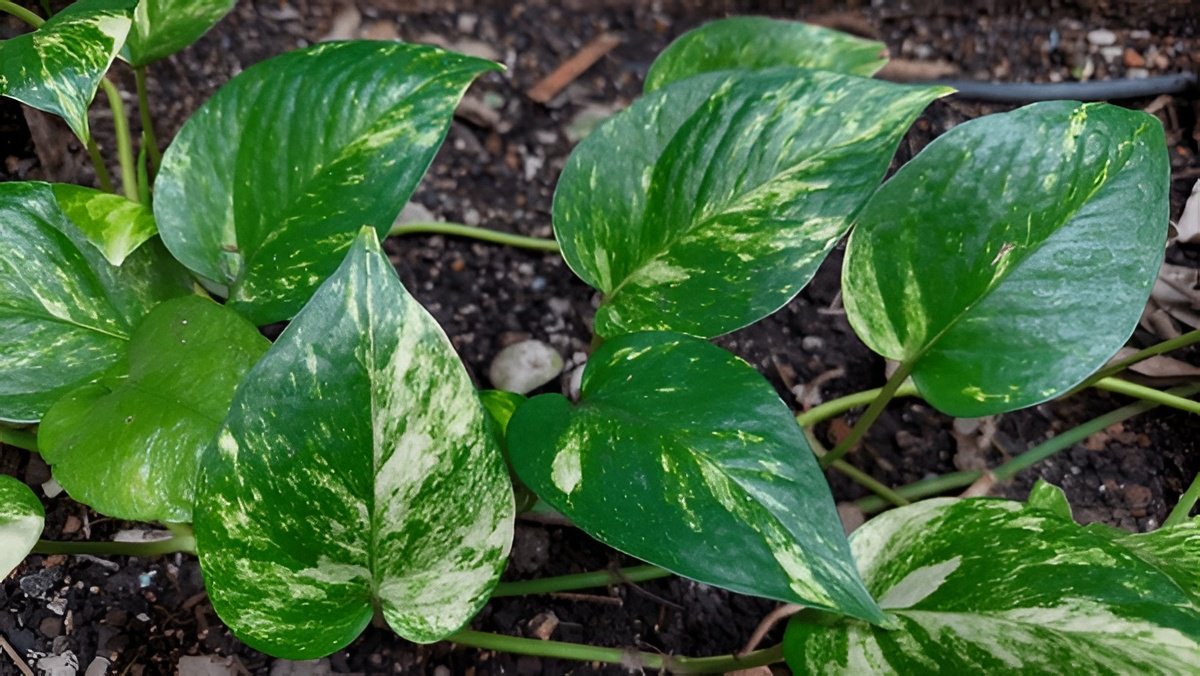
Two heavily variegated pothos cultivars often sit side by side in nursery trays, both flashing cream-and-green drama under greenhouse mist. At a glance, beginners understandably merge Manjula and Marble Queen into the same mental bucket: “fancy white pothos.” Experienced growers know the differences are consistent enough that identification becomes intuitive once you learn the tells—leaf shape, variegation architecture, growth habit, and how each responds to light.
This article compares Manjula and Marble Queen clearly: what you should see in mature foliage, how cultural needs diverge in practice, propagation quirks, shopping pitfalls, and how to choose between them for your space.
Shared foundation: both are variegated pothos with similar core needs
Manjula and Marble Queen are sold primarily as Epipremnum aureum cultivars—houseplant pothos with trailing or climbing habits, aerial roots at nodes, and baseline preferences for bright indirect light, well-draining chunky mixes, between-watering dry-down, and stable warm temperatures.
Because both carry abundant pale tissue, they tend to grow slower than Golden or Jade pothos and may show more dramatic yellowing if overwatered in heavy substrates. Nutrition, pests, and pot size interact the same way: roots first, lifestyle second.
From there, the divergence is mostly morphology and the aesthetic logic of variegation patterns.
Marble Queen: the painterly marbling archetype
Marble Queen’s signature is organic swirls: white and green intermingle like marble slab veining, often flowing lengthwise along the leaf. Leaf shape is generally heart-shaped with a typical pothos tip—familiar and consistent with what most people visualize as pothos leaves.
Growth can be rangy and vigorous relative to some novelty cultivars, though still not identical to Golden. Marble Queen vines can look dramatic in hanging baskets and on poles when given adequate light to maintain contrast.
Under lower light, Marble Queen often greens up—a recognizable survival strategy—sometimes losing crisp separation until conditions improve.
Manjula: wavy margins and patchier variegation blocks
Manjula stands out for leaf undulation: edges often wave or ripple, producing a sculptural silhouette even before you analyze color. Variegation frequently reads as irregular patches—creamy islands, speckles, and streaks—rather than smooth marble rivers across the entire lamina.
Leaves can appear slightly broader or rounder overall compared with typical Marble Queen specimens, though nutrition, juvenile vs mature growth, and propagation lineage create real-world spread. The gestalt is “wavy and painterly in chunks” versus “classic heart with marbled veins.”
Manjula can also be marketed under different branding depending on region and patent story; trust morphology more than hype.
Side-by-side identification checklist (practical)
When comparing plants in person:
- Margin shape: Strong waviness suggests Manjula; smoother margins suggest Marble Queen—allow for individual leaf variation.
- Variegation flow: Marble-like continuous veining vs patchy islands leans toward the names you expect from those descriptors—exceptions exist, but trends help.
- Leaf rigidity and texture: Manjula leaves sometimes feel subtly thicker or more sculptural; tactile cues support visual ones in good lighting.
- Stem spacing: Environmental factors dominate, but paired specimens grown under identical light can reveal slightly different internode habits depending on lineage.
Photography tip: diffuse daylight reduces glare on white sectors—phone flashes blow out detail and obscure differences.
Light needs: both want brightness, but forgive differently
Neither cultivar is ideal for dark hallways if your goal is maximum ornamental contrast. Bright indirect light remains the default prescription.
In practice, some growers report Manjula holding interesting patterning under marginally less ideal conditions than super-white Marble Queen clones—but anecdotes are not guarantees. If you refuse supplemental lighting and your apartment is genuinely dim, lean toward greener cultivars rather than expecting snowy miracles.
Direct sun requires careful acclimation for both; pale sectors burn faster.
Watering and soil: identical principles, slightly different risk profiles
Because both can be slower drinkers than Golden Pothos in the same soil volume, match pot size to root mass and prioritize mixes with perlite, bark, or similar aeration amendments.
Chronic overwatering reveals itself as yellowing leaves, sour soil smells on sniff tests during repot, and sometimes stem softness at the base—intervene early.
Winter slowdown means slower watering cadence; summer brightness can increase frequency. Log watering if you juggle multiple cultivars—memory lies.
Fertilization: feed gently, read the leaves
Balanced liquid fertilizers at dilute strengths during active growth suit both. If white areas go thin or leaves reduce in size despite good light, audit root health before chasing micronutrient folklore.
Propagation differences worth knowing
Both root from nodes. For aesthetic continuity:
- Marble Queen cuttings often yield marbled offspring reliably if the mother shows stable variegation.
- Manjula cuttings likewise propagate, but if your source plant is weak or mislabeled, you might duplicate an impostor—verify mother morphology.
Avoid all-white leaves without chlorophyll when possible; include balanced green sectors for sustainable new vines.
Pest visibility
White-heavy leaves display spider mite stippling harshly—weekly undersurface checks pay dividends for both cultivars.
Price, availability, and mislabeling
Marble Queen is widely produced; Manjula may cost more or appear less often depending on your market. Mislabeling happens in both directions due to similarity under poor light and immature leaf stages.
If a shop sells “rare Manjula” for extreme prices, demand clear mature-leaf identification or wait for a reputable source.
Design uses: which fits your interior goal?
Choose Marble Queen if you want classic pothos heart leaves with flowing marble veins—ideal symmetrical baskets and traditional indoor jungle styling.
Choose Manjula if you want wavy, sculptural foliage that reads designer on minimalist shelves—fewer straight lines, more playful silhouettes.
Toxicity note
Treat both like standard pothos: potential toxicity if ingested for pets and humans, consistent with common arum-family guidance. Placement and prevention are practical priorities.
Myths and forum arguments
Myth: They are identical except marketing. Reality: Mature morphology usually diverges clearly with experience.
Myth: Manjula needs misting to keep waves. Reality: Leaf shape is developmental/genetic; misting is not a geometry dial.
Myth: Marble Queen must be fed more because it is whiter. Reality: Feeding cannot replace light; excess feeding stresses roots.
Environmental stress signatures shared by both
- Brown crispy tips: Possible low humidity plus excessive fert salts or uneven watering—eliminate variables methodically.
- Brown patches on white sectors: Often mechanical damage or focused sunburn—map leaf orientation to light sources.
- Tiny leaves: Low light, root confinement, or nutrient issues—check in that order.
Choosing one if space is limited
If you can only keep one high-variegation pothos near a bright window, pick based on aesthetic preference rather than imagined difficulty tiers—they are peers in demands, not opposites.
If your window is marginal, neither may satisfy you photographically; consider Global Green, Jade, or Golden until lighting improves.
Closing synthesis
Marble Queen is the classic marble-veined heart leaf; Manjula is the wavy, patch-variegated sculpture. Care fundamentals overlap almost completely; difference lives where plant styling lives—in leaf architecture and how variegation distributes across the blade. Learn those cues and you will never confuse trays again, even when nursery tags swap names.
For deeper dives, explore cultivar-specific care articles on Marble Queen’s whiteness strategy and broader variety overview lists—context reinforces identification confidence faster than memorizing marketing copy.
Nursery shopping: asking better questions before you pay
When both cultivars sit in the same greenhouse tray, ask when they were last watered and whether they have been kept under shade cloth—recently dry, perky leaves paired with airy mix are better signals than glossy marketing stickers. If immature leaves look ambiguous, request a view of older leaves farther back on the vine; juvenile foliage blurs differences that mature blades clarify.
Transport both like temperature-sensitive tropicals: avoid leaving them in cold car trunks in winter or hot sealed vehicles in summer. A single afternoon of temperature abuse can produce marginal burning that confused beginners blame on watering the next week.
Long-term styling on moss poles
Both cultivars can climb, but wavy Manjula leaves create a different silhouette along vertical planes than Marble Queen’s broader hearts—choose poles tall enough for your ceiling realities and tie vines gently without snapping brittle variegated blades. As canopies ascend, light on lower leaves drops; expect some lower yellowing as natural shading increases, and prune or reposition if the aesthetic bothers you.
Water-quality and residue notes for pale variegation
Pale leaves show water spots and fertilizer residue clearly. If your tap water is hard, consider allowing a short settling time or using filtered water for top irrigation if crust becomes visually distracting—this is an aesthetic and mild salt-management choice, not mandatory chemistry for every household.
Building a photo reference library
Snap your own chronological photos under consistent indoor lighting; commercial greenhouse images distort colors. Over months, a personal album teaches you what your Marble Queen and Manjula look like in honest home conditions, which beats comparing your plant to overly edited internet thumbnails that assumed different light and lenses.
Propagation expectations if you multiply either cultivar
Both Manjula and Marble Queen propagate from stem nodes like other pothos clones, yet highly pale segments may establish more slowly unless each cutting retains workable green pigment. When trading cuttings online, disclose whether foliage is juvenile or mature, whether the donor plant climbed or trailed, and whether variegation has been stable through recent seasons indoors.
If the label still bothers you after reading comparisons
Treat uncertain IDs as provisional: root the plant responsibly, observe new leaves across several months in consistent bright indirect light, and revisit comparison photos quarterly. Naming precision matters for trades and pricing—but care fundamentals stay anchored in drainage-first soil, humane pest scouting, and seasonal watering awareness until your eye trains itself automatically.
Related Pothos Guides
- Cebu Blue Pothos: Rare Care Guide & Where to Buy
- Jessenia Pothos vs. Marble Queen — Side-by-Side Comparison
- Pearl and Jade, Snow Queen, Baltic Blue & Other Rare Pothos Varieties Explained
- Pothos Care Guide: Everything You Need to Know in One Place
- How Much Light Does Pothos Need? (Low Light vs. Bright Indirect)