
Last Updated on May 1, 2026 by Indoor Plant Nook
Houseplant commerce loves adjectives—Pearl, Jade, Snow, Baltic—words that hint at frost, silver seas, or arctic fantasy. Behind marketing, you mostly find a manageable set of biological realities: cultivars of Epipremnum aureum with different variegation mechanics, plus a few closely related species sold beside them because they occupy the same mental shelf space as “pothos.”
This explainer demystifies commonly hyped names, clarifies what shoppers should inspect on real plants, outlines practical care priorities for variegated and blue-toned selections, and offers a grounded perspective on rarity—without pretending labels are perfectly standardized worldwide.
Pearl and Jade: speckled elegance in compact packages
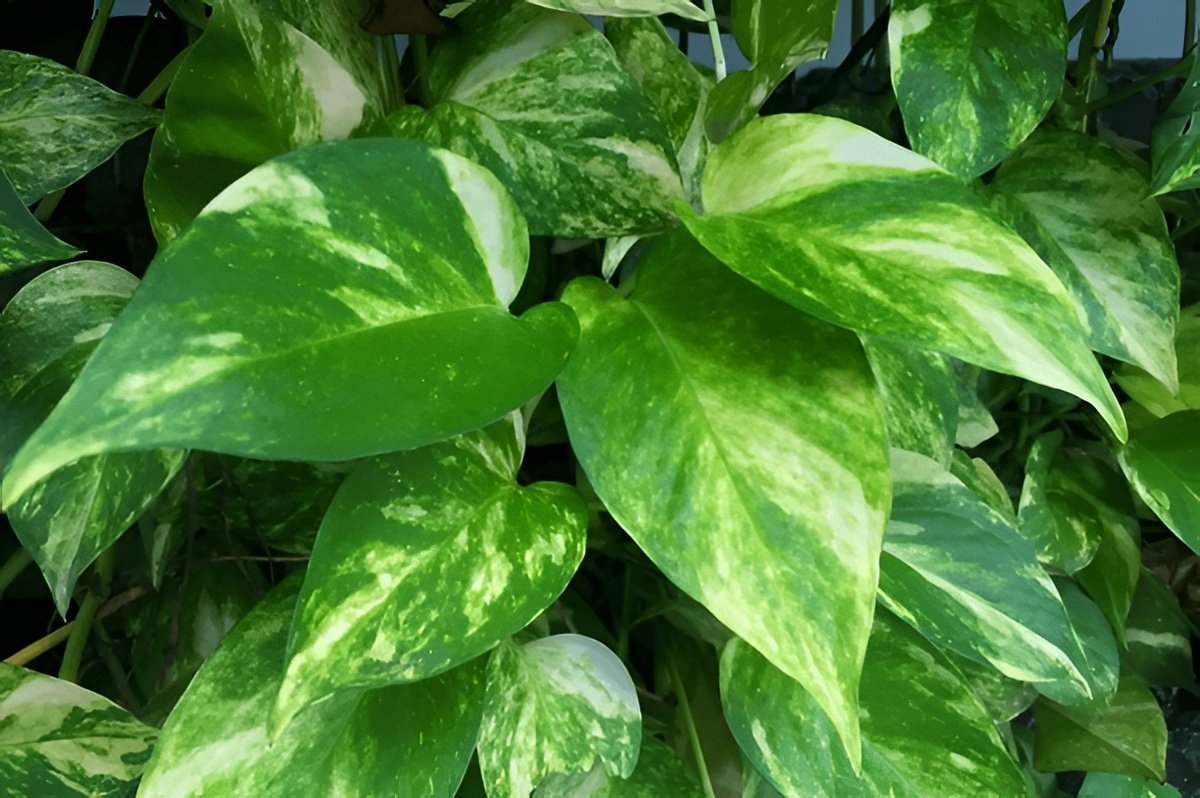
Pearls and Jade (sometimes styled Pearl and Jade) is widely understood as a variegated Epipremnum aureum cultivar with green leaves marked by white and silvery-gray patches—often with sectioned or edged patterning depending on maturity and clone line. Growth can be compact relative to rangy Golden Pothos, making it attractive for desks and small shelves.
Care priorities mirror other variegated pothos: bright indirect light for pattern crispness, chunky well-draining soil, watering after real dry-down rather than calendar autopilot, and pest checks because damage shows on pale regions.
Shopping pitfall: confusion with N’Joy and Glacier—leaf shape, variegation distribution, and growth habit separate batches more reliably than price tags. Ask for multiple mature leaves when comparing.
Snow Queen: icy naming, familiar physics
Snow Queen is commonly described as extremely white-heavy relative to Marble Queen—sometimes appearing more frosted overall. Naming overlap exists; some specimens blur boundaries between Snow Queen and Marble Queen depending on nursery lineage and light history.
Rather than debating internet taxonomy, treat Snow Queen as high-contrast, light-hungry variegation: it generally rewards bright indirect exposure and suffers in soggy substrates. If you cannot supply adequate light, expect greener new growth—biology budgeting energy, not personal insult.
Propagation tip: include chlorophyll in cuttings; all-white leaves can struggle long-term.
Baltic Blue: deeper green and climbing intrigue
Baltic Blue pothos branding often points to selections associated with Epipremnum pinnatum genetics rather than classic E. aureum—narrower leaf vibes and narratives about earlier fenestration under climb support in favorable indoor setups. Outcomes vary with genetics, light, and patience; avoid treating marketing copy as promise.
Care stays anchored in bright indirect light, strong drainage, support if you chase mature morphology, and humidity as a supportive factor rather than a cure-all.
Because Baltic Blue discussions trend collector-adjacent, prices fluctuate—verify leaf shape before paying premium rates for mislabeled standard green pothos.
“Other rare pothos varieties” worth knowing conceptually
Rare is regional. In one city, Cebu Blue is everywhere; in another, still special. Instead of chasing hype lists alone, learn categories:
White variegated heart-leaf types: Marble Queen, Snow Queen, N’Joy, Glacier—pattern and habit differentiate.
Green-on-green intricacies: Jessenia—mosaic subtlety.
Neon forward: Neon—chartreuse impact.
Global tonal stripes: Global Green—graphic green-on-green patches.
Silvery-blue textures: Cebu Blue—cool tone anchor.
Sculptural waviness: Manjula—undulating margins.
Understanding categories protects you when sellers rename familiar clones.
Universal care triad for “rare” pothos aesthetics
- Light honesty – Bright indirect wins; direct sun only with acclimation; dim spaces mute rare looks.
- Root-zone oxygen – Chunky mixes, sane pot sizing, drainage holes non-negotiable for long-term rare-plant stewardship.
- Observational watering – Seasons shift; light shifts; root mass shifts—schedules should bend.
Where rarity becomes risk: pricing, poaching narratives, and patience
Not every rare story is ethical panic, but spikes in demand encourage questionable listings. Practical shopper habits:
- Compare multiple neutral-light photos of mature foliage.
- Avoid plants with yellowing median leaf counts in shop trays unless you know how to rehab root issues.
- Quarantine new arrivals briefly when integrating into dense collections.
- Refuse to treat “rare” as permission to skip drainage for pretty cachepots—luxury planters should still engineer hidden drainage or inner liners.
Propagation realities across these cultivars
Most Epipremnum aureum selections root from nodes in water, moss, or fine soil mixes. Species like E. pinnatum selections also root from nodes but may differ slightly in speed and preferred warmth.
When trading cuttings, document mother plant photos—names drift, morphology persists.
Pest and disease visibility
Pale variegation highlights mite damage early—advantageous if you respond. Blue-toned leaves can hide stippling until populations boom—inspect anyway.
Bacterial or fungal leaf issues occasionally appear in crowded greenhouses; buy from sources that ventilate well and avoid purchasing obviously wet, damaged lots “for deals” unless you enjoy pathology hobbies.
Toxicity caution across the group
Treat these plants like typical arums: commonly described as problematic if ingested for pets and humans. Elevate trailing vines, supervise animals, seek guidance if ingestion occurs.
Display strategies that respect foliage strengths
Pearls and Jade shine in tabletop compositions with ceramics; tiny leaves reward close viewing.
Snow Queen rewards hanging positions where indirect light can kiss leaves evenly—rotate to avoid one-sided snow melt toward green.
Baltic Blue suits vertical aspirations—provide poles if you test climbing aesthetics; be patient.
Light + fertilizer interaction myth-busting
Rare labels do not change chemistry basics. Fertilizer cannot replace photons for variegation clarity. Over-fertilization risks salt injury especially in small pots with heavy water retention—always lighter than manufacturer ego suggests.
Acclimation after shipping or shop transfer
New plants need stable middle-ground conditions: no immediate repot unless emergency, no harsh sun first day, no drowning “to help it settle.” Observe perky leaves and root-bound clues before dramatic interventions.
Climate notes for outdoor summer experiments
Some growers move pothos outdoors in warm months—shade-first acclimation, excellent drainage, pest checks before reentry. Frost remains adversary number one.
Collecting philosophy
Collect because you love living design, not because fear-of-missing-out hijacks budgets. A thriving Glacier on a bright shelf beats a dead “unicorn” in a dark foyer.
When names fail, skills succeed
If your Pearl and Jade arrives mislabeled but healthy, you still win—care skills transfer across cultivars. Learn moisture, light, and roots; names become secondary annotations.
Closing perspective
Pearl and Jade reward tidy variegation lovers; Snow Queen rewards high-contrast devotees with strong windows; Baltic Blue rewards cool-tone climbers chasing mature silhouettes—hopefully with patience. The houseplant world will keep rebranding familiar genetics; your counterstrategy is simple: look at leaves, test roots, match environment to metabolism. Master that, and rarity becomes a fun label rather than a gamble.
Pair this explainer with broader variety lists and cultivar-specific deep dives—each reinforces the others until shopping feels calm instead of chaotic.
Bench-marking “rare” against your actual light budget
Before chasing Baltic Blue or ultra-white Snow Queen selections, map your brightest usable shelf across the whole year honestly. Foliage marketed as rare still needs photons; dim real estate turns premium labels into expensive green disappointment. Skills advance faster when scarce plants receive scarce window access deliberately rather than competing with every impulse buy.
Gift purchases and recipient realism
Pearl and Jade and similar compact cultivars can make considerate gifts when you include brief guidance on drainage and bright indirect light. Snow Queen gifted into a dim office with no realistic lighting upgrade may become a public struggle—match cultivar drama to recipient environments so generosity does not quietly guilt anyone.
Repot and soil refresh signals across variegated types
If several novelty cultivars share old heavy peat mixes, they may decline together after a year or two—not a mysterious curse, but synchronized media collapse. Refresh chunky structure on a sensible schedule, especially for pale variegation that telegraphs stress faster than all-green companions on the same shelf.
Integrated pest management humility
Briefly quarantine new arrivals when you expand collector-leaning shelves; one mealybug hitchhiker scales into a weekend chore across five pots. Physical removal plus disciplined repeat checks often beats dramatic one-day chemical theater in average homes.
Recordkeeping for rename madness
Maintain a simple log with purchase date, vendor, and photo links. When commerce renames erupt online, your dated photos anchor identity better than argumentative forums.
Fragrance, cleaners, and delicate variegation
Household sprays and concentrated volatile organics near open windows can deposit films on leaves that mute both speckle and snow—rinse occasionally if you paint, polish furniture, or deep-clean nearby. Air purifiers help particulates but do not replace gentle leaf hygiene on plants living beside busy streets.
Repotting timing when labels disagree
If you buy Snow Queen that might be Marble Queen but health is perfect, repot on root schedule rather than identity anxiety—observe next dozen leaves in your light before spending emotional energy on taxonomy appeals online.
Insurance cuttings for expensive scores
When Baltic Blue or Snow Queen prices pinch budgets, stash one rooted backup cutting separately—loss happens via radiators, pets, and moving trucks. Propagation redundancy is cheaper than midnight replacement shopping at inflated rarity pricing.
Rental moves and pothos resilience
Rare-label plants suffer moving trucks like any temperate possession—insulate against cold snaps, secure pots so soil does not compress roots, and delay dramatic repot weeks until spaces stabilize. Document pre-move foliage so post-move comparisons reflect reality rather than anxious imagination.
Bright indirect light as the universal translator
Whatever shorthand labels appear on tags, bright indirect exposure plus oxygenated soil translates most “rare pothos” stress signals into fixable problems faster than cross-referencing forum drama nightly. Invest in a trustworthy light map of your apartment before investing sequentially in hyped cultivars that all demand the same photon budget.
Year-round repositioning for novelty cultivars
Rare labels still obey ordinary physics: autumn sun angles stream deeper into rooms compared with midsummer geometries, repositioning pothos subtly as seasons turn prevents one sided bleaching especially white heavy snow queen adjacent selections thoughtfully periodically paragraph—
Rare labels obey ordinary physics: as seasons change, sun angles migrate across interiors; rotate and shift pots thoughtfully so Baltic Blue climbers and snowy cultivars harvest light evenly rather than stressing one façade all winter while the opposing side fades.
Related Pothos Guides
- Pothos Care Guide: Everything You Need to Know in One Place
- How Much Light Does Pothos Need? (Low Light vs. Bright Indirect)
- How Often Should You Water Pothos? (Beginner-Friendly Watering Schedule)
- The Best Soil Mix for Pothos — What to Use and What to Avoid
- What Is the Best Pot for Pothos? (Material, Size & Drainage Tips)