
Last Updated on May 1, 2026 by Indoor Plant Nook
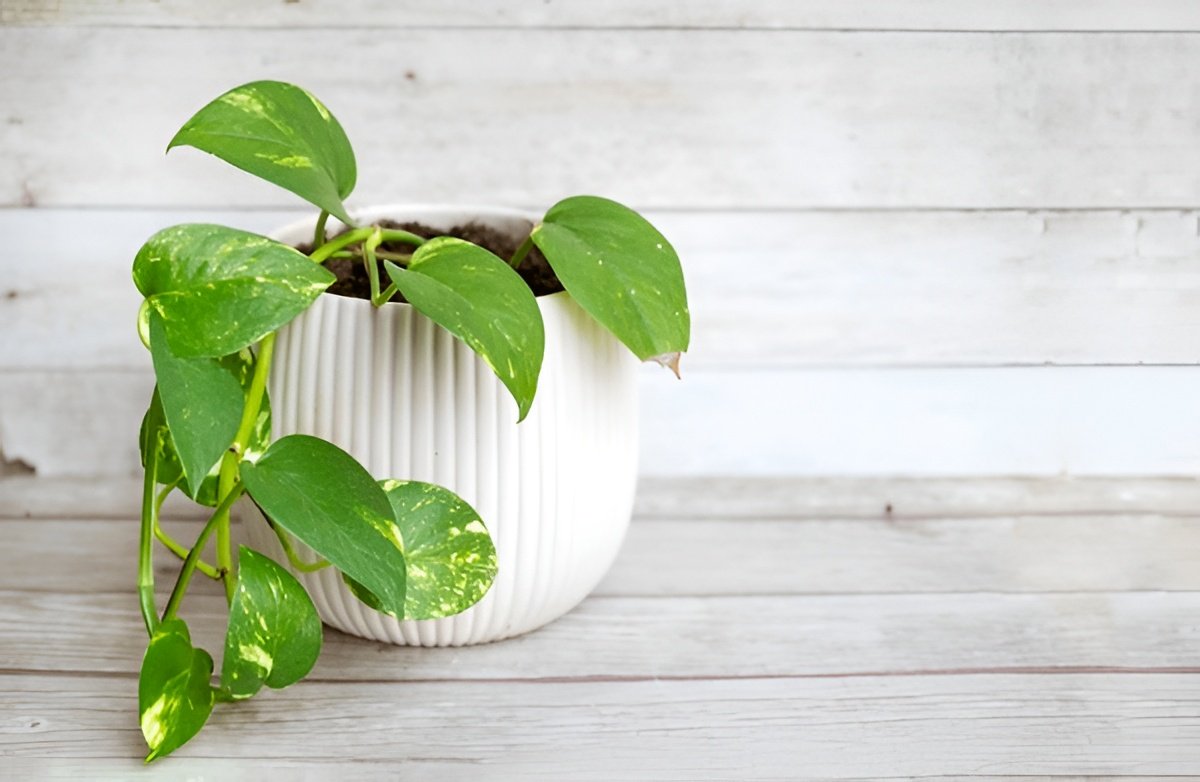
If you bought a small pothos expecting a jungle in a month, you may feel either delighted or disappointed—pothos (Epipremnum aureum and common cultivars) can grow surprisingly fast under ideal conditions, yet “ideal conditions” are easy to assume and hard to guarantee indoors. Growth rate is not a single number stamped on the nursery tag; it is an outcome of light, temperature, root space, nutrition, humidity, pest pressure, and genetics, all filtered through the seasons. This guide explains what “fast” means for pothos, how to interpret growth realistically in a home, and which variables move the needle the most.
What fast growth looks like on a pothos
Pothos is a vining aroid that elongates stems from nodes, producing leaves at intervals determined by vigor and environment. In strong indoor conditions—bright indirect light, warm stable temperatures, healthy roots, appropriate watering—you might observe:
- New leaves appearing on active vines every week or two during peak seasons
- Noticeable vine extension over a month along trained supports or trailing lines
- Bushier appearance after pruning redirects energy to lateral buds
In weaker conditions—dim corners, cool rooms, crowded roots, chronic pest stress—growth may continue, but it becomes thin: longer gaps between leaves (stretched internodes), smaller leaf size, and slower rooting if you propagate.
Neither extreme means the plant is “broken.” It means growth rate is an expression of resources.
Seasonality indoors: winter slow, summer surge—usually
Even indoors, many pothos respond to photoperiod and seasonal light changes. Northern winters bring shorter days and weaker window light unless supplemented. The same plant that rockets in June may appear to pause in January. If your home runs warm in winter and you add grow lighting, seasonal effects blur—but they rarely vanish entirely.
Soil drying patterns also shift with the seasons. In winter, pots may stay moist longer; in summer, brighter light and warmer air may accelerate drying. Your watering schedule must drift with that rhythm, not fight it. Chronic overwatering in a slow season creates rot that masquerades as “slow growth.”
Light is the primary accelerator—within reason
If you want one lever that most predictably increases growth rate without special gadgets, improve light quality. Pothos tolerates lower light better than many houseplants, but tolerance is not optimum. In dim sites, survival-first physiology dominates: the plant may maintain leaves while extending stems toward brighter areas, producing the classic “leggy” look.
Bright indirect light generally supports:
- Tighter spacing between leaves on many cultivars
- Larger mature leaves on climbing specimens with adequate support (growth form matters)
- Better expression of variegation on types that bleach out in shade—though some highly variegated leaves are inherently less productive photosynthetically
Direct midday sun through glass can burn leaves, so the goal is bright without scorching. A few feet back from a strong window, or beside a window with gentler morning light, often hits the sweet spot.
Temperature and metabolic speed
Warmer stable indoor temperatures within a comfortable human range tend to support faster metabolism and faster root activity, assuming other factors align. Very cool rooms can slow growth without showing obvious distress immediately. If your pothos stall in winter, check both light and temperature before buying more fertilizer.
Roots and pots: underground limits on top growth
A rootbound plant can still grow, sometimes surprisingly—but as roots crowd, thirst swings become harsher and nutrient access can suffer. If water races through the pot or the plant wilts quickly no matter what, root congestion may cap growth. Repotting into a sensibly larger container with fresh, airy mix often unlocks a growth spurt—not magic, just restored capacity.
The opposite mistake—too large a pot—can slow visible growth while roots struggle in anaerobic wet margins. If growth is absent and soil never dries, reassess pot size and drainage before blaming genetics.
Nutrition: helpful, not a substitute for fundamentals
Pothos is not a heavy feeder compared to some flowering houseplants, but limited nutrients can cap leaf size and vine extension, especially in inert or exhausted mixes. A diluted balanced fertilizer during active growth can help—emphasis on diluted and not daily. Excess fertilizer causes salt buildup, leaf burn, and root damage that slows growth dramatically.
If you fertilize aggressively while light remains low, you do not synthesize more energy; you mainly increase risk. Match feeding to actual growth pace.
Water: consistency beats extremes
Both drought stress and chronic soggy soil reduce growth. Underwatering can slow expansion because the plant conserves; overwatering damages roots, reducing uptake. The grower habit that supports steady growth is observation: learn your pot’s dry-down cycle and water deeply when appropriate.
Humidity and air quality: secondary, situational
Extremely dry air can increase marginal browning on tender new growth in some homes, but pothos often grows quickly in ordinary humidity if other factors are strong. Address glaring microclimates—vents, radiators—before assuming humidity is the growth bottleneck.
Pests and stealth throttling
Spider mites, mealybugs, and scale can sap vigor while you blame the season. Inspect undersides, nodes, and new growth regularly. Growth can “stall” while pests drain resources even before obvious webbing appears.
Cultivar differences: not all pothos grow identically
Golden Pothos is often described as vigorously climbing in suitable setups, while some highly variegated cultivars may grow more slowly because leaves contain less chlorophyll. “Slow” variegation is not failure; it is biochemistry. Compare any plant to a fair standard—its own recent performance under improved care—not to a different cultivar on Instagram.
Training affects leaf size and visual impact
Climbing pothos supported on a moss pole or board can develop larger leaves with maturity compared to long-term trailing in dim conditions, because growth form interacts with light capture and stability. Training does not change time itself, but it changes the experience of growth in your space.
Measuring growth like a gardener, not an accountant
Instead of demanding inches per week every week of the year, track markers:
- Frequency of new leaves on your fastest vine
- Whether new leaves are increasing or decreasing in size
- Internode length as a rough “stretch meter” for light adequacy
- Root health cues (wilting pattern, pot dry-down time)
If three of those trend negative together, you have a diagnosis path—light, roots, pests, watering—rather than a mystery.
Season rhythms, feeding, and cramped roots
Indoor pothos often accelerates as late winter lengthens daylight—even before fertilizers change—because longer photoperiods raise the plant’s metabolic ceiling modestly. Mild feeding during active spurts can deepen color and support new leaves when drainage and occasional flushing keep salts honest; it does not replace midwinter sluggishness when shortened days are genuinely the limiting factor.
If growth feels flat through bright midsummer anyway, inspect the root ball for tight circling that quietly throttles new node spacing despite glossy foliage above the rim. Refreshed chunky soil in a proportionate pot—timed with warm active growth—often unlocks another season of visible inches.
Realistic expectations for busy humans
A pothos in medium light, decent soil, and reasonable watering may grow moderately forever and still be a wonderful plant. Chasing maximal growth is optional. What matters for most households is steady health: fresh leaves sometimes, no rot smell, and vines that respond when you finally move it to a better window.
Benchmarks without pretending to be a laboratory
If you enjoy data, keep a simple monthly photo from the same angle and note the date you last repotted, last fertilized, or moved the plant. You are not measuring scientific growth velocity; you are catching drift early—stretching internodes before they become aesthetic regret, or slowed dry-down before it becomes rot. Compare your plant to itself, not to a greenhouse photo where light, humidity, and fertilizer timing differ entirely. Outdoor summer growth in a temperate climate can look explosively fast compared with a dim apartment winter; naming that contrast prevents you from declaring “my pothos stopped loving me” when the season changed.
Shared spaces: roommates, offices, and variable care
Growth rate often changes when the watering agent changes—roommate rotations, office weekends, travel weeks. Pothos tolerates occasional misses, but growth may plateau during inconsistent spells not because the species “stalled,” but because it is spending resources repairing minor drought or minor overwater oscillations. A written note near the pot (“do not water unless soil is dry two knuckles down”) is unglamorous and surprisingly effective.
Pothos growth rate is flexible drama: it can explode when conditions align, and it can coast when life happens. Your job is to align the big three—light, roots, water—and let the plant do what it does best: grow forward, node by node.
Growth-rate FAQ (quick answers)
If I fertilize more, will growth speed up? Only if light and roots are already strong. Extra salts on a dim, stressed plant mostly raise burn risk without producing meaningful new tissue.
Why did growth stall after repotting? Transplant shock and disturbed roots can pause expansion for weeks. Verify drainage is sound and avoid watering on autopilot while the root ball relearns its dry-down rhythm.
Is “leggy” growth always bad? It signals relatively low light for what you want aesthetically—but the plant may still be healthy. Tighter spacing usually follows brighter indirect light, not louder encouragement.
Myth vs. reality
| Myth | Reality |
|---|---|
| “Pothos grows fast in any corner.” | It often survives dim corners; fast, compact growth usually wants brighter indirect light. |
| “Yellow leaves mean it wants food.” | Nutrition issues happen, but overwatering, pests, and cold drafts yellow leaves far more often than honest starvation indoors. |
| “Bigger pots make bigger plants faster.” | Oversized pots frequently slow growth by keeping roots wet too long. |
Seasonal pulse checklist
- Late winter: increasing daylight often nudges the first noticeable spacing improvements—note dates on your calendar rather than trusting memory.
- Summer: brighter windows and warmer rooms can shorten dry-down times; growth may surge while thirst swings widen—adjust checks before leaves crisp.
- Autumn: sun angle drops; the same sill can behave like weaker light—watch internodes before blaming “bad luck.”
Propagation ties growth rate together: vigorous mothers yield vigorous cuttings. If your displays depend on frequent trims, prioritize the mother plant’s light and root health first—the scissors only redistribute energy that photosynthesis already funded.
Related Pothos Guides
- How to Propagate Pothos in Water — The Easiest Method, Step by Step
- How to Propagate Pothos in Soil — Tips for Better Root Success
- Propagating Pothos in LECA / Semi-Hydroponics: A Beginner’s Guide
- How Long Does It Take for Pothos Cuttings to Root?
- Can You Grow Pothos from Seeds? (The Truth About Pothos Seeds)