
Last Updated on May 1, 2026 by Indoor Plant Nook
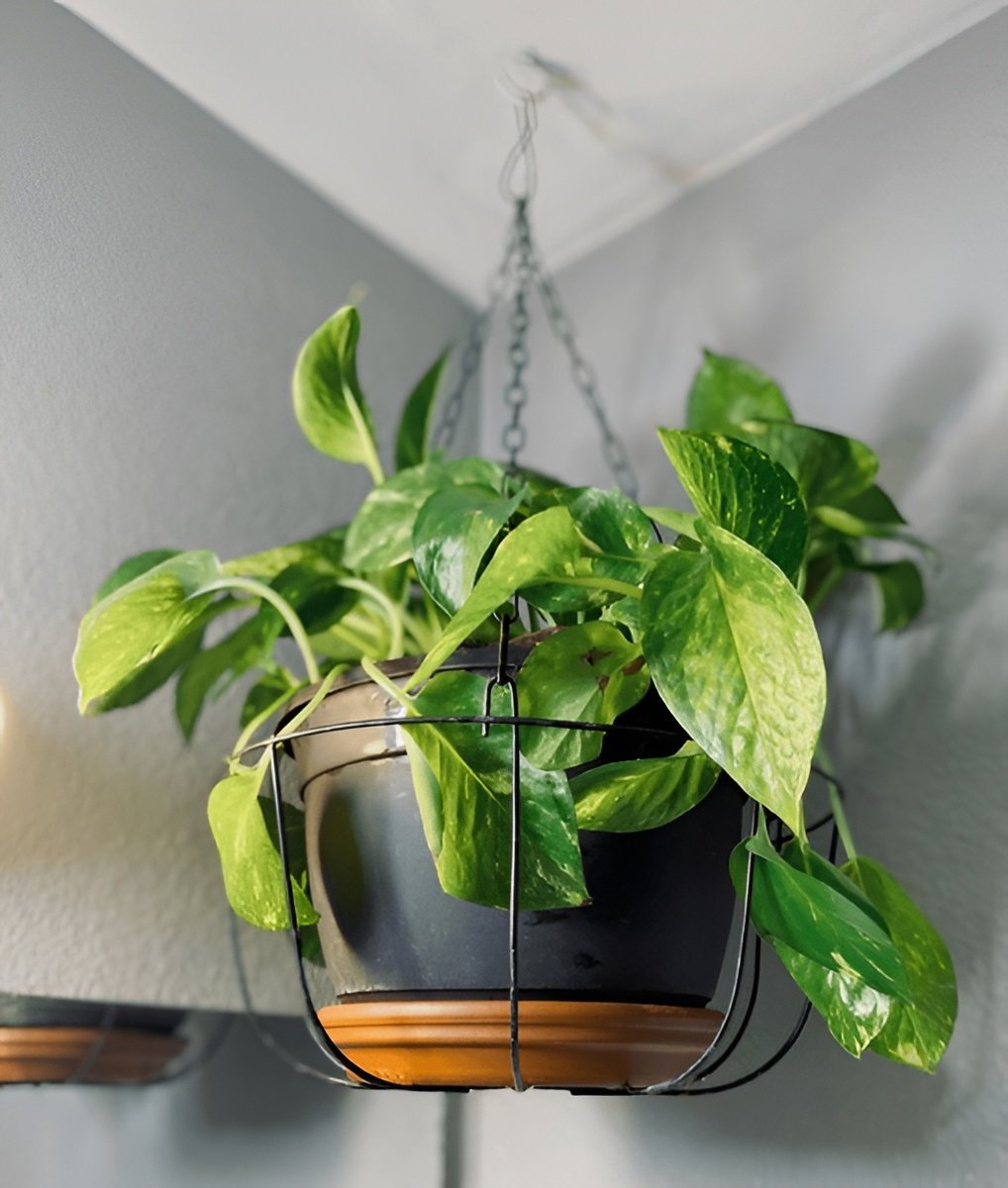
A hanging basket turns pothos (Epipremnum aureum and familiar cultivars) into a living chandelier—green draping that rescues vertical space and softens corners without consuming floor area. Baskets also introduce unique challenges: watering without flooding the floor, ensuring adequate light above eye level, and managing vines as they lengthen. This guide walks through basket selection, potting mix, installation safety, maintenance routines, and upgrades as your plant matures.
Choose a basket that matches physics, not just aesthetics
Weight matters. Wet soil plus long trailing stems plus ceramic can stress hooks. For heavy setups, use structural anchors into studs, not adhesive hooks rated for picture frames.
Drainage matters. Decorative outer shells without holes work if you keep the plant in an inner nursery pot that lifts out for watering—this is often the easiest rental-friendly compromise.
Size matters. For a standard Golden Pothos start, a modest basket suffices; do not stuff a tiny root ball into a cauldron of wet mud “for drama,” or you risk rot.
Potting mix: light enough to breathe, heavy enough to hold moisture
Hanging pots dry faster in airy rooms because elevation exposes them to more airflow—sometimes hotter rising air near ceilings. Use a chunky, well-aerated mix; many growers add perlite and/or bark for porosity. Dense mixes stay soggy and invite gnats and rot.
If you hate drippy watering, favor inner pots you can remove and soak in the sink, returning them when drained.
Light: the basket ceiling problem
People hang pothos in dim hallways because it “looks empty there.” Pothos may tolerate it for a while, but growth often becomes stretched. Ideal placements are near windows where vines receive bright indirect light—even if the window is lateral and vines trail away.
If natural light is weak, consider grow lights aimed thoughtfully without creating fire hazards near textiles.
Watering strategies that protect floors and furniture
Method 1: removable liner pot. Carry to sink/shower; water thoroughly; drain; reinstall.
Method 2: drip tray installed carefully—verify it can handle the volume without overflow when you slip.
Method 3: bottom watering in a basin—helpful for even saturation without blasting soil surface.
Avoid misting as a substitute for thorough root-zone watering.
Rotation for symmetry
Hanging plants often lean toward light. Rotate the pot occasionally for even growth—unless asymmetry is your intentional design.
Pruning long curtains
Eventually vines touch heads, doors, or heating vents. Trim for shape, propagate tips, and remove yellowed older leaves. Spring is a forgiving season for heavier pruning indoors.
Pest management elevated
Spider mites thrive in dry hot microclimates—sometimes near ceilings. Inspect undersides when you water. Shower rinses help if you can manage pot weight safely.
Heat and HVAC
Ceiling zones can be warmer; vents can desiccate foliage. Keep baskets out of direct furnace blasts. Winter dryness plus heat can crisp margins—address placement before blaming humidity globally.
Upgrading baskets as plants mature
When roots crowd, repot into a slightly larger inner nursery pot, refresh mix, and reinstall—same outer hanger if still structurally sound. If the outer decorative shell cannot accommodate growth, swap shells instead of cramming.
Multi-plant baskets: fuller faster
Combine several rooted cuttings in one basket for immediate lushness. Space stems so air can move; overcrowded crowns stay wet longer.
Safety checklist
- Anchor for real weight; shocks happen when dry-looking moss suddenly becomes saturated
- Watch hanging lines for wear—sun-roten jute fails
- Keep trailing growth away from hot bulbs and swaying doors
Design ideas beyond macramé
Metal hoops, woven rattan, minimalist ceramic shells—choose for drainage realism, not only photos. A boring plastic hanger that survives beats a gorgeous basket that dumps.
Balancing trail length with watering reality
Very long baskets become surprisingly heavy when saturated; pulley hangers help only if installed into structure safely. If lifting is difficult, favor inner pots small enough that watering feels routine rather than a shoulder workout—future you watering in February thanks present you for humility about scale.
Dual baskets and repetition in interior design
Two matching smaller baskets flanking a window can mirror light better than one giant basket centered oddly far from photons. Repetition also gives redundancy: if one plant struggles from an unnoticed draft, its twin across the room provides diagnostic contrast.
Closing encouragement
Growing pothos in a hanging basket is houseplant theater: elevation changes how you see foliage, how light hits it, and how guests encounter green at eye level and above. Treat basket culture as a hydration-and-light engineering problem with a pretty wrapper, and your chandelier plant will stay lush instead of crispy.
Wind from fans and open windows
Ceiling fans create subtle sway that strengthens petioles modestly but also desiccates faster—notice if basket edges crisp near constant breeze and either relocate or accept tradeoffs.
Seasonal fertilizing from above
Fertilizer applied to elevated baskets can drip unpredictably—dilute extra, lift inner pots, protect floors. Enthusiasm for growth should not become wax on hardwood.
Long curtain rescue pruning
When trails tangle irreparably, chop and restart tips happily—pothos forgives dramatic trims more than eternal chaos.
Closing practical echo
Treat every hanger like a small engineering project: hook, pot, light, water path. Ignore engineering and romance collapses into drywall dust and yellow leaves; respect engineering and romance thrives sustainably.
Deep dive: hook engineering without heroic denial
Ceiling joists beat hollow drywall anchors for heavier wet setups—use a stud finder, predrill carefully, choose eye-hooks rated beyond your wet worst-case weight, and remember water swings momentum when you bump the basket walking past. If you rent, tension rods across window alcoves sometimes substitute for ceiling penetration—verify vertical load limits and pad contact points so paint survives.
Irrigation math that protects floors
Measure water volume once: how many fluid ounces until drainage appears? That number becomes your personal guardrail against accidental overflows during distracted mornings. If your inner pot seals oddly and hides perched water, lift it weekly and tilt—to verify hidden swamps before roots translate them into rot smell downstairs.
Basket aesthetics versus thermal reality
Dark metal hoops heat foliage when south-facing summer sun clips edges—sometimes rotating orientation weekly prevents one-sided crisping. Light-colored liners reflect a little heat; dark cords absorb it. Small physics tweaks beat superstition.
Combining baskets with shelving systems
Floating shelves beneath baskets can catch drips and hold misters or fertilizer dilution cups—design systems, not ornaments. Keep electrical cords segregated from damp drainage paths.
Accessibility and inclusive care
If shoulder mobility limits lifting, favor pulleys or lower hooks during winter when watering frequency shifts. A plant you cannot comfortably inspect becomes a plant you will neglect; honesty about ergonomics determines success more than Pinterest optimism.
Seasonal swaps with outdoor summering
If you hang plants on porches for summer, wind and storms matter—bring them in before gusts yank hooks. Inspect jute annually; UV embrittles fibers while you are not watching.
Closing integration
Hanging baskets are vertical trust loops: hooks trust engineering, soil trusts drainage, leaves trust your eyes weekly. Close those loops deliberately and the chandelier metaphor becomes daily reality—lush, elevated, and surprisingly sturdy when physics is respected instead of imagined.
Still-hungry readers section
If you want even fuller curtains faster, combine multiple rooted starts in one liner pot—space stems so crowns breathe—and resist the urge to flood “to help them bond.” Bonding is botanical, not hydraulic. Feed modestly once growth stabilizes; margin burn from eager feeding shows up at elevation where everyone sees it.
Final nudge
Empty saucers and drainage dishes religiously; elevation does not excuse standing water at the bottom of decorative shells. That single habit prevents more hangxiety than any moisture meter impulse buy.
Companion plants above and below
Some growers underplant baskets with shade-tolerant companions—risky if water needs diverge. If you layer, choose partners that forgive similar dry-down curves or keep pothos solitary until you truly understand your basket rhythm in that exact microclimate.
Insurance cuttings on the side
While a cherished basket matures, keep a jar cutting alive elsewhere—baskets fail from falls, leaks, or sudden moves; redundancy preserves genetics and sentimental cultivars without drama.
Closing capstone on weight math
Estimate saturated mass before hanging over laptops—if the thought makes you nervous, relocate or reinforce. Nothing in this hobby mandates risking electronics; humility in placement is sophistication.
Night watering caution
Watering late without drainage vigilance invites overnight saucer soup—prefer morning checks when possible so mistakes reveal themselves in daylight.
Long-form encouragement
Hanging pothos rewards planners: hook strength, inner pots, honest light, measured pours. Skip any leg of that square and forums fill with sad chandelier photos—meet the square instead, and guests assume you have secret green-thumb genetics rather than sensible engineering.
Last practical line on joy
Hang baskets where you will smile at them often—pleasure reinforces maintenance; neglect follows invisible corners even when physics are perfect.
Hanging basket FAQ
How often should I water a pothos basket versus a tabletop pot? Expect faster dry-down aloft because of airflow and sometimes warmer ceiling microclimates—check more often in summer, less in winter, always by substrate cues rather than weekdays alone.
Can I bottom-water a hanging basket? Yes if you can lower the inner pot into a basin safely; many growers prefer removable liners specifically for sink soaking without guessing drip volumes.
Why do tips crisp despite “good humidity”? Tip burn often traces to fertilizer salts, uneven watering, or furnace drafts—not ambient humidity alone.
Seasonal basket checklist
- Spring: inspect hooks, cord, and chain wear after winter dryness.
- Summer: bright glass accelerates thirst—raise check frequency before margins crisp.
- Autumn: shorter days usually lengthen dry-down—avoid autopilot summer pours.
- Winter: heat rises; foliage near registers transpires faster—rotate for even exposure.
Propagation when curtains need shortening
Tip pruning keeps walkways safe and yields cuttings—root extras in water or soil and tuck fresh starts back into the same basket later for renewed density without buying new plants.
Mini case study: the dripping laptop incident
Setup: Basket centered above a desk for “symmetry.”
Failure mode: Inner pot tilted after bump; slow seep stained electronics.
Lesson: Hooks must lock liner pots squarely; heavy watering belongs over sinks until pots seat confidently—engineering before glamour.
Small honest joys compound into big healthy curtains over time.