
Last Updated on May 1, 2026 by Indoor Plant Nook
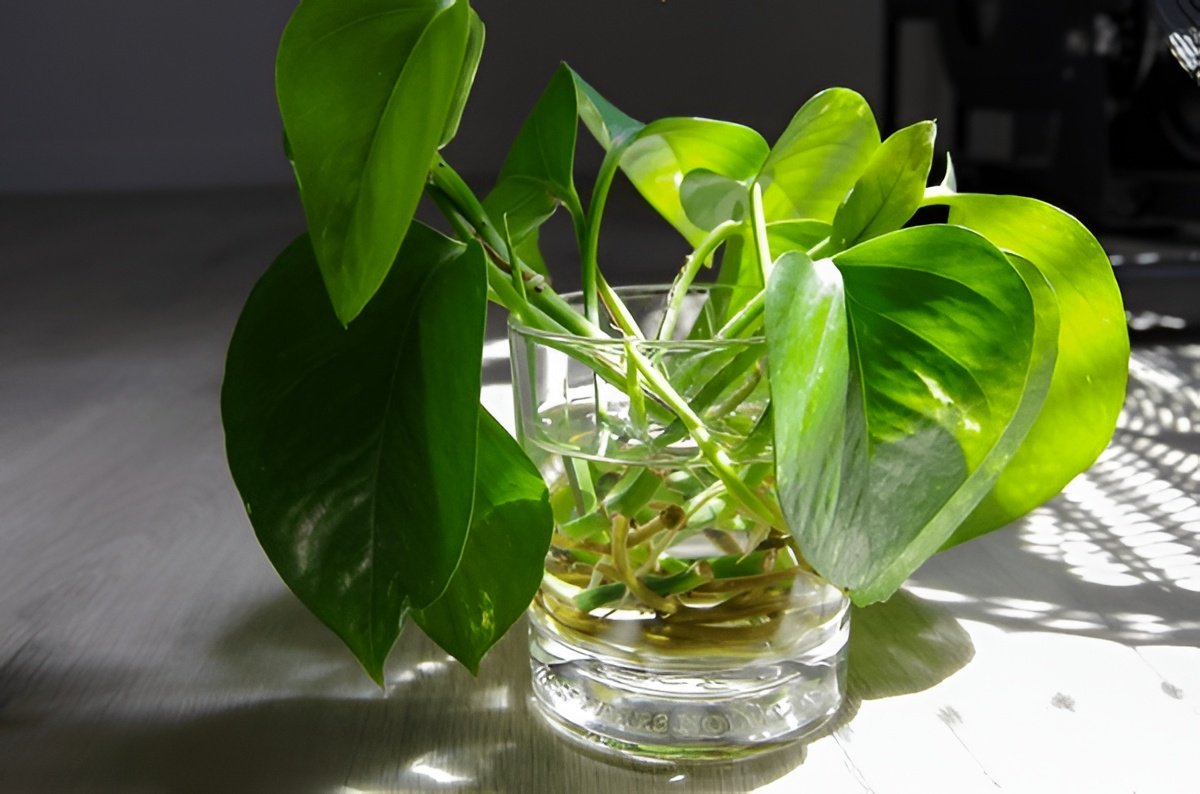
Keeping pothos (Epipremnum aureum and common cultivars) in water long term is not just a propagation stunt—it is a legitimate display style with its own rules. Water culture replaces soil’s buffering with transparency: you see roots, algae, and water clarity directly. Success depends on oxygen management, mineral nutrition, light algae balance, and occasional reset hygiene. This guide explains how to run long-term water pothos responsibly, from jar selection to troubleshooting decline.
Why pothos works in long-term water culture
Pothos roots willingly adapt to submerged life, producing water roots capable of exchanging gases and absorbing dissolved minerals—within limits. The plant still needs light for energy and careful feeding because water lacks soil’s slow nutrient bank.
Starting material: rooted cuttings vs transitioned soil plants
Cuttings rooted in water transition smoothly because they already possess water-adapted roots.
Soil-to-water transitions require washing roots thoroughly and accepting leaf losses if root damage occurs; beginners often prefer starting from cuttings.
Vessel selection: size, stability, and light exposure
Choose a jar that supports the stem without burying leaves. Stability reduces tip-overs that snap stems. Narrow necks can brace cuttings; wide jars allow more water volume and slower temperature swings.
Clear glass encourages algae in bright light—sometimes fine, sometimes cosmetic nuisance. Opaque sleeves can reduce algae without eliminating the joy of visible roots.
Water quality: taps, filters, and deposits
Many growers use dechlorinated tap or filtered water to reduce mineral crust on roots and glass. Extremely soft or extremely hard water each creates issues over time—hard water precipitates, very soft may destabilize nutrient availability if you go advanced.
If white crust appears, gentle rinsing during changes helps.
Water changes: oxygen refresh vs ecosystem swings
Two philosophies exist:
Frequent changes keep water fresh and reduce anaerobic pockets—common beginner-safe approach.
Semi-stable reservoirs with careful feeding resemble hydroponics more closely—requires tighter monitoring.
If water smells sour or roots turn mushy, change aggressively and inspect for rot.
Nutrients: feeding without burning
Pure water eventually starves unless you add measured nutrients suited to hydro or houseplant water culture. Begin weakly and increase cautiously; observe leaf response. Salt buildup still happens in jars—occasionally fully rinse roots under gentle tepid flow if film accumulates.
Algae: partner or pest?
Some algae produce oxygen and are harmless aesthetically; thick algal mats can restrict root access to light and gas exchange. Control strategies:
- Reduce intense direct light on jars
- Use opaque coverings
- Snails are controversial indoors—avoid unless you accept ecosystem complexity
Manual wiping of glass and gentle root rinsing remains the boring reliable fix.
Temperature and location
Avoid blazing windowsills that cook roots. Avoid icy drafts. Stable indoor temperatures support lifelong water culture better than oscillation extremes.
When roots fill the jar
Crowded roots can succeed until stagnation risk rises. Upgrade vessels or trim oldest limp roots with clean tools if truly necessary—conservative trimming only.
Transition back to soil (optional)
If you tire of jar maintenance, pothos can often move to soil—expect transitional wilt; keep humidity moderate and soil evenly moist initially.
Comparison to semi-hydro LECA
LECA buffers water and airflow differently; jars are visually pure but less forgiving of neglect. Choose water forever if you love the aesthetic and accept routine changes.
Aesthetic maintenance: glass sparkle and plant shaping
Scrub mineral films; remove yellow leaves; rotate for even light. Long vines in water culture still benefit from occasional pruning to keep the look intentional.
Safety and placement
Water jars on ledges spill; weight breaks things. Choose surfaces accordingly.
Troubleshooting quick map
Yellow leaves: nutrient issue, aging, or rot/stagnation starting Brown roots: rot—clean, recut healthy tissue, fresh water Slow growth: low light or underfeeding—or normal winter slowdown Cloudy water: change, clean vessel, reduce organic debris
Lifestyle fit
Water pothos suits people who enjoy weekly plant rituals and the aesthetics of roots. If you want fully hands-off, soil may align better.
Urban water quality headaches: chloramine, iron, and trace odors
Municipal chemistry varies: some taps disinfect with chloramine that lingers longer than classic chlorine off-gassing suggests, while well water might carry metallic flavors or seasonal shifts. If roots look healthy but leaves show chronic edge burn, water chemistry joins fertilizer on the suspect list—sometimes filter pitchers help, sometimes collecting rain is impractical but a memorable lesson in how sensitive long-term hydro can be to invisible inputs. Document changes when you switch sources; otherwise causal stories become mythology.
Sharing “forever water” specimens without shock
If you gift a jar pothos, include feeding notes and water-change expectations. Recipients who treat it like a soil plant often either neglect changes or overfeed enthusiastically. A one-page cheat sheet saves relationships and roots alike.
Closing vision
Full hydroponics for pothos at home does not require laboratory gear; it requires clean water discipline, modest feeding literacy, and willingness to treat algae and minerals as part of the hobby’s texture. Do that, and pothos can live in glass for years—a transparent collaboration between you and the roots you can actually see.
Oxygen, warmth, and slow seasonal shifts
Jar water holds less dissolved oxygen when warm; roots still respire. If summer sun overheats glass, roots cook while leaves look momentarily fine. Shade jars thoughtfully; change water when temperature swings have been violent.
Decorative accents that help or harm
Glass beads at jar bottoms can look lovely but complicate cleaning and hide debris—choose aesthetics you can maintain. Algae-scrubbing toothbrushes kept plant-only reduce cross-kitchen contamination weirdness.
Fish-tank crossover caution
Some hobbyists combine aquaria and emergent pothos roots; ecosystems intertwine with fish health, ammonia cycles, and law regulations. Beginners should treat standalone jar culture as its own skill before stacking livestock complexity atop houseplants.
Glass safety and pets
Cats knock jars. Choose wide bases or secondary containment saucers that catch spills if a tail slap sends water flying.
Long-term hydro philosophy
Water culture is neither lazier nor holier than soil—it exchanges one homework list for another: clarity, minerals, oxygen rhythms. Respect the trade and the years-long displays become sustainable; ignore it and jars sour like forgotten cups.
Closing
Pothos in glass honors transparency: what you neglect shows quickly, and what you tend shows beautifully. That honesty is the unspoken reason water enthusiasts stay loyal—roots in sunlight feel like living architecture.
Mineral layering and root zones
Roots stratify subtly in jars—older bases sometimes accumulate silt while newer tips search upward. Occasional gentle swirling during changes dislodges lazy debris without snapping roots wholesale.
Vacation prep without fairy tales
No jar survives months untouched without decline unless someone tends it; automate humbly with trusted humans or accept trim-back beforehand to reduce transpiration load.
Gift hydro pothos responsibly
Include feeding dilution cheat sheets with gifted jars; most “failures” trace to random strength guesses burning tender tips.
Glass vs plastic culture vessels
Plastic reduces algae and breakage; glass seduces with visibility—pick per temperament, not status.
Closing reaffirmation
Long-term water culture is a relationship with chemistry and oxygen, not a meme about laziness. Respect the exchange and glass stays clear enough to remind you why you started—living roots performing daily chemistry lessons without soil in the way.
Year-two mindset
Second-year jars ask for nutrient nuance, occasional root trims of obvious dieback, and vessel upgrades—same as soil plants asking for repotting. Treat anniversaries as maintenance holidays, not just photo days.
Teaching children jar culture responsibly
Kids love visible roots—also spills. Choose sturdy bases, supervise feeds, and explain algae like pond life rather than catastrophe. Science wins when curiosity pairs with containment.
Corporate desk jars: realistic feasibility
Offices vary; low light plus weekend neglect kills jars. If you want desk water pothos, invest in modest light and two-jar redundancy swapped weekly by a human who remembers.
Mineral mullets: funny but informative
Older roots at jar bottom sometimes look darker than fresh tips—context matters. Uniform translucency-turned-mush means intervention; normal basilar corking can mean nothing scary—learn the difference with photos over time.
Final practical pledge
Treat hydro jars like tiny aquariums minus fish: water changes, nutrient discipline, algae realism. That pledge keeps glass culture gorgeous longer than wishful “set and forget” memes.
Year-three humility
Mature water-root masses need division or larger volumes sometimes—same as soil being exhausted. Anniversaries deserve inspection, not only celebration selfies.
Night temperatures and jar metabolism
Cool nights slow metabolism; nutrient schedules might need seasonal tone-downs lest unused ions accumulate while roots rest relatively more than summer nights imply indoors.
Choosing roommates for jar benches
Housemates should know which jars are experiments versus keepsakes—communication prevents “helpful” dumping of unknown liquids into your roots.
Closing synthesis extended
Water culture’s transparency is pedagogy: you see neglect and care equally nakedly. Embrace the pedagogy and you grow as a gardener while roots grow in glass—two curves parallel.
Humor allowance
Yes, you will once confuse iced tea with jar water on a chaotic morning—label shelves if your kitchen gang multitasks ruthlessly. Humor aside, labels save roots.
Water-culture FAQ
Do roots need darkness? No—keep foliage in bright indirect light; algae control matters more than shading roots.
When is full jar change better than partial top-off? When odor, slime, or cloudy pulses return despite lighter interventions—reset beats chronic biofilm denial.
Propagation bridge
Strong jar-rooted cuttings transition to soil or LECA when multi-branched roots several inches long reduce transplant shock—rush early soil moves and you replay wilt theater unnecessarily.