
Last Updated on May 1, 2026 by Indoor Plant Nook
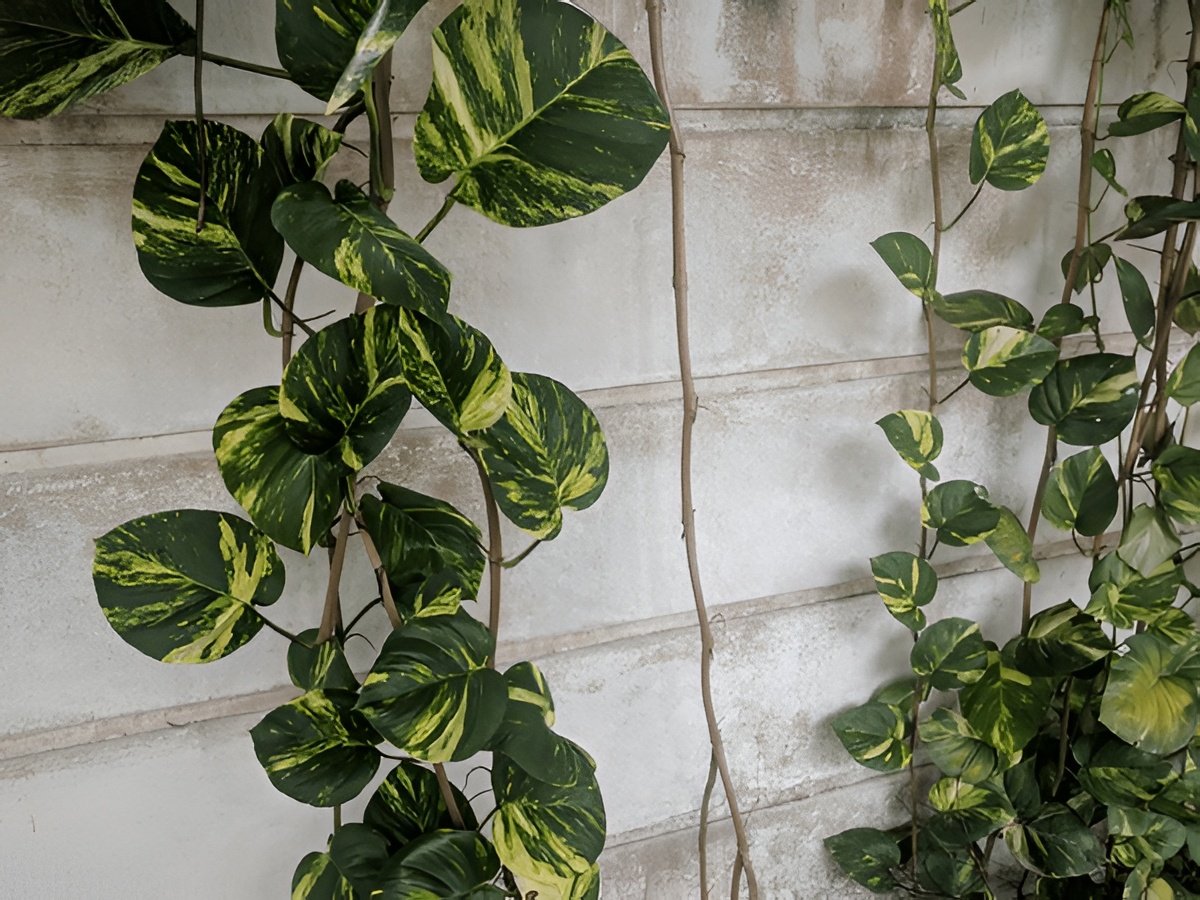
Training pothos (Epipremnum aureum and common cultivars) turns loose vine chaos into intentional architecture: green highways tracing a bookshelf, soft geometry on a wall grid, or a trellis panel dividing space without blocking light completely. Training is partly horticulture—nodes contact surfaces, aerial roots may anchor—and partly interior installation discipline, because adhesives, paint finishes, and rental rules matter as much as photosynthesis. This guide covers planning, attachment methods that minimize damage, light considerations, maintenance, and course-corrections when vines escape their brief.
Start with a design map, not hope
Before clipping anything in place, decide the route: which direction growth should travel, where nodes will find bright indirect light, and whether you want density (many parallel stems) or simplicity (one hero line). Pothos trains best when it is not fighting shadow—dark walls behind furniture may look cool week one and look sparse month eight.
Measure lengths roughly; overestimate how fast length accumulates once training succeeds.
Light and wall proximity
Walls themselves do not produce photons; windows do. A wall opposite or adjacent to a bright window often works; a wall deep inside a dark interior may yield lanky growth unless supplemented. Consider movable grow lighting if you are serious about wall coverage without sun access.
Watch heat sources: radiators behind trained vines cook leaves; outlets with warm electronics do the same.
Trellis training: the renter-friendly default
Freestanding trellises or grid panels leaned on shelves require fewer holes in drywall. Attach vines with gentle ties to grid intersections. As stems thicken, loosen ties. A trellis can move with you—major advantage.
Material options include wood lattice, metal grids, and expandable bamboo—choose rigidity that matches weight.
Shelf training: gravity as collaborator
Shelves offer vertical “edges” where you can wind stems along the side supports, using small command-style clips on metal or discreet hooks on wood—test finishes for damage first. The plant experiences stable structure while benefiting from near-window placement.
Avoid crushing stems under heavy books; route vines behind decor intentionally.
Wall clips and hooks: damage control
Tiny clear adhesive clips appear in many social tutorials. Reality check: adhesives differ by paint quality, humidity, and surface texture. Test inconspicuous spots; accept that repaint touch-ups may happen upon removal. Prefer removable hardware where landlords allow.
Never use staples into live stems; puncturing creates disease entry and mutilates tissue.
Natural attachment vs assisted attachment
Aerial roots may cling lightly to rough textures—unfinished wood, porous brick—but painted drywall often provides nothing to grip. Expect to assist long-term unless you build a deliberate tactile surface like a moss-backed board.
Moisture for aerial rooting (optional)
If you want adventitious roots to adhere more firmly, occasional misting of a moss strip or board behind the vine can help—while still avoiding constant leaf wetness in stagnant air.
Growth direction and redirecting
Apical tips seek brighter zones. If a vine “jumps” toward a window across the room, you are seeing phototropism, not rebellion. Redirect gently with ties; prune if a stem insists on obstructing walkways.
Length management on vertical routes
Wall-trained pothos can become heavy. Periodically trim, propagate, and remove older scraggly sections to keep the design crisp and reduce pest-hiding density.
Cleaning dust on wall-adjacent foliage
Vertical displays collect dust—rinse in a shower seasonally if pots are portable, or wipe large leaves carefully if rinsing is impractical.
Pest monitoring on complex routes
Spider mites love dusty leaves. Training increases surface area and hiding spots—inspect during watering, especially undersides near wall contact points where airflow is weaker.
Seasonal expansion and winter contraction
Summer growth may require more clips; winter may slow expansion—adjust expectations and reduce fertilization if growth pauses.
Safety notes
- Keep vines away from open flames, stovetops, and candle shelves
- Avoid routing stems where door hinges pinch
- Watch trip hazards at floor level where vines dangle unruly
When to switch metaphors: pole vs wall
If wall training becomes high-maintenance, a moss pole near the wall may centralize climbing while still reading as a wall feature visually.
Cable management synergy (without trapping heat)
Many renters route trailing vines near shelving that also hides cables; keep foliage away from warm power bricks and wall-warts. Heat-kissed leaves yellow and crisp in patterns that look like humidity issues but are purely thermal.
Color psychology: green lines drawing the eye
Vertical lines visually heighten a room; horizontal trailing softens sharp shelf edges. Choose deliberately in small apartments where every line competes for attention. Pothos cooperates with either story if light cooperates first.
Closing design thought
Training pothos is collaborative styling: you supply structure and direction; the plant supplies momentum. With gentle ties, honest light, and reasonable attachment choices, your wall or shelf becomes less a backdrop and more a living map—one leaf node at a time.
Paint, Command strips, and patch kits
If clips pull paint, keep spackle and matched paint on hand for move-out weeks. Landlords differ; some welcome gentle green, others itemize chips. Ask when uncertain—training should not cost your deposit unnecessarily.
Integrating grow lights tastefully
Clip LEDs can graze climbing lines if aimed with discipline; spaghetti wiring looks messy fast. Cable channels respect both photons and adult aesthetics.
Vines near doorways: swing radius math
Doors need arcs free of obstructive stems humans will tear walking while carrying groceries. Route training lines away from hinge sides.
Weight distribution on shelves
Top-heavy pots climb poles; top-heavy vines pull shelves forward if brackets are weak. Anchor furniture when in doubt.
When to accept imperfection
Slight asymmetry reads as organic life; chasing millimeter symmetry wastes weekends. Adjust ties when safety or major imbalance demands—not when Instagram grids demand.
Closing
Training pothos is domestic landscape architecture: cheap, alive, improvable. Treat walls and shelves as collaborators, not stage flats, and the vine becomes part of the room’s grammar instead of clutter that frustrates you weekly.
Knots, ties, and material fatigue
Fabric ties weather; inspect quarterly. Weathered ties snap in wind gusts from fans or open windows, dropping vines onto hot plates—low probability, high annoyance; prevention is cheap.
Integration with shelving depth
Deep shelves cast shadows forward; route training lines toward the shelf edge nearest light rather than letting them wander into perpetual shade along back boards.
When to admit trellis defeat
Sometimes architecture refuses cooperation—bad studs, lease clauses, weird windows. A tall freestanding grid beside the wall captures most visual benefits without fighting paint at all.
Closing integration extended
Training pothos turns walls into timelines: each clip marks a month you cared enough to redirect growth. That quiet history becomes part of the room’s personality more enduringly than repainted accent walls alone.
Stewardship over spectacle
Spectacle spikes social likes; stewardship builds plants that survive your next busy season. Choose clips, routes, and supports durable enough for real life, not only photos—and pothos quietly rewards pragmatism with greener years.
Historical interior parallels (lightly)
Victorian parlor palms and modern pothos trellising share a human desire to domesticate verticality—your version is lighter, cheaper, gentler on walls if you plan clips rather than Victorian fervor for stuffed corners.
Sound and vibration weirdness
Subwoofers vibrate shelves; curious roots and clips loosen over party nights—tighten after events if you live loud, literally or socially.
Final architectural analogy
Think of vines as flexible moldings: they soften transitions between hard surfaces. Training is sculpture with timeouts—adjust when life bumps layouts.
Stewardship closing
Training lives in small recurring tasks: loosen ties, redirect tips, dust leaves, step back. Momentum belongs to people who enjoy those loops—pick loops you like or switch to freestanding trellises you can walk past without guilt.
Last practical whisper
If a clip mars paint, repair early; landlords forgive prompt patches more than move-out archaeology.
Nighttime photography audits
Flash photos exaggerate dust and mite sparkle—occasionally useful diagnostically, occasionally panic-inducing; use sparingly with calm interpretation.
Training children and pets simultaneously
Toddlers mimic clip placement—supervise craft projects near vines—glue and glitter do not improve stomata.
Closing architectural bow
You are painting with living lines; adjust strokes seasonally without ego. Walls forgive redirection; plants forgive redirection; only rigid pride refuses to loosen a bad clip.
Strength closing
Strong training is boring maintenance repeated until vines hold themselves—claim boredom proudly; boredom is how adults keep plants alive years past trend cycles.
Integration chapter: training plus cleaning cadence
Wall-adjacent leaves collect grime where HVAC stirs dust—pair training sessions with gentle leaf wiping so photosynthesis keeps pace with your design ambitions. Dusty vines stretch toward light yet still underperform; cleaning is not vanity here—it is maintenance.
Knot fatigue and periodic audits
Twist ties fatigue; fabric ages; adhesive clips lose grip after several humidity seasons. A ten-minute quarterly audit prevents dramatic midnight collapses into dinner plates. Replace tired fasteners before they fail catastrophically.
Cord and cable diplomacy
Training near workstations invites vines toward power strips—route intentionally away from warm bricks and snarl zones. Green should calm desks, not audition for fire codes.
Closing bow
Training is slow interior landscaping: lines improve week by week when you nudge stems kindly and keep light honest. Accept gradual refinement; reject brittle perfectionism—the plant is alive, and living designs breathe.