
Last Updated on May 1, 2026 by Indoor Plant Nook
Few houseplant cues are as blunt as leaf size. A pothos in bright conditions with buoyant roots can produce broad leaves that carry real visual weight trailing along shelves. The same lineage in shadow, or drowning in stagnant soil, tends to repeat small blades on long skinny stems—as if it is conserving every joule until life improves indoors. Larger leaves rarely arrive from gimmicks or ultra doses of fertilizer; they are the plant agreeing that photosynthetic income, root oxygen, and steady hydration finally line up the way pothos physiology prefers.
Think of pothos vine growth as bookkeeping. Leaves are expensive to build and maintain per square inch, especially tissues with lots of creamy variegation. When light is scarce, the plant invests in elongation (“reaching”), then pairs that effort with smaller leaf area to match a smaller energy budget. When light is generous and roots are healthy, the next nodes can step up in size because the balance sheet allows it.
Juvenile leaves are not the same as stunting
Cuttings and young starters often open modest leaves while they grow functional roots. That is normal. Stunting is when mature nodes keep producing thumbnails after the plant clearly has roots to spare. Compare new foliage after environmental changes—not last season’s wizened hangers-on. Old blades rarely widen retroactively, but they quietly retire as vines replace canopy.
Marketing photos amplify expectations. Nursery shots often include greenhouse-grade optics. Your goal should be visibly larger successive leaves inside your real home—not perfect parity with a catalog hero image.
Low light drives both small blades and leggy gaps
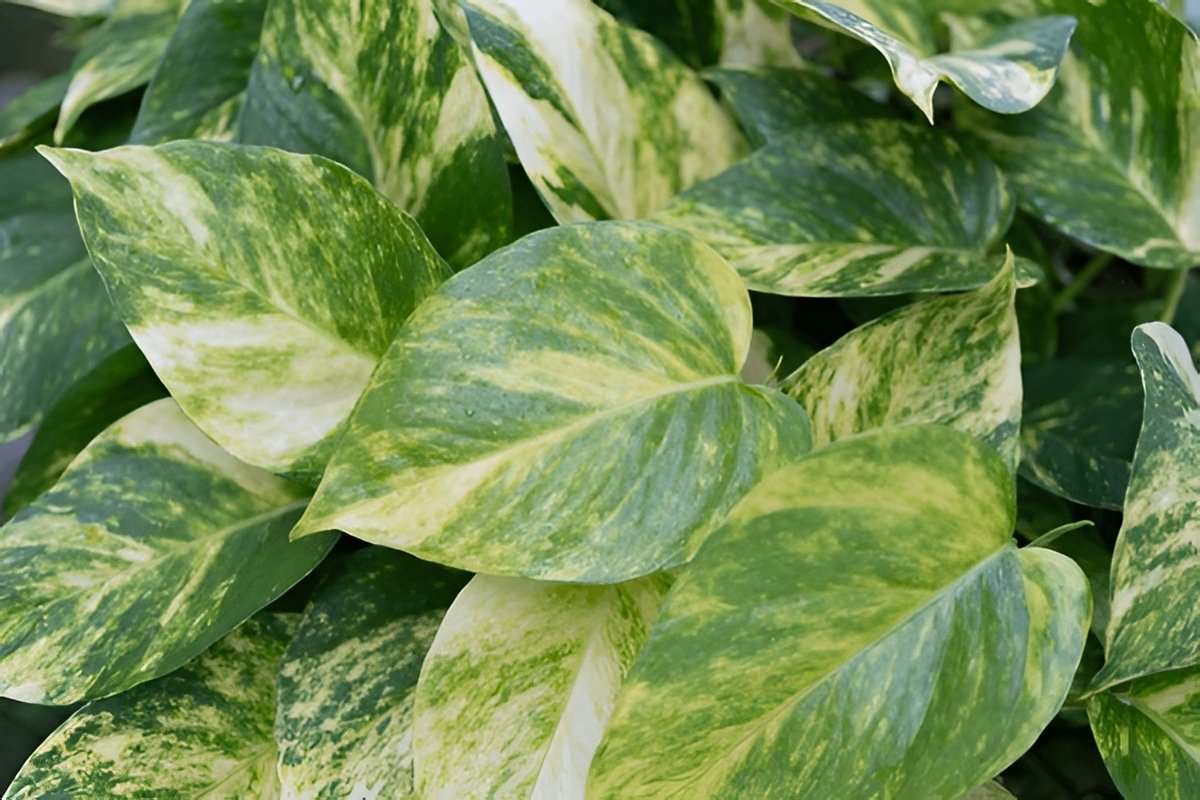
Insufficient photons create the classic pothos silhouette: elongated internodes stretching toward brighter gaps, paired with petite leaves saving maintenance costs. Cultivars with white or yellow patches may also read greener in dim interiors because sustaining pale sectors demands strong photosynthesis from neighboring green tissues.
Translating advice into placements: prioritize bright indirect light—that sun-washed cone a few feet back from large eastern or western glass, southern exposures softened during peak glare, or thoughtfully placed grow lights timed for plausible day-lengths. Rotate the container weekly so all sides contribute to symmetry instead of leaning one shoulder toward glass.
Sudden leaps from darkness to midday sun bleach and burn foliage—particularly white sectors—so relocate gradually across several days while you watch margins for warning signs like pale halos converting to browned tissue.
Supplemental LEDs and winter honesty
Northern rooms, shady courtyards, and tree-masked balconies often cheat photosynthesis subtly for months until leaves stay small indefinitely. Supplemental full-spectrum LED fixtures work well when hung at the manufacturer’s recommended distance and run on a timer—commonly around eleven to twelve hours for foliage houseplants, adjusted after you observe color and growth responses. Avoid leaving lights on around the clock; plants still benefit from dark periods as part of normal metabolism.
Document changes with dated photos of the newest leaf against a neutral background. Human memory makes progress feel invisible until you compare images.
Climbing and support: when bigger leaves follow structure
In nature, many related vines climb trunks. Indoors, a moss pole, coir column, or trellis can encourage more mature-looking architecture than endless dangling in low light. The support is not a substitute for photons: it is a partner. Keep pole moisture adequate to encourage aerial roots without turning the base into a cold, perpetually wet pocket that invites crown rot. Pair structure with improved light and watch new nodes for size responses over several weeks.
If you dislike poles, strategic pruning to keep the crown closer to brighter space can also improve leaf size on fresh growth by concentrating energy on fewer active tips.
Underwatering limits cell expansion
Small, wrinkled, or cupped new leaves may appear when roots cannot replace water lost through stomata. Older blades may crisp at tips; pots feel light; soil can shrink from the rim in peat-heavy mixes that later resist rewetting.
Water thoroughly when the upper portion of a chunky mix has dried appropriately, then discard tray water. If water channels through dry peat, soak the whole pot briefly so the root mass hydrates evenly, then drain completely. Learn pot weight or use a slim probe so you are not guessing on a calendar alone.
Overwatering shrinks leaves while the pot still feels wet
Rotten roots cannot take up water efficiently, so the canopy starves even while the substrate reads moist. Classic confusion: “it can’t be thirsty—look how wet it is.” Unpot, inspect for brown mush, trim dead tissue with clean tools, repot into fresh airy mix, and downsize the pot if the remaining root ball is modest. Hold fertilizer until new growth firms and new white root tips appear at drainage holes when you peek gently.
Soil structure, repotting, and oxygen for hair roots
Old media collapses into dense, airless layers that suffocate the fine roots responsible for feeding young leaves. Refresh potting soil every couple of years for vigorous specimens—tease circling roots, trim dead strands, and choose a pot sized to the root system plus modest room to grow. Oversized decorative vessels that stay wet too long are a hidden cause of chronic small leaves because roots never access the sweet spot between moisture and oxygen.
Elevate inner grow pots on feet, keep drainage holes open, and empty saucers so the bottom of the root mass is not marinating.
Fertilizer helps at the margins, not instead of sunshine
Mild, balanced fertilizers at dilute strengths during active growth can support fuller leaves when fundamentals are already sound. Heavy nitrogen in low light produces soft, stretchy growth that still looks unsatisfying. Salt buildup from overfeeding or poor flushing can crisp margins and stunt new tissue—if you suspect buildup, leach the pot with ample room-temperature water and resume feeding at gentler dilutions.
Pests quietly reduce the budget for large leaves
Spider mites stipple and drain vigor; thrips scar and twist young foliage; mealybugs camp in nodes; scale armor petioles. Scout weekly, rinse both leaf surfaces, and treat with labeled soaps or oils on a schedule tied to pest lifecycles rather than a single dramatic afternoon. Fix infestations before blaming “bad genes.”
Cultivar realism keeps expectations kind
Not every pothos type becomes a giant-leaf curtain under home conditions. Some selections maintain smaller or narrower blades by nature, or grow more slowly than Golden Pothos. Compare your plant to credible references for that cultivar so you are not punishing a Neon for not impersonating a mature Golden on a pole.
Seasonal rhythms indoors
Shorter winter photoperiods and cooler root zones often slow expansion. Smaller winter leaves can be normal unless you supplement light and keep temperatures stable away from icy drafts. Reduce feeding when growth slows to match plant appetite.
A four-week upgrade sequence you can follow
Week one: improve light carefully; acclimate if moving closer to windows; note wilting or crisping.
Week two: align watering to evidence—weight, probe, drainage behavior—not anxiety.
Week three: inspect roots if yellowing, wilting, or sour smells persist; repot if needed.
Week four: add a support structure if light is now honest; begin quarter-strength feeding only if new growth looks firm and green.
Reassess leaf size on new nodes after four to six weeks; adjust light distance or duration in small increments if progress stalls.
What not to do while chasing size
Avoid jumping a dim plant into harsh noon sun in one day. Avoid stacking multiple fertilizers weekly. Avoid wrapping roots in soggy moss on a dark shelf. Avoid ignoring mites while pouring nitrogen at the problem. Stability and clarity beat heroic randomness.
Mechanical damage, cat teeth, and cracked petioles
Small, torn, or oddly shaped leaves can follow physical wounds rather than physiology. Assess whether new damage correlates with pets, trolley bumps, vacuum cords, or macramé compression. Fixing physical stress is simpler than rewriting fertilizer programs—reroute hangers, soften tie points, and give recovering stems space without tight knots.
Edema and blistered texture versus true small leaves
Edema manifests as blistered or corky patches after roots take up water faster than leaves can transpire—common when warm wet soil meets cool, humid stagnation indoors. It can make expanded tissue look distorted even when the plant technically tried to grow “big.” Improve airflow modestly and align watering warmth with room conditions; differentiation matters because edema patches do not enlarge like healthy blades.
Pruning strategically to consolidate energy
Leggy pothos recovering from brighter relocations sometimes carry distant weak tips starving for consistent light quality. Removing the weakest runners refocuses resources on nodes nearer the crown where your improved setup can actually deposit photons reliably. Avoid removing more than about a quarter to a third of total leaf area in one dramatic session unless rot or pests force harder cuts.
Ceiling effects: home limits versus greenhouse dreams
Even perfect shelf care will not always match commercial volumes of leaf area because indoor humidity, container life, and filtered light differ from production houses. Pursue health first and pleasing relative gains second; comparing your living room to a tropical display greenhouse sets you up for unfair disappointment.
Bigger pothos leaves are the plant’s quiet compliment: you finally matched its needs for light, oxygen at the roots, and predictable water. Keep notes, take pictures, and read the story on the next unfurling leaf—wider, steadier, and earned.