
Last Updated on May 1, 2026 by Indoor Plant Nook
Plants communicate care differently than candles—you offer ongoing companionship, gentle routines, and the option of future cuttings instead of single-use gifts meant to vanish overnight.
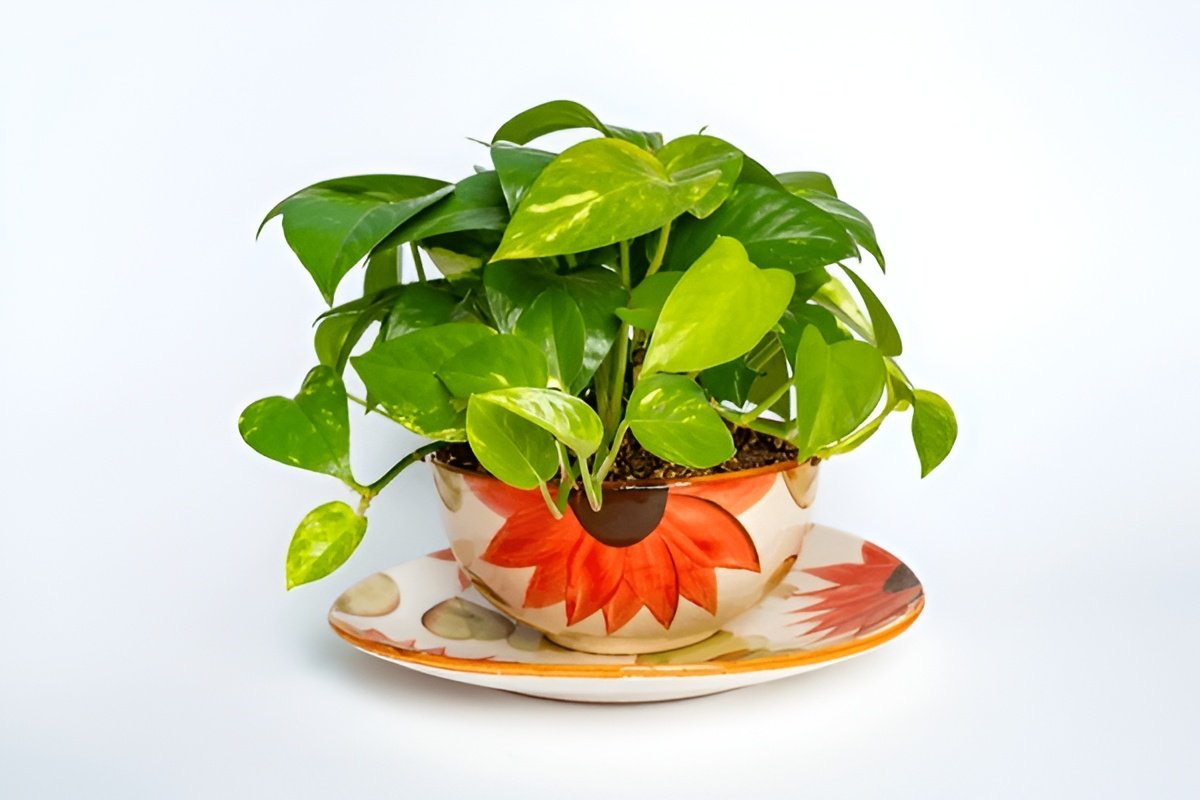
If your recipient is new to indoor plants, pothos still teaches without punishing every mistake on day one. Pothos (Epipremnum aureum and the familiar cultivars sold as pothos) is that companion for millions of growers. It is not indestructible—chronic overwatering, chronic darkness, prolonged cold, and neglected pest outbreaks can still take a plant down—but pothos tends to stay in the conversation long enough for you to learn the skills that transfer to harder species: reading soil moisture, interpreting leaf color, adjusting light, pruning for shape, and propagating with confidence.
This guide explains why pothos works so well as a gift, why experienced plant people still wrap cuttings for friends, and where realism matters—pets, toxicity notes on cards, drainage, and honest light expectations.
The beginner’s real fear—and how pothos lowers the stakes
Most first-time buyers are not afraid of Latin names; they are afraid of quiet failure. Leaves yellow, roots rot, gnats arrive, and the whole experience starts to feel like evidence of incompetence rather than a normal learning curve. Pothos helps because many of its problems develop on a timeline that still allows correction, because replacement cost is typically modest, and because you can take backup cuttings without a laboratory kit.
That does not mean you should neglect a plant “because it’s easy.” It means you have more room to improve your observation skills: touching the soil, lifting the pot to feel weight changes, noticing when new leaves emerge closer together after a brighter month, spotting the first fine webbing of spider mites before an infestation defines your entire shelf.
Light: pothos buys you time while you learn your rooms
Retail tags often declare pothos “low-light tolerant.” A more accurate statement is that pothos can survive reduced light longer than many houseplants before collapsing. Survival is not the same as thriving. In dim corners, pothos may keep living while stretching toward the nearest bright patch—long internodes, smaller leaves, and sometimes paler growth on variegated types.
For a beginner, that slow declension is instructive. It is a visible signal that light is a limiting resource, and it invites a simple experiment: move the plant closer to a bright window for a couple of weeks (without blasting it with hot midday sun) and watch spacing between new leaves tighten.
Pothos also fits real apartments, where windows are partly blocked by buildings, blinds, neighboring plants, winter’s shorter days, and furniture you cannot rearrange instantly. While you figure out those constraints, pothos often remains photographable and encouraging.
If you want a simple target, think bright indirect light as the default for strong growth and stable variegation, with gradual adjustments rather than abrupt moves from deep shade to blazing windowsills.
Watering: learn the skill on a forgiving schedule
Rigid “water every Tuesday” rules fail indoors because temperature, humidity, pot size, soil ingredients, root mass, airflow, and season all change how fast a pot dries. Pothos still helps beginners because it is often willing to communicate when you have pushed dryness a little too far: leaves may soften or the whole canopy may look slightly wilted, then perk up after a thorough drink.
Important nuance: you do not need to wilt your plant on purpose. Wilting stresses the plant and, if repeated, weakens roots. The better habit is proactive—check the soil, learn your pot’s rhythm, water deeply when appropriate, and discard excess from the saucer.
Where pothos teaches like a strict coach is overwatering. If you love your plant too much with daily sips in heavy soil inside a giant decorative pot with no drainage, you can absolutely cause root rot. Pothos does not forgive soggy anaerobic conditions forever; it only forgives occasional mis-timings when the substrate still breathes.
So the transferable lesson is not “pothos never rots.” The lesson is: drainage and soil structure matter more than brand loyalty, and pothos gives you enough feedback that you can connect yellowing leaves, sour soil smell, and limp stems to waterlogging when you finally unpot and inspect.
Soil and pots: pothos rewards the basics beginners often skip
Beginners sometimes treat soil as an afterthought. Pothos responds well to a chunky, well-aerated potting mix—something that holds moisture briefly but releases it rather than turning into mud. Garden soil straight from the yard is usually a poor fit indoors because it compacts and suffocates roots in containers.
Pot size matters too. A common early mistake is repotting into something enormous “to give it room.” Room is not oxygen. Oversized pots stay wet longer, especially with dense mixes, inviting rot. With pothos, staying closer to appropriately sized pots builds good lifelong habits.
If you pair decent soil with a pot that drains, pothos becomes the plant that reinforces the simplest truth in indoor horticulture: roots need air as much as water, just not at the exact same millisecond—but across the weekly moisture cycle.
Propagation: fast wins build confidence you can reuse elsewhere
Propagating pothos from stem cuttings is one of indoor gardening’s most satisfying beginner labs. Nodes root readily in clean water jars (with periodic water changes), in perlite mixes, or in normal potting media if you guard against soggy stagnation.
Visible roots are motivating. Motivation fuels consistency—checking for rot instead of forgetting the jar behind a cereal box, rinsing slime before it spreads, transferring to soil once roots are sturdy enough.
Those habits transfer cleanly to philodendrons, monstera relatives, syngonium, hoya (with different timelines), and other cut-and-root plants. Starting on pothos is like practicing scales before concertos.
Budget and availability: pothos lowers the shame tax on mistakes
Let’s speak plainly about money. Many fashionable houseplants are expensive, fragile, or both. It is brutal to kill something that arrived in a TikTok haul with a price tag resembling a modest car payment. Golden Pothos, by contrast, is usually inexpensive and ubiquitous. Economic accessibility matters: plant joy should not be reserved for households with discretionary income for rare imports.
That affordability also makes pothos a responsible way to practice repotting, pruning, treating pests, and testing fertilizer dilutions. You build skill on a plant that is not emotionally and financially devastating if you discover you packed the mix too firmly or left a cutting too long in cloudy water.
Design flexibility: one plant, many interior stories
Pothos is not a one-look plant. It can trail from a high shelf, spill from a hanging basket, climb a moss pole, or be trimmed into a bushier tabletop shape. Cultivar selection widens the palette from classic gold variegation to neon chartreuse, white-heavy marbling, and blue-toned textures in popular lines like Cebu Blue (discussed in variety guides).
Interior designers—and ordinary renters—love pothos because it reads “lush” quickly. You can soften hard corners, camouflage cords visually (without letting vines touch overheating electronics), and build a greener sightline toward a workspace without dominating the desk surface.
Troubleshooting education: pothos problems are recognizable
Yellow leaves happen. Brown spots happen. Pests happen. Those issues are discouraging whenever they appear, but with pothos the community knowledge base is enormous. You will find clearer photo comparisons for spider mites, fungal gnats cycles, fertilizer burn suspicion, drafts, bacterial-looking lesions, underwatering dryness, mechanical damage from subway turnstiles—or maybe that last one stays anecdotal—in short, pothos troubleshooting is unusually well-charted terrain.
Better still: the same diagnostic instincts you cultivate on pothos—separating old leaf drop from systemic collapse, inspecting roots when in doubt—scale up to fancier collections.
Offices, dorm rooms, and busy lives
Travel weeks, chaotic semesters, overtime seasons—life happens. While no plant thrives on indefinite neglect, pothos survives uneven care more gracefully than thirsty ferns paired with centrally heated dryness or succulents that demand bright light and disciplined dry-downs indoors.
Office pothos survives fluorescent-forward lighting more often than many alternatives, although it grows faster with supplemental bright indirect illumination or reputable grow lights. It also tolerates coworkers who kindly over-water “to help.” (If someone “helps” constantly, moss on top dries slower than peat alone—elevate drainage education gently.)
Why experienced growers keep pothos anyway
Experts do not graduate out of pothos; they reposition it.
Pothos can be:
- A propagation factory gifting cuttings ethically to friends
- A tester vine experimenting with moss pole hydration habits
- A baseline reference diagnosing whether your environment is subtly off
- A palate cleanser when rare plant anxiety peaks
Complex collections come with vigilance exhaustion. Occasionally keeping a pothos flourishing is both aesthetic and emotionally grounding.
The pet and child caveat (straight talk)
Recommendations must stay honest: pothos is toxic when ingested for many pets and irritating to mouths and GI tracts—a pattern common among arums (Araceae family) due to calcium oxalate crystals. Hanging baskets and elevated shelving help, supervision matters, and toxicity articles elsewhere cover symptom awareness and when to call a professional.
If an animal reliably strips leaves from anything within reach, solve placement before you solve cultivar lust.
Myths that hurt beginners (and the sharper truths)
Myth 1: “Pothos loves dark bathrooms forever.” It may live; it may not look like the photos you bookmarked. Give it real light or accept a sparse vine.
Myth 2: “Misting replaces watering.” Misting does not hydrate roots; it briefly changes surface humidity. Address watering and ambient humidity thoughtfully.
Myth 3: “Bigger pot means faster growth.” Often the opposite—more wet volume, slower oxygen, more rot risk.
Myth 4: “If it’s easy, you can ignore drainage.” Easy is conditional; drainage is structural.
A simple success checklist
- Bright indirect light as your default goal.
- Well-draining mix and a pot with holes (or a responsible inner pot strategy).
- Water when appropriate, not on autopilot.
- Inspect monthly for pests, dust, and leaf signals.
- Fertilize gently during active growth, not as a panic button.
- Prune to shape and encourage fullness if you dislike leggy runners.
- Propagate if you want backups or sharing material.
Conclusion
Pothos is the best beginner plant not because it is impossible to kill, but because it is possible to learn with. It meets people where their homes actually are—imperfect light, uneven schedules, budget limits—while still rewarding better care with faster growth, richer color, and satisfying vines.
Stay curious, stay gentle with yourself when a leaf yellows, and treat every correction as data. Pothos will still be there, leafing forward, while you grow into the grower you want to become.
Related Pothos Guides
- How to Share and Trade Pothos Cuttings with Other Plant Lovers
- What Is Pothos? A Complete Introduction to the World’s Most Popular Houseplant
- Pothos vs. Philodendron: How to Tell the Difference (with Photos)
- The History and Origin of Pothos — Where Does It Come From?
- Why Pothos Is the Best Plant for Beginners (and Everyone Else)