
Last Updated on May 1, 2026 by Indoor Plant Nook
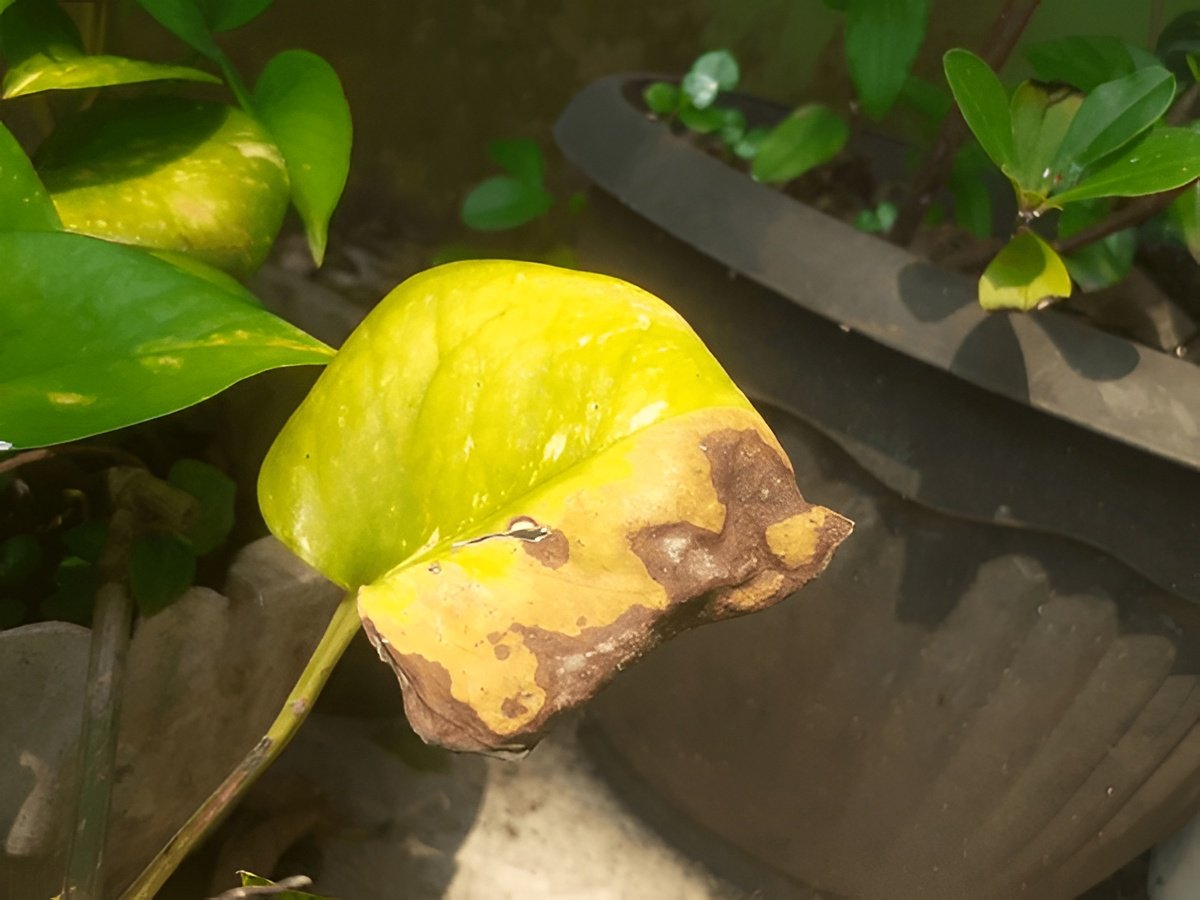
Yellow leaves alarm people because green is the default contract we imagine when we buy a houseplant. Yet yellowing is a symptom, not a diagnosis, and pothos (Epipremnum aureum and popular cultivars) yellows for multiple independent reasons—some harmless, some urgent. This guide walks through eight common causes, how to tell them apart, and practical fixes rooted in observation rather than panic.
1) Normal senescence: old leaves exit gracefully
What it looks like: A lower leaf yellows evenly while the rest of the plant looks vigorous and new growth continues.
Why it happens: Plants recycle nutrients from older leaves, especially when energy is directed upward on vining stems.
Fix: Remove the fully yellow leaf if it annoys you; no overhaul required unless many leaves decline together.
2) Overwatering and root suffocation
What it looks like: Multiple leaves yellow, often starting broadly, sometimes accompanied by limp stems, sour soil smell, or fungus gnats. May follow a stretch of “helpful” frequent watering.
Why it happens: Roots need oxygen; chronic saturation leads to rot and failed uptake—yellowing is an early systemic signal.
Fix: Inspect roots; trim rot; repot into fresh airy mix and an appropriate pot; water only when soil truly dries appropriately; ensure drainage is real.
3) Underwatering (sometimes yellow after drought stress)
What it looks like: Wilting that improves after watering; older leaves may yellow; soil is bone dry.
Why it happens: Roots cannot supply water; cells fail in patches.
Fix: Establish a consistent check rhythm; water deeply when dry; ensure soil isn’t so hydrophobic that water channels around the root ball.
4) Poor drainage or the “decorative outer pot” trap
What it looks like: Chronic moisture; yellowing despite “rare” watering because water hides in the bottom.
Why it happens: No drainage, oversized pot, blocked holes, or saucers that never empty create soggy conditions.
Fix: Drill holes, use an inner nursery pot, discard excess saucer water, resize pots sensibly.
5) Light stress: too dim or abrupt bright shock
What it looks like: Leggy growth with pale or yellowing new leaves in dim corners; or bleached/yellow patches after sudden intense sun exposure.
Why it happens: Photosynthetic machinery adapts to light levels; abrupt extremes cause inefficiency or photodamage.
Fix: Move gradually toward bright indirect light; avoid midday beam on leaves; supplement conservatively in dark winters.
6) Nutrient issues: deficiency—or fertilizer burn
What it looks like: Overall chlorosis patterns in newer or older leaves depending on deficiency; or marginal burn/crisping with salt buildup after heavy feeding.
Why it happens: Too little of needed nutrients limits chlorophyll; too much salt injures roots and leaf tissue.
Fix: Feed modestly during growth; flush soil occasionally if salts suspected; do not fertilize sick rotting plants as a “boost.”
7) Pests: sap drainers hiding beneath the story
What it looks like: Speckling, stippling, fine webbing (spider mites), sticky honeydew trails, cottony fluff (mealybugs). Yellow may appear as chlorotic dots rather than uniform fade.
Why it happens: Pests damage cells and tap phloem resources.
Fix: Identify pest; treat consistently (physical rinse + appropriate controls); isolate if severe; improve inspection habits.
8) Cold damage, drafts, or physical injury
What it looks like: Yellowing or dark patches after a cold night near glass; yellow after a stem got kinks or tears.
Why it happens: Cell death from temperature extremes or broken vasculature.
Fix: Relocate away from cold glass or vents; stabilize environment; prune damaged tissue if it worsens.
How to triage quickly
Ask:
- Is new growth healthy?
- Is yellowing one leaf or many?
- Does the soil smell sour?
- Are roots firm or mush?
- Did anything change recently—repot, move, fertilizer?
Patterns beat single-leaf anecdotes.
Mistakes that keep yellow returning
- Watering on a calendar regardless of soil
- Chasing yellow with fertilizer while roots rot
- Blaming humidity for systemic decline
- Ignoring pests because leaves “just look sad”
When yellow means emergency
Rapid yellow cascade plus black stems and foul odor: likely serious rot—act on roots immediately.
“Sometimes yellow is a language, not a lecture”
Patterns teach: if yellow spares new growth while older leaves retire, you are often watching life cycles rather than catastrophe. If yellow clusters near the crown while soil burbles wetly, you are watching a red-alert physiology story. Photograph weekly during mystery episodes; time-lapse judgment beats midnight catastrophizing. Share images with experienced growers only when you also include care facts—watering rhythm, pot drainage, recent moves—because leaves alone lie occasionally.
Companion stresses: new paint, cleaners, and air fresheners
Volatile fumes seldom cause uniform pothos yellowing at normal household ventilation, but extreme sealed renovation zones with solvents and no airflow have produced houseplant grief in anecdote after anecdote. If every plant in one room yellows simultaneously while plants elsewhere stay fine, suspect environment before pests. Move specimens to a cleaner air zone temporarily when renovations spike VOCs.
Rehab rhythm after fixing the real cause
Once drainage improves or light stabilizes, yellow may continue briefly on leaves already doomed—do not chase instant re-green on compromised tissue. Judge recovery on new leaves: cleaner color, firmer texture, steady node spacing. Fertilizer is not rehab medicine for fresh fixes to rot; roots absorb poorly until they heal.
Encouragement
Yellow leaves are pothos grammar: the plant is trying to tell you which chapter needs editing—water, light, roots, pests, or simple aging. Learn to read the pattern, and green usually returns where it belongs: on new nodes pushing forward.
Water chemistry and municipal variability
Chlorine, chloramine, fluoride, and seasonal treatment changes alter how leaves edge-burn in some homes—not always humidity. If yellow pairs with tip patterns after municipal switch weeks, consider filtered water trials alongside drainage inspections. Document what changed; correlation is not causation, but municipal timing often rhymes with marginal leaf complaints.
Potassium, magnesium, and forum rabbit holes
Nutrient diagnoses from photos alone mislead constantly. Before you chasing rare deficiencies, confirm roots breathe, pots drain, and light is adequate—macro problems disguised as micronutrient cosplay waste money and salts.
When yellowing flags repot timing
Chronic yellow on oldest leaves while roots circle hard can mean simple hunger for fresh mix—not mysterious plagues. After fixing drainage, refresh soil when appropriate and see if new growth cleans up before you escalate.
Pets, toddlers, and soil disturbances
Fresh yellow after curious digging often traces to broken roots or stem nicks rather than disease. Stabilize pots out of reach; recover quietly.
Encouragement reframed
Yellow is a sentence the plant writes with pigments; learn its grammar and you spend less money on panic purchases and more time enjoying steady nodes. Pothos forgives many chapters if the latest ones make sense.
Integrating yellow diagnostics with watering schedules
If your schedule is calendar-driven while yellow screams soil-driven truth, the conflict never resolves—switch to weight, chopstick depth, or finger checks until intuition matches moisture. Yellow often disappears when schedules submit to substrate reality rather than anxiety.
When two problems stack
Cold draft plus overwatering produces maddening mixed signals—some leaves yellow while stems rot slowly. Solve environment and roots together instead of choosing one villain from a listicle.
Reframing “failure”
Yellow leaves recycled into compost closes loops literally and mentally. You are practicing cyclical care, not painting a static portrait that must never change.
Community advice hygiene
Online identifications vary wildly; lead with pot drainage facts, not only photos. Yellow’s story includes unseen variables others cannot see.
Closing patience
Yellow teaches reading comprehension for plants—slow, cumulative, worth learning. Each corrected pattern makes the next houseplant less mysterious; pothos remains an affordable professor.
Interpreting yellow alongside new growth color
If fresh leaves emerge pale while old leaves yellow, you may be seeing overlapping issues—nutrition or light on new tissue while roots or age explain old tissue. Address drainage first; split diagnoses second.
When to accept imperfect older foliage
Lower leaves age out even in pristine conditions—removing a retiring yellow leaf improves photo aesthetics and sometimes airflow; it does not mean the plant “lost progress.”
Integrated home walkthrough habit
Monthly walk with a flashlight and ten minutes catches early mites before yellow stippling dominates the story—cheap insurance.
Reader homework in one paragraph
Next time yellow appears, write five lines: soil wet or dry, smell fine or off, recent move yes or no, pest check done or skipped, feeding changed or not. Those five lines outperform hours of scrolling.
Encouragement tail
Yellow embarrassed me as a beginner too—until I treated it as data. Pothos still yellows sometimes on my shelves, because biology is not a loyalty oath; it is chemistry in a pot. Data keeps friendship with the plant intact.
Yellow and variegation interplay
Heavily variegated leaves yellow differently—sometimes Senescence is faster because less chlorophyll banked per leaf. Compare apples to apples by cultivar, not to random Golden Pothos in different windows.
When hospitals are not kitchens
Recovery after root surgery belongs near good light and stable temps—not above stovetops with chaotic humidity swings unless unavoidable.
Final kindness line
You are allowed to remove ugly yellow leaves and not narrate shame about it—gardening includes editing.
Stable care beats chasing single-leaf perfection: track one new leaf weekly during recovery—that forward metric matters more than arguing with foliage that already declared its chapter closed.