
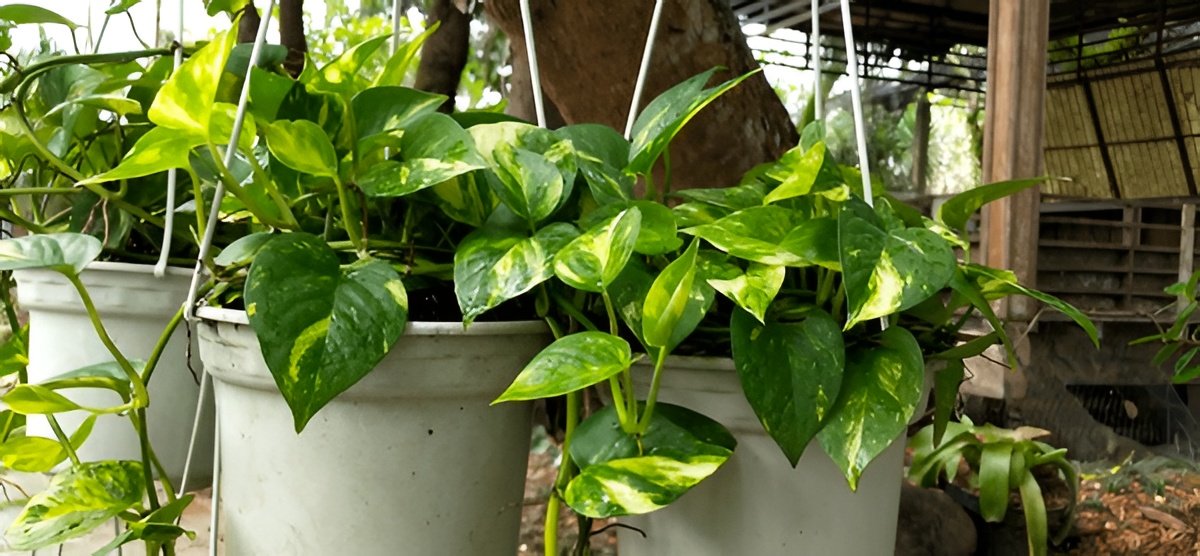
Last Updated on May 1, 2026 by Indoor Plant Nook
A pothos that was proudly perky yesterday and today looks like overcooked spinach triggers immediate alarm—sometimes rightly, sometimes because the plant is performing a drama you can resolve in hours. Pothos (Epipremnum aureum and common cultivars) droops primarily from water imbalance (too little or too much), temperature extremes, recent repot shock, or root failure. This guide helps you read the wilt, act in the right direction, and avoid the classic mistake of drowning a rotting plant because “water fixes wilting.”
Step 1: Lift the pot and touch the soil
If soil is very dry and the pot feels light: underwatering is likely.
- Water thoroughly until water exits drainage; empty the saucer after
- If water races through cracks in dry peat, slowly rehydrate: repeated gentle passes, or bottom watering, so the root ball actually absorbs moisture
Many pothos perk within hours—not always instantly—once real hydration returns.
Step 2: If soil is wet and the plant still wilts—suspect roots
This is the dangerous mirror image: chronic overwatering causes root rot; rotted roots cannot move water, so leaves wilt despite wet soil—a “wet wilt.”
Signals
- Sour smell
- Yellowing beyond one old leaf
- Soft stems at soil line
- Fungus gnats suddenly partying
Actions
- Unpot gently; inspect roots
- Trim mushy roots with sterilized tools to firm tissue
- Repot into fresh airy mix; avoid huge pots
- Water cautiously after; prioritize bright indirect light and stable warmth
Step 3: Temperature and drafts
Heat spikes, radiator proximity, or cold windows can cause temporary limpness. Soil dryness may accelerate in hot microclimates.
Fix: Stabilize placement; protect from cold glass; avoid baking leaves near electronics.
Step 4: Recent repotting or propagation transplant
Disturbed roots underperform briefly—transplant shock can look like wilt without evil intent.
Fix: Provide moderate light; avoid fertilizer; keep soil evenly moist (not swampy) until new root tips establish; maintain humidity around leaves without soaking crowns constantly.
Step 5: Pot-bound hydraulic limits
Extremely tight roots can cause quick wilting between waterings because the small soil volume fluctuates hard.
Fix: Repot to a sensibly larger container with refreshed mix.
Step 6: Pests and vascular stress
Heavy sap loss from pests can weaken turgor—usually with visible stippling or webbing.
Fix: Identify and treat pests; rinse foliage if appropriate.
Step 7: Don’t stack mistakes
The classic failure mode: seeing wilt, assuming thirst, watering daily into wet soil, accelerating rot.
If unsure whether soil is wet deep down, use a chopstick probe or lift the nursery pot out of a cachepot to see residual water.
Reviving severely dehydrated plants
For extreme dryness where leaves are thin and curling:
- Hydrate in stages if the root ball is hydrophobic
- Remove leaves that are fully crisped—they won’t resurrect
- Expect some yellowing after recovery as the plant reallocates resources
When to trim
If tips are permanently damaged post-recovery, trim for aesthetics—pothos branches from nodes and carries on.
Timeline expectations
Underwatering perk-up: often hours to a day if roots intact.
Root rot recovery: weeks; some leaves may be sacrificed.
Prevention habits
- Drainage always
- Water when soil indicates—seasonally adjusted
- Saucers emptied
- Placement mindful of HVAC
The “overwatering panic loop” after underwatering
Sometimes a dehydrated owner overcorrects by soaking repeatedly without letting oxygen return to the root zone, converting drought stress into rot. Better: rehydrate thoroughly once, drain fully, then return to observation-based rhythm rather than anxiety-based frequency. If you fear you overdid it, lift the inner pot, check weight, and insert a dry wooden skewer to profile moisture depth—cheap instruments beat guessing.
When drooping is actually top-heavy mechanics
Exceptionally long vines in tiny pots can torque soil and loosen root anchorage, causing transient wilting after bumps even when moisture is fine. Stabilize pots, prune excess length, or upgrade containers—not every wilt is hydrological.
Calm last word
Drooping is information: the hydraulic system is stressed. Your job is to learn which stress—dry roots, dead roots, heat, cold, or shock—and answer with the intervention that matches reality. Get that match right, and pothos usually returns to the cheerful posture that made you choose it in the first place.
Plastic pot flex versus ceramic heft
Thin nursery liners warp when bone dry; lifters misread wilting. Compare similar symptoms across pot materials before deciding roots rotted—sometimes the pot lied first.
Subirrigation and capillary mats
Some growers use mats or reservoirs; mis-calibration yields wet feet and wet wilt confused simultaneously. If you use gadgets, validate them with old-fashioned finger depth checks until trust is earned.
Humidity domes after dehydration rescue
After severe wilt recovery, a short humidity lift can reduce transpiration while roots rehydrate—do not seal forever; exchange air daily.
When stakes help
Temporary stakes can keep limp stems from kinking while turgor returns—remove before they become garrote wires embedding bark.
Calm summary
Drooping talks hydraulics: listen for dry pots, dead roots, heat, cold, shock, or mechanical stress—answer the real speaker and pothos usually uncurls. The revival story belongs to attentive boring care more than exotic sprays.
Electrical safety near recovered plants
Do not drape freshly watered recovering vines across power strips—common sense rarely needs emphasis until it does.
Wilting clones in the same pot
One cultivar wilts first while neighbor looks fine—check individual stems at soil line for localized rot, not whole-pot averages only.
Rehydration and fertilizer pause
Post-wilt recovery pairs poorly with heavy feeding; roots strained by drought move salts unpredictably—delay feeding until turgidity steadies.
Gentle support during bounce-back
Loosely propped stems avoid kinks while tissues refill—remove props once firm.
Closing synthesis
Wilting is a shout; your response should be diagnostic calm, not reflexive drowning. Pothos rewards listeners with perky leaves faster than punishing guessers with new rot cycles.
Root inspection courage
Many wilt mysteries end only when someone finally unpots—schedule courage, not eternal guesswork. Plastic nursery pots forgive frequent checks more than pride does.
Wilting after aggressive feeding
Salt shocks mimic drought sometimes—flush if roots healthy and story fits; pause feed.
Cooperative roommates again
Label pots “dry-only watering” when you travel—roommates comply better with sentences than with implied plant telepathy.
Resilience framing
Pothos wilts dramatically on purpose—turgor loss is fast feedback. Treat dramatic feedback as acceleration, not insult.
Closing practical mantra
Lift, sniff, inspect, water—or don’t—then wait. Four beats, fewer tragedies.
Glass cachepots obscuring truth
Outer glass hides standing water you forgot—lift inner pots when wilt confuses.
Posture returns slowly
Turgid recovery can take hours to a day—do not re-drown hourly from anxiety.
Symmetry returns never perfectly
Leaves may cock slightly after wilts—cosmetic, usually tolerable.
Integrated closing
Wilting episodes teach pot weights memorized in muscles—eventually you lift unconsciously like checking a phone—absurd, useful, real.
Stewardship micro-practice
Every watering, lift once before and after—training proprioception beats guessing from soil color alone on big pots.
Proprioception training for growers
Lift the pot every watering until dry weight and wet weight live in your hands unconsciously—wilting becomes rarer when your muscles notice drought one day early. This sounds mystical; it is just repetition.
Humidity domes after extreme wilt recovery
Short-term humidity support can reduce transpiration while roots rehydrate—vent daily so leaves do not mold. Domes are bridges, not permanent homes.
When to sacrifice terminals
Sometimes the youngest furthest leaf never rebounds—clip it so the plant stops shipping water to hopeless tissue. Energy redirects to nodes that can still pay rent.
Integrated closing mantra
Wilting speaks quickly—answer with diagnosis before reflex. Pothos rewards listeners with perky leaves sooner than punishing guessers with new rot cycles.
Stewardship micro-habit
Pair morning coffee with a one-minute plant glance—not obsessive, just consistent. Consistency catches wilt before collapse more than marathon inspections once a month.
Wilting plus odor equals priority triage
If limp pairs with sour soil, skip the “maybe it is thirsty” branch—inspect roots before pouring another round. Odor is a compass.
Recovery selfies that help
Photo the same angle weekly post-rescue—subtle perk shows before you emotionally believe it—data anchors hope.
Shared household scripts
Roommates respond to sticky notes near pots describing wet-wilt versus dry-wilt in one line—communication reduces accidental drowning by kindness.
Zen of lifting pots
Make pot lifting a mindfulness bell—one second tells you more than ten minutes of anxious leaf staring once calibrations exist.
Final steady voice
You will wilt-locate wrong occasionally—correct, learn the smell and weight cues, proceed. Pothos tolerates learning curves when corrections arrive before week-long sogginess becomes archaeology.
Tiny toolbox reminder
Keep a chopstick for soil depth probes and a small towel for saucers—cheap tools prevent expensive mistakes when you are hurrying and a plant is talking hydraulics.
Steady observation beats dramatic rescues every time you can pause and lift the pot first.
Drooping FAQ
Why perk up after watering, then wilt again? Suspect wet wilt—rotted roots cannot drink despite wet soil; smell soil and inspect crowns before repeating pours.
Does misting fix droop? Almost never—fix root-zone water first; misting only tweaks leaf films briefly.
Can cold glass cause droop without rot? Yes—chilled roots move water slowly; relocate inward slightly or buffer night chill.
Revival checklist
- Lift the pot; probe moisture depth, not only surface crumbs.
- Sniff for sour anaerobic cues; peek at drainage exits.
- Scan for heat vents, radiators, or cold drafts on foliage.
- Rule out pest stippling if leaves look dull without obvious soil story.
- Give corrections time—repeated hourly watering stacks errors faster than patience.
Case study: office-weekend wilt
Scenario: Limp basket Monday after two idle HVAC days beside a heat plume.
Cause: Accelerated dry-down aloft plus weekend silence—not mysterious pathology.
Fix: Moved off the heat lane; Friday moisture checks during warm months became routine—drooping stopped being a Monday ritual.